Published : 03 Apr 2023, 01:25 PM
Updated : 03 Apr 2023, 04:03 PM


The Election Commission has decided to only use paper ballots for all 300 parliamentary seats up for grabs in the upcoming general election.
The decision was made at a meeting chaired by Chief Election Commissioner Kazi Habibul Awal at its headquarters in Dhaka’s Agargaon on Monday.
Election commissioners Ahsan Habib Khan, Rashida Sultana, Md Alamgir and Anisur Rahman were also present at the meeting, Md Jahangir Alam, the EC secretary, said.
Awal’s commission had proposed to hold polls through EVMs for 150 parliamentary seats, but moved away from the decision after receiving no response from the government on the matter.
With 150,000 EVMs at their disposal, the EC was capable of using the machines in polls for 50-80 seats. They requested tens of billions of taka to repair the machines, but were faced with a setback due to an ongoing financial crunch.
The majority of the political parties were against the use of EVMs as well.
Jahangir said the commission took the decision following uncertainty over receiving the Tk 12.59 billion they sought from the finance ministry to repair the machines.
The EC is also holding five city elections before the general election. The city polls will use EVMs.
The Gazipur city polls will be held on May 25, the Khulna and Barishal polls on Jun 12, and the Rajshahi and Sylhet polls on Jun 21, EC Secretary Jahangir Alam announced after the meeting on Monday.
Local government polls will continue to use the machines, Jahangir added.
WHY THE DECISION?
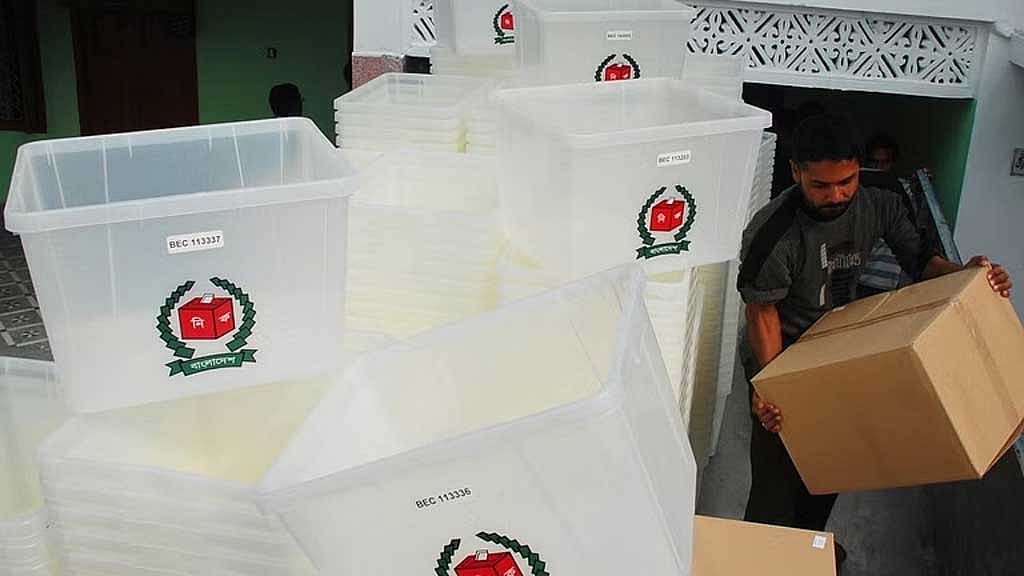
In the 11th parliamentary elections, EVMs were used for voting in six seats. But voting in all 300 seats this time will on paper ballots placed in transparent boxes.
Jahangir said the EC’s proposed Tk 80 billion project to use EVMs in a maximum of 150 seats was “not accepted.” They also proposed allocating funds to BMTF, the company that supplies the devices, for the maintenance of over 100,000 machines.
“The finance ministry declined to deliver the funds, but said it might be available in the next fiscal year. Right now, the EC simply doesn’t have the funds to carry out operations following QCs of the machines and it would take time.”
Jahangir also said that political parties opposing the use of EVMs also factored into the decision.
The EC held its 17th meeting on Monday and the use of electronic voting machines for the next general election was on the agenda.
The 12th national parliamentary elections will be held within seven months. As the general election nears, the EC is making many of the major decisions on how it will be organised.
The use of EVMs, reforms of electoral laws, demarcation of constituencies, registration of new political parties, the registration of observer organisations, and policies for media personnel, all have to be decided prior to the election.