Published : 17 Nov 2026, 11:03 AM
Updated : 17 Nov 2026, 11:03 AM


Bangladesh’s media circle as well as its political arena have both suddenly come alive. While the increased tempo of the Awami League’s overt activities, despite the official ban, is a major source of comments and consternation, it is an alleged message from India that is shaping the current discourse.
At the centre of the storm is a report by the BBC’s Bangla service which suggests that India has floated two “proposals" to facilitate the return of former prime minister Sheikh Hasina to Bangladesh. There has been no official confirmation of such proposals, but that hasn’t stopped the wheel of speculation from turning furiously.
This seems to have injected some life into the debate about whether Hasina would return to Bangladesh or not. In fact, recent moves have stripped away much of the layers of doubt about the seriousness of Hasina’s intentions. It appears Hasina’s actions may well have been coordinated with India, thus making her return in the near future more plausible than not.
Lately, very little new information was coming forth since Hasina’s announcement, through an interview given to Reuters on Jul 10, that she would return in December. However, a letter written on Nov 9 to the Bangladesh High Commission in Delhi by Hasina’s UK-based lawyers requesting a new passport for the former prime minister triggered a new bout of speculation. The BBC Bangla report on Nov 12 heaped more fuel on the fire.
Appeal or New Trial?
Judging by the BBC Bangla report, the content as well as the purpose behind India’s move provide food for thought. The timing of the information’s release into the public sphere, coinciding with the launch of the Awami League’s nationwide campaign of small protests and sabotage, may be coincidental; or it maybe not be.
The second part of the proposal is not the genius part. This basically suggests Hasina should be given a fair hearing, which would mean she would get to appeal the death sentence passed against her on Nov 17 last year. But, given that she was tried in absentia and “defended” by a state-supplied lawyer who was a laughing stock, a new trial would not seem too far-fetched.
Appeal or re-trial was always thought to be a key requirement for Hasina’s return. Without assurance of at least a full hearing at the Appellate Division, her return would simply not take place. It is inconceivable that she would try to return, or India would consent to her return, if the only outcome promised to be a swift hanging.
The government line so far has been a series of Nos: no appeal, no passport, no voluntary return. As far as they are concerned, Hasina has been tried and sentenced to death, so the only thing remaining is the hanging. India would be most unlikely to push Hasina into the hangman’s arms.
Military in the Frame
This would make the issue of appeal, possibility of re-trial, bail etc, the stuff of negotiations and it appears India is signalling that it is keen to get the ball rolling. A negotiated return is what India hopes to achieve and it has also laid out the modality of such a return.
The first part of their “proposal” is where India puts the cat among the pigeons. The real surprise element in this package is how India is attempting, if the BBC Bangla report is accurate, to bring the Bangladeshi military into the Hasina equation.
India’s reported proposal, that the Bangladesh Army should transport Hasina back to Dhaka, just as they flew her to safety in Delhi on Aug 5, 2024, not only introduces a third element into the “return vs extradition” debate, it also reminds Dhaka how the former prime minister came to be in India in the first place.
As the Indian High Commissioner to Bangladesh Dinesh Trivedi pointedly reminded an audience in Dhaka on Oct 3, “Hasinaji was not brought to India by the Indian Air Force or the Indian Army.”
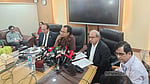
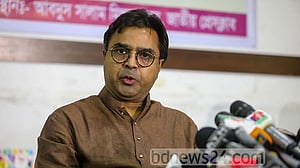
Whether India’s idea will become a topic of negotiations or not remains unclear. The Bangladeshi State Minister for Foreign Affairs Shama Obaed told reporters on Monday that no talks have taken place on this issue. “It did not come from any responsible government source,” Obaed was quoted as saying by bdnews24.com, referring to the proposals reported by BBC Bangla.
Relations in the doldrums
India has come in for some severe criticism over the past couple of years for sheltering Hasina, particularly from Bangladesh. Both the interim Muhammad Yunus regime and the current BNP government have painted Hasina’s continued residence in Delhi as an “affront,” and the main cause of deterioration in bilateral relations.
In recent months, Bangladesh has even made extradition of Hasina a non-negotiable condition for any visit to Delhi by Prime Minister Tarique Rahman. Dhaka is well aware of Delhi’s desire to repair relations now that the Yunus era has ended, and sees Hasina’s extradition as leverage.
India had expected things to improve once the Yunus era came to an end, and took some high-visibility steps with that in mind. First was Foreign Minister S Jaishaknkar attending the funeral of former BNP chief Khaleda Zia. This was followed by a swift message of congratulations to Zia’s son and successor Tarique on his election victory; then an invitation to visit Delhi was sent within hours of the prime minister taking his oath of office.
But this does not seem to have melted the ice. If anything, the freeze has deepened, with Hasina’s presence in Delhi turning into a deal-breaker. For Bangladesh, Hasina’s address to a press conference in Delhi’s Foreign Correspondents’ Club was the last straw. Despite a flurry of diplomatic activities in the wake of Dhaka’s furious reaction to the FCC address, the needle does not appear to have moved much.
The Third Way
For India, it has become important to settle the Hasina issue before it becomes a festering sore in the body of Dhaka-Delhi relations. India has critical security, economic and political interests in relation to Bangladesh. Bangladesh probably has even more pressing reasons to maintain a business-like, if not friendly relations with India. The Ganges Water Sharing Treaty, up for renewal next month, is a case in point.
In this context, Hasina’s desire to return voluntarily in December offers a window of opportunity for India. Some might say, the plan for the December return was drawn-up with India’s nod of approval, if not active encouragement.
Bangladesh government may still insist on extradition, but Dhaka surely knows that road leads nowhere, and continued insistence would only fuel speculation that the BNP government does not actually want her back. The insistence on extradition is looking more like a ploy to deflect, delay and ultimately deny Hasina’s return.
India’s proposal, which may still be just an idea rather than something on the table in front of officials in Dhaka, can appear to be an alternative to voluntary return or extradition. It offers a third path, which would deny Hasina a grandstand home-coming, something the BNP wants to avoid at any cost; but at the same time, it will accord Hasina the dignity of a former prime minister.
For India, a compromise deal for Hasina’s return and continued trial would remove the one issue that Bangladesh has cited as an obstacle to improving relations. For Bangladesh, however, the modality of return - by “extradition” - seems to have become more important than the return itself.
[Sabir Mustafa is a journalist and podcaster]