Published : 13 Nov 2026, 09:04 PM
Updated : 13 Nov 2026, 09:04 PM


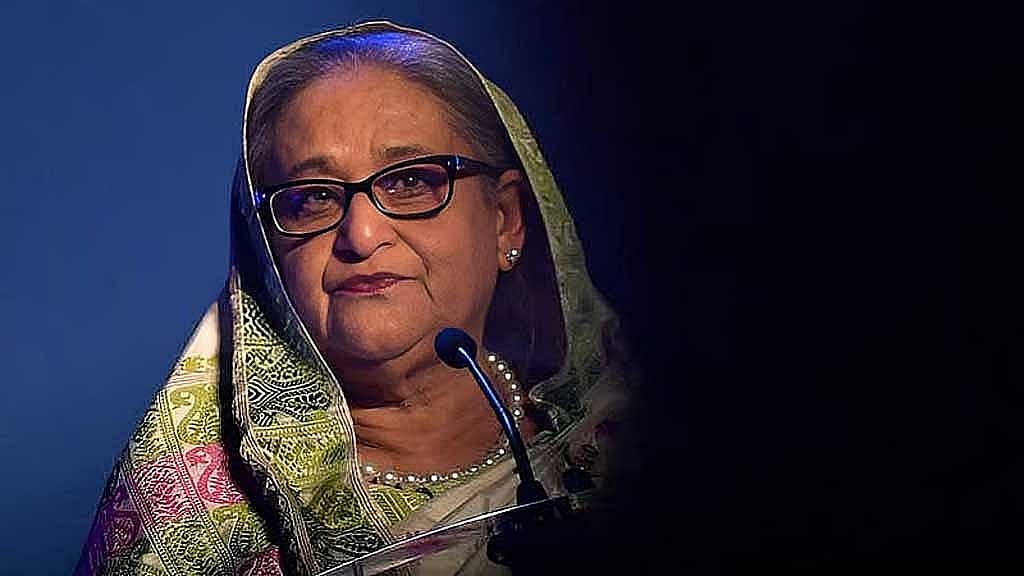
New Delhi officials have hinted at two conditions for the extradition of ousted prime minister Sheikh Hasina, who is in India and faces the death sentence for crimes against humanity during the 2024 July Uprising, BBC Bangla reports.
The first condition states that Hasina came to India on a Bangladesh military aircraft, and the Bangladesh Army will have to take her back.
BBC Bangla wrote, citing New Delhi officials, that the process could be by air or by land. That is, Bangladesh could send a military aircraft to take her from Delhi, or they could receive Hasina at any point on the land border.
The second condition is that Hasina be allowed to appeal against her death sentence and that the Bangladesh government must guarantee it will reconvene her trial for the massacres during the July Uprising, the report said, citing Indian Ministry of External Affairs officials.
"New Delhi's attitude" towards Sheikh Hasina's extradition came to the fore when she applied for a new passport and National Identity Card (NID) to return to Bangladesh.
Although there has been no clear statement from the Bangladesh government regarding the application, there have been demands for her extradition from the start of her self-imposed exile to India.
Despite these demands, several officials from the Indian home and foreign ministries told BBC Bangla they believe that no matter how often Bangladesh speaks about Hasina’s extradition, Dhaka does not actually want the former prime minister to return to Bangladesh.
Quoting Indian officials, BBC wrote: "From the fuel sector crisis to protests by garment workers - the Bangladesh government is already beset by various problems. Under the circumstances, they fear that Sheikh Hasina's return could exacerbate political unrest in the country. That is what we think."
In November last year, Bangladesh's International Crimes Tribunal sentenced Hasina to death in absentia. She was convicted of ordering a deadly crackdown to suppress the student-led mass uprising. However, she has denied these allegations in India.
In July, she told Reuters that she planned to return to the country in December to surrender before the court.
Four months after that plan was revealed, another Reuters report revealed that Hasina had applied for a new passport and National Identity Card (NID).
The Indian Ministry of External Affairs has faced questions from journalists many times about returning Hasina. Each time, they have spoken of a legal solution to the issue.
Indian Ministry of External Affairs spokesperson Randhir Jaiswal faced similar questions on Monday after the matter of Hasina’s passport came to light.
His reply that day was: “The issue of Sheikh Hasina’s extradition is a matter of the law and the judiciary. Further action will be taken in this regard according to the law.”
BBC Bangla asked in its report, “Is Delhi playing any role in the announcement of Sheikh Hasina’s return to the country? Is India showing any activity behind the scenes to pave the way for this ‘return’?
“The simple answer is that Sheikh Hasina did not make this announcement on her own without India’s tacit consent or approval. In other words, this announcement came because both Sheikh Hasina and Delhi agreed on this matter.”
Are Talks Underway Between Delhi and Dhaka?
The BBC, quoting a foreign ministry official in Delhi, wrote that the reason for the two conditions that India is “hinting” at for Hasina's return is that "we can never knowingly put her forward for hanging. Rather, we want to ensure that she gets a fresh fair trial."
They said that India will also want to ensure that the trial is monitored by the international community and global media.
BBC Bangla wrote that Delhi has been holding behind-the-scenes talks with Dhaka for several months with the aim of "fulfilling New Delhi's conditions and paving the way for Sheikh Hasina to return to the country."
Indian Prime Minister Narendra Modi has sent politician Dinesh Trivedi as ambassador to Bangladesh to bridge the gap that emerged between India and Bangladesh after the fall of the Awami League government in the 2024 July Uprising.
Since taking charge, Trivedi has met with Prime Minister Tarique Rahman and other high-ranking government officials in Dhaka twice. After both meetings, he returned to Delhi and met Prime Minister Modi.
He last met Modi on an unscheduled visit to Delhi on Oct 6. He also met with Army chief General Dhiraj Seth.
At that time, a top Indian “military source” told BBC Bangla: “There is no reason for our high commissioner to Bangladesh to come to Delhi and meet the Army chief, unless there is a special reason in a special situation.”
“He hinted that the reason was none other than ensuring an active role of the Army in Sheikh Hasina’s return to the country.”