Published : 11 Nov 2026, 02:30 AM
Updated : 11 Nov 2026, 02:39 AM


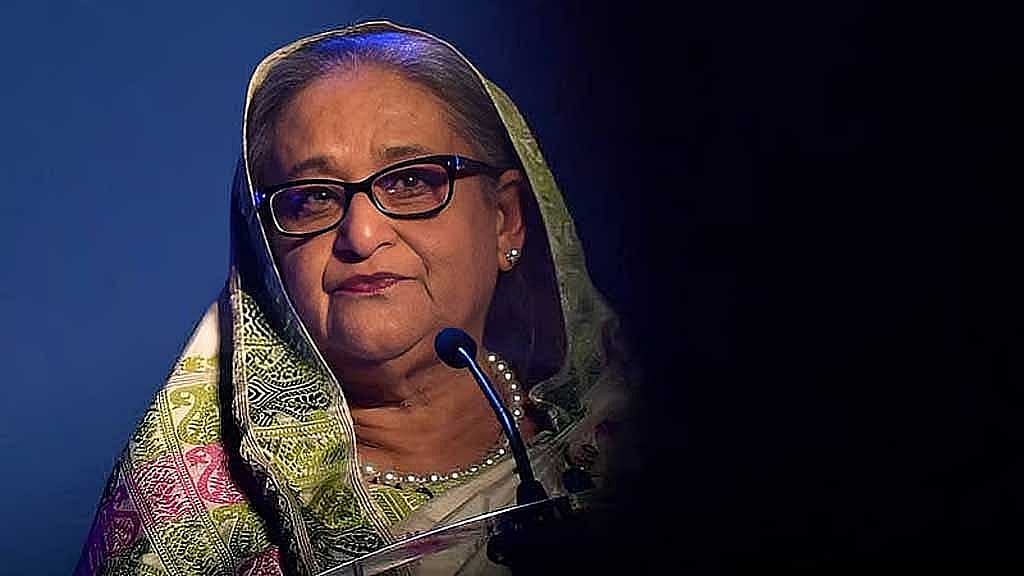
Sheikh Hasina has been sentenced to death for crimes against humanity, and she has no passport to come home on.
Talk of the ousted prime minister's return has flared up again after her representatives asked the Bangladesh High Commission in Delhi to issue her one. Hasina has been living in self-imposed exile in India. So how could she get back?
Lawyers say she has few options. With a death sentence pending, she would have to be arrested as soon as she arrived. As a convicted criminal, she cannot legally get a passport either.
After going through Bangladesh's Penal Code and Passport Act, the lawyers see only two ways home for the Awami League president: a travel pass from the High Commission in New Delhi, or a return under Bangladesh's extradition treaty with India.
The first route is the usual one for any Bangladeshi citizen abroad without a passport. They get a travel pass from the embassy or high commission in the country where they are, then travel under the normal rules. Hasina could do the same.
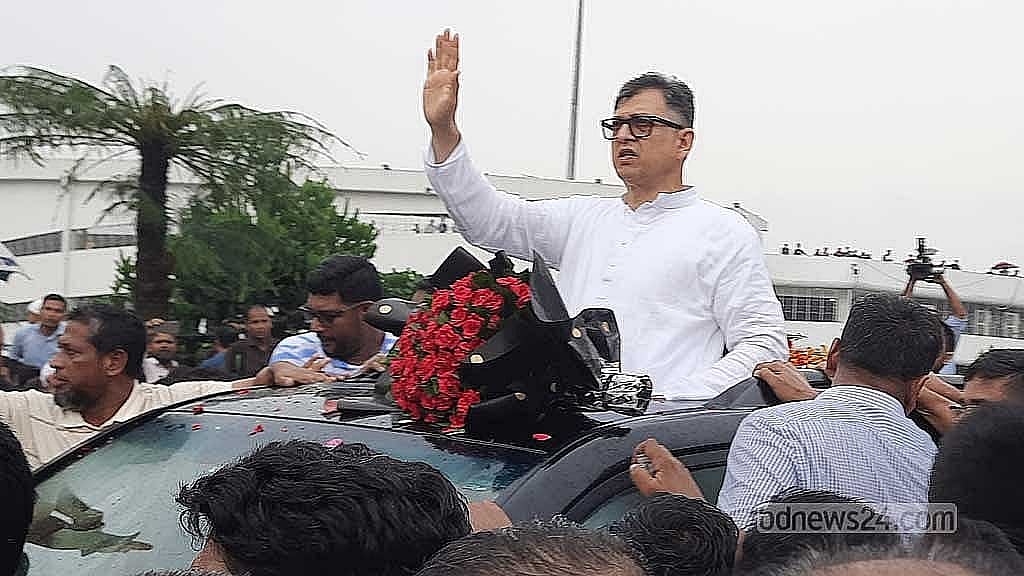
Recently, BNP Chairperson and Prime Minister Tarique Rahman and BNP leader and Home Minister Salahuddin Ahmed have returned to Bangladesh on travel passes.
If the Bangladeshi national without a passport is a criminal or convict, there is an opportunity to send them back to the country under an extradition treaty. In the case of Hasina, India can take this action if it wants to. Bangladesh has been demanding the extradition since Hasina’s government was toppled in 2024.
However, this is not the first time Hasina’s return to the country created a unusual situation in Bangladesh’s politics. In 1981 and in 2007, during the army-installed caretaker government of Fakhruddin Ahmed, the issue of a passport had sparked debate when Hasina returned to Bangladesh.
Under the current circumstances, political analysts believe that her return will depend on the decision of the Bangladesh government or a political understanding between Bangladesh and India.
Although the fact that Hasina is not allowed to obtain a passport by law as a convicted criminal, many also see such a move as part of a strategy by the ousted prime minister.
Senior Supreme Court lawyer Ahsanul Karim told bdnews24.com that since Sheikh Hasina is a convict, she cannot get a passport in this situation.
“Because to get a passport, she will have to apply for a passport again, and to follow that, she must be in jail.”
He said that Hasina may be returned through an extradition, or she may want to come back with a travel pass.
“If she wants to come under the extradition treaty, she can do so. If she wants to come using a travel pass, she can do that too. But however she comes, she will have to be arrested as soon as she arrives because she has been convicted.”
He said that Hasina will not get the legal benefits that she is entitled to as a convict until she gets bail on an appeal.
“If she gets bail, then the question of her passport comes up. Moreover, since a warrant was issued against her, there is a warrant against her after she was convicted. So, she has to be arrested, and since she is a fugitive, she will not get the benefits under the law.”

Regarding how Hasina, who said she would return in December, could do so, Saiful Haque, general secretary of the Revolutionary Workers Party, said: “Her return still depends on the two governments of the two countries.
“How the governments of India and Bangladesh will decide on her situation must be tackled first. She is now convicted by a court verdict, so the situation in ’81 and the present are distinct.''
In November 2025, the International Crimes Tribunal of Bangladesh sentenced Hasina to death in absentia for ordering a deadly crackdown to suppress the 2024 July Uprising.
According to a UN report, approximately 1,400 people died in that movement. However, Hasina, living in self-imposed exile in New Delhi, has been denying the accusations that she ordered killings.
India's sheltering of Hasina has led to a severe chilling of relations between Delhi and Dhaka. Dhaka has repeatedly called on New Delhi to send her back to Bangladesh to face justice.
Delhi has yet to respond. The Indian Ministry of External Affairs said on Tuesday that the issue of Hasina's extradition will be resolved legally.
On Nov 12, 2015, under the extradition agreement signed with India in 2013, the then Awami League government brought back Nur Hossain, a suspect in the then widely discussed Narayanganj 7-murder case, from the neighbouring country. A day earlier, Bangladesh had handed over Assam separatist movement leader Anup Chetia to India under that same agreement.
When Sheikh Hasina, who was on her way to Delhi on August 5, 2024, in a military plane amid a crowd of people heading to Ganabhaban, took the route to Delhi, she had a diplomatic passport as the Prime Minister. Since then, she has been staying in New Delhi. Although there was discussion about whether she would go to another country, she did not go anywhere else.
Passports and NIDs
In January 2025, the office of then chief advisor Muhammad Yunus said that the passports of 97 people, including Hasina, had been cancelled due to “enforced disappearances” under the Awami League regime and murders during the July Uprising. The following month, the Election Commission “locked” or invalidated the passports of 10 members of Hasina's family on charges of providing “false information”.
Reuters reported on Monday that London-based law firm Matrix Chambers had written a letter to the Bangladesh High Commission in Delhi on behalf of Hasina, requesting a new passport and national identity card.
Saidur Rahman, a spokesman for the Bangladesh High Commission in Delhi, later said that a request had been received from an organisation called Matrix Chambers to issue a passport and NID in the name of Hasina. It was later passed on to the Ministry of Foreign Affairs.
Minister of Home Affairs Salahuddin Ahmed then said that the authenticity and legal aspects of the letter would be investigated, while State Minister for Foreign Affairs Humaiun Kobir dismissed the possibility of issuing a passport to Hasina.
Asked by reporters at the foreign ministry on Monday, he said that Bangladesh wants India to return Hasina, but this does not involve passports.
“Bangladesh does not issue passports to terrorists; Bangladesh seeks their extradition,” he said.
Officials from the Passport Department say that if a person wants to get a passport, they have to apply for an e-passport online. There is no opportunity to apply outside of this process,
In addition, the former prime minister will not be able to apply for a passport online even if she wants to because her NID is 'locked'.
On Tuesday, Additional Director General of the Immigration and Passport Department, ATM Abu Asad, said: "We have not received any application from the former prime minister.

"However, the Passport Act of 1973 clearly states who is eligible to get a passport and who is not. We have to issue passports within the framework of the law."
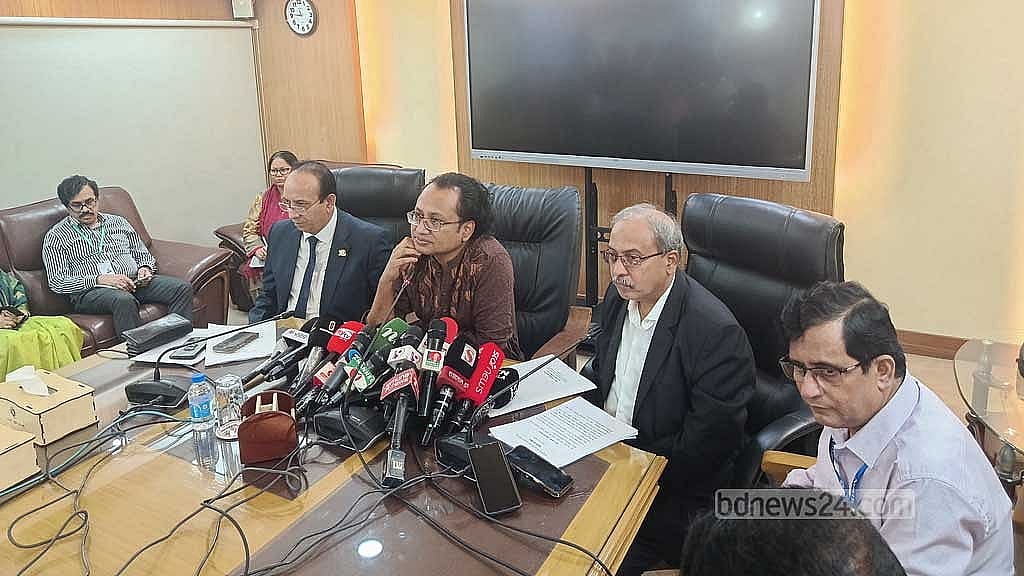
Aminul Islam, chief prosecutor of the International Crimes Tribunal also slated Hasina's application for a passport through a lawyer.
bdnews24.com has sought comment from Matrix Chambers on the Bangladesh government’s criticism of Hasina's legal representation and the context of the letter. As of the time of this report on Tuesday, they had yet to respond.
What is in the Passport Act?
The Directorate of Immigration and Passports issues passports or travel documents to citizens under the Bangladesh Passport Order, 1973.
Section 6 of the Act gives the Directorate of Passports the right to refuse to issue a passport or travel pass for one or more of 10 reasons, even if someone applies.
According to the e-subsection of the act, if someone is absconding from an ongoing trial in a criminal court in Bangladesh or is at risk of absconding, or if a court bans that person from leaving the country, then the directorate can decide not to issue a passport or travel pass to that person.
Police Headquarters says there are a total of 673 cases against Hasina, including 457 for murder. The International Crimes Tribunal (ICT) has sentenced her to death in one case for crimes against humanity in the July Uprising. Trials are under way in a number of other cases after declaring her to be a fugitive.
Courts have banned Hasina from leaving the country in several cases, including on charges of sedition, while she is still in Delhi.
ICT Chief Prosecutor Md Aminul Islam also gave a legal explanation on Tuesday for not being able to issue a passport to Hasina under the Passport Act. He told reporters that there is no opportunity to issue a passport to a person convicted under the Passport Act and absconding by evading trial.
Citing Article 6 of the Bangladesh Passport Order, 1973, he said that if a person has been sentenced to at least two years in prison for a crime involving moral turpitude within the five years preceding the application for a passport, he has the right to refuse to issue a passport.
The same article provides for the possibility of not issuing a passport even if there is a court ban on trying to evade trial in a criminal case or leaving the country.
Regarding Hasina's sentence, the chief prosecutor said that crimes against humanity are included in the category of crimes involving moral turpitude. For this reason, the Bangladesh government has cancelled her passport for “very good reasons”.
He said that if the a, b, c, and e subsections of the Passport Order 6 are considered together, it can be seen that the passport authority does not have the jurisdiction to issue a passport to a convicted person.
Since Hasina wants to return to the country voluntarily, her right to return under Article 36 of the Constitution of Bangladesh is also being discussed.
Article 36 states, "Every citizen shall have the right to move freely throughout Bangladesh, to reside and settle in any part of it, and to leave and re-enter Bangladesh, subject to reasonable restrictions imposed by law in the public interest."
However, pointing out that this right does not apply to a convicted or absconding person, Aminul said that an arrest warrant has been issued to bring her back and other related actions have also been taken. Hasina has avoided the ongoing cases against her.
The chief prosecutor described the idea that Hasina has the right to return to the country based on Article 36 as “misleading”. He said, "How can the Bangladesh government issue a passport to a death row convict? If a convicted person is issued a passport or travel pass on behalf of the state, on behalf of the government, then it will be tantamount to a mockery of the state, along with the trial."
Hasina has Used Travel Passes Twice Before
Another Supreme Court lawyer, without disclosing his name, told bdnews24.com that the letter does not state the basis on which the law firm has applied for Hasina's passport and NID.
According to him, Hasina will return "the same way" she left. He described her return to the country as a "political decision."
In 1981 and 2007, during the army-backed Moin-Fakhruddin government, the issue of a passport had sparked debate when Hasina returned to the country.
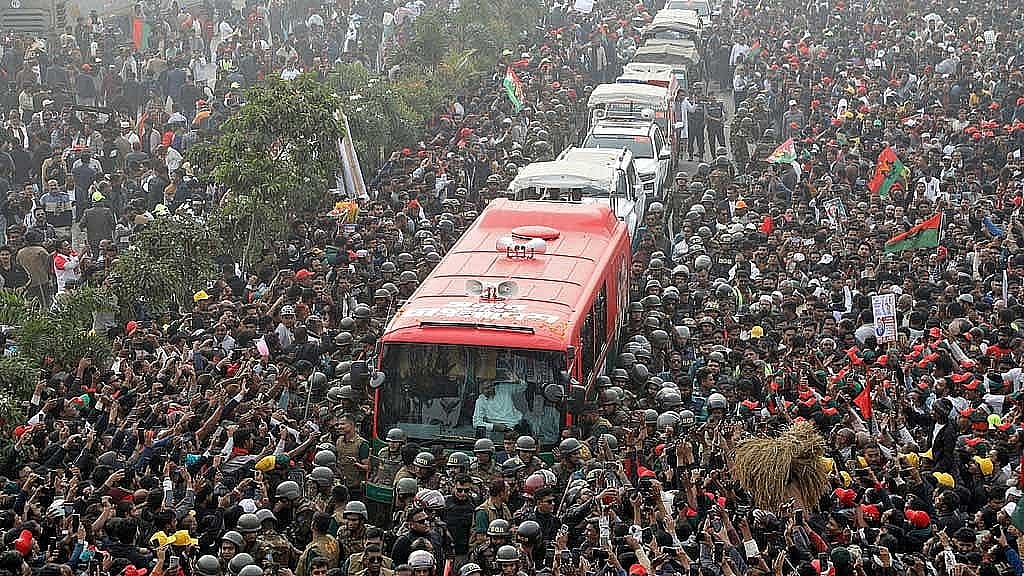
On Aug 15, 1975, when Sheikh Mujibur Rahman and most of his family were killed by a group of army personnel, Hasina was in Germany with her younger sister Rehana. They both spent the next six years in exile in India. Hasina returned to the country on May 17, 1981. She took over as the president of the Awami League.
Najib Ahmed was Hasina's personal officer for a long time. In an interview given to bdnews24.com on May 17, 2024, he said: "Ziaur Rahman was in power then. She did not have a passport. They tried to obstruct her in various ways. Ignoring that obstruction, she (Hasina) returned to the country."
bdnews24.com spoke to several senior journalists and at least three political leaders on this issue. None of them could clearly provide any information about Hasina’s “return to the country with a passport” on May 17, 1981. Some have speculated that Hasina returned to the country with a “travel pass” in 1981.
Political analyst Mushtuq Husain said, "I don't know whether she (Sheikh Hasina) had a passport in 1981, or not, or whether it had expired. But she had no problem coming back. She was in political asylum in India in 1981, but when she became the leader of the Awami League in this country, she returned home. But now her circumstances are different; the two are not the same. Now she has been convicted in a case of crimes against humanity.’’
Saiful, who is now the general secretary of the Revolutionary Workers Party, was the convener of the Chhatra Oikya Forum in 1981. He told bdnews24.com, “I can say from memory that she (Hasina) came with travel documents. I am not sure.”
Hasina went to the United States for medical treatment for a second time after the state of emergency was declared during the era of the military-backed caretaker government. She returned home on May 7, 2007, after facing various adversities. She was then arrested.
That complication also came up in Hasina’s speech.
Describing the events of that time in the parliament on May 7, 2024, then prime minister Hasina said: “I promised that I would come back. I came back on May 17 (1981). Later, I came back on May 7, 2007.”
On Apr 18, 2007, the then government issued a press note banning Hasina from returning to the country, which was withdrawn on Apr 24 of that year.
In a speech, Hasina said that all airlines were prohibited by the Moin-Fakhruddin government from giving her a “boarding pass”.
In her words, “I stood at the American airport for three hours, argued with them, and then came to London on British Airways. After arriving there, when I went to board the plane, I was not allowed to board.”
Tarique, Salahuddin Returned to Bangladesh on Travel Passes
After spending a decade and a half in exile in the UK, then BNP acting chairman and current Prime Minister Tarique Rahman returned to Bangladesh on Dec 25, 2025 with a travel pass.
Like Khaleda Zia, her eldest son Tarique was also arrested during the 2007-08 military-controlled caretaker government. After his release, he moved to London with his family and did not return to Bangladesh.
After the fall of the Awami League government in the 2024 mass uprising, amid discussions about his return to Bangladesh following news of his mother Khaleda Zia's illness, BNP leaders said that he would return on a travel pass as he did not have a passport.
The process of obtaining one was discussed. On Dec 19, Tarique was issued a travel pass and returned to Bangladesh six days later.
Current Home Minister Salahuddin Ahmed also returned to the country on Aug 11, 2024, with a travel pass after the 2024 July Uprising. BNP leaders had announced that he would get his travel pass from the Bangladesh Mission in Guwahati on Aug 6.
Salahuddin went missing from Uttara, Dhaka on Mar 10, 2015, amid the BNP's protests against the Awami League government. He was later found in Shillong in India’s Meghalaya.