Published : 11 Nov 2026, 01:20 AM
Updated : 11 Nov 2026, 01:20 AM


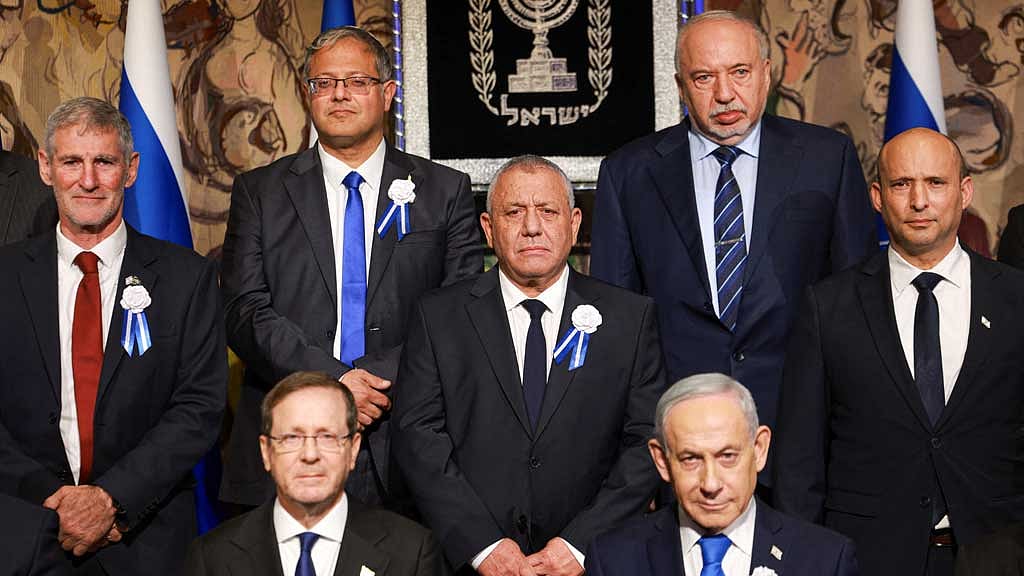
Israel's newly elected parliament was sworn in on Tuesday after a deadlocked election stripped Prime Minister Benjamin Netanyahu's alliance of its majority, leaving former general Gadi Eisenkot to try to assemble a governing coalition.
Lawmakers elected in the Oct 27 vote took their oaths as Eisenkot began efforts to form a government after President Isaac Herzog tasked him with the job on Sunday. However, his allies also lack a majority and have yet to secure agreements with potential partners.
If both Eisenkot and Netanyahu fail to form coalitions, another election could follow.
Herzog urged lawmakers to avoid another vote, calling on them to compromise across political divides. "You must do everything to avoid a repeat election," he told parliament.
Parliament Could Try to Set Up Oct 7 Inquiry
Netanyahu will remain caretaker prime minister until a new government is formed. His Likud-led alliance with far-right and ultra-Orthodox parties holds 53 seats in the 120-member Knesset, below the majority threshold.
Eisenkot's centre-right Yashar party and allied factions have 48 seats, while Arab-led parties hold the remaining 19. Their opposition to Netanyahu could give Eisenkot a potential route to power, although any agreement would face political obstacles.
The newly sworn-in parliament could nevertheless advance some of Eisenkot's campaign pledges, including a state commission of inquiry into the Hamas-led attacks of Oct 7, 2023. The Arab parties support such an investigation, while Netanyahu has largely opposed it.
Herzog said lawmakers were "duty bound to leave no stone unturned" in examining the attacks. Eisenkot has until Dec 6 to form a government, with the option of seeking a two-week extension until Dec 20. He has described the task as "extraordinarily complex".
His options include forming a minority government with Arab party support, bringing ultra-Orthodox factions into his camp or joining a unity government with Netanyahu. The ultra-Orthodox parties have so far ruled out joining an Eisenkot-led administration.
Netanyahu has alleged voter fraud by Arab voters without evidence. Election officials have said they are investigating possible misconduct but have found no indication that it affected the result.
After the swearing-in, Netanyahu called for a unity government, warning that Iran was seeking to revive its nuclear programme and that Israel could face growing international pressure over the issue.
"Only such a (unity) government will be capable of confronting challenges of this magnitude," he said.
Eisenkot and his allies submitted bills after parliament's opening, including proposals for an inquiry into the Oct 7, 2023 attacks, prime ministerial term limits and the repeal of Netanyahu-era judicial changes.
Among the new lawmakers sworn in was Elisha Madan, a military reservist who lost both legs fighting in Gaza. He received a standing ovation as he stood on his prosthetic legs to take the oath.