
Published : 11 Nov 2026, 12:17 AM
Updated : 11 Nov 2026, 12:17 AM


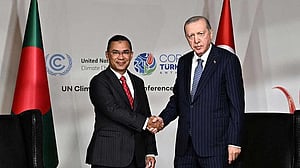
The 31st United Nations Climate Change Conference (COP31) begins on Nov 9 in Antalya, Turkiye, and will run through Nov 20. As in previous summits, Bangladesh will champion crucial demands - the full operationalisation of the Loss and Damage Fund, accessible climate finance, and robust adaptation support. These priorities are both well-founded and urgent.
Yet, as a soil scientist, a critical question occupies my mind: how will the health and protection of soil—the very foundation feeding hundreds of millions of people—be prioritised in these global deliberations?
Lessons from the Field
Following my Master's degree in soil science, I have spent over two decades in the professional sector, dedicating myself directly to on-the-ground soil and agricultural challenges since 2013. Between 2013 and 2018, under the USAID-funded project implemented by the International Fertilizer Development Center (IFDC), I served as a soil scientist conducting field trials for Urea Deep Placement (UDP / Guti Urea) and NPK briquettes across Barishal and Jashore. In the demonstration plots we managed in Barishal, rice yields increased by nearly 20 percent.
Later, I worked in the flood-prone coastal belt of Subarnachar in Noakhali and the Haor wetlands of Sunamganj, focusing on smallholder livelihoods and agri-entrepreneurship development. I was also engaged in research tracking nitrogen management and greenhouse gas emissions from rice paddy fields.
These field experiences have taught me two fundamental truths:
· First, whenever an innovative technology delivers tangible economic gains to farmers, they never hesitate to embrace it.
· Second, even rigorously proven technologies stall in the field due to labor constraints, fragmented supply chains, and a lack of accessible agricultural credit.
An Emerging National Crisis
According to the Soil Resource Development Institute's (SRDI) study “Land Degradation in Bangladesh 2020”, roughly 76 percent of the country's land lost between 10 and 75 percent of its productivity between 2000 and 2020. Alarmingly, soil organic matter has depleted across nearly 79 percent of the landmass, while approximately 55 percent of soils suffer from harmful acidification. Since 2000, an average of 27,000 hectares of arable land have experienced moderate to severe degradation every single year.
On top of this, climate change exacerbates the crisis through rising salinity, flash floods, and prolonged droughts. Depleted, nutrient-deficient soils simply lack the structural and biological resilience needed to withstand these recurring shocks.
From Soil Degradation to Fiscal Burden
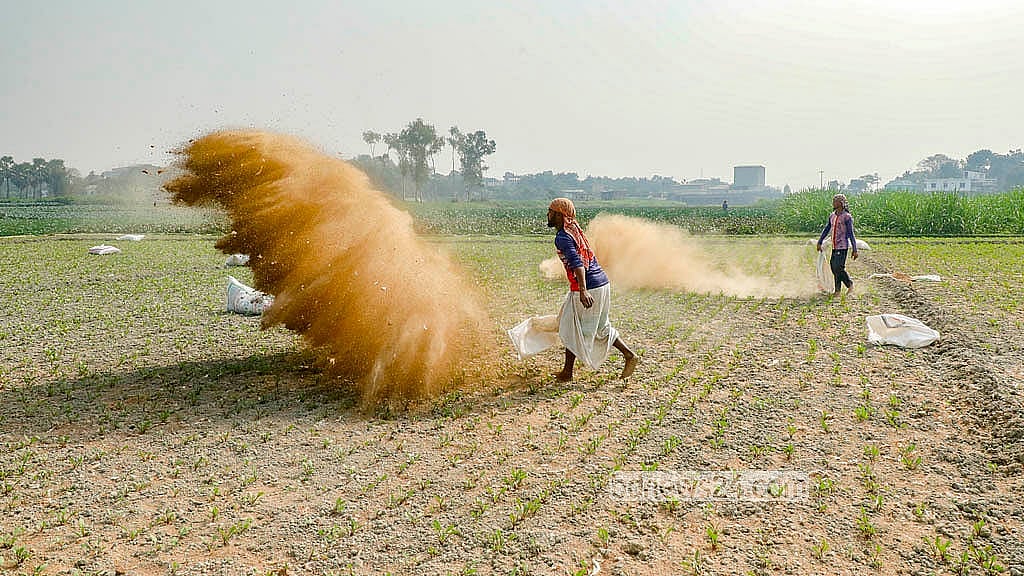
Across Bangladesh, the vast majority of surface-broadcast urea fertiliser cannot be absorbed by crops. Most of it is either lost into the atmosphere through volatilisation or leached into waterways, contaminating both surface water and groundwater aquifers. The steep costs of this inefficiency are borne by farmers, the environment, and the national exchequer.
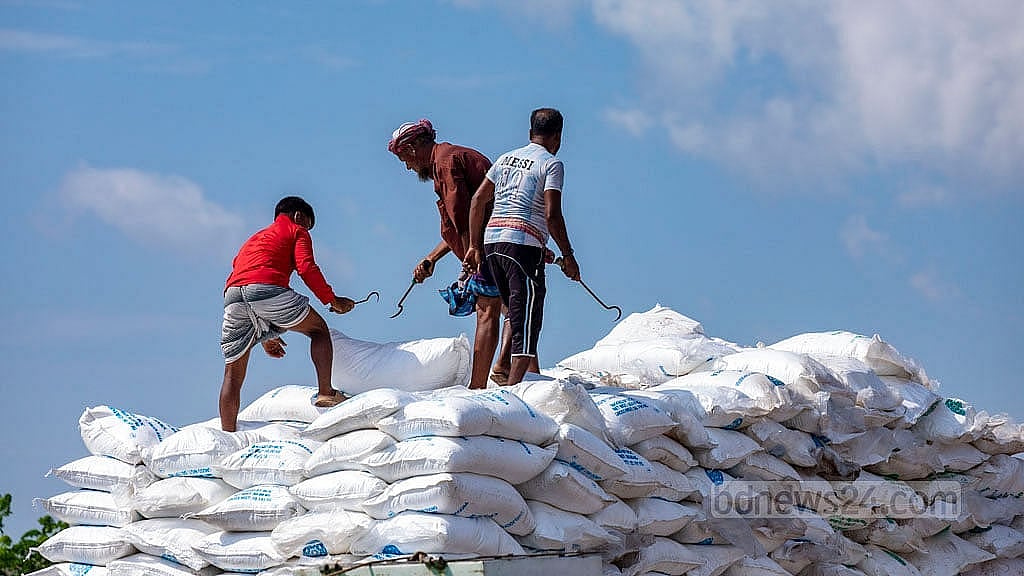
According to reports in The Daily Star, based on international pricing benchmarks relevant to the FY 2026–27 budget discussions, the import cost of urea stands at roughly Tk 56 per kg, whereas farmers purchase it at a subsidised price of Tk 27 per kg. This substantial gap of roughly Tk 29 per kg is sustained directly by state subsidies.
Urea Deep Placement (UDP) can drastically curtail this waste. Under IFDC's ILSAFARM project across eight Cyclone Sidr-affected districts, more than 500,000 farmers adopted UDP by 2010, increasing their average annual net household income by $185. At the national scale, IFDC estimated that in 2012 alone, the government saved over $29 million in fertiliser procurement and subsidy expenditures.
Yet, this proven, eco-efficient technology has still not reached all farmers. An IFDC survey in 2014 identified key structural bottlenecks: the intensive labor required for deep placement, retail supply shortages of briquettes, higher upfront purchase costs, and insufficient micro-credit. The bottleneck is not technological efficacy, but rather financial access and supply chain delivery.
A Window of Opportunity for Soil
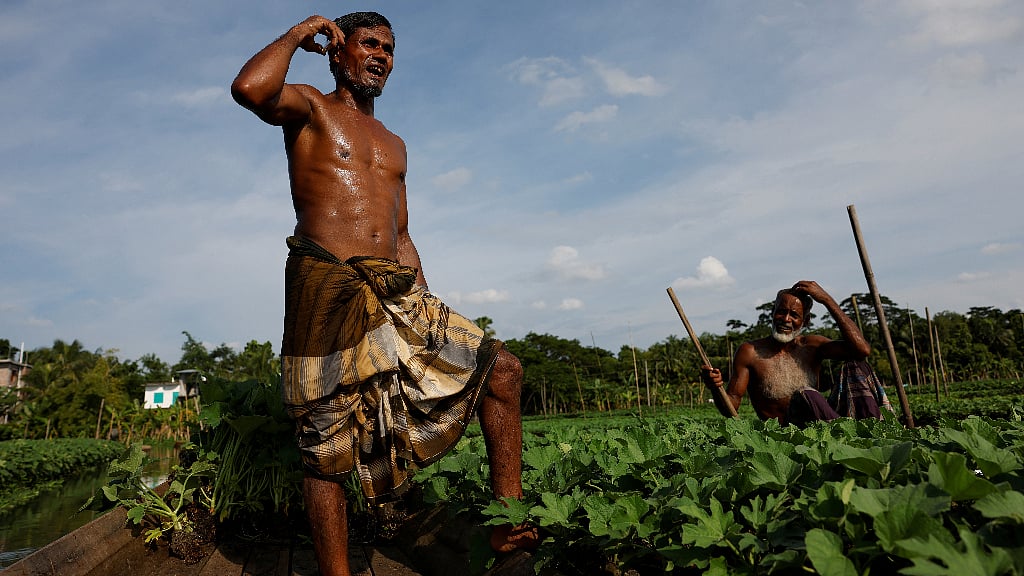
Bangladesh has a compelling opportunity to advocate for soil and sustainable fertiliser governance across three strategic tracks at COP31:
· Climate Finance: While the COP30 decisions called for efforts to at least triple adaptation finance by 2035, no clear baseline year was established. Concrete implementation roadmaps are urgently needed. Furthermore, the Loss and Damage Fund must transition from pledges to readily disbursed capital, provided as non-debt grant financing rather than loans.
· Sharm el-Sheikh Joint Work on Agriculture (SJWA): Initiated at COP27, the four-year SJWA mandate will undergo critical review in Antalya. Whether the process is extended, transitioned into a successor framework, or rerouted remains undecided. Bangladesh must seize this moment to ensure that soil health and sustainable nutrient management are codified as formal pillars of the upcoming framework.
· Methane and Nitrogen Mitigation: Paddy fields account for nearly 9 percent of global anthropogenic methane emissions. Concurrently, elevating global nitrogen-use efficiency from below 50 percent to 70 percent could abate approximately 0.6 gigatons of CO2-equivalent annually. Following the Belém Declaration on Fertilisers introduced jointly by the UK and Brazil at COP30, Bangladesh—as a premier rice-producing and climate-vulnerable country—must assume an active leadership role in this dialogue.
Economic Liberation Begins with Healthy Soil
In our agrarian reality, true economic sovereignty rests upon three pillars: freedom from reliance on imported chemical fertilisers and escalating subsidies, access to climate finance without falling into debt traps, and genuine income growth for smallholder farmers.
Fertile, living soil yields higher crop productivity with substantially lower chemical inputs. This directly protects farmer incomes, alleviates fiscal pressures on the national budget, and fortifies the agricultural landscape against environmental shocks.
Five Strategic Proposals for Antalya
The Bangladesh delegation can put forward five concrete, soil-centric propositions:
1. Formal Institutional Inclusion in SJWA: Secure “Soil Health and Balanced Nutrient Management” as a dedicated, formal agenda item within the SJWA or its successor mechanism.
2. Grant-Based Direct Financing for Farmers: Establish direct, grant-based financing windows for marginal and women farmers to access urea deep placement technologies, affordable mechanical applicators, and localised briquette manufacturing facilities.
3. National Targets for Nitrogen-Use Efficiency: Establish national targets to boost nitrogen-use efficiency and explore formal partnership with the Belém Declaration on Fertilisers.
4. Targeted Investment in MRV & Research: Scale up scientific research and measurement of methane and nitrous oxide fluxes from paddy fields, creating the empirical groundwork required to access international carbon markets and climate damages compensation.
5. Domestic Subsidy Realignment: Reallocate a portion of conventional broadcast urea subsidies toward soil-test-based balanced nutrition and efficiency-enhancing application technologies through targeted pilot projects.
Conclusion
The climate summit will inevitably feature grand speeches, gleaming pavilions, and ambitious declarations. Yet, at the end of the day, actual harvest yields will depend on the living vitality of the soil and the tangible resources delivered to farmers' hands.
Healthy soils protect crop yields; thriving yields safeguard farmer livelihoods; and empowered farmers sustain the national economy. In the long chain of climate resilience, the very first link is the soil beneath our feet. At the negotiating tables of Antalya, the time has come to remind world leaders of this undeniable truth.
[Md Hasnain is a soil scientist and the founder & principal consultant at EcoSynth Solutions, Dhaka]
References
· COP31 Dates & Venue: UNFCCC COP31 Portal (9–20 November 2026, Antalya).
· Soil Degradation Data: SRDI, 'Land Degradation in Bangladesh 2020' (Published 2022); The Daily Star report.
· Urea Pricing & Subsidies: The Daily Star, 'Agri share falls to decade low'.
· ILSAFARM Project & Income Growth: IFDC, ILSAFARM Project Press Release (31 August 2011).
· Subsidy Savings Data: IFDC, Fertilizer Deep Placement Brochure (2013).
· Adoption Bottlenecks: Sanabria, Jahan, and Hossain, IFDC, 'Quantifying Adoption of Urea Deep Placement by Rice Growers in Bangladesh' (SSSA, 2015).
· Adaptation Finance: COP30 'Global Mutirão' Decision, Paragraph 53 (UNFCCC).
· SJWA Consultations: C2ES, 'Halfway to COP31: Why the Bonn Climate Meeting Matters'.
· Belém Declaration on Fertilisers: UK Government Policy Paper (gov.uk).
· Nitrogen Efficiency & Emissions: World Resources Institute (WRI) Policy Statement.
· Rice Fields & Methane Emissions: Saunois et al., 'Global Methane Budget 2000–2020', Earth System Science Data, 17: 1873 (2025).
· Yield Growth Findings: Author's field observations and IFDC Report (2011).