Published : 10 Nov 2026, 04:11 PM
Updated : 10 Nov 2026, 04:11 PM


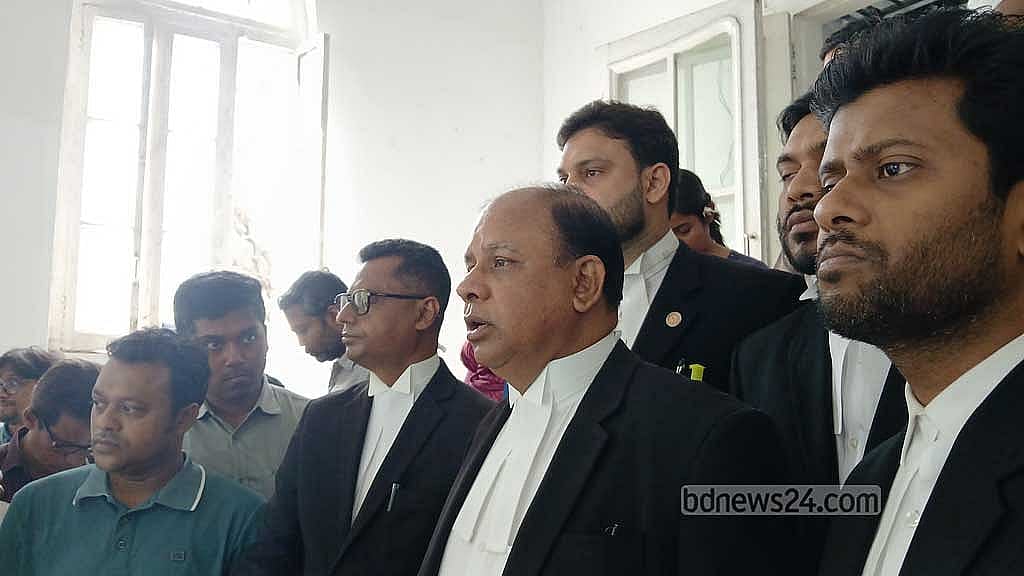
Issuing a Bangladeshi passport or travel pass to former prime minister Sheikh Hasina, who has been sentenced to death and is currently a fugitive, will be tantamount to making a “mockery of justice”, Chief Prosecutor of the International Crimes Tribunal Md Aminul Islam has said.
Speaking to journalists on Tuesday, he said the Bangladesh Passport Order, 1973 does not allow passports to be issued to convicted individuals or those who are absconding to evade trial.
Passport Law Bars Issuance
Referring to Sections 6 and 7 of the Bangladesh Passport Order, Aminul said Section 6 bars passport issuance to anyone sentenced to at least two years in prison within the five years preceding an application, as well as an accused person who has evaded judicial proceedings or is absconding.
Section 7 also provides for the seizure or cancellation of passports issued to individuals convicted of offences involving moral turpitude, he said.
Noting that Hasina had been sentenced to death by the International Crimes Tribunal for crimes against humanity, Aminul said such offences fall within the category of crimes involving moral turpitude.
“For this very reason, the Bangladesh government has cancelled her passport,” he said, adding that the relevant provisions leave passport authorities with no scope to issue a passport to a convicted individual.
‘Article 36 Does Not Apply’
On Hasina's right to return to Bangladesh, the chief prosecutor said Article 36 of the Constitution guarantees ordinary citizens the right to leave the country and return from abroad, but does not apply to convicted or fugitive individuals.
He said Hasina had been living as a fugitive even before her conviction. An arrest warrant has been issued to bring her back, and other legal steps, including newspaper notices, have been taken.
Hasina avoided facing the cases against her by not returning to Bangladesh, Aminul said.
Calling arguments based on Article 36 misleading, he said the constitutional provision could not be interpreted as giving a convicted fugitive an unrestricted right to return.
No Scope For Appeal After 30 days
Referring to Section 21(3) of the International Crimes (Tribunals) Act, Aminul said an appeal must be filed within 30 days of the publication of a verdict. Once the deadline expires, no appeal can be filed.
He described the provision as mandatory and said Hasina neither appeared before the tribunal to contest the cases nor filed an appeal within the stipulated period.
As a result, he believes she has no further legal opportunity to appeal.
“How can the Bangladesh government issue a passport to someone sentenced to death? If the state or the government issues a passport or travel pass to a convicted person, it would amount to making a mockery of the judiciary,” he said.
Matrix Chambers' Application Questioned
Commenting on reports that London-based Matrix Chambers had applied for a passport on Hasina's behalf at the Bangladesh High Commission in India, Aminul said the foreign minister had rightly described the matter as ridiculous.
He said neither Hasina herself nor her party or its leaders and activists had submitted the application. Instead, it was filed by a London-based law chambers whose client is reportedly living in India.
No copy of the legal agreement between the client and the lawyers had been made public, he said.
“How can such a law chambers claim to represent a client and apply for a passport on their behalf without an agreement? There is no such provision or opportunity under the law,” Aminul said.
He added that the person seeking a passport must apply personally and that Hasina had not submitted any such application herself.
Return Under Extradition Treaty
Advising Hasina on how she could return to Bangladesh, the chief prosecutor said she should submit a written application to the Indian government seeking repatriation under the extradition treaty between the two countries.
“That would be the proper course of action for you,” he said, ruling out any legal scope for her return on foot, by air or with a travel pass.
Referring to more than a hundred cases pending against Hasina and her death sentence, Aminul accused her of leaving the country with her relatives while leaving party leaders and activists behind.
He alleged that her actions had caused widespread suffering, claiming that 1,400 people were killed and nearly 30,000 injured and left disabled.
He also warned that attempts to return through unofficial means could put her party's leaders and activists in further danger.
Aminul said no official documents had so far been obtained regarding Hasina's stay in India, although the Indian government had said she was granted refuge on humanitarian grounds following her application.
He said the chief prosecutor's office was unaware of any written communication from Hasina to the Indian government or any virtual statement made by her. He also questioned the authenticity of audio statements circulating in her name.
He reiterated that Hasina had no legal grounds to return except through the extradition process, describing the activities surrounding her possible return as political grandstanding.