Published : 28 Nov 2026, 05:55 PM
Updated : 28 Nov 2026, 05:55 PM


President Mirza Fakhrul Islam Alamgir has accused the ousted Awami League government of pushing Bangladesh’s financial institutions into a "vicious cycle of corruption".
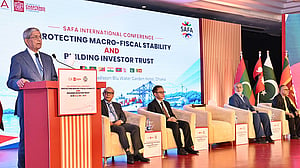
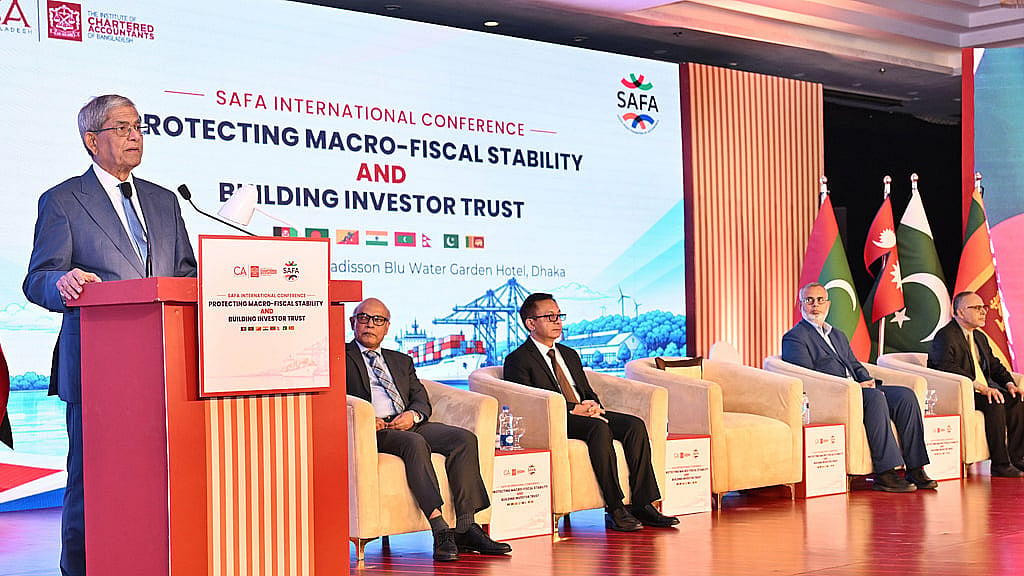
At the South Asian Federation of Accountants (SAFA) international conference on Friday, he said key national institutions were systematically weakened and destroyed over more than 15 years of authoritarian rule.
Citing the 2024 White Paper on Bangladesh’s economy, the president pointed out that roughly $234 billion, or Tk 28 trillion, was laundered abroad between 2009 and 2023, averaging $16 billion annually, or about 3.5 percent of GDP.
By the end of June 2026, defaulted loans stood at around Tk 6.07 trillion, nearly a third of total credit, he said, calling for transparent loan classification to uncover the true scale of the crisis as the government moves to curb money laundering, stop bank fraud, and recover stolen assets legally.
The president pressed for reliable financial reporting aligned with international standards to restore stability, strengthen the capital market, and draw quality foreign direct investment (FDI), while demanding tighter accountability, transparency, and good governance in public spending and state-run entities.
Organised by the Institute of Chartered Accountants of Bangladesh (ICAB) at Dhaka’s Radisson Blu Water Garden, the conference carried the theme "Safeguarding Macro-Fiscal Stability and Building Investor Confidence".
During the event, Fakhrul presented the SAFA Women Leadership Award-2026 to Akhtar Sanjida Kasem and received a commemorative crest from the organisers.
Recalling the regional vision of late president Ziaur Rahman and former prime minister Khaleda Zia -- who inaugurated the 1991 SAFA conference in Dhaka -- he urged South Asian nations to tackle shared economic and security challenges through mutual trust and collective action.
"Trust is the foundation of a strong financial system," Fakhrul said, adding that depositors rely on banks with their savings, investors depend on audited statements, and citizens expect state bodies to protect public wealth.
He said protecting the economy was everyone's responsibility, not just auditors', and called for chartered accountants to be involved in policymaking.