Published : 26 Nov 2026, 01:32 AM
Updated : 26 Nov 2026, 01:32 AM


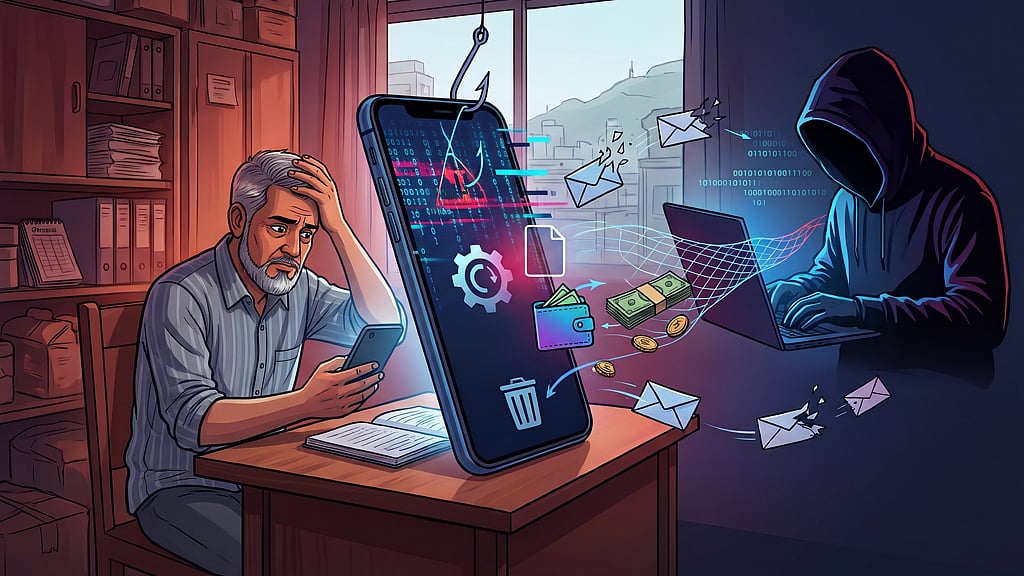
A phone that updates itself. Bank alerts that vanish. Money transferred while its owner has no idea what is happening. Police in Chattogram are investigating fraudsters who use seemingly harmless apps and links to seize phones and access their accounts.
For Sabbir Rahman (not his real name), the trouble began while watching Facebook reels. An app was installed on his phone without his knowledge. Days later, on Oct 20, the handset began updating on its own. By the time he understood something was wrong, Tk 643,700 had disappeared from two accounts and a credit card he held with Dhaka Bank.
The update began days after installation, with no warning that the phone's security had been compromised or that anyone was watching him closely.
The money, Sabbir said, was moved through another bank account and a mobile financial service app. The bank's SMS alerts were then deleted.
He filed a case at the Chattogram Metropolitan Magistrates’ Court. The Chattogram Metropolitan Police's cyber crime unit is investigating.
Investigators say the case is not isolated. The pattern is similar: victims download an app or click a link, or are lured on to online gambling sites.
Hackers take control of their phones, monitor banking and mobile financial service apps, then move money when the opportunity is safest – often late at night or on bank holidays.
In the past two months, the cyber crime unit has received 188 complaint register cases, filed with the court, and 26 general register cases, lodged with police stations, said Shamim Hossain, deputy commissioner of the Counter Terrorism Department. Most involve financial fraud.
“Most people now use smartphones. Many shop online and make payments. Many receive SMS messages offering attractive deals, and clicking on those links is often how control of their phones passes to hackers.
“Hackers take control of the phone and monitor their bank accounts and mobile banking apps. They then steal the money when it suits them. The transfers are usually made late at night or on bank holidays.”
A Reset that Wipes Away the Evidence
A Khatunganj businessman has also gone to court. He said a WhatsApp message on Mar 28 carried a link to an app called MBTV, offering free television. Soon after he installed it, a message appeared asking him to update the system.
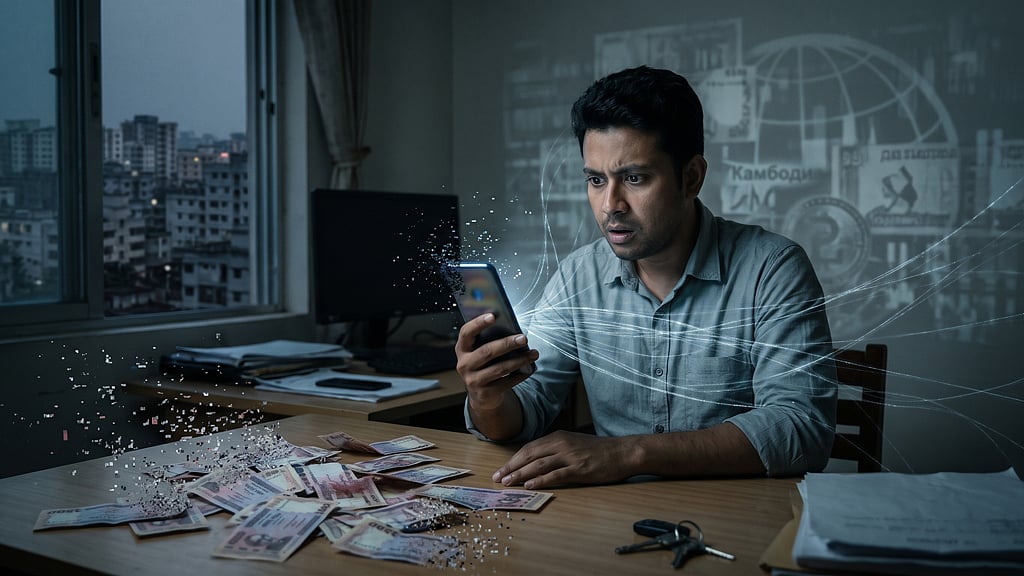
Money was transferred from his Islami Bank account in five transactions totalling Tk 250,000. Another Tk 14,000 was taken from his bKash app, while Tk 100,000 was moved from his credit card. The money went to another bank account and to Nagad and bKash accounts.
Then, he said, his phone performed a factory reset by itself. All SMS messages notifying him of the transfers disappeared.
A bank employee, Jahirul Islam (not his real name), was watching Facebook videos when an app was downloaded to his phone. Soon afterwards, Tk 158,000 was transferred from his Mutual Trust Bank account to another bank account. A further Tk 13,000 left his bKash number, and Tk 20,000 was transferred from his credit card to another bKash number. The reported loss was Tk 191,000.
Sub-Inspector Saidur Rahman of the cyber crime unit is investigating several such cases. He said malware can be installed when users download links or visit adult websites. Deleting the app does not necessarily remove it.
“As a result, control of the phone passes into the hands of hackers. The user may not even realise it. But hackers can monitor different apps on the phone as well as the movements of its user.”
Saidur said investigators had found that stolen money was often routed through accounts opened in other people's names. Fraudsters sometimes persuade people to open accounts with tempting offers; others do not even know accounts exist in their names.
He also described a cross-border dimension. Many Bangladeshis living in countries such as Cambodia, Fiji and Cyprus use the lira for transactions, he said.
With no direct way to send remittances home from those countries, some use Binance, a cryptocurrency exchange platform. Freelancers also bring their earnings into Bangladesh through the platform.
“Taking advantage of this, many people take responsibility for sending expatriates' money to Bangladesh. After taking on that responsibility, they contact hackers. The hackers steal money from other people's accounts and send it to the expatriates' accounts. As a result, the expatriates are also being harmed.”
Shamim said investigators had found fraudulent accounts opened at different banks, sometimes without the named account holders' knowledge.
He blamed weak checks in part on banks' internal competition to attract customers. Fraudsters also open bKash accounts using SIM cards registered in other people's names.
Some people, he added, knowingly allow criminals to route stolen money through their accounts for a commission.
Police warn: do not download apps through links sent from unfamiliar numbers, or open those links. If you have already done so, Shamim said, seek police help as quickly as possible.