Published : 21 Nov 2026, 01:14 AM
Updated : 21 Nov 2026, 01:14 AM


For 13 years, the wait for “Grand Theft Auto VI” functioned less like a normal product cycle and more like an internet-wide punchline. Whenever a political upheaval, scientific breakthrough, or mundane personal milestone occurred, the collective refrain remained the same: we got this before GTA VI.
Now that Rockstar Games’ behemoth has finally landed in the sun-drenched, neon-soaked sprawl of Leonida, the jokes have evaporated, replaced by something far more complicated than simple hype.
To play “Grand Theft Auto VI” in late 2026 is to witness an entertainment juggernaut operating at a scale no rival can realistically match. Yet beneath the dazzling surface of Vice City’s coastal highways and humid swamplands lies a fascinating set of contradictions. It is a game that spent a reported $1.5 billion to achieve a level of simulation fidelity previously thought impossible on current hardware, while deliberately rejecting the industry’s obsession with ultra-fast frame rates and frictionless arcade gratification.
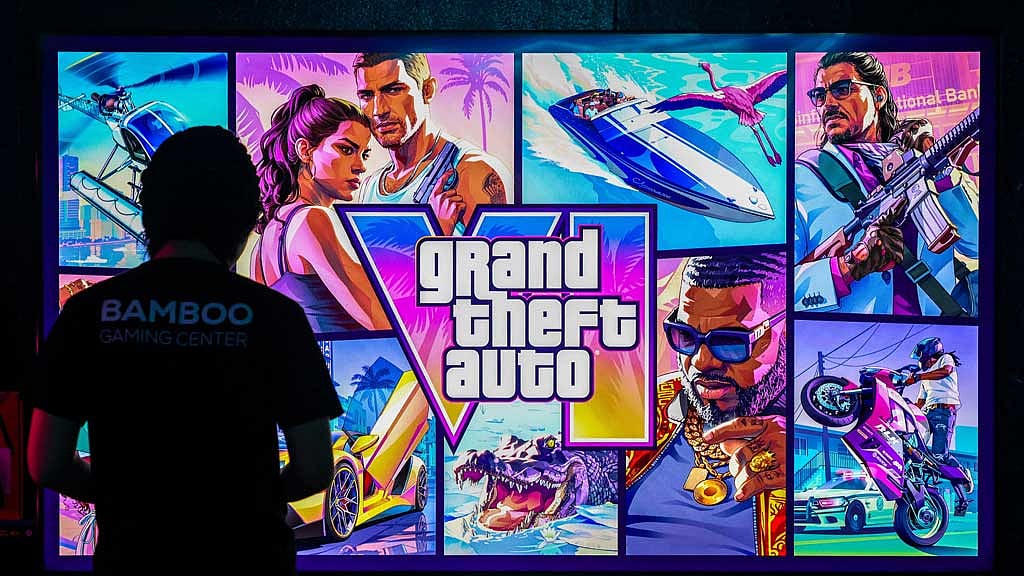
It is a biting satire of modern American excess that unexpectedly anchors itself in tender human intimacy. And, perhaps most tellingly, its shockwaves are being felt just as acutely in living rooms and gaming cafes across Dhaka as they are in New York or London.
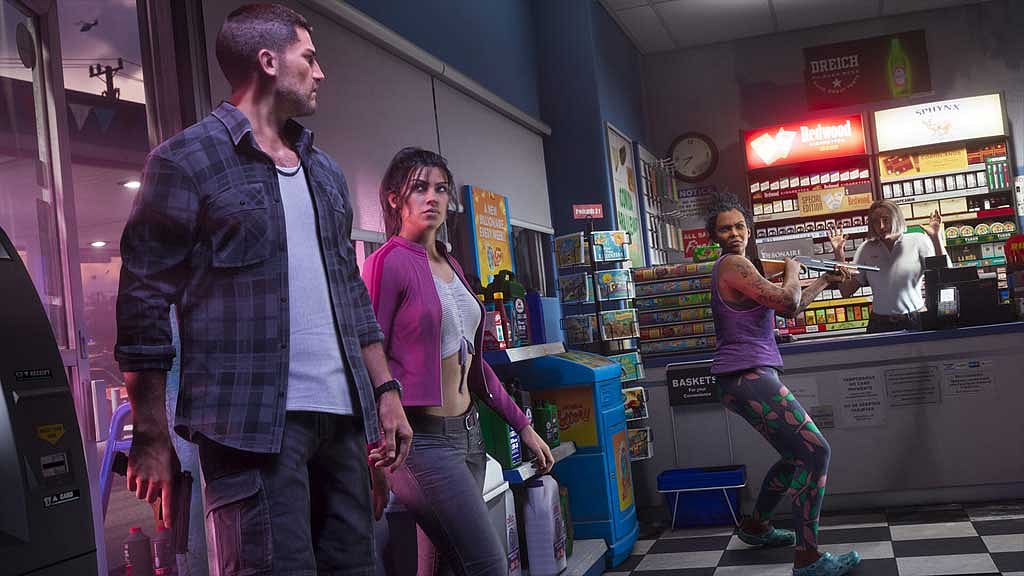
Visually, Leonida is nothing short of staggering. Rockstar has always treated its open worlds as living dioramas, but the sheer density of detail here borders on the obsessive. Heat haze shimmers convincingly off asphalt stretches under the midday sun; ray-traced global illumination bounces off rain-slicked tarmac and chrome bumpers with photographic weight; crowds do not merely mill about as decorative background noise, but react, film, gossip, and move with distinct physical momentum. Footsteps echo differently across tiled hotel lobbies, wooden boardwalks, and damp sand, while dynamic vehicle audio groans and sputters in direct response to mechanical wear.
That obsession extends directly into the game’s mechanics, where Rockstar has made a bold -- and occasionally divisive -- philosophical bet. Rather than smoothing away every rough edge for instant gratification, “GTA VI” doubles down on tactile weight and consequence. Cars carry genuine inertia; gunfights feel heavy, messy, and uncomfortably loud; even mundane routines carry an almost avant-garde commitment to realism. You cannot conjure an arsenal out of thin air -- leave your preferred rifle in the boot of a getaway car abandoned three blocks back, and it stays there.
Here, “GTA VI” openly inherits the DNA of “Red Dead Redemption 2”, translating the frontier slow-burn of Arthur Morgan’s journey into the neon chaos of modern Florida. Just as “Red Dead Redemption” forced players to care for their horse, stow heavy weapons on their saddle, and read the body language of strangers along dusty trails, GTA VI replaces the hollow, icon-chasing checklist fatigue of contemporary open-world games with organic discovery.

For over a decade, rival studios have treated open worlds as bloated theme parks stuffed with repetitive map markers. By grafting Red Dead’s unhurried ecosystem, reactive NPC memory, and physical consequence onto an urban sandbox, Rockstar has effectively revitalised a stagnant genre -- proving that a virtual world feels expansive not because of its square mileage, but because every corner behaves as though it exists independently of the player.
Of course, pushing current-generation consoles to simulate a world this dense comes at a well-documented price, sparking the loudest technical debate of the launch window: the 30 frames-per-second ceiling.
Across the PlayStation 5 and Xbox Series X/S, Rockstar has foregone the standard 60fps “performance mode” that console players have grown accustomed to over the past six years. Technical analyses from outlets such as Digital Foundry confirm that while the PlayStation 5 Pro holds that 30fps line with near-flawless frame pacing and crisp PSSR upscaling, the standard PS5 experiences minor dips during high-speed chaos, and the Series S frequently hovers in the mid-to-high twenties when explosions fill the screen.
For frame-rate purists -- and PC players staring impatiently across the console-exclusivity divide -- the absence of 60fps is an understandable sore point. Yet spending meaningful hours in Vice City makes the engineering trade-off plain. “GTA VI” is not GPU-starved; it is constrained by the sheer CPU load required to run its simulation systems, crowd AI, physics, and world streaming simultaneously.
Compromising that world density merely to chase a higher frame counter would have hollowed out the very magic that makes Leonida feel alive. Rockstar chose depth over slickness, betting that players would forgive a lower frame rate once they realised nothing else on the market feels remotely as substantial.
That same maturation defines the narrative -- another lesson refined in the crucible of “Red Dead Redemption”. For decades, “Grand Theft Auto” viewed humanity through a lens of cynical, nihilistic detachment -- a parade of grotesques chasing cash and status in a broken country. With Lucia, the series’ first female protagonist, and her partner Jason, Rockstar pivots toward something far riskier: genuine emotional stakes.
Set against a contemporary America where social media spectacle, political absurdity, and criminal desperation blur together, their Bonnie-and-Clyde dynamic gives the satire a beating heart. You are no longer merely causing chaos for its own sake; you are acutely aware of two flawed people trying to survive both their environment and their own worst impulses.
Even before the first copies were unlocked, the cultural gravity of this release was unmistakable far beyond Western markets.
In Bangladesh, where a booming youth demographic has steadily transformed gaming from a niche pastime into a mainstream cultural pillar, the build-up to Nov 19 resembled a major sporting final. Across Dhaka, local tech communities buzzed for months over console upgrades, with enthusiasts debating pre-order logistics, grey-market pricing, and whether existing setups could do Vice City justice.
Local newspapers chronicled young professionals scheduling leave around launch week, while Bangladeshi content creators dissected every frame of pre-release footage for audiences numbering in the hundreds of thousands.
For a generation of Bangladeshi gamers who grew up trading cheat codes for “Vice City” and “San Andreas” in neighbourhood cybercafés, stepping back into a reimagined Vice City carries a distinct generational resonance.
Yet it is impossible to celebrate GTA VI’s artistic and commercial triumph without reckoning with what it means for the wider industry. With estimates pointing toward multi-billion-dollar opening-week revenues and a development budget eclipsing Hollywood’s largest tentpoles, Rockstar has effectively distorted the economics of video games.
Publishers across the globe cleared their autumn release calendars simply to avoid being crushed in its wake. Smaller studios, already battered by waves of layoffs and shifting audience habits, now face an impossible benchmark: consumers conditioned by a once-in-a-decade anomaly may unfairly judge tightly scoped, $70 games against a billion-dollar outlier.
At the same time, “GTA VI” serves as a double-edged sword for an industry increasingly defined by corporate greed and aggressive monetisation.
On one hand, its overwhelming success proves that players will still pay handsomely -- even at a $79.99 standard price tag -- for a richly crafted, single-player world rather than the hollow, microtransaction-riddled “live-service” treadmills major publishers have spent years chasing.
Yet there is a real danger that greedy executives will draw entirely the wrong lessons from Take-Two Interactive’s windfall. Having watched “GTA Online” print money for over a decade, rival boardrooms are already salivating over how to replicate Rockstar’s pricing power, code-in-box digital lock-ins, and endlessly monetisable ecosystems without possessing a fraction of Rockstar’s patience or craft -- threatening to turn an artistic triumph into an excuse for steeper price hikes and sharper anti-consumer practices across the board.
Equally urgent is the human cost behind the curtain. Reports and firsthand accounts from developers during the final stretch of production have underscored the immense labour required to polish every reflection, animation, and line of dialogue to Rockstar’s exacting standards.
As the industry marvels at GTA VI’s commercial windfall, the conversation around sustainable working conditions and collective bargaining for the people who actually build these worlds has never been more pertinent.
Ultimately, “Grand Theft Auto VI” stands as both a towering monument and a cautionary signpost. No studio will replicate its budget, its 10-year runway, or its cultural ubiquity anytime soon.
By fusing the tactile, unhurried philosophy of “Red Dead Redemption” with the electric pulse of Vice City, and by prioritising emotional weight and simulation depth over easy technical orthodoxy, Rockstar has delivered a defining work of the console generation. The real question for the rest of the gaming world is not how to copy Leonida’s scale -- which is impossible -- but whether it has the courage to match its conviction.
[Syed Mahmud Onindo in an assistant news editor at bdnews24.com]