


Published : 21 Aug 2021, 08:36 PM
Updated : 08 Apr 2022, 01:09 PM


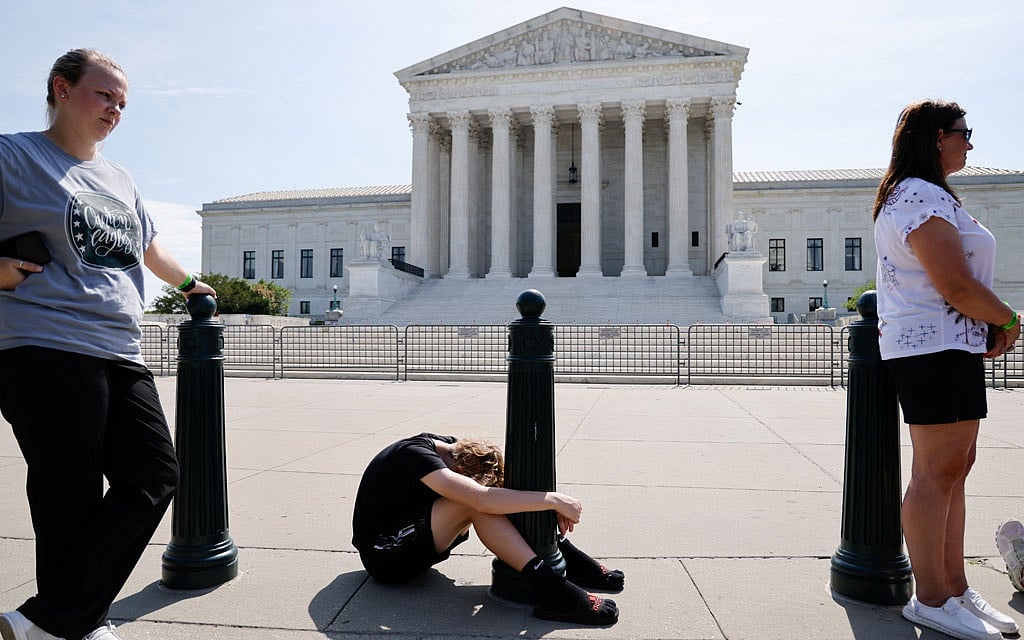
The judge’s ruling was to have gone into effect after midnight Friday. Alito instead granted the Biden administration an “administrative stay,” one meant to preserve the status quo “so that the full court can consider the application.”
The stay will expire, unless the court takes further action, at midnight Tuesday. Alito ordered the states challenging the program, Texas and Missouri, to respond to the Biden administration’s arguments by Tuesday evening.
On Thursday, a federal appeals panel in Texas denied the Biden administration’s attempt to stop the judge’s ruling, which mandated the reinstatement of the asylum policy, known commonly as Remain in Mexico and formally as the Migrant Protection Protocols program.
The stay offered at least a temporary reprieve for the Biden administration after a series of judicial setbacks in its effort to reverse President Donald Trump’s hard-line immigration policies. In a separate case, a federal judge in Texas temporarily blocked the administration’s short-term strategy to limit the arrests of immigrants who lack legal status by prioritising those who posed the greatest threats to national security and public safety.
A spokeswoman for the Justice Department said that the agency was reviewing the 160-page ruling in that second case from Judge Drew B. Tipton of the US District Court for the Southern District of Texas, and lawyers were weighing next steps.
Taken together, the lower-court actions threaten two of the Biden administration’s earliest efforts to reshape the nation’s immigration system. Another blow came in July, when a federal judge ruled that an Obama-era program that has protected hundreds of thousands of young immigrants from deportation was unlawful.
The rapid-fire string of decisions underscored the role of the courts as the primary venue for shaping polarising immigration policies, one legal challenge at a time — a strategy that immigration advocates honed during the Trump administration.
“Those who are opposed to the Biden administration’s immigration agenda are taking every and any opportunity to take policy questions and have them answered in favorable courts,” Tom K. Wong, director of the US Immigration Policy Center at the University of California, San Diego, said.
The order stating that the Biden administration must reinstate the Trump policy that forced asylum-seekers to wait in Mexico while their cases were considered in the United States came from Judge Matthew J. Kacsmaryk, of the US District Court for the Northern District of Texas.
He and Tipton were both appointed by President Donald Trump. Of the three judges on the 5th US Circuit Court of Appeals who rejected the administration’s request to stop the “Remain in Mexico” ruling on Thursday, two were Trump appointees; the third was appointed by President George W. Bush.
In their appeal to the Supreme Court, government lawyers said reinstating the asylum policy on Saturday would be “near-impossible” and would cause “irreparable harm.” Critics said it would place asylum-seekers in dangerous congregate settings at a time when the highly contagious delta variant was fueling a surge in coronavirus cases.
It was not immediately clear what exactly would have been set into motion on Saturday as a result of the order, or whether Mexico would permit the reinstatement of the program.
The program was litigated during the Trump administration as well.
“You will likely see, with future Biden administration policies, that those opposed will use the courts to stunt further progress, which just amplifies the importance of congressional action,” Wong said.
The latest example is the effort to stop the administration from prioritising which unauthorised immigrants to arrest.
In February, the Biden administration issued its temporary arrest priorities for Immigration and Customs Enforcement, a stark change from the Trump administration’s policy of arresting immigrants for any suspected immigration violation. The Biden team ordered ICE officers to prioritise arresting people lacking legal status who pose national security and public safety risks, as well as those who recently crossed the border illegally. The Obama administration set similar enforcement priorities.
The Texas attorney general, Ken Paxton, celebrated the temporary injunction on Biden’s arrest priorities, calling it “another Texas victory against Biden.”
Texas is a party in both cases and has borne the brunt of the unusually high number of illegal border crossings this year, with many migrant families and children from Central America arriving in the state’s Rio Grande Valley and overwhelming border officials. The state has taken several actions to challenge the Biden administration’s immigration policies; earlier this summer, Gov. Greg Abbott, a Republican, directed state law enforcement officials to start arresting migrants for trespassing to address illegal immigration — because, he said, the Biden administration was not.
Alejandro N. Mayorkas, the homeland security secretary, has been working to draft permanent arrest priorities for ICE, which would replace the interim ones currently being challenged. It was not immediately clear if the judge’s ruling would also apply to any final arrest priorities the administration imposed.
If the Biden administration is not able to continue its strategy for immigration arrests, the shift will likely further strain an immigration detention system that is already near capacity. Arrests by ICE are down by more than half so far this year, compared to the same period in 2020, according to immigration statistics — in part because of pandemic-driven rules about limiting the number of people in congregate settings and the temporary arrest priorities.
Wong said that even if Republicans succeeded in challenging the arrest priorities, it would not change the reality that there was not sufficient detention space.
“And so policies of ‘enforcement en masse’ don’t take into account the finite resources,” he said, “including limited detention capacity.”
The administration is also waiting for a judge to rule on a lawsuit that would prevent it from continuing a public health rule that the Trump administration put in place early in the pandemic to turn away many asylum-seeking families arriving at the border. Immigration advocates filed the lawsuit last year, and at the time, Vice President Kamala Harris, then a senator from California and presidential candidate, argued against the rule.
Lawyers for the plaintiffs hoped a settlement could be reached with the Biden administration. But discussions fell apart last month when the White House decided it would not lift the public health rule any time soon because of the overwhelming number of migrants arriving at the southern border and the risk of more COVID-19 infections.
If the courts ultimately order the administration to lift the public health rule, it will stretch the federal government’s enforcement capabilities even more.
©2021 The New York Times Company













