


Published : 09 Jan 2020, 10:24 AM
Updated : 03 Aug 2022, 02:33 PM


Four months ago, a swarm of low-flying armed drones and cruise missiles struck oil tanks in the central hub of the Saudi petroleum industry, catching Washington by surprise and temporarily knocking out 5% of the world’s oil supply. Almost no country in the region — Israel may be the exception — could have defended against it.
The Iranian attack on US military posts in Iraq early Wednesday, local time — the only direct attack on the United States or its allies claimed by Iran since the seizure of the US Embassy in 1979 — relied on ballistic missiles and inflicted little damage.
But with tensions between the United States and Iran at the highest level in four decades, the unexpected success of the September strike on the Saudi oil facilities is a stark reminder that Tehran has an array of stealthier weapons in its arsenal that could pose far greater threats if the hostilities escalate.
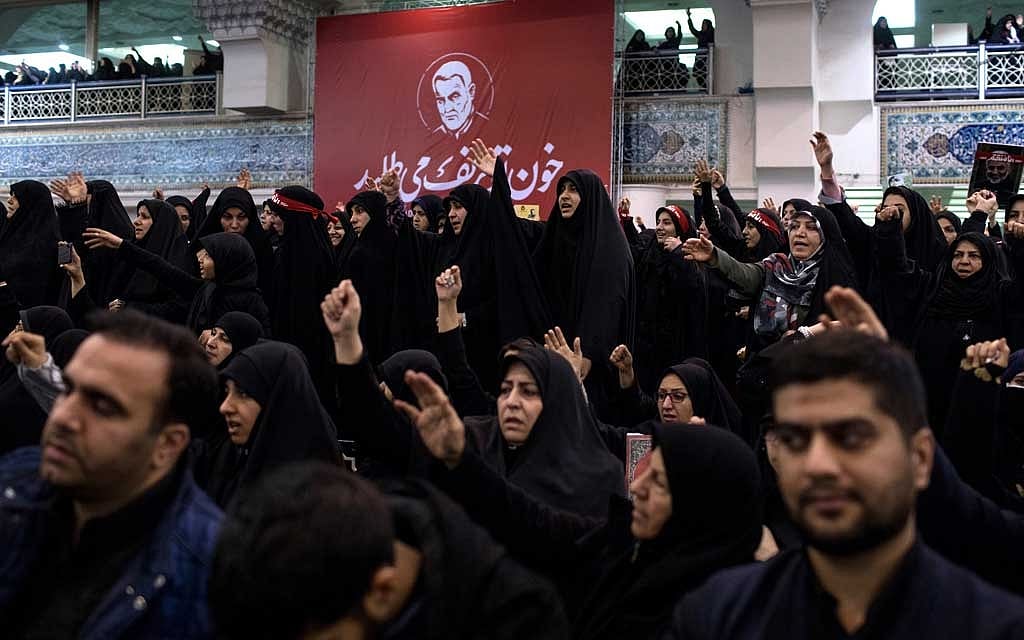
Iranians gather in Tehran, Iran, on Jan 5, 2020, in public mourning of Gen Qassem Soleimani. The New York Times
Iran’s conventional military has deteriorated severely during the country’s relative isolation since the Islamic Revolution of 1979. But Tehran has spent those decades cultivating less conventional capabilities that are now among the most potent in the world and which are ideally suited for carrying out asymmetrical warfare against a superpower like the United States.
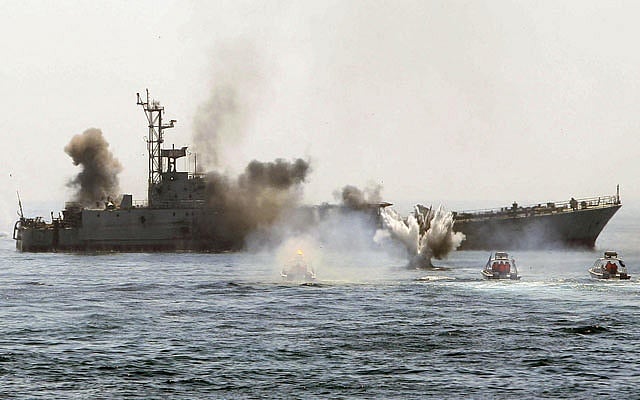
FILE PHOTO: In July 2018, President Hassan Rouhani hinted Iran could disrupt oil flows through the Strait in response to US calls to reduce Iran's oil exports to zero. A Revolutionary Guards commander also said Iran would block all exports through the Strait if Iranian exports were stopped. Pictured, Iranian naval war games in the Strait, 2010. REUTERS/Fars News
It has also developed sophisticated armed and surveillance drones. And lacking a strong conventional navy, it has sought other ways to choke off the flow of Persian Gulf oil, with a fleet of small speedboats and a stockpile of underwater mines.
“Their offensive capability is drastically greater than the defensive capability that is arrayed against them,” said Jack Watling, an analyst at the Royal United Services Institute, a London security research centre. “Their ability to inflict significant damage makes the cost of war with Iran quite severe.”
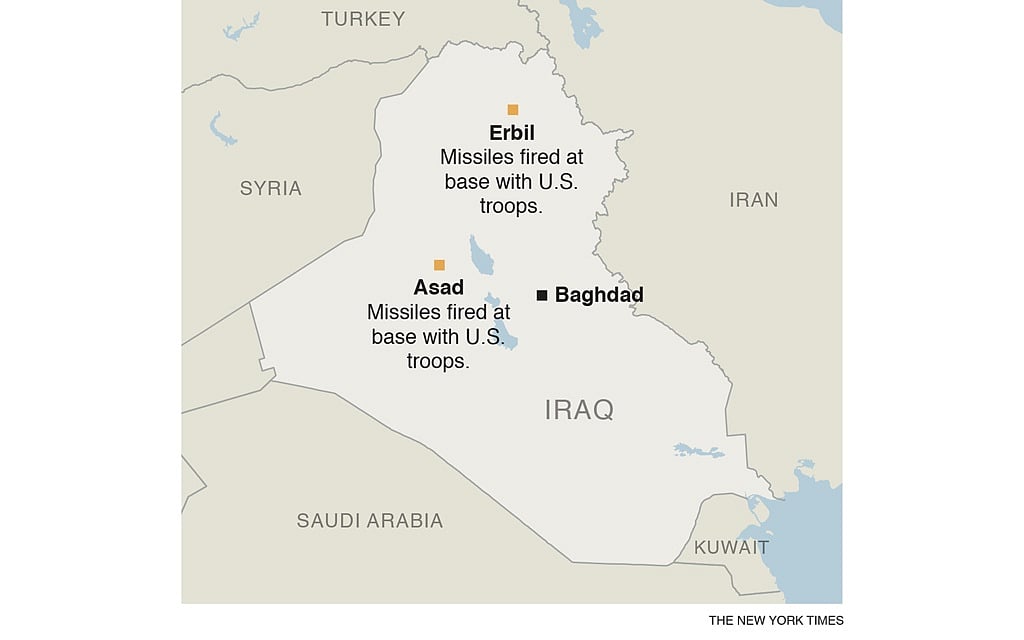
Iran fired more than 20 ballistic missiles at military bases in Iraq where American troops are based, Iraqi officials said. President Donald Trump said that no American or Iraqi troops were killed.
“Khamenei has to calibrate the response so that it is enough for Iran not to lose face but not so much that Iran loses its head,” said Karim Sadjadpour, a scholar of Iran at the Carnegie Endowment for International Peace.
But Tehran and its allies may still be plotting less overt forms of revenge for the American killing last week of Iranian military commander Qassem Soleimani. Many analysts contend that Iran and its militant allies are reverting to their pattern of covert or indirect attacks that leave no clear evidence of Iranian responsibility.
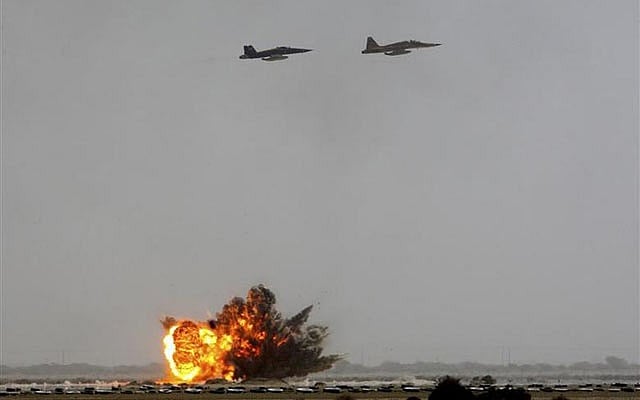
File Photo: Iranian air force fighter planes drop bombs on targets during maneuvers in southern Iran, June 24, 2009. REUTERS/Fars News
Iran has also shown a long-standing interest in assassinations, a tactic that could match the vows of Iranian officials to take “proportionate” measures to avenge Soleimani. Several Iran experts said that killing an American official, presumably in the region, might be the eye-for-an-eye that Tehran is seeking.
“I certainly would not be going out to many public places, because the risk of getting whacked or kidnapped is very high,” said Sir John Jenkins, a former British ambassador in Saudi Arabia.
But Iran has a dismal success rate in assassinating foreign officials.
Iran has tried and failed to kill Israeli diplomats in Thailand, Georgia and India, and to bomb a rally near Paris where Rudy Giuliani, the former mayor of New York, was speaking. In 2011, US law enforcement agents broke up a particularly brazen and inept Iranian plot to hire thugs from a Mexican drug cartel for $1.5 million to blow up an Italian restaurant in Washington in order to kill a Saudi diplomat.
“We almost couldn’t believe it,” said Ilan Goldenberg, a former Pentagon official who oversaw its Iran task forces at the time. “Everybody looking at the intelligence thought it was just crazy noise, until a first payment of $150,000 showed up in a bank account.”
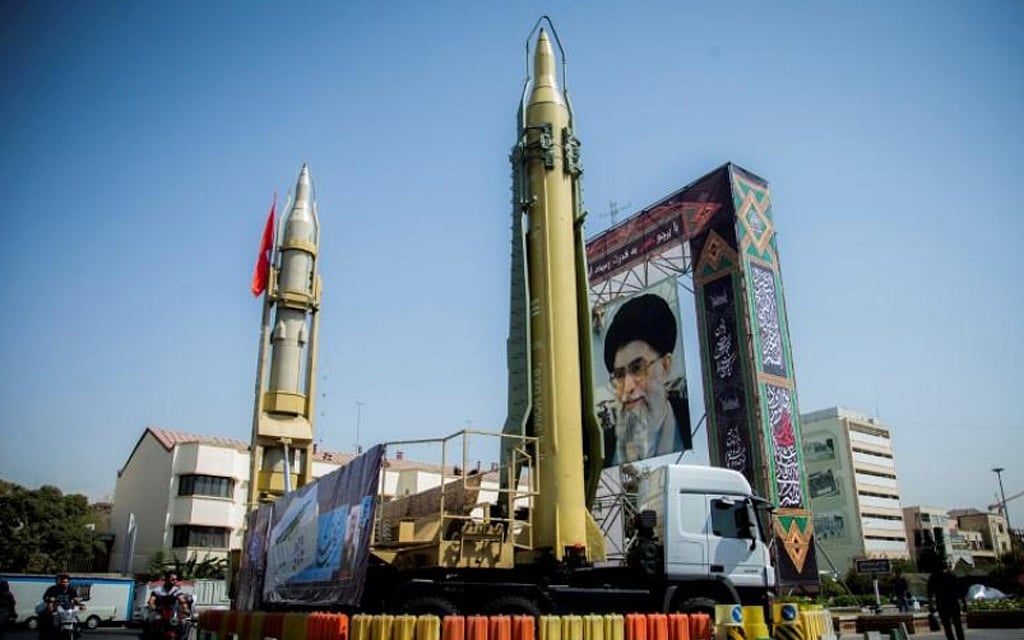
File Photo: A display featuring missiles and a portrait of Iran's Supreme Leader Ayatollah Ali Khamenei is seen at Baharestan Square in Tehran, Iran Sep 27, 2017. REUTERS.
Officials said that the attack demonstrated that Iran’s technology was more advanced than US intelligence agencies had expected.
“The attack on oil fields in Saudi was stunning in the depth of its audaciousness,” Gen. Kenneth F McKenzie Jr, head of the Pentagon’s Central Command, said in a recent interview.
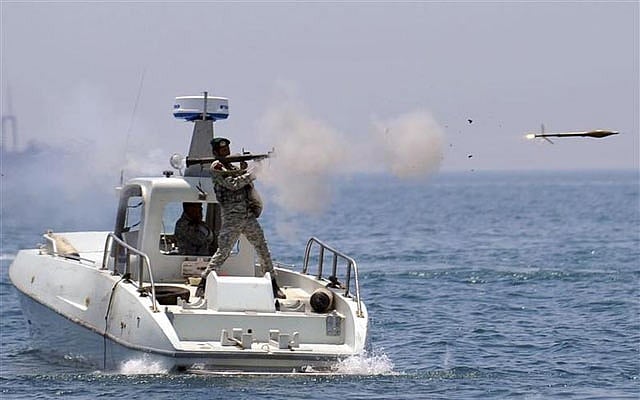
File Photo: A member of Iran's army fires RPG during a war game near Jask port in southern Iran, May 10, 2010. REUTERS/IIPA/Abolfazl Nesaie
“Much better capabilities were deployed in this attack,” he said, “possibly a camera on the missile and the drones, which compares reality with a target image.”
Unlike more advanced American or Chinese drones, Iranian drones cannot fire missiles from the air. But they can be loaded with explosives, as they were thought to be in the Saudi attack, to become remote-guided missiles.
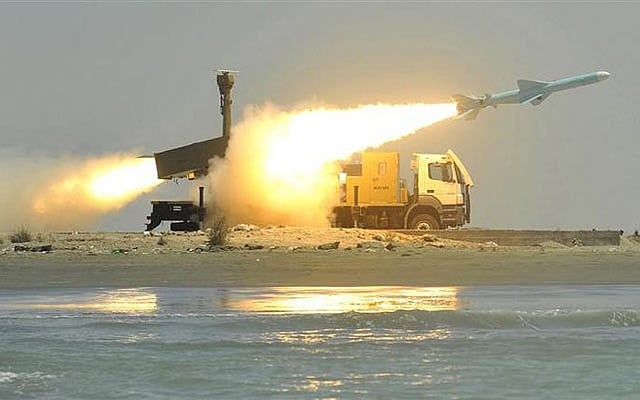
Iran’s longest-range cruise missiles can strike more than 1,500 miles from Iran’s borders, reaching almost anywhere in the Persian Gulf. China, Russia and North Korea have provided Iran with technology and munitions, and Iran has produced remote-controlled drones domestically.
Until recently, though, Iran has preferred to rely on its network of militant allies around the region — including Hezbollah in Lebanon, an array of Iraqi militias now organised as the Popular Mobilization Forces, the Houthis in Yemen, and other groups across the region. Some, like Hezbollah or the Iraqi forces, are now so large, well-equipped and institutionalised that they more closely resemble professional militaries than informal militias.
“That is what extends Iran’s power far beyond its borders,” said Afshon Ostovar, a scholar of the Iranian military at the Naval Postgraduate School in Monterey, California.
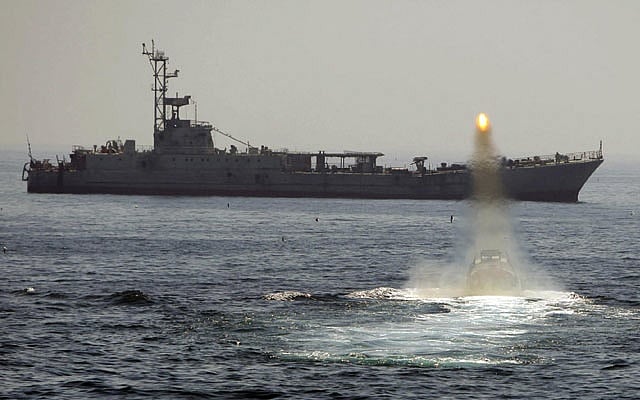
File Photo: An Iranian warship and speed boats take part in a naval war game in the Persian Gulf and the Strait of Hormuz, southern Iran April 22, 2010. REUTERS/Fars News
And despite the efforts of the United States and Israel, Iran has continued to smuggle missiles of various ranges and abilities to its proxies in Syria, Iraq, Lebanon and Yemen, according to Israeli and US defence officials.
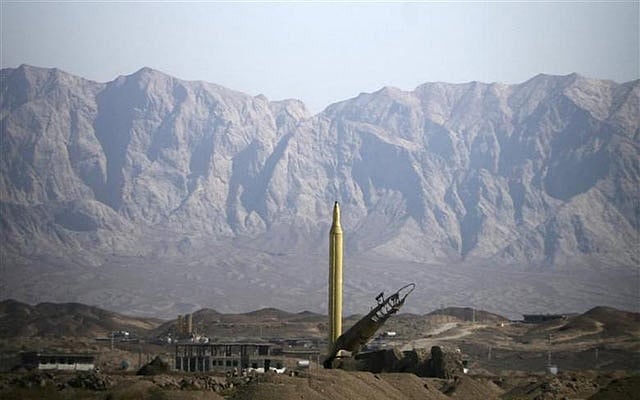
File Photo: A Ghadr 1 class Shahab 3 long range missile is prepared for launch during a test from an unknown location in central Iran, September 28, 2009. REUTERS/Fars News/Ali Shayegan
But far from ending such rocket attacks, some of the Iranian-backed militias in Iraq have said that even without Iranian encouragement they now intended to step up their attacks on US forces in order to drive them out of the country.
“I think we are settling in for what is going to be a bumpy period of conflict,” Ostovar said.
Cyberattacks — a weapon that can cause severe damage halfway around the world with low costs and few fingerprints — may be Iran’s wild card. Cybersecurity experts and government officials have already spotted an increase in malicious activity by pro-Iranian hackers and social media users that they believe could foreshadow more serious computer attacks from Tehran.
One apparently low-level Iranian attack has already sought to avenge Soleimani. Iranian hackers temporarily captured the website of the US government’s Federal Depository Library Program and replaced its contents with a eulogy for the general.
“Hacked by Iran Cyber Security Group Hackers,” text on the website read. “This is only small part of Iran’s cyber ability!”
c.2020 The New York Times Company












