


Published : 13 Jan 2022, 04:13 PM
Updated : 18 Jul 2022, 02:14 PM


They were held in packed, sweltering cells and fed potatoes that tasted like diesel. They drank from toilets. One recalled passing dead bodies in a hallway. A woman said interrogators inflicted electric shocks on her hands, legs and chest during questioning.
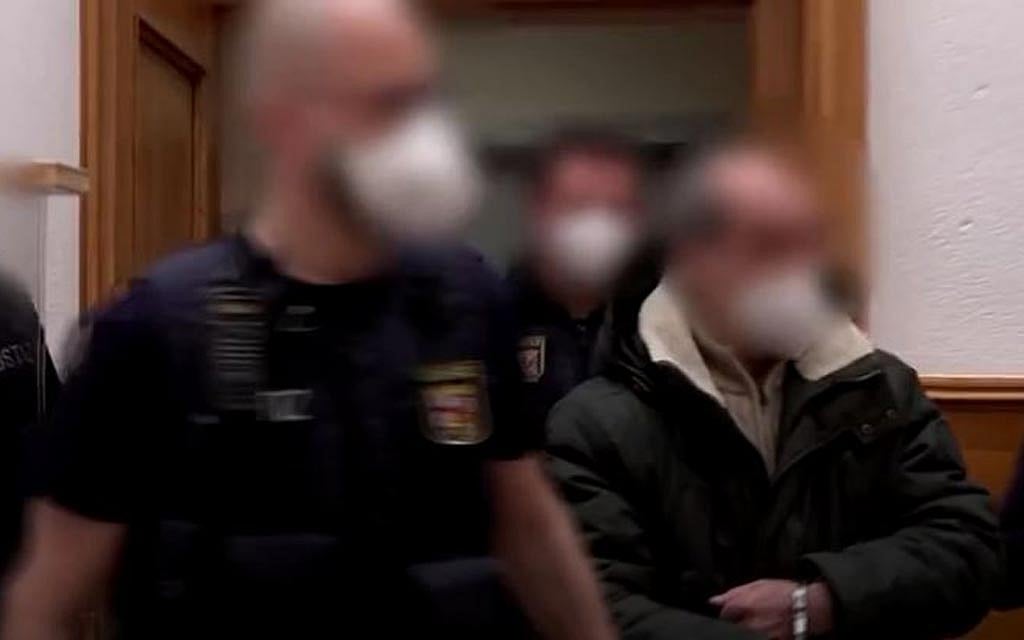
In the world’s first trial prosecuting state-sponsored torture in Syria, the German court, in Koblenz, on Thursday convicted the former intelligence official in charge of that security office, the notorious Al Khatib unit in Damascus, of crimes against humanity and sentenced him to life in prison.
The ruling said the former officer, Anwar Raslan, 58, oversaw the torture of prisoners and the killing of at least 27 people, in addition to sexual abuse and “particularly grave rape” of detainees.
Human rights lawyers and Syrian survivors hailed the verdict as a landmark in the international quest to hold accountable those who committed war crimes during nearly 11 years of war in Syria. It also set a precedent reaching far beyond Syria: It was the first to target atrocities by a government that is still in power, said Stefanie Bock, director of the International Research and Documentation Center for War Crimes Trials at the University of Marburg in Germany.
“This was a very important verdict,” Bock said. “The signal is: There is no safe haven for war criminals. It’s a clear sign that the world will not stand by and do nothing.”
But the conviction also highlighted the stark limitations of international efforts to bring war criminals from countries such as Syria to justice. Raslan, who served as a colonel in a Syrian intelligence service, was ultimately just a cog in the extensive machinery of repression in Syria.
Many Syrians far more powerful than Raslan — accused not only of committing more extensive crimes but of crafting policies that resulted in mass civilian deaths — are still living freely in Syria, including its autocratic president, Bashar Assad.
“My question is: Is this the type of justice we’re looking for?” said Lina Mouhmade, who testified about being detained in Raslan’s center in 2012. “Honestly, the justice I am looking for is prosecuting Bashar himself and his collaborators, who are still committing horrifying crimes.”
Raslan left Syria in 2012, in the war’s second year, and joined the political opposition, which helped him secure a visa to Germany in 2014. The war continued to rage for several more years, with Syrian forces using poison gas, imposing starvation sieges on rebellious communities and reducing residential neighborhoods to rubble through bombing campaigns.
Both the rebels who tried and failed to oust Assad, and jihadis from al-Qaida and the Islamic State group who took advantage of the conflict’s chaos, also committed war crimes.
But only a few perpetrators on all sides have been prosecuted.
One reason, experts say, is that unlike leading Nazis after World War II or Rwandan officials who were convicted of the atrocities they committed, the Syrian government, whose military and security services are responsible for the bulk of the violence in the country, remains in power, preventing the apprehension of its leaders and officers.
Assad and his senior advisers and military commanders rarely travel abroad. When they do, they go only to countries they can count on not to arrest them, such as Russia, a staunch supporter of Assad.
Other potential avenues for justice have also been blocked. Syria is not a party to the International Criminal Court in The Hague, and Russia and China have used their vetoes on the United Nations Security Council to prevent Syria from being referred to the court.
As a result, human rights lawyers and victims of the Syrian government have focused their efforts in countries that accept “universal jurisdiction,” a principle stipulating that in the case of crimes against humanity and genocide, normal territorial restraints on prosecution do not apply.
Owing partly to its Nazi-era history, Germany has become a go-to venue for such prosecutions. It has also become home to hundreds of thousands of Syrian refugees, putting it at the center of efforts to prosecute Syrian officials.
Most of the Syrian refugees who arrived in Germany in 2015 and 2016 fled Assad’s forces. But some, like Raslan, had served in the president’s military and security services.
German prosecutors built their case against Raslan with the help of scores of Syrian witnesses in Germany and beyond. They also drew on a so-called structural investigation that has been collecting evidence for over a decade to illuminate the Syrian state's inner workings and command structure.
The concept of universal jurisdiction goes back to the Nuremberg trials, organized by the Allies after World War II to prosecute surviving members of the Nazi regime. Israel used it in the 1961 trial of former Nazi official Adolf Eichmann, as did Spain in 1998 when demanding that Britain arrest Gen. Augusto Pinochet, the former Chilean dictator.
Previous universal jurisdiction cases in Germany have dealt with crimes committed in Rwanda and Congo, and, more recently, with the genocide of Yazidis in Iraq by members of the Islamic State group.
When it comes to Syria, Thursday’s verdict is only one small puzzle piece in the hope for justice, Bock said.
“In time, there needs to be a truth commission and alternative mechanisms to deal with all the injustices,” she said. “You need to think very long term.”
The Nuremberg trials went after the leading surviving members of the Nazi regime, but also after a range of individuals who played important roles in Nazi repression, including doctors, business leaders, bureaucrats and propagandists, said Wolfgang Kaleck, a founder of the European Center for Constitutional and Human Rights, which represented victims in Raslan’s trial.
“That’s what made it possible to get a picture of the whole apparatus that led to the Holocaust,” Kaleck said. Raslan’s trial, he added, “is a first step in trying to get a picture of the crimes committed by al-Assad’s regime.”
Other prosecutions are being prepared. A Syrian doctor accused of torturing detainees in a secret military prison and killing at least one of them will soon stand trial in Germany on charges of crimes against humanity and causing grievous bodily harm.
Human rights lawyers concede that so far, the cases have targeted low- and middle-ranking Syrian officials or soldiers. But lower-level prosecutions could facilitate future prosecutions of more senior officials by introducing documents, witness statements and knowledge about the Syrian state’s operations into the court record, Kaleck said.
“If you don’t start now, then in 10 years, you cannot get al-Assad or his chief of intelligence because you have no evidence,” Kaleck said.
The verdict stirred complicated feelings among Syrians who were abused in Syrian prisons — some at the hands of Raslan.
Many rejoiced at knowing that a man who had overseen interrogations at a security office in Damascus was in the dock.
“This guy who once considered himself the tyrant, the powerful head of the station, I see him standing in court, weak and humiliated,” said Mahran Aoiun, who was detained twice in the early years of the war. “And the people he tortured are stronger.”
Others hoped that Raslan’s conviction would draw attention to the many more crimes committed during the Syrian war that have not been prosecuted and to the officials who committed them but are still free.
“It is the beginning of a path,” said Wassim Mukdad, who was jailed four times early in the uprising and said he was interrogated by Raslan. “It will be a long one toward justice.”
Christopher F Schuetze in Berlin and Hwaida Saad in Beirut contributed reporting.
© 2022 in The New York Times Company












