


Published : 05 Oct 2019, 01:49 PM
Updated : 17 Oct 2022, 11:46 AM


As many Hong Kongers awoke Saturday morning to find the windows of their neighbourhood stores and subway stations smashed by pro-democracy protesters, much of the city — including its entire subway system — was shuttered.
And as tourists anxiously raced to Hong Kong’s airport Saturday afternoon, the streets of the normally bustling financial hub were cloaked in eerie silence, along with concern about how much further the clashes might escalate.
The semiautonomous Chinese city has been in a political crisis since June, and street clashes between antigovernment protesters and the police have steadily grown more combative and dangerous.
In the latest sign of rising danger, a 14-year-old boy was hit in the leg by a gunshot Friday. His condition was later changed from serious to stable.
The police said separately that one of its plainclothes officers had fired a shot in self-defense Friday. But as of Saturday afternoon, it was unclear whether the officer had in fact shot the boy, as many protesters assumed.
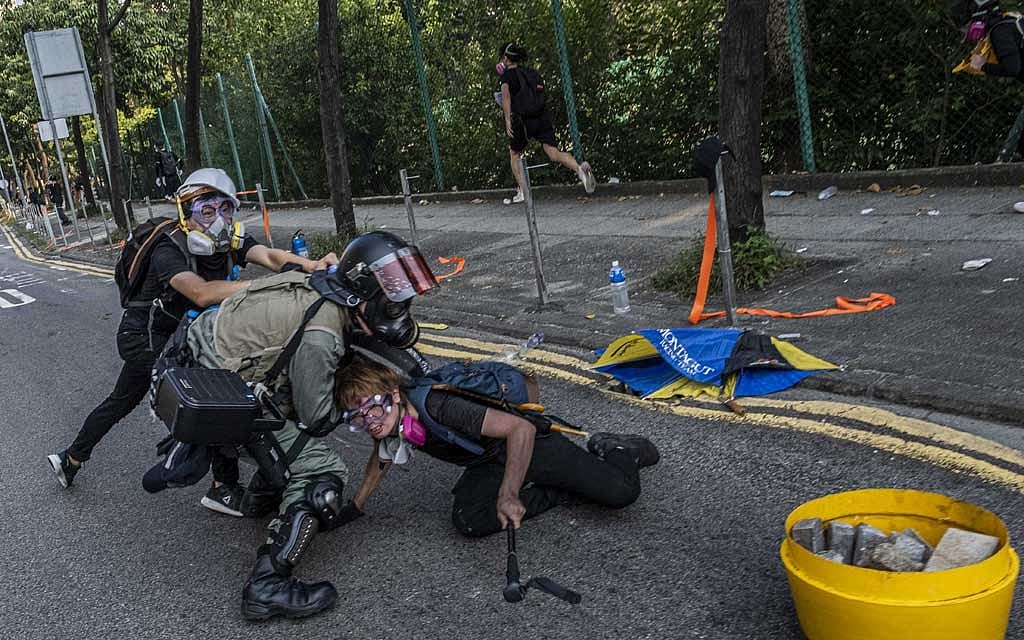
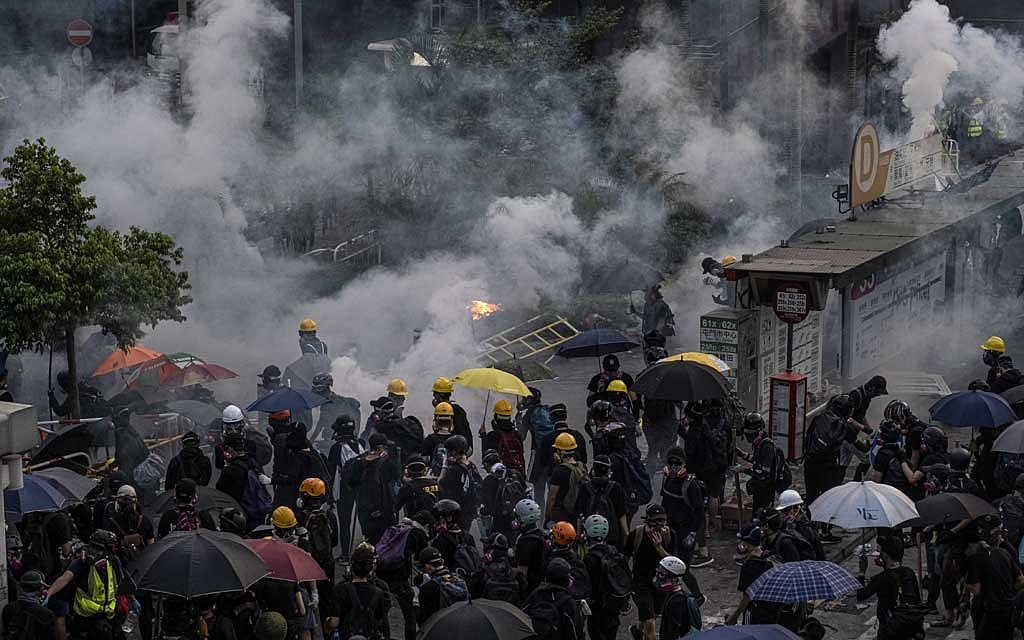
Police clash with protesters near Wong Tai Sin MTR station in Hong Kong on Tuesday, Oct 1, 2019. Hong Kong chief executive Carrie Lam invoked emergency powers to ban face masks, on Friday, Oct 4, 2019. The New York Times
Hong Kong’s embattled leader, Carrie Lam, announced the ban Friday, saying her government had a duty to “stop the escalating violence and restore calmness in society.”
Lam’s government apparently hopes that invoking its emergency powers to enact the ban — which is punishable by fines and jail time — will dampen turnout at pro-democracy street demonstrations where protesters typically wear masks to hide their identities and guard against tear gas.
But Lam’s announcement Friday set off an especially violent wave of protests across the city, as protesters smashed windows and set fires at subway stations and at stores they perceived to be pro-government.
Friday’s violence and chaos prompted the authorities to shut down the entire subway system two hours earlier than normal. That the system was still closed as of early Saturday afternoon marked an exceedingly rare development in a global financial hub known for its efficient public transportation.
Many businesses were also closed across the city Saturday, including several major malls and all but one branch of Bank of China. The Hong Kong Monetary Authority said that some bank branches had closed on account of vandalism and arson, and the police warned the public in a text message that “unauthorized public events expected in coming days may cause severe disruptions.”
Some protesters were planning to defy the new ban by gathering with masks in the streets over the weekend, although their exact plans were unclear as of early Saturday afternoon.
“The ban is not addressing the problem; it’s trying to get rid of the people who are trying to speak out about it,” said Castor Lau, 29, a protester who joined a protest Friday in the Causeway Bay shopping district. “But Hong Kongers won’t be deterred from protests. We can’t let oppression govern our behaviour.”
On Friday, Lam said she was acting under a rarely used provision in the territory’s colonial-era law that allows the issuance of regulations in response to “a state of serious danger.” She emphasised repeatedly at a news conference that she was not declaring an emergency.
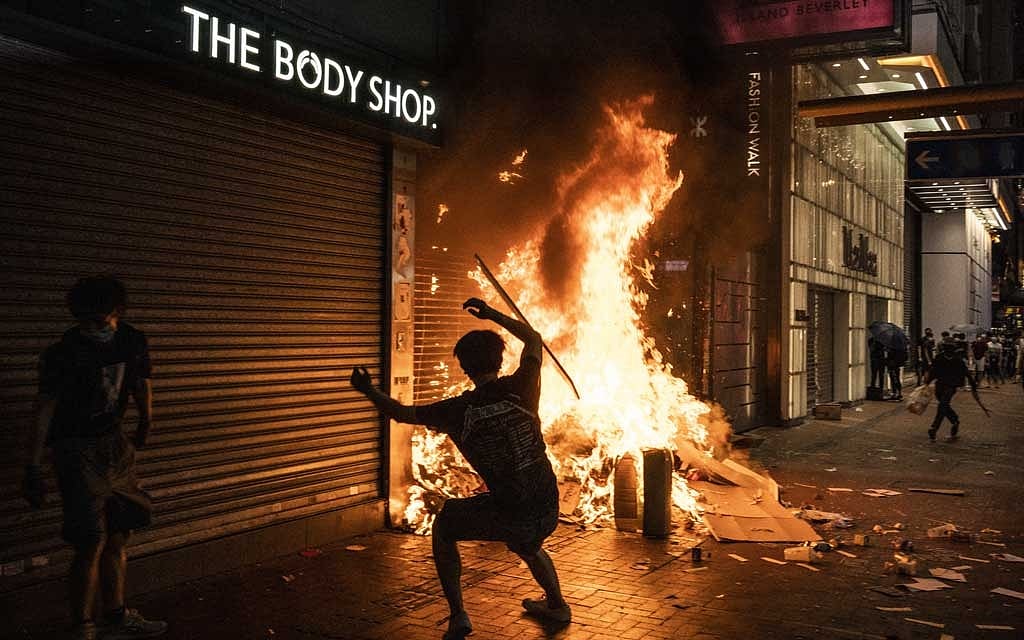
Protesters stoke a fire in Causeway Bay during a protest against the government’s invocation of emergency powers to ban face masks in Hong Kong late Friday, Oct 4, 2019. Thousands protested, many wearing masks, as the clock ticked toward the ban taking effect, and clashes broke out around the city. The New York Times
So far, no one has died on the streets since the protests started in early June. But some have come close, and flashing ambulance sirens have become a common sight on the fringes of street clashes between protesters and police officers in riot gear.
During a violent round of protests across the city Tuesday, a protester was shot by a police officer for the first time since the protests began and was rushed to a hospital in critical condition. His condition later stabilized after emergency surgery.
© 2019 New York Times News Service












