


Published : 04 Sep 2019, 12:07 PM
Updated : 17 Oct 2022, 11:45 AM


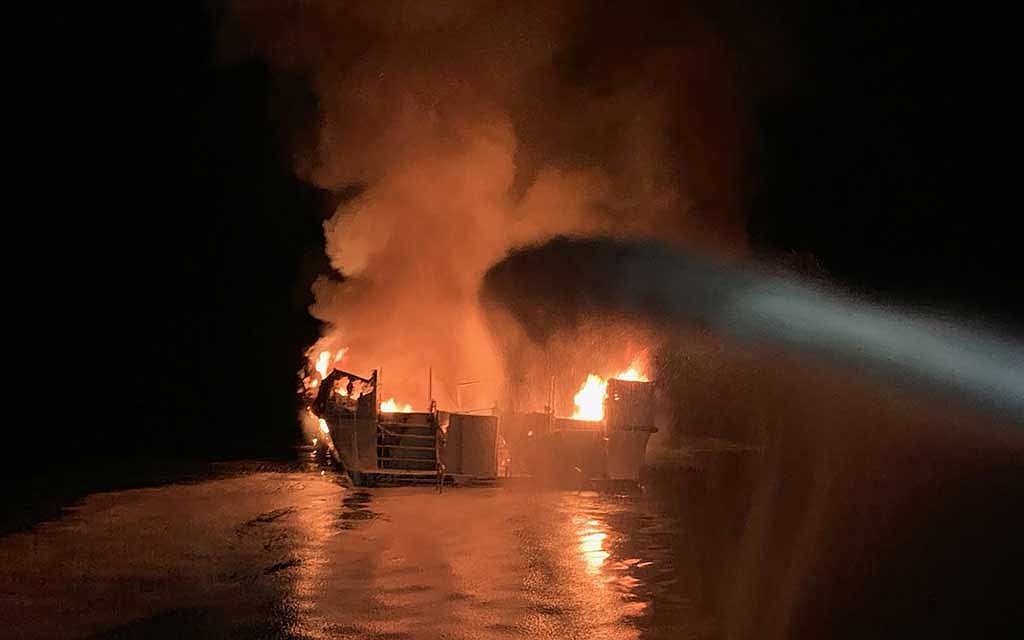
But that apparently was not enough to stop the fire that overtook the Conception in the early morning hours of Labour Day, leaving 34 people dead and prompting increased scrutiny about whether regulations in place to prevent such tragedies go far enough.
Though the cause of the fire is unknown, the scope of Monday’s devastation has left industry experts and officials baffled at how a respected boat operator lost an entire excursion of people inside the hull of a ship outfitted with safety systems intended to protect any such vessel.
The deadly fire near the Channel Islands, a national park on the California coast, was the state’s worst maritime disaster in recent memory, and officials Tuesday said they had called off a search for survivors.
Sheriff Bill Brown of Santa Barbara County said Tuesday morning that 20 bodies had been recovered and that 14 people remained unaccounted for. He added that divers had seen between four and six additional bodies in the wreckage but were not yet able to recover them.
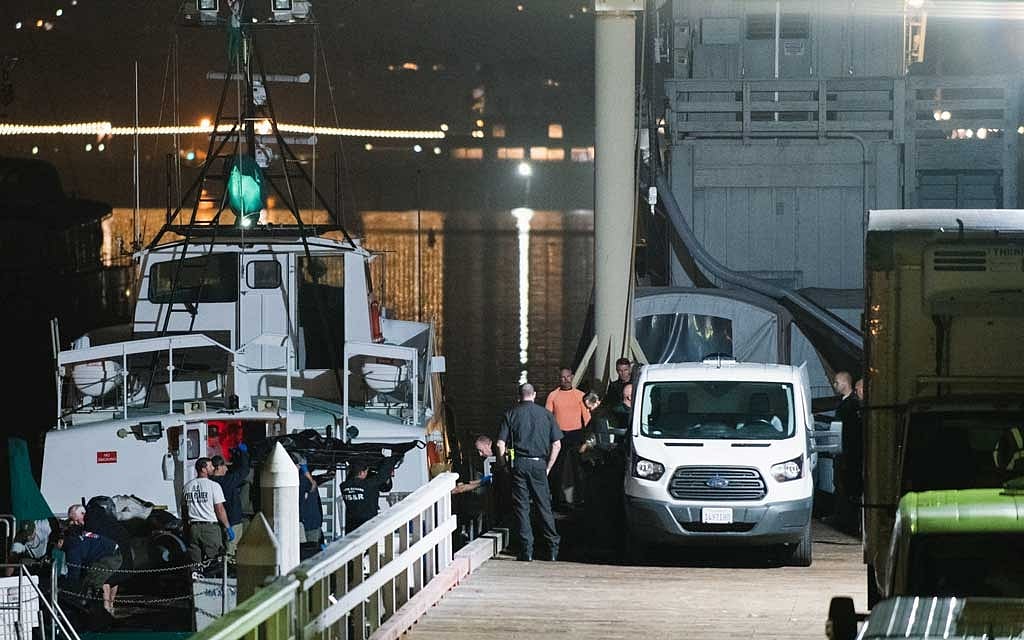
Coroner's vans arrive at the Santa Barbara Harbour to receive remains of victims of a fire aboard the commercial scuba diving vessel, the Conception, in Santa Barbara, Calif, on Monday night, Sep 2, 2019. The 33 passengers aboard the Conception are believed to have been asleep below deck when the fire broke out. The New York Times
Federal regulations for small passenger vessels require spaces for overnight accommodations to have a smoke detection and alarm unit. Accommodation spaces must also have at least one portable fire extinguisher, clearly visible and readily available, for every 2,500 square feet, according to regulations. Engine areas must have a fixed fire-suppression system, with controls located away from that area. Passenger areas must have at least two routes of escape. The Conception appeared to be in compliance.
The Conception is owned by Truth Aquatics and has been in operation since 1981. The boat was configured to accommodate up to 46 people in the sleeping quarters, according to specifications offered by the company.
The Conception’s most recent inspection, in February, did not note any problems.
© 2019 New York Times News Service












