


Published : 21 Jun 2020, 03:37 PM
Updated : 17 Oct 2022, 11:09 AM


Visiting a 2016 electoral stronghold, Trump had hoped to declare a “great American comeback” before a jam-packed arena like he repeatedly had during his first presidential campaign. Instead, the event only raised questions about his drawing power and political skills at a time when his poll numbers are falling and allies are worried about his electoral prospects for a second term.
While the president’s campaign had claimed that more than 1 million people had sought tickets to attend the rally, the 19,000-seat BOK Centre was still half empty by the time Trump landed in Tulsa. A second, outdoor venue where Trump was set to declare a “great American comeback” was so sparsely attended that he and Vice President Mike Pence both canceled appearances there.
Tim Murtaugh, a spokesman for the Trump campaign, falsely blamed the small numbers on “radical protesters” and the news media who he said frightened away supporters. But there were few protests in the area, a strong security presence and no one blocking entrances.
The disappointing turnout came as Trump already found himself under siege about his sudden firing of the US attorney in Manhattan and his losing legal battle over the release of a memoir full of damaging revelations by John Bolton, his former national security adviser. And in Tulsa, Trump faced criticism for ignoring pleas from officials about health risks to rallygoers and restarting his “Make America Great Again!” rallies in a city where a white mob massacred hundreds of Black residents 99 years ago.
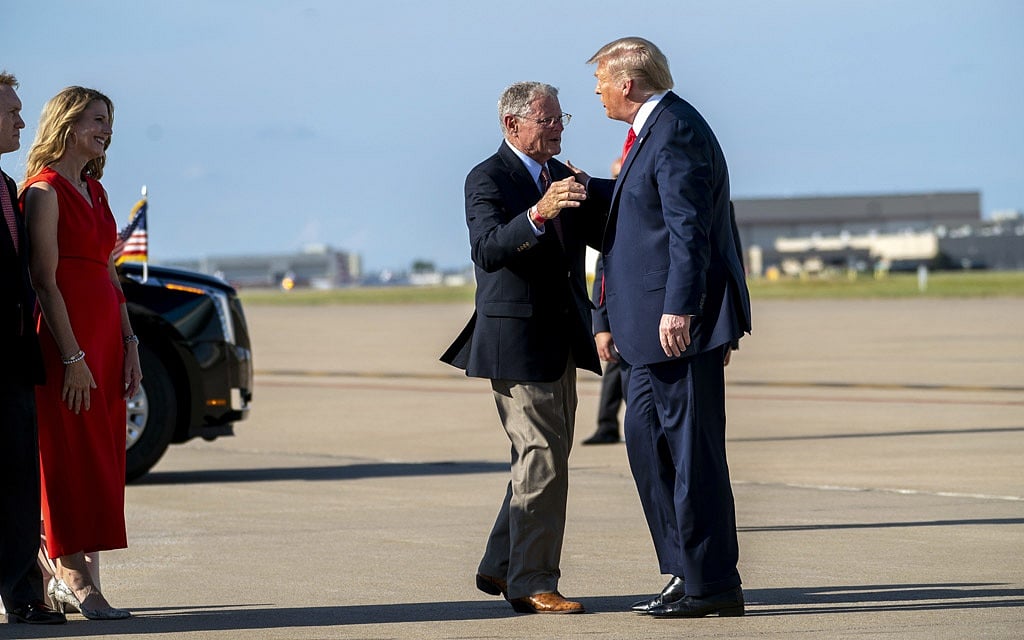
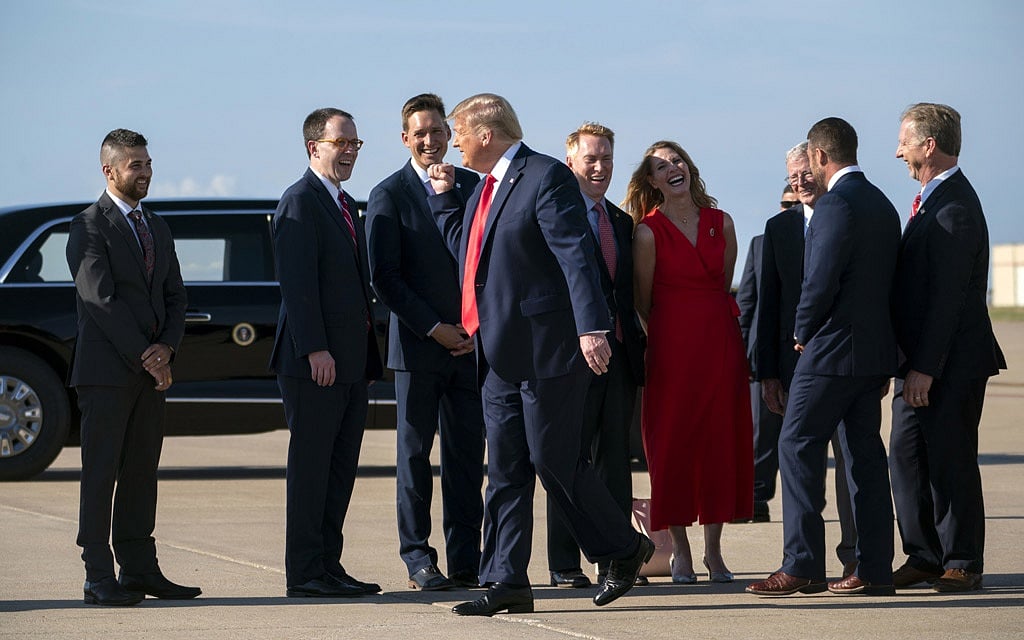
President Donald Trump is greeted by local officials as he arrives in Tulsa on Saturday, June 20, 2020, for his first campaign rally since March 2. The New York Times
“The unhinged left-wing mob is trying to vandalize our history, desecrate our monuments, our beautiful monuments, tear down our statues and punish, cancel and persecute anyone who does not conform to their demands for absolute and total control,” Trump said. He was referring in part to attempts to remove Confederate monuments, efforts that have support in both parties.
The president once again shrugged off the threat from the coronavirus, at one point calling it the “Chinese virus” and the “Kung Flu.” He bragged that he had done “a phenomenal job” fighting the pandemic but admitted that increased testing for the virus revealed more cases of infection that he felt made the country look bad.
“So I said to my people, ‘slow the testing down,’” he said.
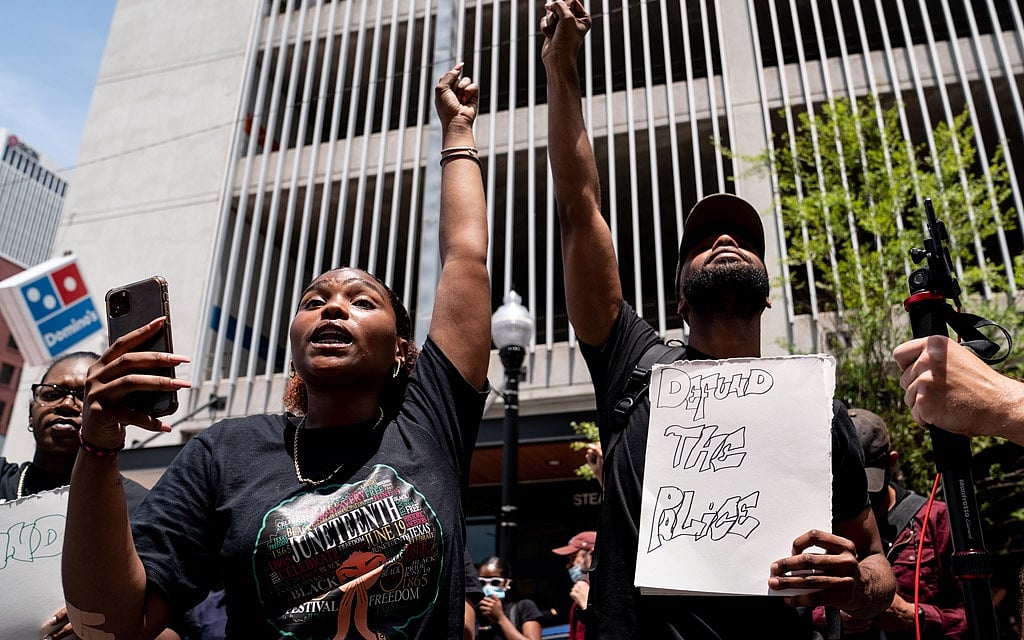
Protesters chant "black lives matter" at Trump supporters near the BOK Center in Tulsa, Okla, on Saturday, June 20, 2020, where President Donald Trump will hold his first campaign rally since March 2. The New York Times
It was unclear whether fears about the virus kept Trump supporters away despite the president’s repeated efforts to dismiss the need for social distancing and other precautions.
A few hours before the event, the campaign disclosed that six Trump campaign staff members who had been working on the rally had tested positive for the coronavirus during a routine screening. Two members of the Secret Service in Tulsa also tested positive for the virus, according to people familiar with the matter. Trump, who was made aware of the sick campaign aides before departing for the rally, was incensed that the news was made public, according to two people familiar with his reaction.
While rallies are Trump’s favorite events, election-year politics have changed since his last one, on March 2. The coronavirus has largely shut down the campaign trail, and more recently the national political conversation has been dominated by a fierce debate over police violence against Black Americans after the killing of George Floyd in Minneapolis. Floyd’s death has sparked global protests against systemic racism and demands for police reform.
But the altered political landscape has had little effect on the president, whom advisers describe as feeling like a caged animal during the national lockdown that forced him to abandon most travel. They say he is determined to recapture the excitement of his pre-virus campaign rallies, but this one seemed unlikely to offer much relief to Trump.
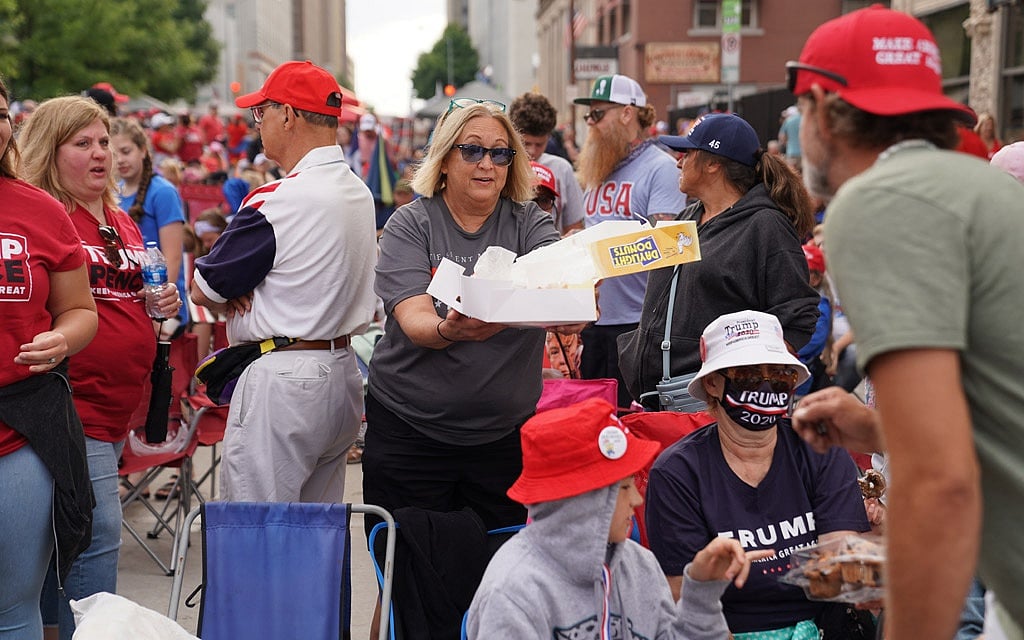
A crowd gathers near the BOK Center in Tulsa, Okla., on Saturday, June 20, 2020, where President Donald Trump will hold his first campaign rally since March 2. The New York Times
On Saturday morning, Attorney General William Barr announced that Trump had personally approved Berman’s firing. But only hours later, as Trump left the White House for the trip to Tulsa, the president said that “we have a very capable attorney general, so that’s really up to him. I’m not involved.”
The campaign had chosen to return first to Oklahoma, which the president won by 36 points in 2016, because they assumed he would be wildly popular there. Aides to Trump spent the week boasting about enormous interest from people in the rally, and Trump bragged Saturday as he left for Oklahoma that ”the crowds are unbelievable” — a fiction that could raise questions about whether Trump rallies still have political potency.
Speaking at the rally before the president took the stage, Pence urged the crowd to bring the enthusiasm that helped sweep Trump into office in 2016. “Get ready. Buckle up,” he said. “It’s on. We’ve got a little more than four months to win four more years for President Donald Trump in the White House. So get ready to bring it.”
During the first half of Trump’s speech, he delivered a 15-minute explanation of images that showed him ambling slowly down a ramp after delivering the commencement address at the West Point military academy. He blamed his slow walk on “leather soles” on his shoes and said he was trying not to fall on his behind.
Many people in Tulsa, worried about the record numbers of coronavirus cases in Oklahoma in recent days, did not welcome the rally. On Saturday afternoon, local Black leaders held a news conference in the city’s historic Greenwood neighborhood, where the 1921 massacre took place, pleading with the city’s mayor, GT Bynum, a Trump ally, to cancel the rally.
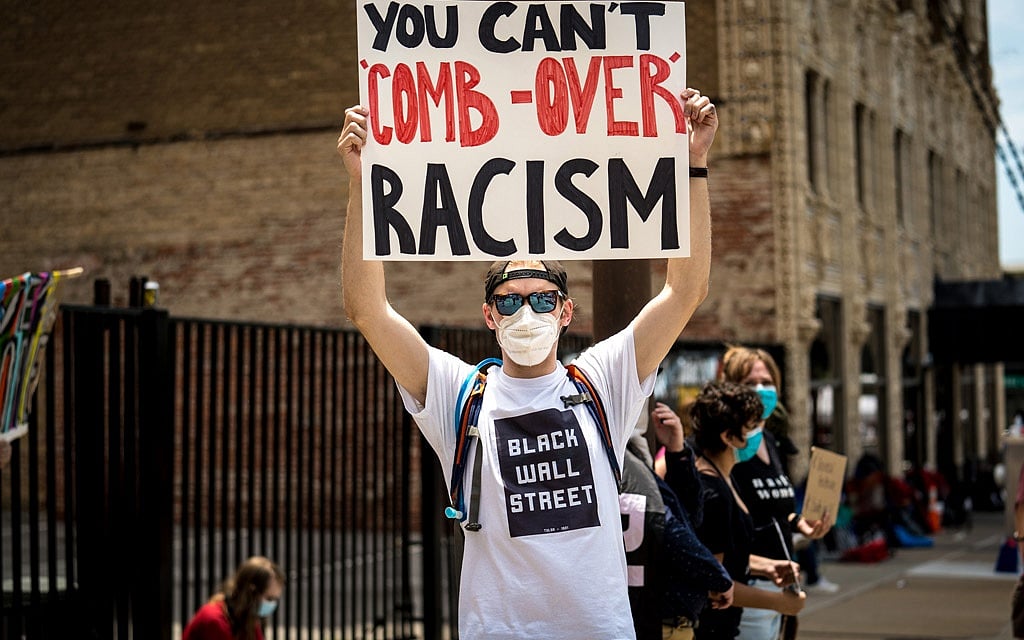
A protester holds up a sign reading "You Can't 'Comb-Over' Racism" near the BOK Center in Tulsa, Okla., on Saturday, June 20, 2020, where President Donald Trump will hold his first campaign rally since March 2. The New York Times
“If it is God’s will that I get coronavirus that is the will of the Almighty. I will not live in fear,” said Robert Montanelli, a resident of Broken Arrow, a Tulsa suburb.
The president and his advisers hope the return to campaign trail will help deflect attention from a daily stream of crises engulfing the White House. On Saturday, a federal judge refused to block the release of Bolton’s book, although he said the former national security aide might be personally liable for revealing classified information.
Driven in part by poll numbers showing his support slipping as he prepares to face former Vice President Joe Biden in the fall, Trump had initially scheduled his rally for Friday. He later said he was unaware of the significance of the Juneteenth holiday, which celebrates the end of slavery in the country.
Under fire, the campaign moved the event to Saturday, leaving Trump to make the wild claim that he had revealed the existence of the holiday to many people despite the fact that millions of Black Americans have celebrated Juneteenth annually for years.
“I did something good: I made Juneteenth very famous,” Trump bragged in an interview with The Wall Street Journal. “It’s actually an important event, an important time. But nobody had ever heard of it.”
Local officials expressed anxiety about the possibility of clashes between supporters of Trump and protesters, a fear that was heightened when the president on Friday appeared to threaten the use of military force to quell any violence that might erupt during his visit. But the protests leading up to the rally were peaceful and relatively small.
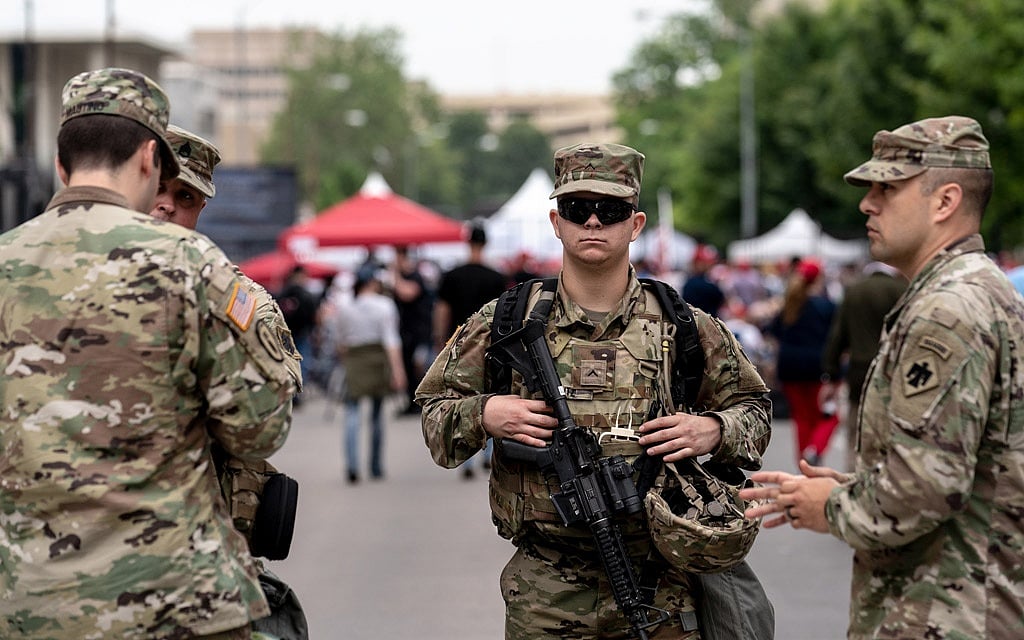
Oklahoma National Guard members stand watch as people wait near the BOK Center in Tulsa, Okla, on Saturday, June 20, 2020, where President Donald Trump will hold his first campaign rally since March 2. The New York Times
Still, the Oklahoma Supreme Court ruled Friday that Trump’s rally could move forward in its usual, boisterous manner, turning back a lawsuit by local business owners and others in Tulsa who had demanded that the president’s campaign adhere to social distancing rules or cancel the rally altogether.
By late morning in Tulsa on Saturday, a steadily growing line of rallygoers had assembled. Some had traveled significant distances, but many other attendees were Tulsa locals or came from nearby states, like Kansas and Missouri, or elsewhere in deep-red Oklahoma. The crowd was overwhelmingly white, and in more than a dozen interviews, most people ranged in age from their 40s to their 60s, although a sizable number of attendees also brought their children.
No one interviewed expressed serious concerns about coronavirus risk at the rally.
“It’s all fake,” said Mike Alcorn, 40, who works in maintenance and lives in Wichita, Kansas. “They’re just making the numbers up. I haven’t seen anybody die, not from coronavirus. I don’t even know anybody who’s got it.”
Cynthia Bellino, who said she arrived at the rally site at 3 a.m. with her daughter, was there to support Trump in part out of appreciation for the anti-abortion measures he backs, an issue several attendees raised as they gathered in this conservative state. She was aware of his faltering poll numbers but said she was tuning them out.
“The polls the first time were completely wrong,” she said. “I don’t pay them any attention.”
c.2020 The New York Times Company












