Published : 30 Jul 2023, 07:28 PM
Updated : 30 Jul 2023, 07:28 PM


Strikes in Hollywood are not new. But they can be seismic events. The writers' strike of 2007-08 saw the meteoric rise of reality TV, including that of The Apprentice star Donald Trump. The latest strike may not be the starting point of a US presidency, but it does not lack significance. It is the first time in about 60 years that both writers and actors are striking simultaneously. At the core of the dispute are a handful of titanic issues that could reshape entertainment for decades to come.
The labour dispute began with the Writers Guild of America (WGA) announcing that it would halt work on May 2. They were joined by the Screen Actors Guild - American Federation of Television and Radio Artists (SAG-AFTRA) on Jul 14.
The work stoppage has halted Hollywood, with many television shows and movies shutting down production. The writers and actors now face off against the producers who hold the purse strings.
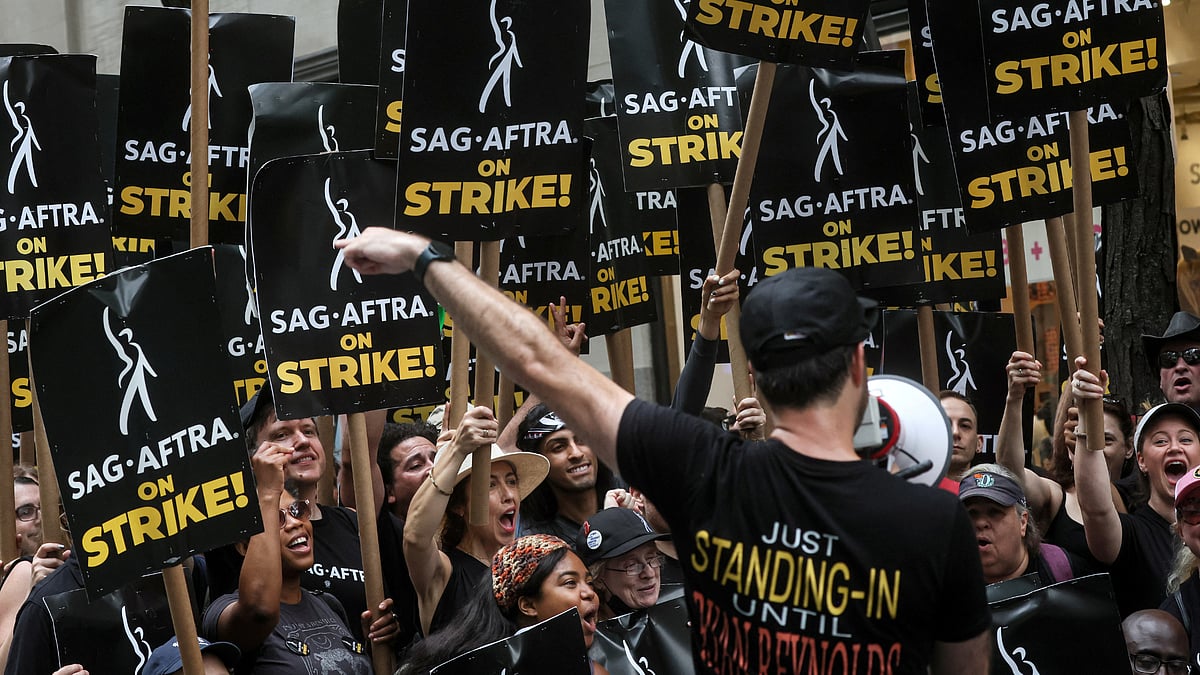
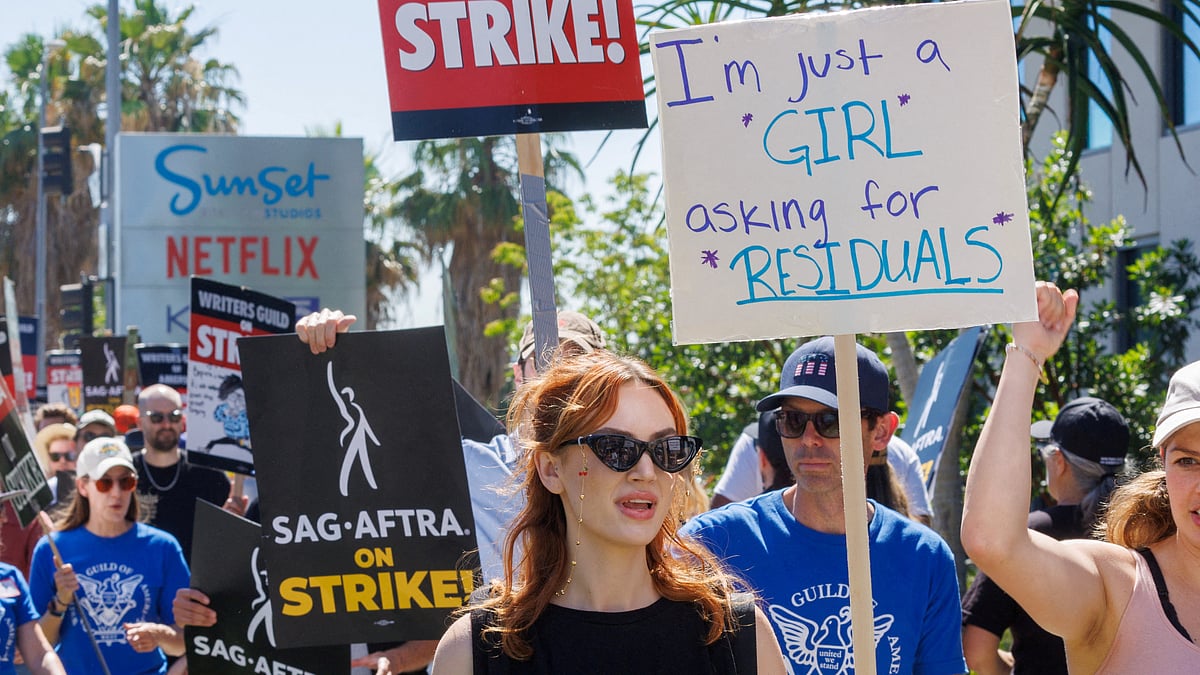
The strike's demands include higher residuals from streaming platforms, greater transparency on streaming viewership, and limiting the growing use of artificial intelligence in creative fields.
Though the AI aspect is not top of the strike's list of priorities, it begs the question - will Hollywood producers push for a future where Generative AI replaces writers at the heart of the global entertainment industry? And is it possible?
he tech industry often hypes up the prospect of AI-generated writing like a snake oil salesman selling a cure-all for writer's block. However, I think this is a marketing ploy designed to lure in more users. As Mike Gioia, an executive of Pickaxe, a new ChatGPT-based platform for writers, said, "When people tell me the studios are going to replace writers with AI, to me, that person has never tried to do anything really difficult with large language models."
It is true that AI generated writing has achieved great strides in recent years. However, it is still far from writing a Shakespearean novel or even a masterpiece like Oppenheimer. Today's AI can generate grammatically correct text made of interesting combinations. Still, it cannot understand the human emotions and nuances that make the stories "human". In short, the idea that AI could produce complete scripts to replace writers is science fiction.
However, AI can still hurt writers. But it won't be anything like that one episode of Black Mirror.
Writers are still vital to the creative process. They are the heart and soul of Hollywood. They are the ones who come up with the ideas, they develop the characters, and they create the plot. In short, writers are the ones who make sure that everything fits together so that the show makes sense. While today's AI can generate rough drafts based on the recurring story structure, writers still hold the higher ground as their unique skills and insights remain irreplaceable. In other words, you can only go so far with automated imitation. At worst, the studios would reduce the size of the writers' room.
I also believe that the real magic in the art of writing is the alchemy of collaboration. The stories, that company, the late-night brainstorming, and the competitive environment of the writers' room are the crucibles in which creativity is forged. From a positive perspective, AI can be a powerful tool for collaboration, which writers can use to enhance productivity and creativity to tell stories more effectively.
Actors, on the other hand, have been facing more scrutiny because of AI. A proposal from Hollywood Studios to use groundbreaking AI to scan background artists and then use them for future projects has put the livelihood of thousands of performers at risk. Not only does this technology allow the studios to own a digital copy of the performers, but it would also allow them to program the digital doubles any way they like, without limitations on their use.
These proposals would threaten the jobs of workaday actors and up-and-comers. In return for total control of digital depictions with compensation as low as under $200. This is a terrifying prospect and a slippery slope that could lead to devastating consequences. In addition, it is also a morally questionable proposition as it would allow the studios to profit off the work of performers without giving them any compensation.
There are already reported instances where these ideas have been put into practice. Prince Royal, an extra on The Flash, told Variety in an interview that during shooting one day he was directed to a tractor-trailer to "take pictures." To his surprise, there were hundreds of cameras inside. There the operators took a 3-D scan of him. He was told it would be used for continuity and special effects.
"We were told if we didn't do it, we'd be sent home without pay," he added.
Accounts such as this have prompted the SAG-AFTRA to fear the worst. Fran Drescher, the lead actress on The Nanny and president of SAG-AFTRA, claimed that producers had "completely stonewalled us" on their demands and called some of the proposals "insulting and disrespectful." This, she said, left actors with no choice but to join the striking writers.
The strike is a microcosm of growing tensions between industries and workers worldwide. It could also be an early front in the battle between workers and AI. As AI grows more sophisticated, it threatens to displace working people. Like many industries, Hollywood is at a crossroads and must decide whether it wants to go all-in on automation or use AI to augment existing human labour.
The waiting game played by Hollywood producers is dangerous. As one studio executive told the entertainment publication Deadline, "The endgame is to allow things to drag on until union members start losing their apartments and losing their houses."
Ultimately, these studios focus on their bottom line – cutting costs and raking in cash. They have little desire to provide better residuals or expose viewership numbers on streaming that could show the flaws in the streaming business model. And they don't want to rule out a future where they could churn out entertainment for cheap through AI-powered technology.
But this relentless pursuit of profit comes from a limited perspective that underestimates the power of creativity. This strike is about more than just money; it is about the future of Hollywood. Is the future of Hollywood one where creativity is valued or one where computers amalgamate existing works ad nauseam? The answer is still up in the air. But even if the producers win this fight, they will not do so without getting blood on their hands.
After all, it's not the size of the spark that matters but the direction the fire is headed.
This article is part of Stripe, bdnews24.com's special publication focusing on culture and society from a youth perspective.