Published : 17 Jan 2024, 07:31 PM
Updated : 17 Jan 2024, 07:31 PM


Ernest Burkhart (Leonardo DiCaprio) is trying to start a new life after days at war. While reading through a children's book, he fixates on a particular line:
"Can you spot the wolves in this picture?"
That moment is a microcosm of Martin Scorsese's latest cinematic epic – Killers of the Flower Moon.
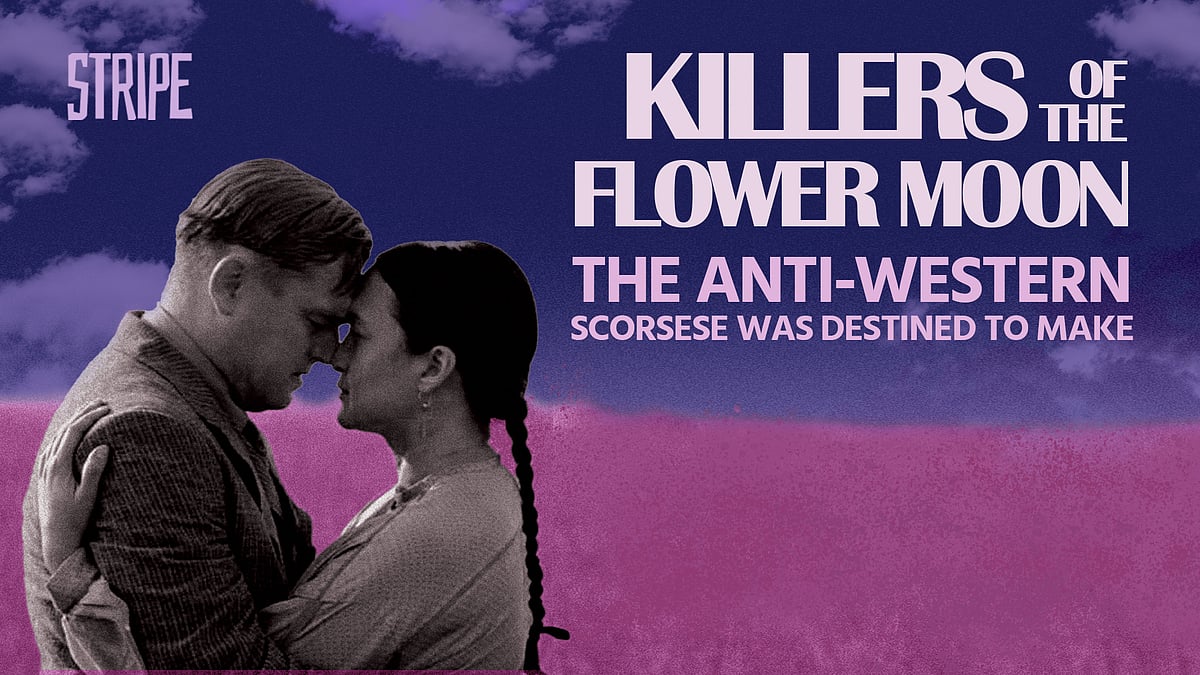
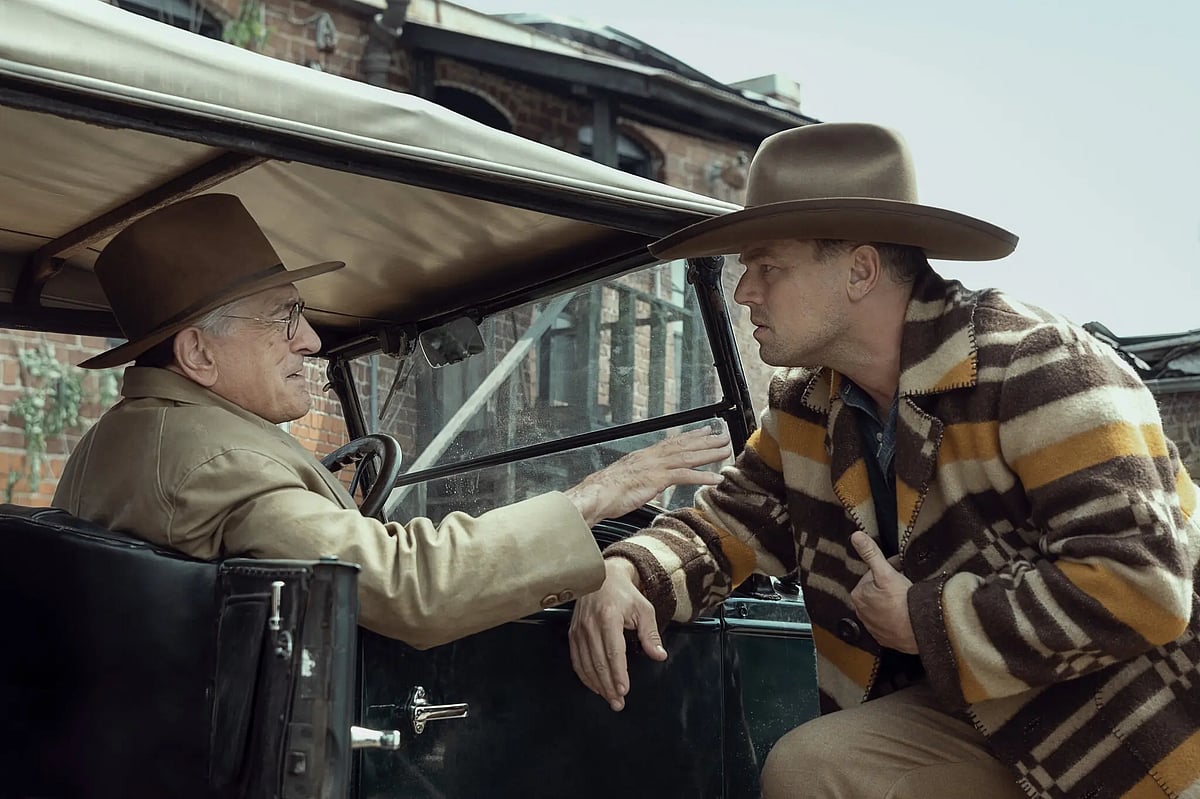
Ernest has returned home to live with his uncle William King Hale (Robert De Niro), who owns a large ranch by the Osage reservation in Oklahoma. His uncle encourages him to court Mollie Kyle (Lily Gladstone), an Osage woman whose family owns a significant claim to the newly discovered oil on the tribe's territory.
As Ernest and Mollie start a romance, wealthy tribe members are found dead. More and more bodies begin to pile up. The involvement of the local white residents grows more and more certain.
Amid this violence, where does Ernest stand? Is he simply a naïve pawn or a wolf in sheep's clothing?
Killers of the Flower Moon has all the elements of a great Western – cowboys, Indians, grand vistas, towering characters, and larger-than-life stories. But Scorsese has rarely been one to depict myths uncritically. And with this film, he tackles a moment of true and horrific American history.
The Osage tribe, like many Native American tribes in the US, were driven into a barren corner of the country with the expansion of the new nation.
Then, in 1897, they struck 'black gold'. A massive oil deposit was discovered on land they controlled. By 1921, a headline from The Times read, "Osage are Richest People". Other people began to flock to the area, trying to make their own fortune from the land's riches.
And with them came the Reign of Terror, in which 400 – 2,000 members of the Osage tribe were killed, and many others were systematically robbed of their land and wealth.
Based on the 2017 non-fiction book of the same name, the screenplay by Eric Roth and Scorsese follows this story at a deliberate pace through the three and a half hours while keeping the audience captivated through the characters' complexity and the tragedy surrounding them.
The trio of DiCaprio, De Niro, and Gladstone are the film's core.
De Niro and DiCaprio, both long-time muses of Scorsese, are at their best. De Niro's father figure is, by turns, pleasant and menacing. Regardless of the mode, he is never short of compelling, leaving viewers questioning his motives to the very end.
DiCaprio also delivers a triumphant performance, shifting and flowing into the swerves and crannies of his conflicted protagonist. His character metamorphoses in every scene, but each change – whether of his internal state or of the audience's perspective – is handled with jolting assiduity.
But the most electric turn in the film is Gladstone's. She is nowhere near as famous as her counterparts but cements her place as a pivotal figure in the movie through her presence. In many ways, her screen time is unacceptably short, and her character is rather underwritten. Despite this, she rises above it to deliver a performance that is effortless, powerful, and full of grace.
As Scorsese remarked, Gladstone is 'the heart of the film', and her insights and suggestions significantly added to the impact of the story.
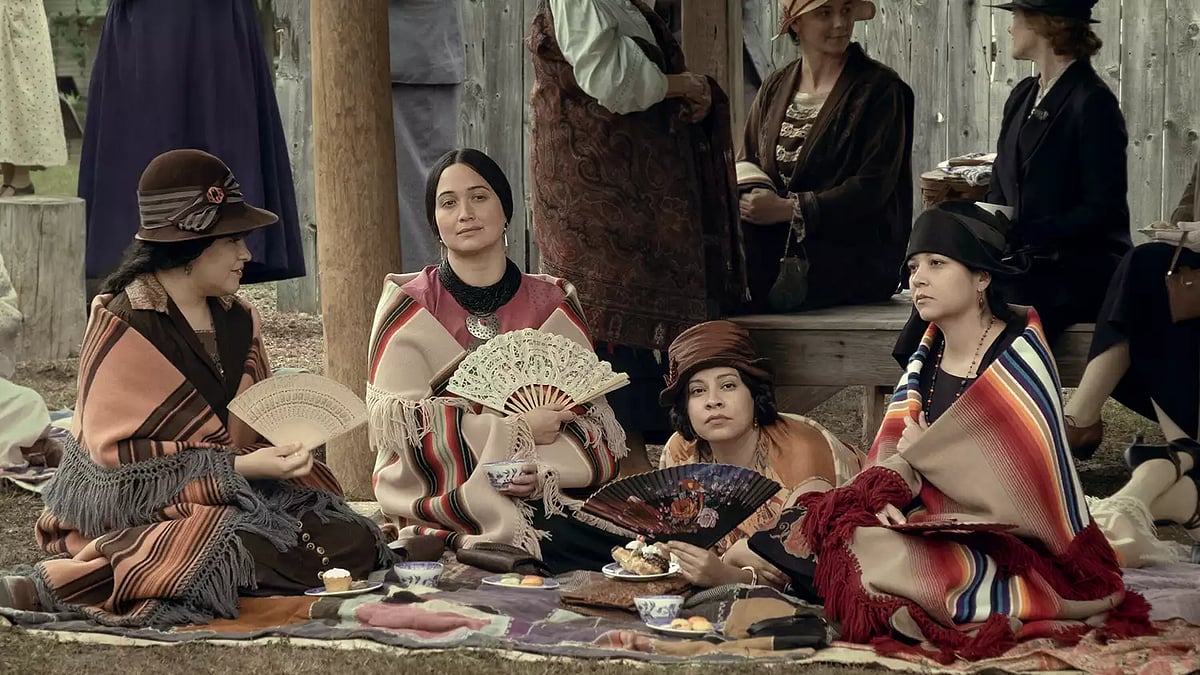
The director has long been an institution of American cinema by himself, but his approach to this material is exceptional. Like with Gladstone, Scorsese wove the Osage community into the fabric of the film's creation. Leaders of the tribe infused the production with an essential understanding of its history. They became creative directors of the film in their own right, ensuring their wishes and opinions guided the production.
Members of the tribe also assume roles in various scenes, contributing significantly to the storytelling. It is a collaborative effort that extends beyond the screen.
And Scorsese uses this lens to turn his eye on the Western – perhaps the most immediately iconic of the American film genres.
Hollywood Westerns tended to celebrate heroic violence as brewing tensions erupted in cathartic purging of 'bad blood'. They centred on outsized crimes, approaching them through an individualistic sense of justice.
Killers of the Flower Moon contains all of these elements. But it doesn't celebrate them. It is a critique of the continuous exploitation underlying this story and the absence of true justice for those who are oppressed.
At 81 years of age, Scorsese remains a vital cinematic voice. His recent movies have all the cinematic flair viewers have come to expect, but many have criticised their lack of a tightly woven plot to justify the extended runtimes.
But in Killers of the Flower Moon, the story emerges as the triumphant focus, fusing seamlessly with the director's trademark cinematic brilliance. The cinematography is breathtaking, the set design meticulous, and, perhaps most importantly, the commitment to representation and accountability is sincere.
As Steven Spielberg aptly asserts, "[With Killers of the Flower Moon] Martin Scorsese, a master of the craft, unveils his magnum opus."
Killers of the Flower Moon is available to stream online and on VOD. Please watch it on the biggest screen you can.
This article is part of Stripe, bdnews24.com's special publication focusing on culture and society from a youth perspective.