Published : 24 Oct 2026, 09:32 PM
Updated : 24 Oct 2026, 09:31 PM


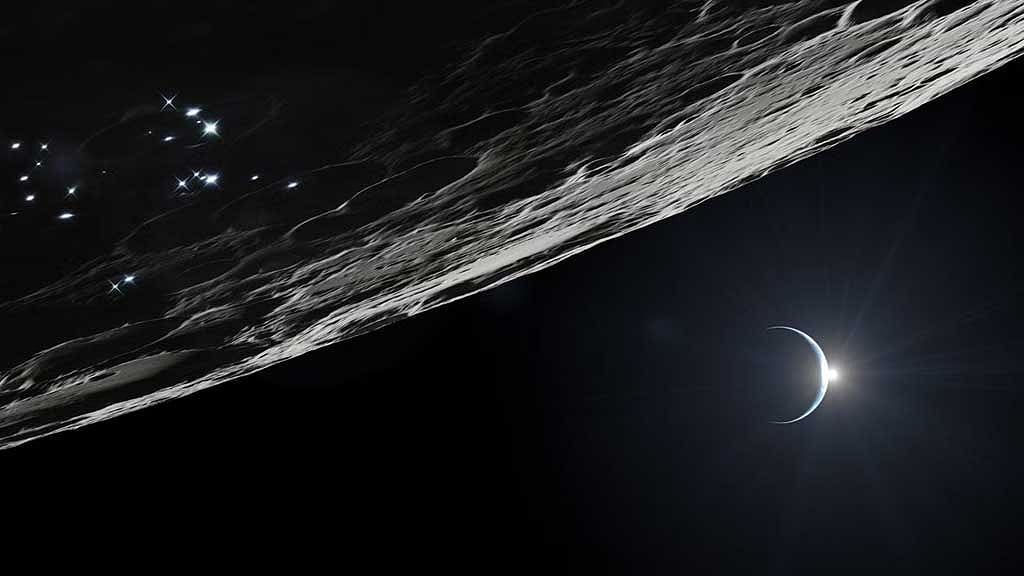
NASA leaders have begun factoring meteor strike risks into their long-term plans to establish a permanent human outpost on the Moon.
NASA Administrator Jared Isaacman says potential environmental hazards must be addressed before humans establish a continuous presence on the lunar surface, according to The Independent.
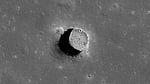
The safety evaluations follow revelations that a building-sized asteroid struck the lunar surface in 2024, leaving a crater roughly 222m (728ft) wide and 43m(141ft) deep.
While scientists have classified the impact as a "once-in-a-century" occurrence, smaller meteoroids strike the atmosphere-less Moon with much higher frequency.
Astronauts aboard the Artemis II mission earlier this year observed several high-speed rock strikes during their flyby of the lunar far side.
"Fortunately, that’s a once-in-a-century type of an event," Isaacman was quoted by the British newspaper as saying during a press briefing at Florida's Kennedy Space Centre. "But there are much smaller meteor strikes that will happen on the lunar surface with greater frequency... So, we are giving a lot of thought to that for the Moon base."
NASA aims to land astronauts back on the Moon in 2028, with plans to establish an operational lunar base by 2032 to support crewed rotations and deep-space research, including future crewed voyages to Mars.
The agency is scheduled to launch the Artemis III mission next year to test low-Earth orbit docking procedures between the Orion spacecraft and commercial lunar landers built by SpaceX and Blue Origin.
Addressing progress by commercial partners, Isaacman praised Blue Origin's recovery after its heavy-lift New Glenn rocket exploded during a test firing in May, noting the firm targets a launch by early next year.
The NASA chief acknowledged that a "monumental effort" lies ahead, adding that the agency is scaling up capabilities in an iterative manner to ensure crew survival on the lunar surface, The Independent reports.