Published : 20 Oct 2026, 12:28 AM
Updated : 20 Oct 2026, 12:28 AM


The forced resignation of State Minister for Liberation War Affairs Ishraque Hossain has delivered another jolt to Prime Minister Tarique Rahman’s government, barely eight months into its term. This is establishing a pattern in Tarique’s handling of errant party leaders whose questionable activities attract widespread criticism on social media.
Another notable example is Ferdousy Ahmed Mishti, a member of parliament who was pressured to resign after being widely implicated in the Sept 25 attack on the Radda health clinic in Mirpur.
By forcing Ishraque to resign over his recent antics in his Dhaka constituency, Tarique may hope the controversy will now fade, as the Mirpur attack has slipped from the front pages. But if Mishti’s resignation was meant to serve as a warning to the rest of the party, the Gendaria incident showed that the message had not got through.
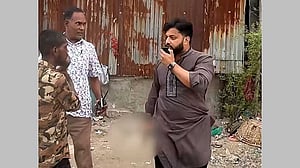
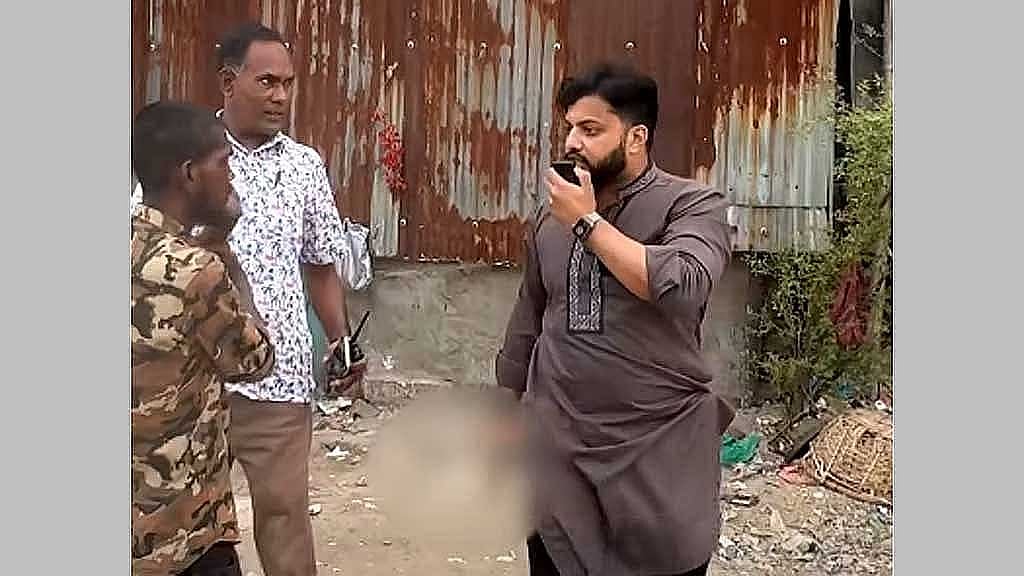
The firearm controversy prompted an immediate response from the prime minister, possibly because of the uproar it caused on social media. A state minister drawing a pistol and pointing it at unidentified people trying to flee is not an everyday sight. But beneath the apparent novelty lay an unmistakable warning: the country risks becoming an eastern version of the lawless “Wild West”.
A member of parliament leading a “raid” on slum dwellings allegedly used by drug users raises serious questions on several fronts. First, where in the Constitution does it say an MP has the role -- let alone the authority -- to enforce the law? Nowhere.
Firearms and Police
Parliament is the supreme lawmaking body, but MPs are not law enforcers. When they begin to see themselves that way, the slide towards a lawless society begins.
Second, why was he brandishing a firearm -- whether licensed or not -- and pointing it at people who appeared to be fleeing? Ishraque later claimed in a statement that he had drawn the gun to protect himself, but the video filmed and published by his associates does not support that account.
The video also showed at least one companion drawing a firearm from a hip holster and pointing it directly at people. No one apart from the MP and his companions was seen carrying a firearm, and there was no indication that Ishraque or his entourage came under fire.
The third question is: where were the police in all this? In a statement after the incident, Ishraque said the raid was part of a “coordinated social resistance initiative involving local residents, law-enforcing agencies and political and social leaders to curb drug trading in Gendaria and surrounding areas”.
The statement sounded rather good, ticking all the right boxes. But it did not tally with what the police themselves said.
The Dhaka Metropolitan Police officials later told the media that they were “studying the video” to determine whether any laws had been broken.
Such a comment suggested that the police knew they would be unable to act against a ruling-party leader, so they resorted to the time-honoured formula: “We are looking into it.”
Dhaka South Calls
The chances of Ishraque facing legal action over brandishing firearms are next to nil. Meanwhile, police said nothing about being part of Ishraque’s “anti-drug drive”.
But Ishraque is unlikely to fade quietly from the scene. The whole Gendaria stunt may have been designed to generate maximum publicity and catapult him to the centre of public debate. Having achieved that, at the cost of his ministerial portfolio, he now appears poised to turn up the volume. He has a bigger fish to fry.
He has already disputed reports that the prime minister ordered him to resign. At a press conference, Ishraque said he had told Tarique he would step down to focus on his constituency.
He announced a stepped-up campaign against “drug users” in the area. This could mean staging of many more such “actions”, with video crew in tow. Next time, however, firearms are unlikely to feature as prop.
Ishraque’s next stop, no doubt, will be the mayoral election. By turning his resignation announcement into a political spectacle where his supporters packed the press conference and chanted slogans, he served notice on the BNP leadership.
The son of former Dhaka mayor Sadeque Hossain Khoka, Ishraque is laying claim to his father’s mantle.
Mob Attack on JSD
While Ishraque appears to have moved on and mapped out his next steps, the same cannot be said of the prime minister. Forcing an MP and a state minister to resign -- in response to social media outrage -- may have signalled to party stalwarts that Rahman would not tolerate conduct that reflects badly on his government. But these actions look more like an attempt to paper over the cracks than to shore up the structure itself.
While Ishraque commands the headlines, the incidents in Mirpur and Gendaria point to a broader desire among BNP leaders to assert their authority and control. Such arrogant displays by politicians with no mandate to enforce the law are blurring the distinction between party and government, and between party and state.
Incidents that fly under the social media radar also remain free of prime ministerial intervention.
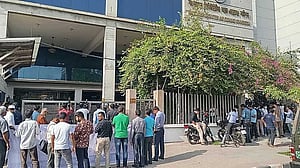
One such example was the attack by a BNP mob on the national conference of the left-wing JSD in Dhaka on Sept 26.
Police came, not to arrest the mob but to detain the 450 or so men and women taking part in a lawful assembly. There was no media outrage and no disciplinary action was taken against the BNP leader who organised and led the violent attack.
These incidents and others involving party men overstepping boundaries, demonstrate that the challenge for the prime minister is far greater than a couple of isolated incidents which can be contained through swift resignations.
A clear pattern is emerging, and it is underpinned by an arrogance of power. This is not an attribute ordinary folks appreciate in a political party.