


Published : 30 Jun 2014, 05:03 AM
Updated : 08 Aug 2022, 06:56 PM


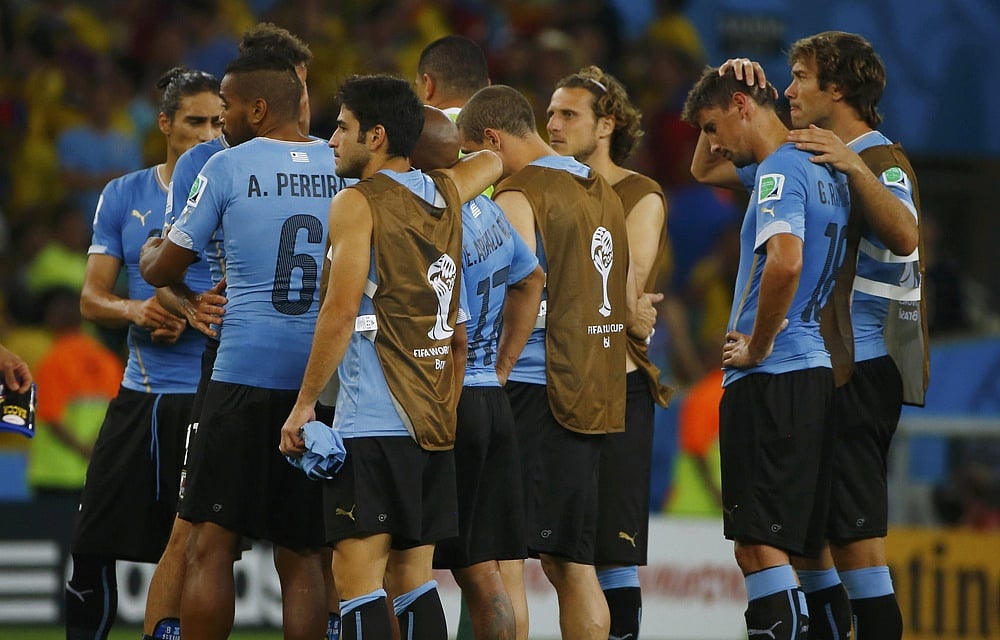
Tough-tackling Uruguay beat England and Italy in the group stages of the tournament in Brazil, contributing to the early elimination of the two European giants.
But after Suarez was sent home in disgrace to start a nine-match ban for biting an opponent, they looked short of firepower in attack and lost their first knock-out match against Colombia 2-0 on Saturday.
The second-round exit is a contrast with Uruguay's march to the semi-finals of the competition in 2010.
But the team are sure to be cheered home by their fans who feel aggrieved by the hefty punishment imposed on Suarez which will probably keep him out of the team for competitive matches until 2016.
Behind the heat of the Suarez protests, big question marks hang over the future of Uruguay which has long punched above its weight in international football for a country of little more than 3 million people.
Saturday marked the last World Cup appearance of striker Diego Forlan who could not repeat the form that made him the player of the World Cup in 2010.
Captain Diego Lugano has also made his last bow at the competition and other squad members are in their 30s.
"It should not cause any trauma, but this squad needs a generational renewal," Forlan told Uruguayan radio station El Espectador.
"I think that change is coming because an era is ending, but the football goes on and a new one will begin."
There are also questions about the future of coach Oscar Tabarez, who at 67 was the oldest manager at this year's World Cup and its longest-serving one, having been in charge of the team since March 2006. He also coached Uruguay between 1988 and 1990.
He master-minded Uruguay's surprise run to the semi-finals of the 2010 World Cup and their victory at the South American Copa America in 2011.
Tabarez's contract ran until the end of the tournament. He told reporters on Saturday that he had not received an offer yet to carry on in charge of the team although he said he was ready to stay on.
Tabarez made no apologies for sticking to his physical, defensive style.
"We are sure, even if some people don't agree, that Uruguay has to play this way on the international stage, really focusing on limiting the opposition," he said.
"I think the people in Uruguay understand that and that's why there is so much feeling between the players and the supporters."
But critics of Tabarez say the team should be less defensive-minded and there have been calls for Juan Verzeri, a former coach of Uruguay's youth teams, to get the job of bringing in young blood.












