


Published : 05 May 2020, 11:23 AM
Updated : 08 Apr 2022, 02:30 AM


But in late afternoon, the sounds of nature in a city where 8 million people are working from home, or not working at all, give way to something else: a burst of welcome human noise.
In neighbourhoods once defined by cars and busy schedules, kids rush out of front doors and garages, roaming free on bikes, scooters and skateboards, screaming down empty streets. Literally screaming, as if they just escaped from prison.
“Three, two, one, go!” I heard a young neighbour yell the other day, goading a sibling to speed over a tree limb they’d dragged into the street, leading to a crunch of bike tires on branches followed by shouts of “Whoooaaaa!”
Five weeks into Australia’s coronavirus isolation, children are the opening beat for an afternoon soundtrack that also includes barking dogs, shouting parents and buff 20-somethings jogging while talking about lust and love at volumes that belong onstage.
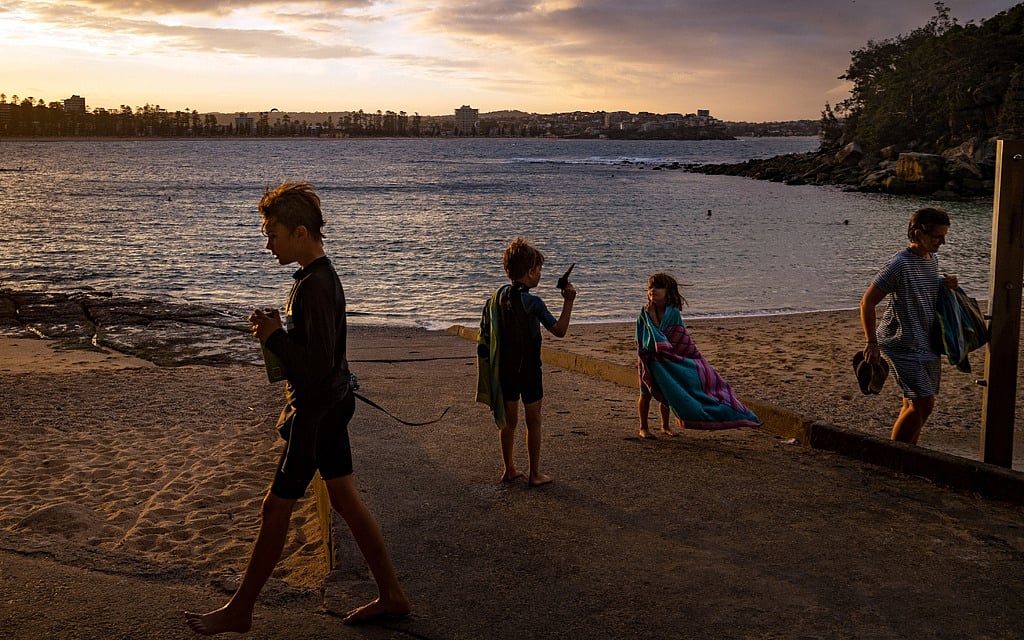
The time may shift — sometimes the noise rises at 3pm, sometimes later — but the swell of sound signals the start of Magic Hour, that ad hoc interlude when our very human need to move and chatter, even at a distance, breaks through the routine of quiet isolation.
And let’s be clear: It is heavenly. Actual voices! Kids! Couples! Arguments! What I hear outside my home office window, or passing by when I run, is the elevator music I never used to notice, and now eagerly anticipate for connection and to mark the passage of time.
The Magic Hour is by no means unique to Sydney. It can’t be a coincidence that the cheers for health workers in New York, the block parties in San Francisco and the mass singing in Italy all tend to occur just before dusk. As sociologists are quick to note, many of us feel compelled to end our days of pandemic loneliness with some kind of connection, preferably outdoors.
“The more formal arrangements, from sports to events, are off the table, and even the informal interactions in shops and bars — that’s gone too,” said David Rowe, a sociologist at Western Sydney University. “People are finding that they need to interact with someone even if it’s just someone walking around a green space with you. You just want some kind of shared purpose.”
In Sydney, the search for a “shared purpose” seems to be especially pronounced. Stay-at-home orders have coincided with a warm autumn that followed a wildfire-ruined summer, upping the stir-crazy quotient to a point where nothing may be more contentious in Australia’s coronavirus era than the use of the outdoors.
In late March, as counts of infection started to double every few days, the crowds pouring onto Bondi Beach became a tipping point that led to a tougher lockdown of all but the most essential services.
Government officials put up fences around the most popular beaches and asked everyone to bunker in, but as the days rolled into each other like an ambient playlist on repeat, the urge to abscond from home detention for a bit of sun and air intensified.
Since exercise was one of the few activities still allowed, the parks and coastal walks around Sydney started to fill up as never before.
Although armed with the power to issue heavy fines, police have frequently been flummoxed about how to respond to the Magic Hour.
Many Sydneysiders, as those in Australia’s largest city are known, were outraged when officers moved people along for drinking coffee or breastfeeding outside. And for some, the restrictions have been too much.
At 3:30pm April 19, the police arrested Dimitri Moskovich, 54, a musclebound regular at Bondi Beach, after he walked out onto the rocks near Bondi’s northern end. He argued he wasn’t violating the beach closure because he wasn’t on the sand. His trip to the police station suggested authorities disagreed.
For the most part, though, the city’s denizens have been well behaved. Physical distancing in my neighbourhood has led to Friday afternoon drinks shared across an open road. In other areas, DJs have set up outside and played Sunday afternoon sets loud enough for people to dance at home.
Parents, while gnashing their teeth trying to balance work and home schooling, have also remarked at the small joys that come with no commuting and a chance to knock off early.
The question of what does come next is one the city may be facing more quickly than expected. After a rapid government response, Australia has suppressed the virus. Testing is widespread, community transmission is low, and new cases emerge by the handful not the hundred.
Prime Minister Scott Morrison said that starting this month, children in Sydney will be returning to school one day a week, rotating groups of students to minimise the risk of spreading the disease.
For now, though, our cooped-up lives continue to produce an afternoon collage of sound that is a reminder of what we’re missing and used to ignore. Outside my window, I hear puppies, I hear toddlers, I hear laughter and I hear friends.
“Gotta get out in the day,” one woman said last week after running into a neighbour at a sunny 4:17pm “We can’t touch but we can talk.”
c.2020 The New York Times Company












