Published : 22 Jun 2023, 04:50 PM
Updated : 22 Jun 2023, 10:19 PM


The desperate search for a missing submersible near the wreck of the Titanic entered a critical juncture on Thursday when air was expected to run out for the five people aboard, but officials vowed to continue scouring the remote North Atlantic.
Detection of sounds yet to help locate Titan
Co-owner of parent ship voices 'hope until the very end'
Remote search vehicles reach ocean floor
How long Titan's air lasts depends on range of factors
A remotely operated vehicle deployed from a Canadian vessel to the ocean floor discovered a "debris field" near the Titanic, the US Coast Guard said on Thursday morning on Twitter, adding that experts were "evaluating the information."
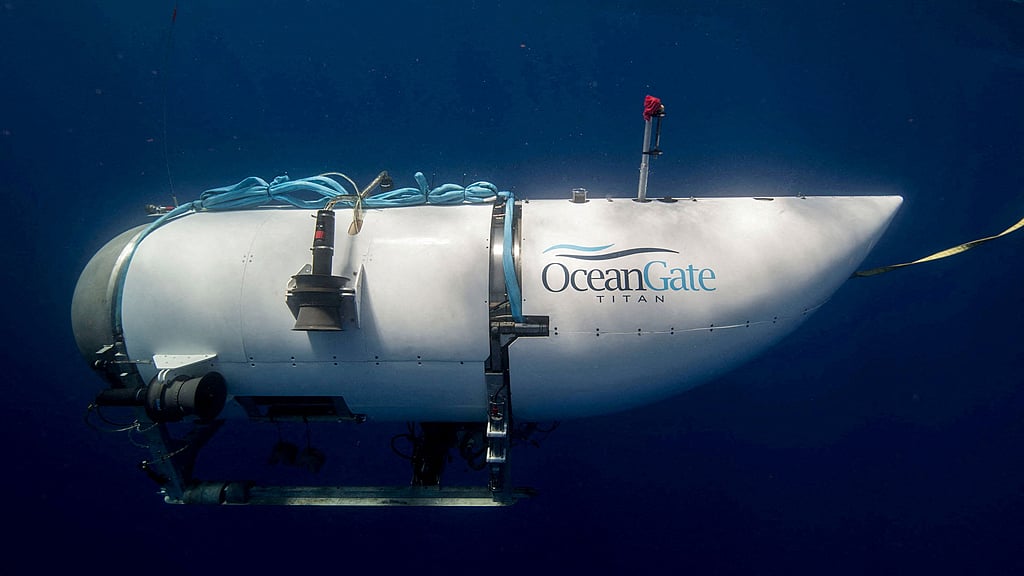
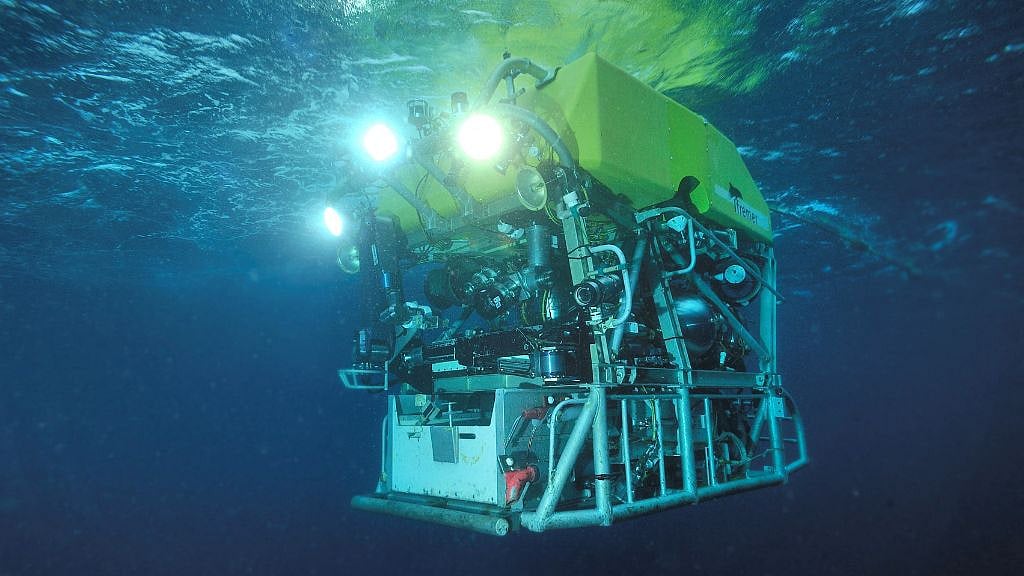
Another robot from a French research ship was also sent diving toward the seabed to search for signs of the 22-foot (6.7-meter) Titan submersible.
The van-sized Titan, operated by US-based OceanGate Expeditions, began what was to be a two-hour descent at 8 a.m. (1200 GMT) on Sunday but lost contact with its support ship.
The submersible set off with 96 hours of air, according to the company, which means the oxygen would be exhausted by Thursday morning, assuming the Titan is still intact. Precisely when depends on factors such as whether the craft still has power and how calm those on board are, experts say.
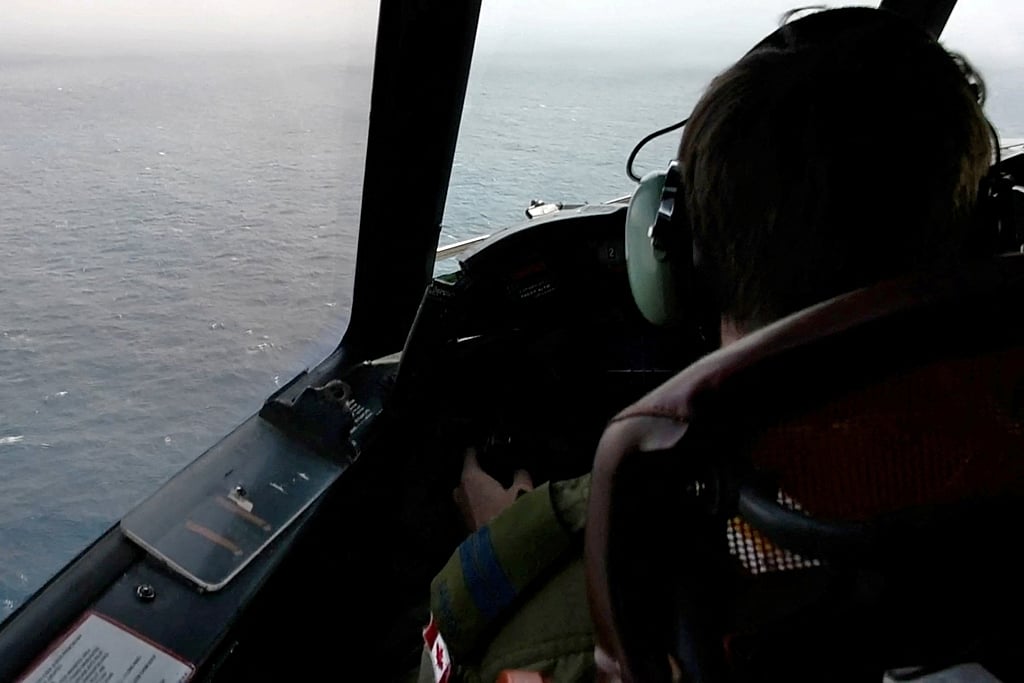
Rescuers and relatives of the Titan's five occupants took hope when the US Coast Guard said on Wednesday that Canadian search planes had recorded undersea noises using sonar buoys earlier that day and on Tuesday.
But remote-controlled underwater vehicles searching where the noises were detected did not yield results, and officials cautioned the sounds might not have originated from the Titan.
US Coast Guard rear admiral John Mauger told broadcaster NBC earlier on Thursday that the search would continue throughout the day.
DEEP-SEA ADVENTURE
The Titanic, which sank in 1912 on its maiden voyage after hitting an iceberg, killing more than 1,500 people, lies about 900 miles (1,450 km) east of Cape Cod, Massachusetts, and 400 miles (640 km) south of St. John's, Newfoundland.
The Titan's deep-sea excursion to the shipwreck capped a tourist adventure for which OceanGate charges $250,000 per person.
The passengers included British billionaire and adventurer Hamish Harding, 58, and Pakistani-born business magnate Shahzada Dawood, 48, with his 19-year-old son Suleman, who are both British citizens.
French oceanographer and leading Titanic expert Paul-Henri Nargeolet, 77, and Stockton Rush, the US founder and chief executive of OceanGate, were also on board. Rush is married to a descendant of two of the Titanic victims.
"We're waiting anxiously, we hardly sleep," said Mathieu Johann, Nargeolet's editor at his publisher Harper Collins.
Sean Leet, who heads a company that jointly owns the support ship, the Polar Prince, has said all protocols were followed before the submersible lost contact.
"There's still life support available on the submersible, and we'll continue to hold out hope until the very end," said Leet, chief executive of Miawpukek Horizon Maritime Services.
Questions about Titan's safety were raised in 2018 during a symposium of submersible industry experts and in a lawsuit filed by OceanGate's former head of marine operations, which was settled later that year.
Even if the Titan were located, retrieving it would present huge logistical challenges.
If the submersible had managed to return to the surface, spotting it would be difficult in the open sea and it is bolted shut from the outside, so those inside cannot exit without help.
If Titan is on the ocean floor, a rescue would have to contend with the immense pressures and total darkness at that depth. British Titanic expert Tim Maltin said it would be "almost impossible to effect a sub-to-sub rescue" on the seabed.
It may also be difficult to find the Titan amid the wreck.
"If you've seen the Titanic debris field, there'll be a thousand different objects that size," said Jamie Pringle, a forensic geoscientist at Keele University in the United Kingdom. "It might be an endless task."