Published : 04 Oct 2026, 10:54 AM
Updated : 04 Oct 2026, 10:54 AM


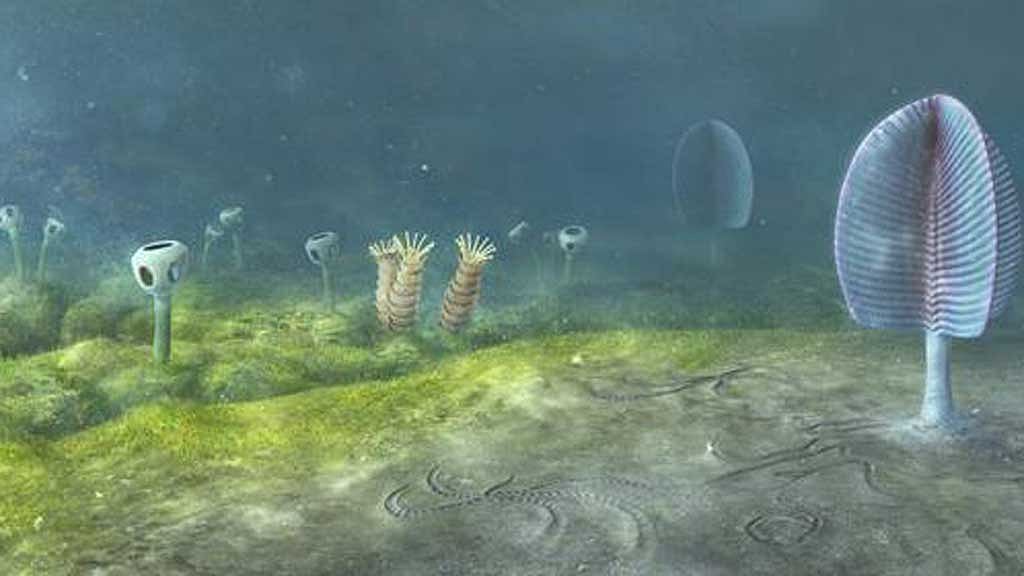
The first animals may have appeared hundreds of millions of years earlier than their oldest known fossils, according to a new modelling study.
The research team has suggested that animals could have emerged between 800 million and 700 million years ago, roughly 200 million years earlier than the fossil record indicates. The study was published Friday in Science Advances.
The earliest undisputed animal fossils date to about 574 million years ago, during the Ediacaran period. But the researchers argue that the patchy fossil record cannot by itself establish when animals first evolved.
Where Are the Animals?
According to Live Science, researchers studied more than 140 samples from the Kheseen Biota in Mongolia, a deposit more than 40 million years younger than the roughly 590 million-year-old Weng’an Biota in China.
Using electron scanning microscopy, they found exceptionally well-preserved microscopic fossils, including tiny spherical organisms and embryo-like structures with internal cells. Yet they could not identify any as animals.
That matters because animals were already present elsewhere by the time the Kheseen Biota formed, according to the study.
“The Kheseen Biota breaks the argument that the exceptional microfossils of Weng'an mean we would have seen animal fossils in the assemblage had they existed at the time,” study co-author Ross Anderson, an associate professor of natural history at the University of Oxford, said in a statement.
Using Molecular Clocks
With no fossil evidence from the period in question, the researchers turned to molecular-clock analysis, which estimates when evolutionary lineages diverged by comparing genetic differences in living organisms with rates of genetic change.
When the analysis was constrained by the younger Weng’an deposit, it produced a more recent estimate for the origin of animals.
But when the researchers used older geological constraints from Norway, Australia and Arizona, dating to roughly 850 million to 730 million years ago, the estimated origin shifted back by about 200 million years.
The analysis placed the possible emergence of animals between 800 million and 700 million years ago.
“Molecular clocks are useful when we don't have a particularly good fossil record for a group of interest or a time period of interest,” Karma Nanglu, an assistant professor of evolutionary paleobiology at the University of California, Riverside, who was not involved in the study, told the American website.
Study first author Orin Lole Durbin, a doctoral student of paleobiology at Virginia Tech, cautioned that the analysis does not prove animals existed 800 million years ago.
“Pre-Ediacaran animal body fossils still elude us,” Durbin said in a statement, adding that the analysis shows how far back their evolutionary history could extend.
Before ‘Snowball Earth’?
Other clues also point to a potentially older animal history. Chemical fossils have been interpreted as evidence consistent with sponges living at least 650 million years ago, tens of millions of years before the oldest known animal fossils.
An origin between 800 million and 700 million years ago would place the emergence of animals around the Cryogenian period, which began about 720 million years ago and included enormous glaciations often called “Snowball Earth”.
The researchers said they plan to examine more Neoproterozoic rocks from different environments and with different preservation conditions to look for further evidence.
Nanglu said the fossil record has limitations and that there is potentially much more to learn about the origins of animals from rocks that have yet to reveal their secrets.