Published : 14 Feb 2022, 02:46 AM
Updated : 03 Aug 2022, 11:31 AM


In fact, this incarnation of the quasi-judicial body polarised opinion from the outset as Huda, a former bureaucrat, was far from the most popular choice to replace Kazi Rakibuddin Ahmad in 2017.
Nevertheless, he promised a firm and uncompromising commitment to staging fair elections. Instead, he was widely maligned for the polls that were held under his watch, with labels such as “partisan”, “subordinate”, “gutless” and even “villain” being thrown at him.
The departing chief election commissioner also faced allegations of corruption and an application was submitted to the president seeking to remove Huda by forming a supreme judicial council.
ATM Shamsul Huda, a former CEC, rated the outgoing EC’s performance as
“unsatisfactory”, heaping further indignity on Nurul Huda’s five-year stint.
Despite all the criticism, Nurul Huda has defended himself, saying no one can earn praise in a “complex” constitutional body like the EC.
The EC helmed by Huda can claim credit for bringing all the political parties to the 2018 parliamentary polls after the boycott of the 2014 elections by the BNP and its allies. But the 2018 polls were marred by allegations of ballot-box stuffing the night before voting.
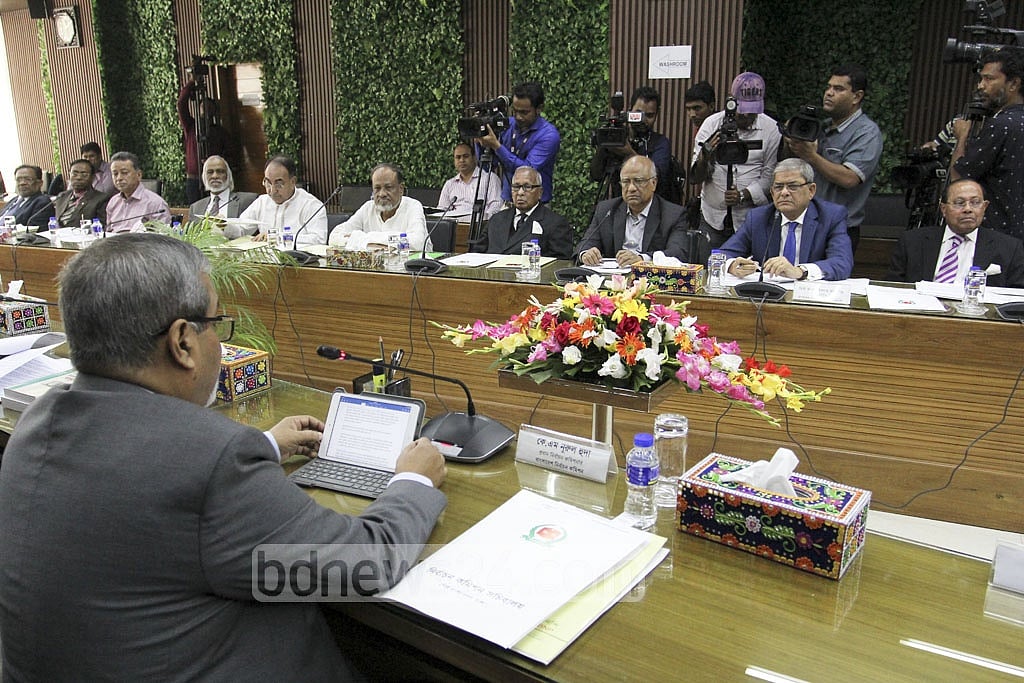
While similar allegations were levelled at its predecessor, infighting that often played out publicly was unique to the Huda-led commission. Election Commissioner Mahbub Talukdar made the headlines as an outspoken critic of the electoral process and often found himself at loggerheads with Huda.
The scathing criticisms delivered by the writer put Nurul Huda in a tight spot but the government described the rift as “the beauty of democracy”. Mahbub’s criticisms also became a stick for opposition parties to beat the government with time and again.
TAKING OVER KAZI RAKIBUDDIN
With the tenure of Kazi Rakibuddin-led commission, which oversaw the controversial 2014 elections, winding down, President Md Abdul Hamid formed a search committee to shortlist candidates for the next EC in January 2017.
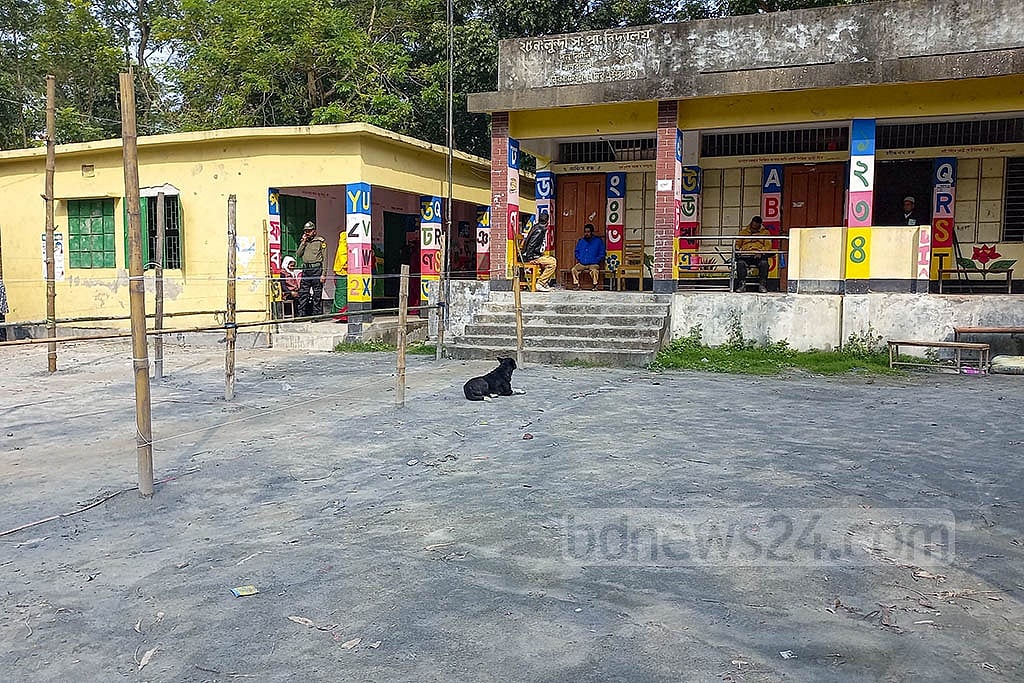
A polling station is deserted during voting in the by-election to Rajoir Upazila Parishad in Madaripur on Thursday, Jan 27, 2022.
The president picked Nurul Huda as CEC. Nurul Huda was accompanied by Mahbub, Rafiqul Islam, Kabita Khanam and Shahadat Hossain Chowdhury as election commissioners in the country's 12th EC.
The chief justice administered their oath on Feb 15 that year. After five years, their tenure is ending on Monday.
ELECTION AFTER TALKS
The Nurul Huda-led EC had drawn a road map ahead of the 11th parliamentary elections after taking charge. The election was held after almost two more years with the participation of 39 parties. It was the first parliamentary election in which electronic voting machines, or EVMs, were used.
Only 12 parties had contested the 2014 national election and so, the main challenge facing Huda’s commission was to make the 2018 polls more inclusive.
The commission took one step forward in earning the confidence of the opposition parties and other quarters by staging the elections to Cumilla and Rangpur city corporations.
It brought much comfort to the country’s politics as the commission held talks with citizens and political parties on legal reforms and other issues such as the demarcation of constituencies.
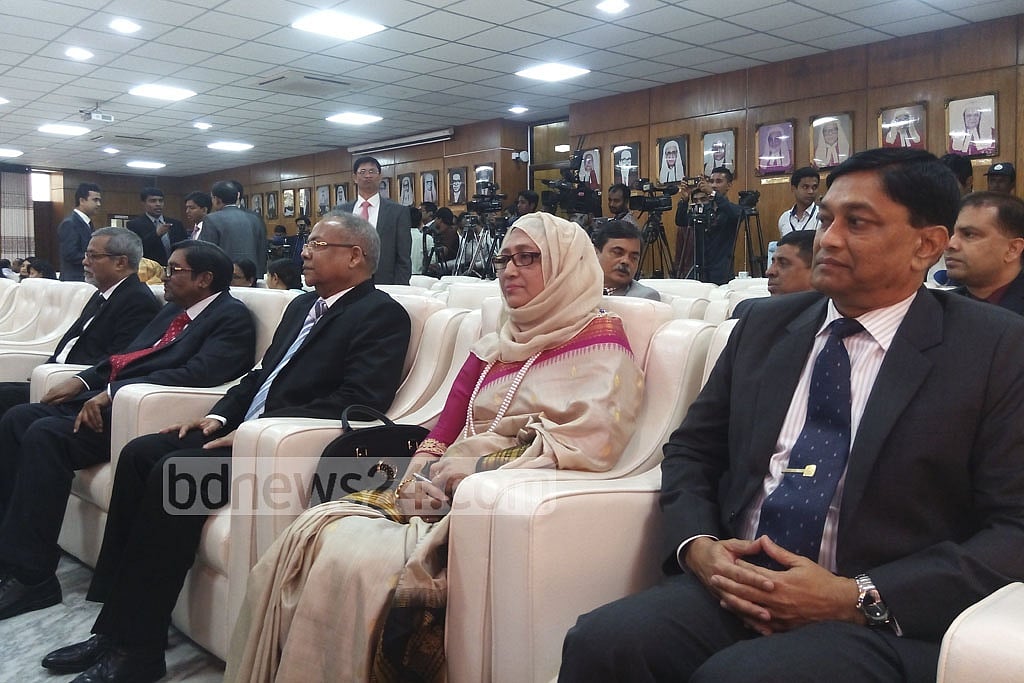
“We are somewhat optimistic now even in the current political circumstance, severely undemocratic behaviour by the government,” BNP Secretary General Mirza Fakhrul Islam Alamgir said after the talks.
The EC sat with the parties again to fix the schedule of the 2018 election. It initially decided to hold the polls on Dec 23 but changed the date to Dec 30 on a consensus.
The scenario changed as the BNP faced a debacle in the election. The BNP-led Jatiya Oikya Front Alliance alleged “vote robbery” in the election, saying the votes were cast on the night before voting.
The Awami League and the EC refuted the allegations. CEC Nurul Huda described the election as one worth keeping in the record.
In the coming years, the EC held elections to parliamentary seats reserved for women, presidential polls, elections to the city corporations, around 500 Upazila councils, nearly 300 municipalities and more than 4,000 union councils, and some by-elections.
It faced harsh criticism again after widespread and deadly violence in union council polls by the end of its tenure amid the coronavirus pandemic.
The turnout in the parliamentary polls was 80 percent, but it started plunging afterwards. Amid criticism over voter apathy, only 5.28 percent votes were cast in a parliamentary by-election held with EVMs.
COMPLAINTS OF IRREGULARITIES
The commission caught the ire of the BNP and representatives of civil society after anti-graft watchdog Transparency International, Bangladesh (TIB) flagged irregularities in the eleventh general election and questioned its validity.
Sushashoner Jonno Nagorik, or Sujan, called the commission “unskilled” and raised complaints about irregularities and violations of the election system.
As the present commission checks out, BNP Secretary General Fakhrul said, “The Election Commission has ultimately failed. Cases should be filed and they should be judged as they’ve completely destroyed the election system of the country.”
Demands to form a supreme judicial council were raised in 2020 to take lawful steps against the CEC and other commissioners.
That year, 42 citizens petitioned the president to arrange for an investigation into complaints involving financial irregularities, corruption and severe money-related misconduct.
CEC Nurul Huda dismissed the complaints as “baseless lies and unwelcome” and criticised Shamsul Huda.
He also claimed that Sujan’s Editor Badiul Alam Majumder was displeased about not being inducted into the commission.
In response to this, Badiul said, “It’s unfortunate that such a villainous person was appointed as chief election commissioner. Sadly, the new law will allow the appointment of such individuals.”
MAHBUB TALUKDAR TROUBLE
Election Commissioner Mahbub Talukdar was a source of great inconvenience for Nurul Huda over the commission’s five-year term.
The oldest among his colleagues, Mahbub opposed the EVMs and walked out of the law reform meeting leaving a note of dissent. He also stood against his colleagues who wanted the cancellation of Khaleda Zia’s nomination.
Mahbub raised complaints including authorities of the chief commissioner and secretary within the Election Commision, lack of level-playing field in votes, disinclination to vote, violence in elections, questioning the system, among others.
He also accused the chief commissioner of lying and, at one point, spoke of resignation. Mahbub’s action was met with drew flak from the Awami League.
NOT EXPECTING PRAISES
Despite all these complaints, Nurul Huda claims the commission carried out all elections lawfully “without any pressure” through their term.
The party in office maintains that the Election Commission never required any intervention.
Responding to the allegations, Nurul Huda said there is no use “looking for praises” in a ‘complex’ institution of the Constitution like the Election Commission.
Election Commissioner Md Rafiqul Islam said they “gave their all” to perform their duties correctly.
“We could not do many things on time due to the COVID crisis. That is causing issues in the end. We’ve done all that we can within the law.”
Rafiqul hopes that the law reform proposals are implemented on time. He thinks the apparent conflict within the commission was just “individual expression”.
“I may not agree to everything, but don’t oppose anything. That’s part of the commissioner’s job. I disagreed with a lot but speaking about them is out of the question.
“Decisions we make are part of the commission and I have to own them. I didn’t see the need to be vocal about it.”
Rafiqul is positive that the next commission will proceed with EVMs and online nomination submissions.
He believes that mutual understanding between the political parties will reflect positively on the faith on Election Commission.
Although satisfied with the tasks they did, CEC Nurul Huda regrets the violence at local government polls.
He thinks the intolerance among parties and nominees is behind the violence and the commission has no control over that.
“I’ve always said tolerant outlook from nominees and political parties is key to keeping the peace in polls. The commission can’t control conflict in polls if everyone else is intolerant. Is it possible? Never, and that I regret.”