Published : 27 Dec 2022, 01:39 AM
Updated : 27 Dec 2022, 01:37 PM


Seven years and Tk 219.85 billion later, the mass rapid transit system in Dhaka, commonly known as the metro rail, is set to open for commuters in the mega city from Dec 28. But for many residents, shopkeepers, and small businessmen, it is coming too late to compensate for their losses.
Some of the residents and shopkeepers bdnews24.com spoke to in the project area from Mirpur-12 to Agargaon, shared horror stories of the metro rail’s construction, which ended in 2021. Now, these locals are looking forward to maximising the opportunities the state-of-the-art transit system will bring to their localities.
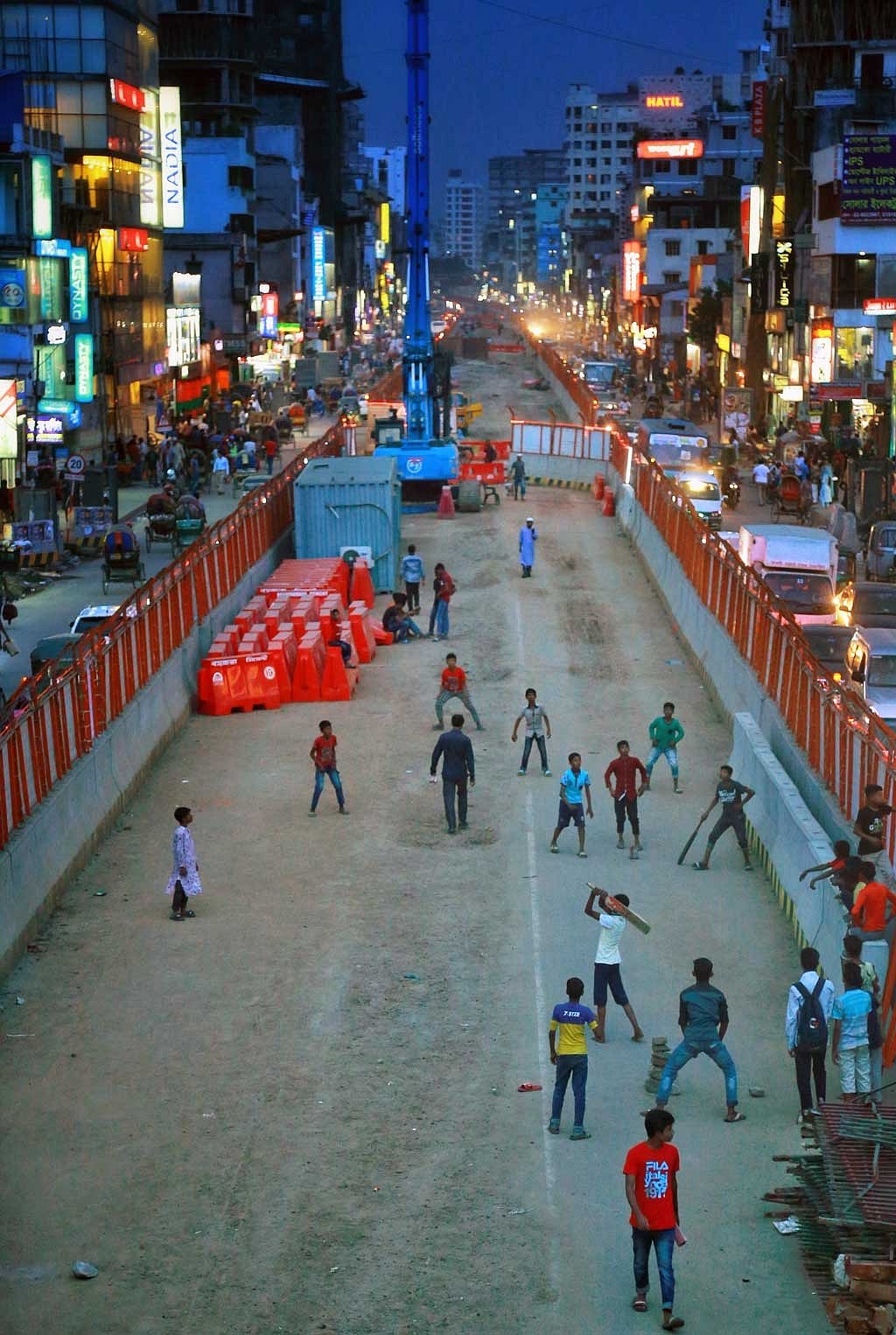
The dust, mud, traffic congestion and noise created by the project work wreaked havoc, both physically and mentally, on the commuters and residents living within the project area for five consecutive years. It was so disruptive that many residents left the area entirely, while many commuters opted for alternative routes to their destinations.
MRT PROJECT WORK AT A GLANCE
The deal for the project was signed with Japan in 2013.
Consultants for the project were appointed in 2014.
The construction work was officially inaugurated on Jun 26, 2016.
Seven companies coordinated the project work under a joint venture.

Shopkeepers and small businesses in the aforementioned areas began losing revenue in 2016, the year construction work began, and by 2021 their losses were overwhelming as the pandemic dried up the small trickle of customers that still stopped by.
After the dust settled a year ago, the aforementioned areas began to return to their previous state. It was still noisy and dusty with the usual traffic gridlock, but it wasn’t as bad as during construction.
Roman, who identified himself by his first name, is a long-time resident of Mirpur and described what changes he expects the metro rail will bring to the area, transport-wise.
“During the heyday of the project work, it took close to an hour to reach the Agargaon IDB area from Mirpur. With the MRT, it will not take more than a few minutes, which I believe will revolutionise the transportation system in the area. Plenty of residents in Mirpur commute to Uttara on a daily basis. It takes ages now if you are using public buses as they use a route via Kalshi, ECB, Kuril and Airport. With the MRT, Uttara-bound people will just get down at Diabari station near Uttara, which will save time and money,” he said.

Al Amin, who lives in the residential area behind the Taltola bus stand, was a high school student when the MRT construction began. He is about to graduate from Mirpur Bangla College now.
“It was a nightmare scenario for us for seven years because of the massive hassle we endured due to the project work. It stung more when we saw people teasing us about our suffering. However, that’s in the past. The streets in the area have been restored and we, the residents of Mirpur, have already forgotten about it,” he said.
But not everyone in the area shares the same level of optimism.

Though a year has passed since the area returned to normal, shops were still struggling.
The owners of many shops -- ranging from hardware, electronics, furniture, bathroom fittings, and fashion -- lost their loyal customer base entirely while some others, dependent on word of mouth or walk-in traffic, had to shut down as they could not balance their accounts.
Some took the risk and sold their tangible and intangible assets to survive, while others who did not have savings but were determined to keep their businesses afloat chose to borrow from banks and eventually became defaulters.
HOW BAD WAS BUSINESS?
Mahmudul Hasan, the proprietor of Al Borak Furniture in the Taltola area near Mirpur said the first three years of the construction work brought down his revenue stream from an average of Tk 3.2 million a month to an average of Tk 700,000 maximum.
“We hardly had any walk-in customers as it was near impossible to park a car in front of the store. Even if we, by some miracle, made such a sale, loading it to a van for delivery was another herculean task. Our books have been in the red since 2016 and, consequently, we had to lay off over 30 trusted, long-term employees as we could not pay their wages,” he said.
Mahmudul said the bleak state of his 20-year-old furniture shop slowly started to turn by mid-2021 after the COVID- 19 lockdowns were lifted, but the heavy losses of the previous six years put a permanent dent on the finances of the businesses.
Al Borak Furniture somehow survived the construction but many roadside shops in Shewrapara, Kazipara and Mirpur areas did not.
The well-known Ikra restaurant chain, which has served food in the Shewrapara area for the last 20 years, is one example.
But after construction began, the business grew so bad that the owners had to shut down the fast food and the Chinese food outlets.
Abu Sufian, a director of the company which owns the chain, told bdnews24.com that their revenue decreased by nearly 70 per cent.
We hardly had any walk-in customers as it was near impossible to park a car in front of the store. Even if we, by some miracle, made such a sale, loading it to a van for delivery was another herculean task. Our books have been in the red since 2016 and, consequently, we had to lay off over 30 trusted, long-term employees as we could not pay their wages.Mahmudul Hasan, a furniture trader in Shewrapara
“I can’t even begin to calculate the amount of loss we incurred in the last seven years. We sold all of our tangible and intangible assets just to keep the lights on,” he said.
Sufian, however, is optimistic that as soon as MRT starts operating, their fortunes will turn.
“Last year was a bit better though. We are hoping to turn the business around as soon as the metro rail opens as it’s located right beside a station.”
Tajul Islam Khan, the proprietor of Optimum Electronics on Rokeya Sarani, did not sound as hopeful as Sufiyan.
He is under a mountain of debt.
“I owe the banks at least Tk 2 million, which I borrowed to survive the dry spell the project work brought in. My income never fully recovered, even after the construction ended, so I am struggling to even pay the regular loan instalments. I may have to shut my doors permanently soon as collectors from the banks have been making regular trips to my shop, asking to settle loans, but I can’t,” Tajul said.
We never got a dime of compensation. Not a single journalist asked us how we have lived for the past seven years.Abu Sufin, a restaurateur in Shewrapara
DEMAND FOR COMPENSATION FALLS ON DEAF EARS
Both Sufiyan and Tajul were deeply saddened by the fact that the authorities had never considered compensating them, nor was their plight highlighted in the news media.
“We never got a dime of compensation. Not a single journalist asked us how we have survived for the past seven years,” Sufiyan said.
Some store owners were bold enough to knock on the doors of Japan International Cooperation Agency or JICA, the chief funding authority of the MRT, to apply for compensation, but they have not heard back, Tajul said.
“Some of the roadside hawkers received around Tk 50,000 to Tk 100,000 as compensation from the government. We never got anything. The traders’ association in Rokeya Sarani never actually attempted anything in this regard. Personal endeavours didn’t amount to anything either. I am not even sure what I should do next,” he said.
[Writing in English by Adil Mahmood]