Published : 26 Nov 2026, 07:04 PM
Updated : 26 Nov 2026, 07:04 PM


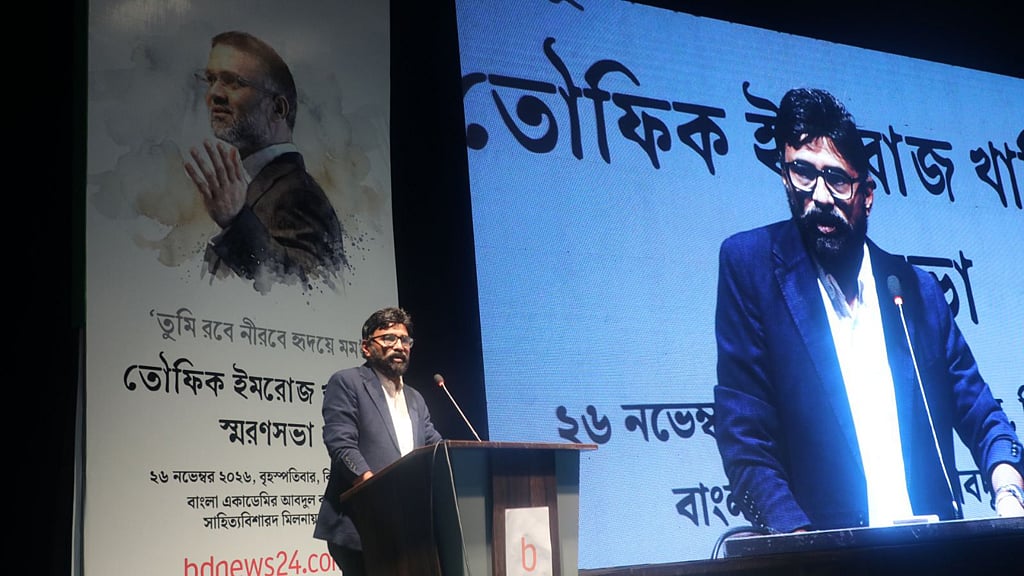
Prime Minister Tarique Rahman’s Press Secretary Abu Abdullah M Saleh has raised the question of whether bdnews24.com’s late editor-in-chief Toufique Imrose Khalidi had ever faced obstacles in bringing the truth to the public.
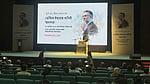
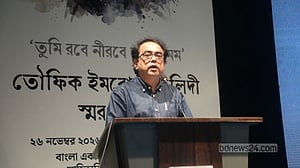
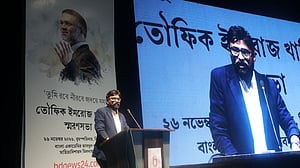
Saleh was speaking at a memorial organised by the bdnews24.com family at Bangla Academy on Thursday evening.
“[Toufique] Bhai was forthright, stood for the truth and spoke it. But we can now ask: did a time ever come in Bangladesh when obstacles were put in the way of publishing the truths he wanted to tell?” Saleh said.
Speaking from abroad, he recalled that bdnews24.com had once been kept offline for several days, preventing readers from accessing its reports.
Even after it returned, Khalidi could not tell readers why the website had been shut down.
Though he had no close personal friendship with Khalidi, Saleh said he knew him through his work.
The press secretary, who spent years in journalism at the United News of Bangladesh (UNB), also recalled having a small part in the process before bdnews24.com relaunched.
He urged people to read Khalidi’s writings and learn more about his work to understand the editor and the times he lived through.
On the relationship between journalism and politics, Saleh said journalists could hold political beliefs, but party loyalty must never obstruct the truth.
“If party belief or allegiance ever stands in the way of telling the truth, a journalist is no longer practising journalism. They have become a party worker or supporter,” he said.
He also called for soul-searching over the media’s role during the past decade, recalling that Bangladeshi outlets had been barred from broadcasting Tarique’s statements while he lived in London, citing court orders.
“Yet, after Aug 5, his voice suddenly began to be heard on television. Why media workers could not speak during those 10 years remains unexplained to the next generation. We have yet to see any explanation or expression of regret,” he said.
Recalling the Dhaka University and TSC of earlier years, Saleh said journalists and students once socialised amicably despite their differences.
A culture of revenge and hatred, he said, had since taken root in politics and journalism.
Concluding, he said a person’s work was their true identity and pledged to follow the good Khalidi had done and the example he had set.