Published : 03 Oct 2026, 02:55 AM
Updated : 03 Oct 2026, 03:36 AM


The history of online journalism in Bangladesh cannot be told without Toufique Imrose Khalidi. He was there at its beginning, when news still travelled largely through teleprinters and the internet was only beginning to reshape how information moved.
And he did more than embrace the new technology: he helped establish the professional standards that would define it.
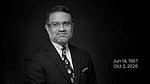
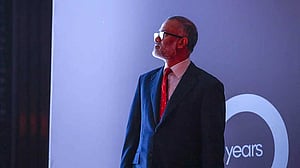
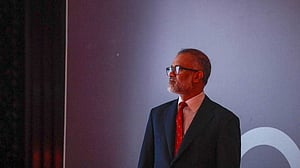
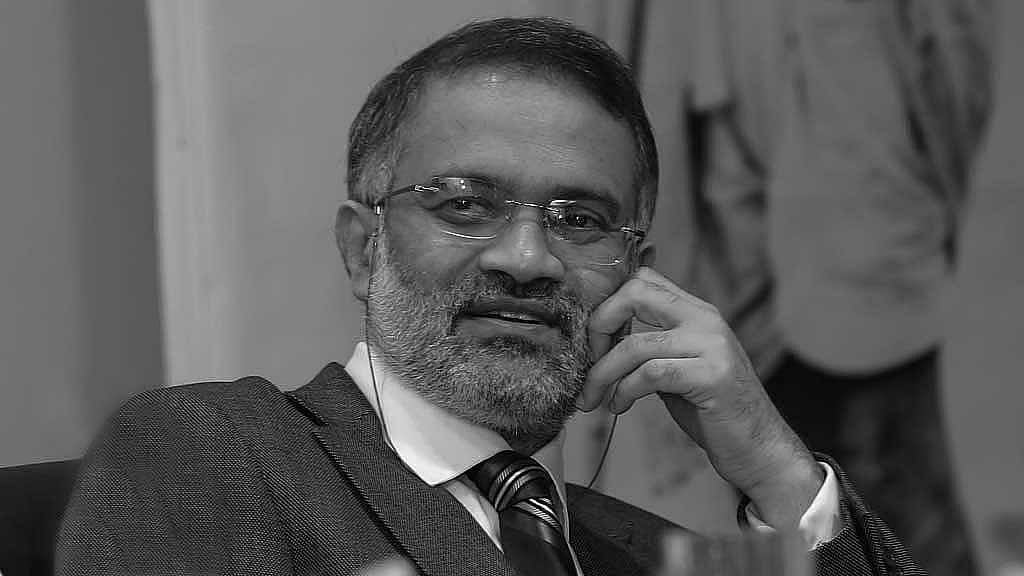
Khalidi, the editor-in-chief of bdnews24.com, died at 59 after giving Bangladesh’s journalism some of its most consequential firsts.
He took particular pride in one of them: making attribution a discipline rather than a courtesy. At bdnews24.com, journalists were expected to name their sources, and he would speak proudly of having made that practice a strict part of the newsroom’s culture.
Khalidi once said: “We were able to deeply embed objectivity in Bangladeshi journalism. Now no one can simply produce reports based on stories and rumours whenever they want.”
He was equally forthright about another principle: journalism should not bend under pressure.
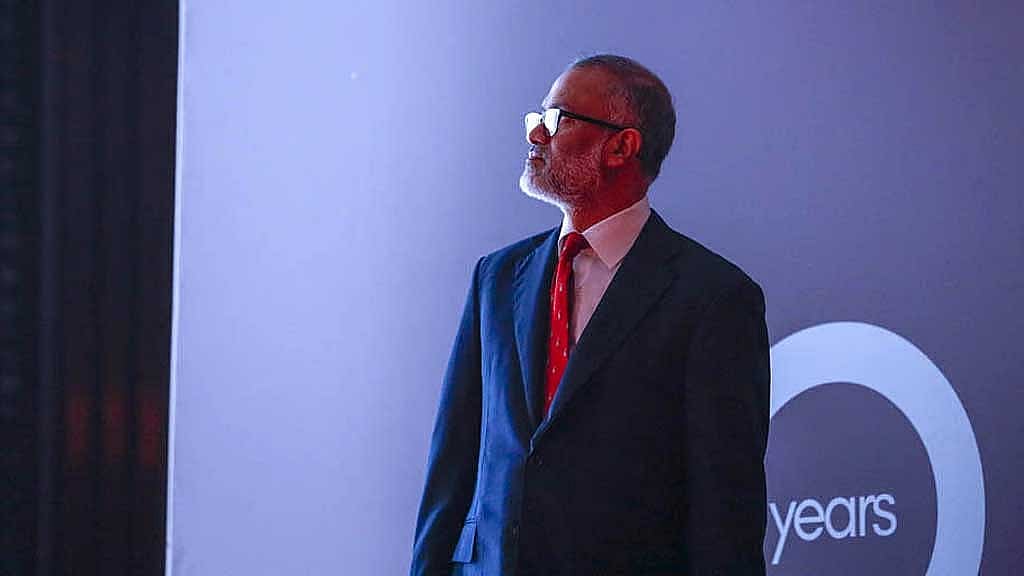
He spoke openly about refusing to bow, and repeatedly demonstrated the stubbornness required to stand upright when the pressure was at its greatest.
“We have gone through many difficult situations. In the end, we did not bow our heads. I believe that, ultimately, we have won,” he said.
That hard-earned “victory” was something he spoke of with quiet defiance.
On bdnews24.com’s 18th anniversary in 2024, he said: “We will continue to survive with our heads held high in the days ahead. No one will be able to suppress us.”
After his death, colleagues and readers returned again and again to that defiance, and to the role he played in making objectivity and reliability central to the identity of bdnews24.com.
For Afsan Chowdhury, a researcher of the Liberation War, journalist, columnist and teacher who worked with Khalidi at both the BBC and bdnews24.com, the ability to remain detached from the news was among his greatest achievements.
Despite the many political changes Bangladesh has gone through, Chowdhury said, bdnews24.com remains “the most reliable”.
“Even now, after all these years, if a piece of news does not appear on bdnews24.com, I cannot believe it.”
He explained why he believed Khalidi had achieved that level of trust.
“The thing he managed to do, to a great extent, was to report the news objectively -- that is very important. Others cannot do that. Others become participants, become stakeholders in the good and bad of the news. But bdnews24.com’s news-making was always objective.
“And the people who wrote columns, that is another matter. I also wrote, countless others wrote, and the views we got were unimaginable. That was 15 years ago. But what I think is most important is that Toufique never allowed the news to go beyond objectivity.”
Chowdhury said he still begins his day with bdnews24.com.
“I read bdnews24 first every day. You cannot imagine how great an achievement that is. At one point, perhaps, it was the only online media outlet of its kind, and that is why it was so important. The historic role of bdnews24.com, the modern digital media -- bdnews24.com did it first in Bangladesh and did it successfully.”
Public health expert and Bangladesh JaSaD Standing Committee Member Mushtuq Husain, who had known Khalidi for years, also memorialised him as someone who took online journalism to a different level.
Their relationship stretched from student politics at Dhaka University to interviews at the BBC and, later, regular contact through bdnews24.com.
“Toufique took online journalism to a standard of quality and committment. He took [bdnews24.com], which was almost on the verge of shutting down, and built it up piece by piece into an internationally reputable and reliable news organisation,” Hossain said.
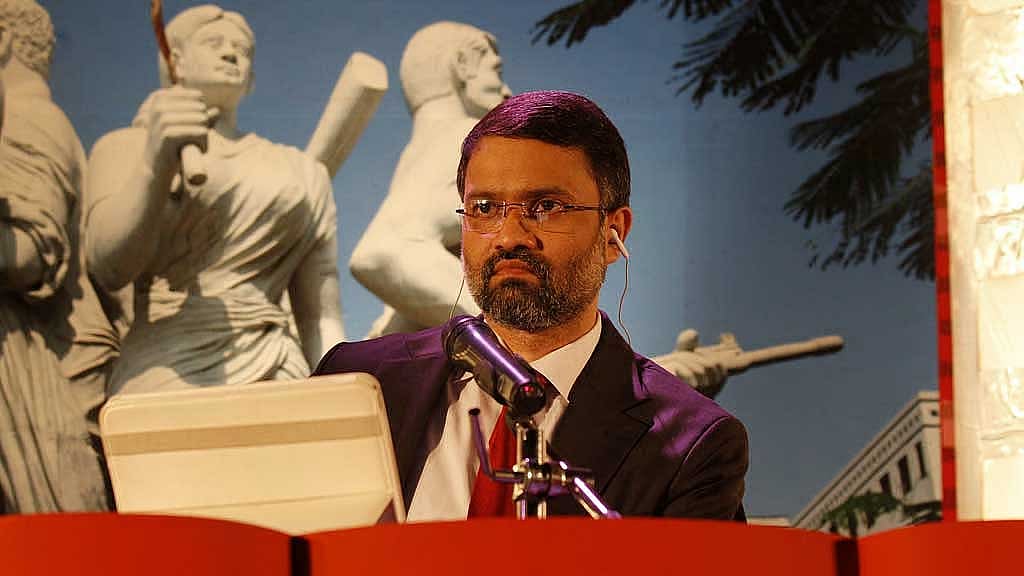
The principle was straightforward: speed was never worth sacrificing certainty.
“Instead of rushing out fast or sensational news, [bdnews24.com’s] core policy was to publish 100 percent verified, truthful news even if it took a little longer, so that no report would have to be withdrawn after being proved wrong. Even when there was an opportunity to obtain a television licence, Toufique did not pursue it because he sensed corruption in the process.”
Mushtuq hoped Khalidi’s colleagues would carry that tradition forward, emerging from their grief to preserve the objective journalism he had spent his career building and to bring his contribution to a new generation.
A Life in Journalism
Khalidi’s career in journalism began long before bdnews24.com and, in many ways, before the profession itself.
While studying in the English Department at Dhaka University, he worked as a researcher at the National Institute of Population Research and Training, or NIPORT. He later became team leader of a research project at Save the Children.
In 1989, he entered journalism as an assistant editor at the Sunday Express, published from Dhaka. He remained in the profession until his final day.
After roughly two years there, he joined The Daily Star, edited by Syed Mohammad Ali, in 1991 as a diplomatic correspondent.
He stayed until March 1993 before joining The Financial Express in October that year as a senior correspondent.
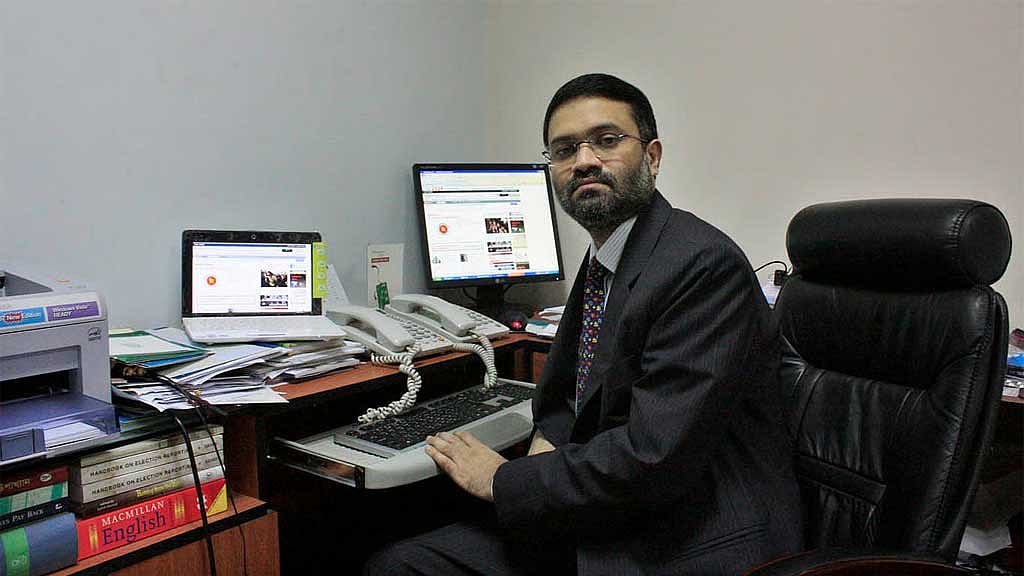
During his time there, through March 1995, Khalidi covered diplomacy, politics and parliament. He also pursued investigative reporting into negotiations over oil and gas, economic infrastructure and corruption in trade agreements.
In March 1995, he became a special correspondent at The Financial Express, while also taking on the roles of assistant editor and editorial writer. He remained in those positions until April 1996.
Then came a five-month break from journalism. Khalidi joined a leading non-governmental development organisation working on river erosion as a socioeconomic and communications consultant.
During that period, he was a co-author of a report for a World Bank inspection panel. The report highlighted the potential losses facing several hundred thousand people because of the Jamuna Bridge project, which was jointly financed by the World Bank.
In September 1996, he returned to journalism as a fellow of the Europe Foundation based in Paris, writing for the quarterly journal Europe. He covered European affairs there until 1997.
In August 1997, Khalidi returned to The Daily Star as assistant editor and head of its business and economics desk. Until July 1998, he was responsible for coordinating the newspaper’s coverage and analysis of economic and business affairs.
In August 1998, he was promoted to joint news editor. Until January 2000, he helped plan, edit and coordinate the newspaper’s daily news operation.
From March 1999, he also served as news editor of The Daily Star’s Weekend Edition. Until January 2000, he oversaw the planning and editing of the special edition, as well as a major weekly interview on current affairs.
On Feb 5, 2000, Khalidi joined BBC World Service in London.
Until Jun 30, 2005, he produced and presented news and current affairs programmes. He prepared and presented special reports on major international events, produced features and programmes on business and economic affairs, and hosted the widely discussed Debate programme.
From July 2005, he spent a year working as a freelance journalist and consultant in Bangladesh and the United Kingdom.
His former classmates remembered that journalism was never merely a profession for Khalidi. It was his calling -- and they recognised early on that his talent belonged in the field.
Mahbuba Farzana, secretary of the Ministry of Information and Broadcasting and one of his classmates in the English Department at Dhaka University, recalled the student she knew before the newsroom.
“We studied in exactly the same class at Dhaka University. He was my classmate and he was extremely talented. That talent was evident even earlier, during his student days. He had that kind of talent... I felt that at some point he would go somewhere, to a very good place.
“We were very good batchmates. Since we studied English, during our student days he could handle his studies and examinations very well. Many times we would discuss things together and study for exams. I used to tell him to study, telling him to sit down with his books. I would often tell him that.”
She also remembered speaking to him after he returned from London, before bdnews24.com came into being.
“In between, when he returned from London, I used to ask him, what will you do? You are so talented.
“That was before he started bdnews24.com. I said, you came back from the BBC, so what will you do now? You should go somewhere, you should have a place to go. He said, ‘I don’t know what I will do’. Anyway, when he started bdnews24.com, I was very happy. He had found his place. I was very happy then.”
After she became information secretary, their contact grew.
“I go to every anniversary. He respected me enormously, enormously. As a friend, he was a wonderful person. I have lost a friend and, in fact, I have lost a very talented journalistic figure.”
The Firsts that Changed News
On Oct 23, 2006, bdnews24.com began its new journey under Khalidi’s leadership, ushering in Bangladesh’s internet-based journalism.
But the institution itself had begun a year earlier, in 2005, when BDNEWS operated as a conventional news agency, supplying reports to news organisations.
There was one crucial difference.
While other news agencies in Bangladesh distributed their reports through teleprinters, BDNEWS began delivering news over the internet.
Then, in 2006, a change in ownership and management transformed the organisation from the ground up. Under Khalidi’s leadership, the new management turned it into Bangladesh’s first online news company.
For Chowdhury, who was there as the new digital era took shape, Khalidi’s greatest achievement was turning an organisation that had struggled into one capable of attracting an entire generation of journalists.
“The big achievement of Toufique was that those who were there before could not really manage bdnews24.com in that way.
“Toufique came and did it. He was able to bring in a huge number of people, countless people, and when I joined, many plans were being made. We went to different places trying to explain digital media to people, and Toufique and I would go and explain it. Gradually, it became very successful.”
Oct 23, 2006 was therefore more than the launch of bdnews24.com. It marked the beginning of internet newspapers in Bangladesh and the moment when a Bangladeshi newsroom became active around the clock.
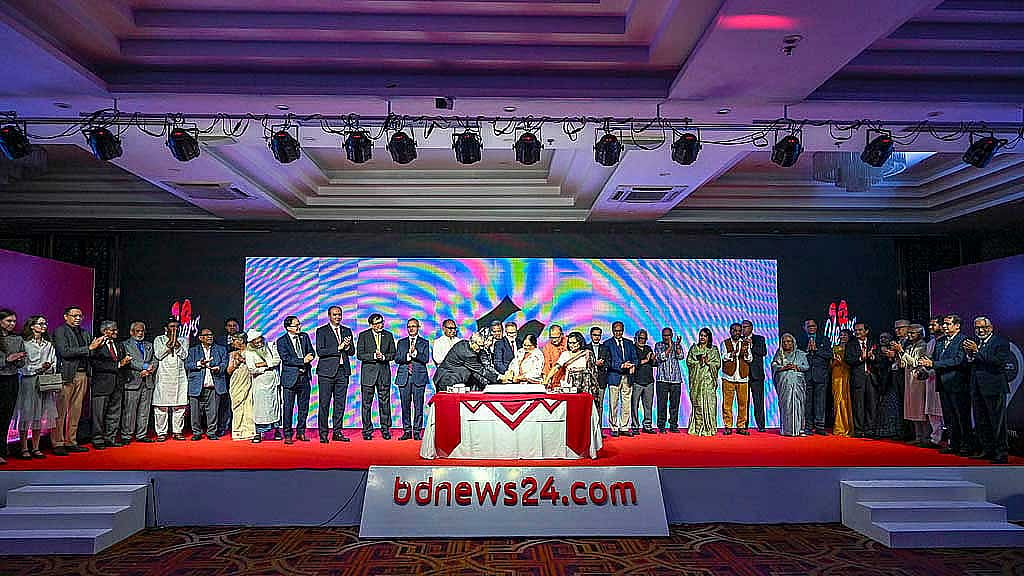
On the organisation’s 16th anniversary, Khalidi recalled what that meant.
“We stay awake almost 24 hours, always. We never sleep.
“Now there may be some others... but when we started, we were the only newsroom in the country that never slept.”
The slogan was simple: “Accurate news first.”
It quickly won readers.
Today, the nearly 10 million likes on bdnews24.com’s Facebook page stand as one measure of the trust it built over the years.
Under Khalidi, the organisation continued to add new frontiers. It launched Kidz, the first Bangla-language website for children. In partnership with UNICEF, it also created Hello, the first website for child journalists.
It introduced a breaking-news service for mobile phones, another first in Bangladesh. It also demonstrated that news could be delivered in Bangla through SMS on mobile phones.
The journey, however, was never easy.
“We are not always well. Sometimes we are doing very well, sometimes we are in great pain, we are suffering. Even then, we try to stay afloat, we try to survive, we try to stay awake,” Khalidi said.
After almost four decades in journalism, he spoke of that survival not as a solitary achievement but as something shared with colleagues, readers and supporters.
“We are still surviving, still alive, still afloat, and that is enough. I am grateful to everyone. To my colleagues, to our millions of readers, to our well-wishers who support us, help us, protect us from various kinds of trouble and danger. We express our gratitude to everyone.”
Khalidi also became known internationally for his work in digital media.
In 2014, at the South-to-South Media Dialogue in South Africa, he was recognised as one of the “14 leading digital media innovators” from Asia-Pacific, Latin America and West Asia.
He participated in the Global Media Forum in Germany’s Bonn in 2010, 2016, 2017 and 2019. In 2018, he spoke as a panellist at the Bangladesh Rising conference at Harvard University in the United States.
He chaired UNESCO’s World Press Freedom Day programme in 2016 and attended the United Nations Climate Change Conference in Copenhagen in 2009 as an observer.
His work also extended into public policy. He was a nominated member of the national committees formed in 2012 and 2015 to formulate and review policies for online media.
He also served on the committee formed in 2008 to formulate policies for news agencies and on the national task force formed in 2007 to protect Dhaka’s rivers.
‘We Did Not Bow Our Heads’
The road that earned bdnews24.com praise for accurate journalism was not always smooth.
Despite facing dozens of lawsuits for refusing to remove old news articles concerning a case against a businessman and the trial, bdnews24.com did not bend.
Khalidi spent years facing a case brought by the Anti-Corruption Commission (ACC) after he refused to remove an old report concerning a powerful group.
After the change of power in Bangladesh in August 2024, the case against Khalidi was withdrawn in September that year.
In 2018, the bdnews24.com website was shut down for a few hours through illegal interference for including the commonly-known identity of an army chief’s brother in a report.
Later, at the prompting of another group, the bdnews24.com site was shut down for a month in 2023.
And yet, despite these struggles, bdnews24.com has not closed. Instead, it returned with renewed vigour.
The years of pressure had, however, reinforced something Khalidi had said repeatedly: journalism and media freedom were worth fighting for.
On bdnews24.com’s 18th anniversary in 2024, he reflected on that battle.
“I think we have fought a significant battle in publishing the news. We did not allow ourselves to reach a situation where we had to bow our heads; we did not bow our heads.
“We have gone through many difficult situations. In the end, we did not bow our heads. I believe that, ultimately, we have won, and we will continue to survive with our heads held high in the days ahead. No one will be able to suppress us.”
He said the pressure had come from both political and business interests.
“There have been attempts, extreme injustice has been done, false propaganda has been spread. Rogue businessmen have gone after us, political leaders have gone after us.
“The ruling group has gone after us, tried to harm us. They tried to put us under economic pressure. They threatened and harassed journalists. I was personally harassed. But all of us, together, kept fighting the battle.”
The Future He Wanted
Yet even as he fought to keep the organisation standing, Khalidi was thinking about what would happen when he was no longer at its centre.
On bdnews24.com’s 18th anniversary, he spoke about handing responsibility to a new generation.
At the organisation’s 10th anniversary, he had said that he had led Bangladesh’s most-read news publication for a continuous decade. Until then, he said, it had been the country’s most-read news outlet without controversy.
He believed the time had come for him to step aside.
“I said I should step down. Over the last eight years, we have not been able to create that environment; I have not been able to.”
He wanted younger journalists to take over.
“I wanted to hand over responsibility to young people. I hope someone young will take responsibility very soon. We have many colleagues who are extremely capable, highly skilled and hardworking.
“They have devoted their lives to good journalism. I believe they will be able to lead. And the number of young people is growing day by day. Many young colleagues have joined over the past two years. They are doing good work. I believe those who have been developed or are being developed now will run this organisation for the next 18 years. This is my personal wish.”
That wish would remain unfulfilled.
Before he could see a younger generation take the organisation he had built into its next chapter, Khalidi’s own journey ended.
At 59, suddenly and far too soon, the journalist who helped bring Bangladesh’s news into the digital age is gone.
But the newsroom he built is still awake.