Published : 10 Oct 2026, 09:57 PM
Updated : 10 Oct 2026, 10:49 PM


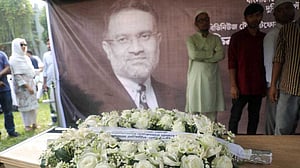
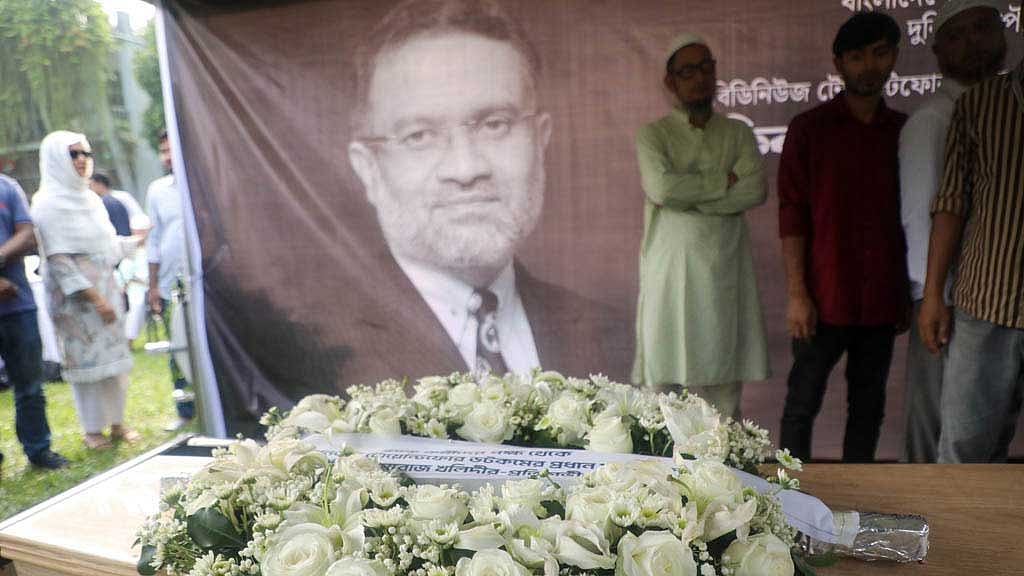
With wet eyes and heavy hearts, friends, family, colleagues and well-wishers have seen off Toufique Imrose Khalidi, the trailblazer who led Bangladesh’s news into the digital world.
They paid tribute to the late editor-in-chief of bdnews24.com in sorrow and affection.
Local Government Minister Abdul Moyeen Khan said Khalidi’s death still feels “unbelievable”.
When he heard the news, he was stunned and has not been able to believe it since, he said.
“When I looked at his face a little while ago, it seemed to me that he had come alive before me.”
Moyeen recalled that the two met through bdnews24.com, and the acquaintance “grew into friendship”. “Khalidi did not confine himself to delivering news.
“His analysis of Bangladesh’s social, political and economic situation will also be regarded as an important contribution,” the veteran politician said.
Khalidi joined The Daily Star in 1991 as diplomatic correspondent under its founding editor SM Ali and stayed about two years.
After stints at The Financial Express and elsewhere, he returned in 1997, when Mahfuz Anam was editor.
He worked there until January 2000 in roles including joint news editor and head of the business and economy desk.
Remembering his former colleague, Anam said: “A young man, very energetic, very bright.”
“What I want to pay tribute to him for is setting up his institution. Many of us have dedicated our lives to journalism, but he built an organisation like bdnews24 and ran it as well.”
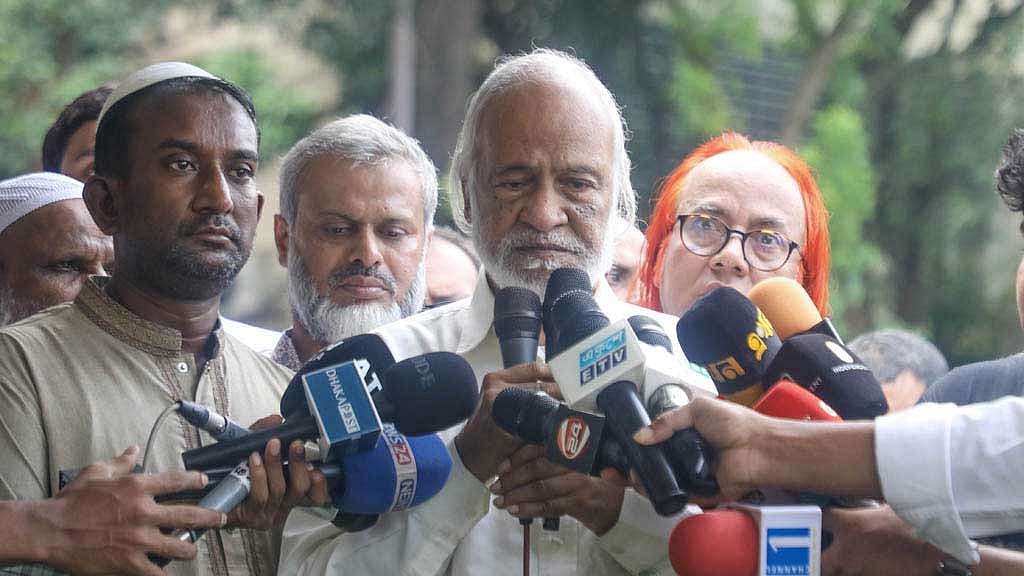
“I have always believed that a journalist who builds such an institution and runs it on ethical foundations, one that embraces journalist-centred values, freedom and ethics, makes a special contribution. He established that in his organisation,” he added.
Former National Press Club president Shaukat Mahmood called Khalidi “incomparable” as a journalist and a person.
He recalled that the day after the language martyrs were shot on Feb 21, 1952, the Daily Azad ran a historic headline written by the late journalist Santosh Gupta, then its news editor.
It declared that no funeral prayer would be said for death, for even graves stir awake as life’s demand grows so vast.
“In the same way, we all feel the demand for Toufique Imrose Khalidi’s life. He was a pioneer of online journalism in Bangladesh,” Mahmood said.
Columnist Chiroranjan Sarker called the death a “huge loss” to journalism in the country.
“Toufique Bhai’s role as a journalist, as a person and as someone firmly on the side of the Liberation War, and the way he pressed ahead despite many blows and negative tendencies, will be remembered in the history of Bangladeshi journalism,” he said.
Actor Tariq Anam Khan said he had heard Khalidi’s name since bdnews24.com began, and the country’s first online news portal was a matter of great pride.
Praising Khalidi’s “dedication and candour”, he said: “It is really shocking! He said exactly what he nurtured in his mind. He was not a man to hide or invent anything.”
Khalidi had tasteful plans for culture and media, including some work with Nima Rahman and a new idea built around a YouTube channel, the actor said. “He still had so much to give.”
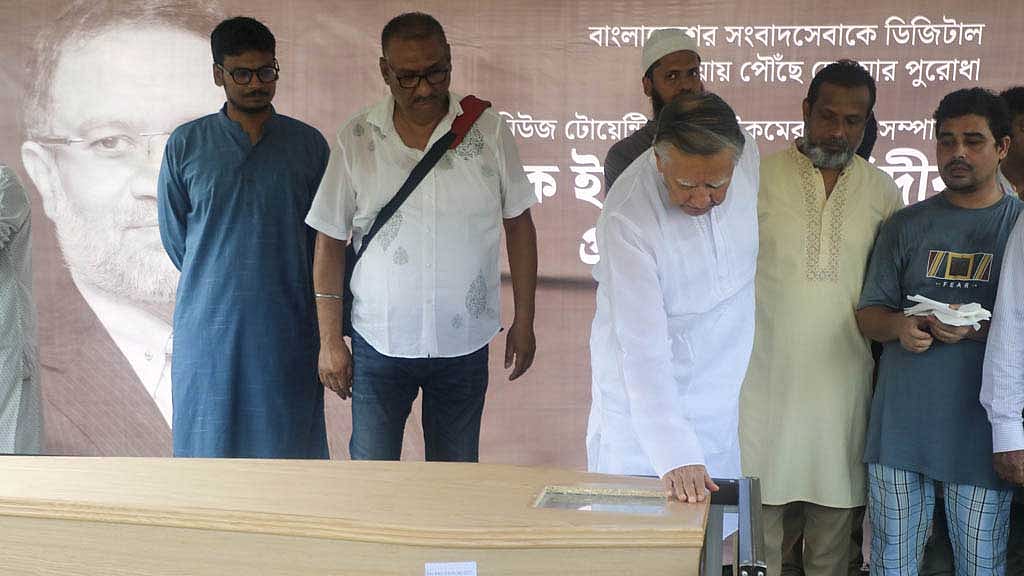
Actress Nima recalled Khalidi’s “hospitality and guidance” over the last eight months.
“After any work or meeting, he never let you leave without eating. If it grew late, he would say ‘Have rice with fried egg before you go’. I would say ‘I won’t eat it with fried egg’, and we would laugh a lot about it”.
BNP Media Cell member and Somoyer Alo Advisory Editor Shairul Kabir Khan said Khalidi was remarkable for both his intellect and his humanity.
“He was an extraordinary personality at every step. The void left by his going will be filled through our struggle,” he added.
Former Bangladesh Television deputy director general KM Harun recalled two decades of friendship.
Nearly 20 years ago, when the internet was far from easily available, Khalidi had the courage to launch an online news portal and brought the country’s best journalists under one roof, he said.
BotTala theatre Director Mohammad Ali Haider said Khalidi seemed to see far ahead of his time and could foresee what journalism would become.
“He was a man of high calibre who liked working with young people. Bangladesh will miss his courageous journalism, and the young will miss the right guide,” he said.
Former Bangladesh Garment Manufacturers and Exporters Association (BGMEA) president Faruque Hassan said Khalidi was his junior at school and a classmate of his younger brother.
“I saw him very closely. I felt he never compromised on anything.”
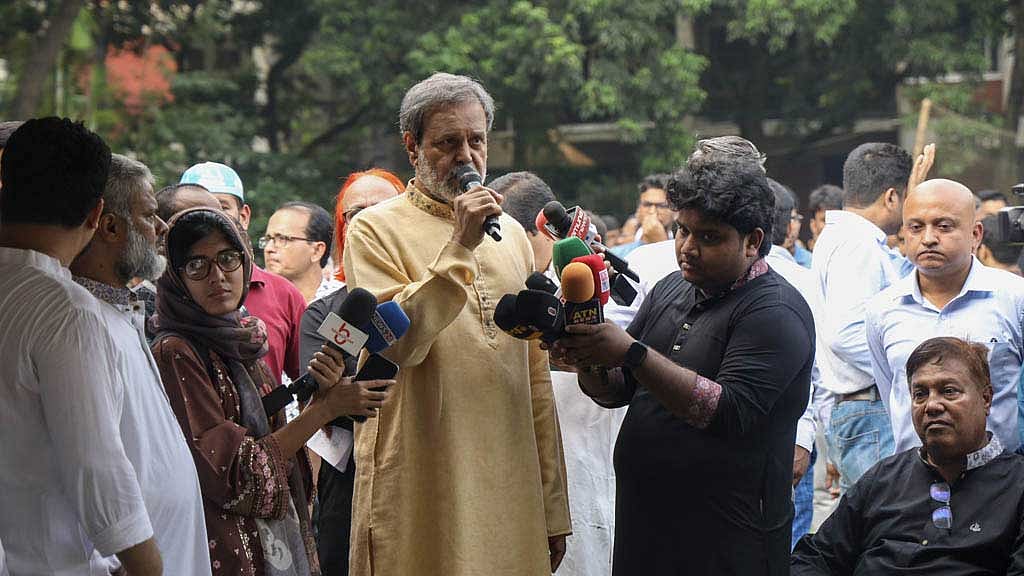
Bangladesh JaSaD General Secretary Nazmul Haque Prodhan said Khalidi never spoke a word of Bangla to him.
“Today I feel nobody will speak English with me any more. May his dynamism and fire stay with us, and may he live on among us.”
Dhaka University Treasurer Jahangir Alam Chowdhury said the country lost him too soon, and his leadership was needed for a long time to come in telling the truth.
The Daily Star Consulting Editor Kamal Ahmed said Khalidi took bdnews24.com from where he inherited it to a successful position through many hurdles, and “we must remember him for that”.
During the Awami League government he faced unexpected, needless harassment and found few by his side, but overcame it through firmness and focus, Ahmed said.
Former ambassador Shahed Akhter said Khalidi could win people over through body language and never let anyone sense if he disliked them. “People will not easily forget him. Nobody believed he would go so soon.”
Journalist Shahriar Karim said the two had been friends since the mid-1980s and worked together at three organisations.
“He had an extraordinary quality of leadership. Building such a news-driven organisation in Bangladesh amid so many odds is very hard. People will remember him at least for that,” he said.
Private university teacher and former colleague Kazi Nafia Rahman said Khalidi taught them to question power.
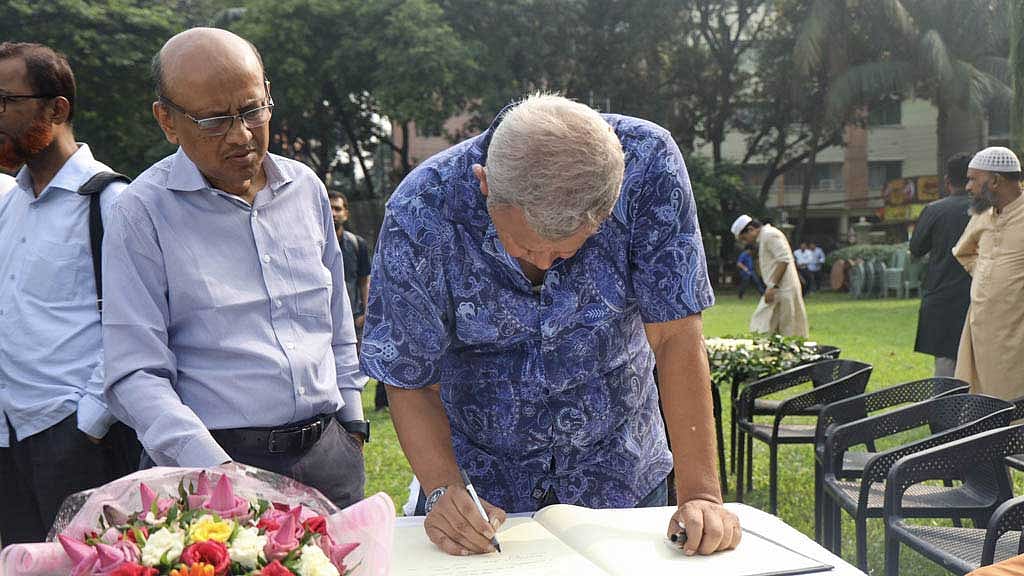
“When we taught journalism, we did not stress sources so much. But Toufique Bhai taught us that to win readers’ trust, you must give sources,” she said.
Writer Salek Khokon said he could not yet accept the news.
He had known Khalidi for about 14 years, and bdnews24.com had given great weight to the Liberation War.
After August 2024, when the war’s legacy came under its first assault, Khalidi and bdnews24.com had taken a firm stand, he said.
Prof Sadeka Halim, a former vice-chancellor of Jagannath University, called Khalidi a pioneer of digital media who brought marginalised communities into the media space through bdnews24.com.
“He viewed the struggles of Adivasis, Dalits, women’s rights activists, workers and students with deep insight and a special perspective.”
Praising his teamwork, she said: “He trained his journalist colleagues to report impartially. Allegations of bias are raised against many media outlets, but we can call bdnews24.com’s reports quite impartial.”
Omar Faruk, former president of the Bangladesh Federal Union of Journalists (BFUJ), said Khalidi left behind many contributions as an “honest, courageous” journalist.
“He was harassed in various ways at different times, and we always condemned it. I hope those who did it will repent. Please pray for him, that he may be happy in the hereafter,” he said.
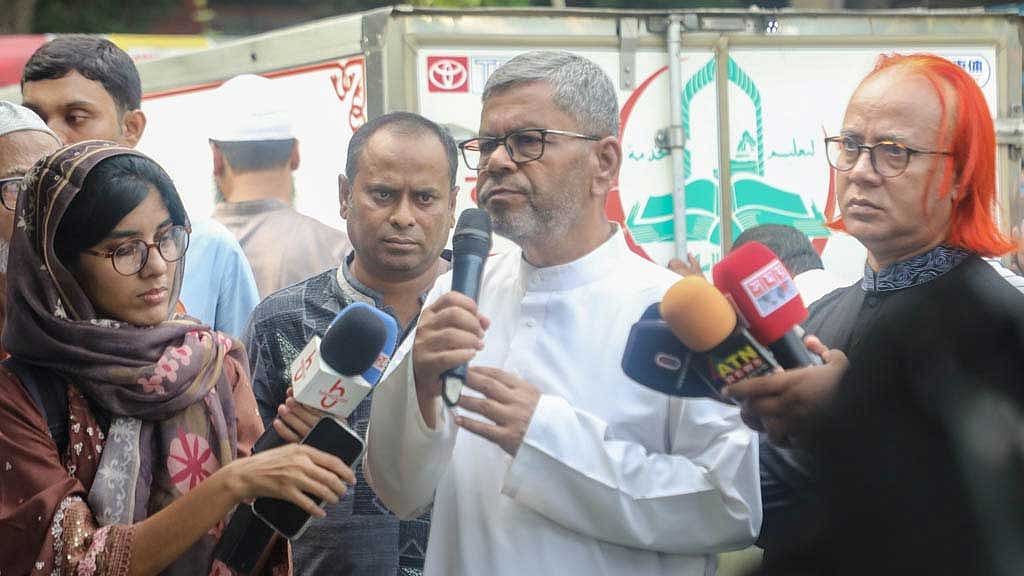
Agamir Somoy Editor Mostafa Mamun, a former sports editor of bdnews24.com, said Khalidi was a model not only for bdnews24.com but for everyone working for editorial independence in Bangladeshi journalism.
“His devotion to truth, restraint in journalism and foresight set him apart.”
Calling the death “a big loss for everyone”, Mamun recalled that Khalidi had said in 2007-08 that everything would one day come to the mobile device.
“It seemed far off then, but he had foreseen the changes in the media that followed. We differed on many ideas, but after leaving him I realised there was foresight in the very ideas where we disagreed, which many of us could not see at the time,” he said.
New Age Managing Editor Foyez Ahammad said he never worked with Khalidi but shared a distant bond, and tried to stand by him on particular issues.
“His journalism taught us the importance of accuracy and attribution, practices that are still rare in our media. He upheld these standards throughout his time at bdnews24.com, setting an important example for the next generation of journalists,” he said.
Channel i Online Editor Zahid Newaz Khan said they had known each other for more than 30 years. “We often say someone’s death is an irreparable loss. This truly is,” he said.
Journalist Nazrul Islam Mithu called Khalidi a courageous journalist. “There is no journalist like him in this city now. He was the last of them. In his words, speech and movement, he was transparent in everything.”
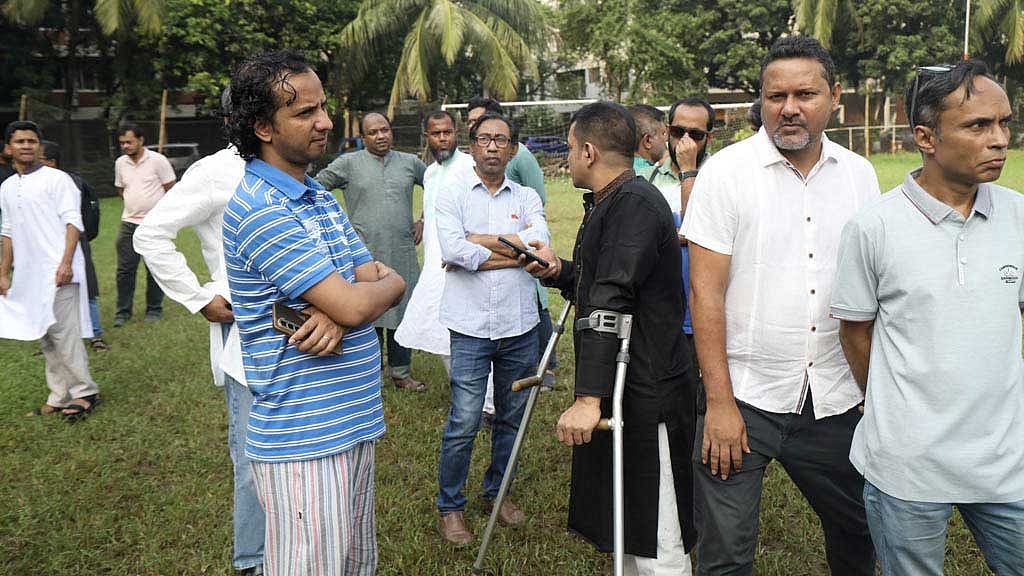
Justice Abu Taher Md Saifur Rahman said he and Khalidi studied together at Dhaka University, he in law and Khalidi in English, and both lived in Salimullah Muslim Hall.
“Toufique was a very lively, friendly person. Twelve years after I entered professional life, when I went to England to study for the bar, I met my friend there again,” he said.
Journalist Pradip Chowdhury, who once worked under Khalidi, said the late editor has achieved “immortality” in the country’s journalism.
“He taught us real Bangladeshi journalism and took it to readers. Many compromise in journalism, in words, sentences or facts. Toufique Bhai never published a report compromising on these,” he said.
AP Dhaka Bureau Chief Zulhas Alam Ripon said Khalidi was always like a teacher to colleagues for his objective journalism.
“His editorial policy, his stand, the objectivity of his reports and his contribution to journalism are incomparable.”
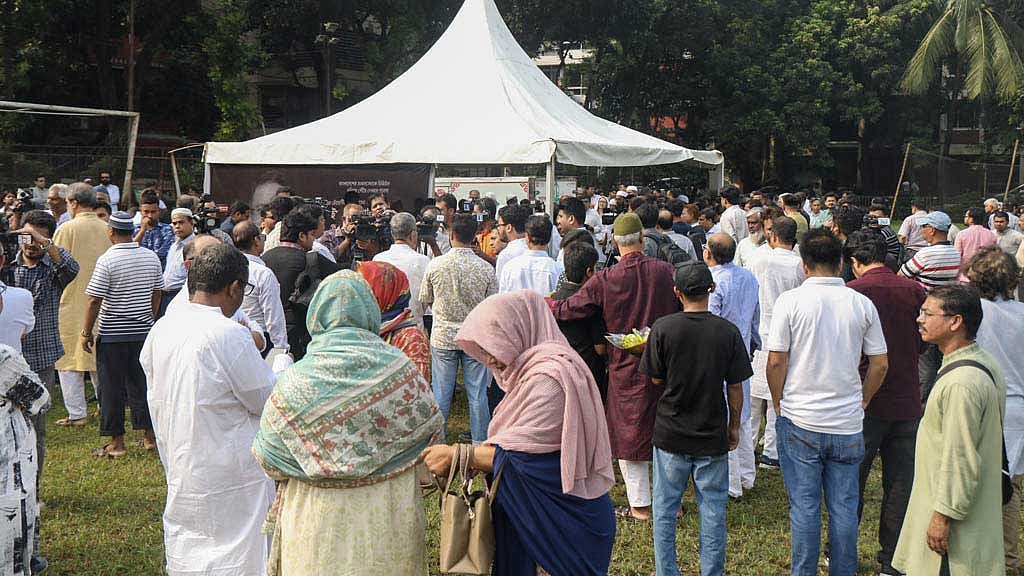
Journalist Gazi Nasiruddin Khokon said his career took off under Khalidi.
When the world was shifting in technology, Khalidi saw the future of media with courage and foresight and was first to digitalise the media in the country, he said.
Former footballer Kaiser Hamid said Khalidi got on well with people from every sector, particularly sport. “I think his death is an irreparable loss,” he said.
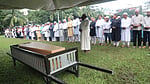
Robi Chief Corporate and Regulatory Affairs Officer Shahed Alam, who attended the Janaza, said he met Khalidi while studying in London.
“He never moved from his principles. I saw he never compromised in his journalism either. That caused him a lot of hardship in his career,” he said.
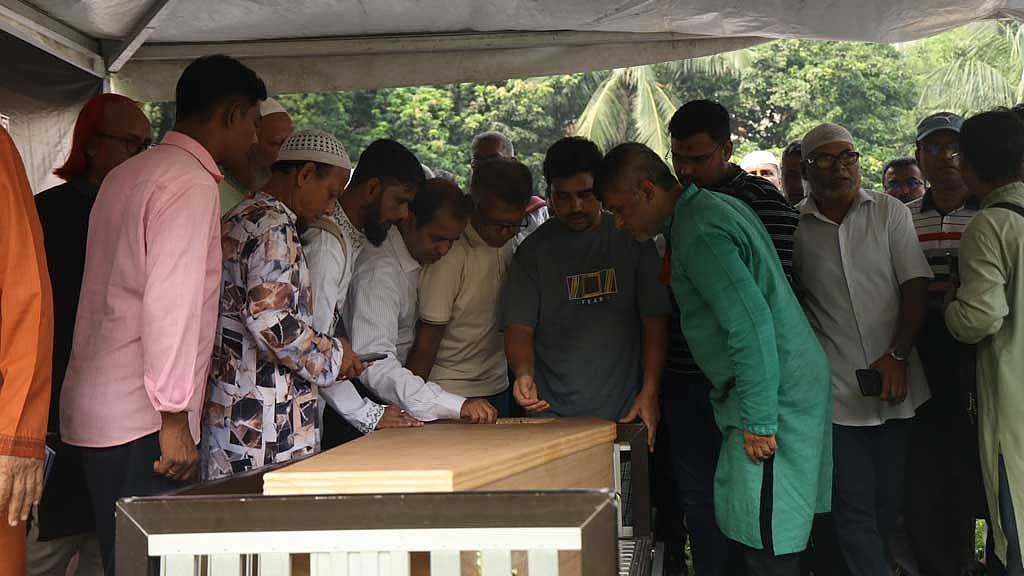
Khalidi, who was in London on a private visit, fell ill suddenly on the night of Oct 1.
Doctors at St Bartholomew’s Hospital found a brain haemorrhage and pronounced him dead at 2:23pm local time the next day.
A Janaza was held at the Brick Lane Jamme Masjid in East London after the Zuhr prayer on Oct 8, where former colleagues and representatives of the local Bangladeshi community paid their last respects.
His body reached Dhaka’s Shahjalal International Airport on a Biman Bangladesh flight around 11am on Saturday.
His nephew Taraaf Tazeez Khalidi and niece’s husband Akif Ahmed received the coffin around 11:30am, with colleagues present.
The coffin was then taken to bdnews24.com’s office, where it was kept from noon to 12:20pm. It was next taken to his home, where family members and relatives saw him for the last time.