
Published : 28 Nov 2026, 08:59 PM
Updated : 28 Nov 2026, 08:59 PM


My grandma thinks zombies are ghosts.
Which makes sense for her generation. For her, horror means a white saree, long hair, a dark corridor, and a voice asking, “Who is there?” Zombies were never part of that world.
So when I told her the Pentagon once had a plan called “Counter-Zombie Dominance”, she blinked twice and wondered why the mighty US Army was scared of ghosts.
“Zombie?” she asked.
Then I had to explain.
A ghost is dead but still around, usually because of "unfinished business". A zombie is a person who has died or been infected and comes back with one goal: eat people.
As someone who has watched and read a lot of zombie stories, I consider myself a kind of zombie expert.
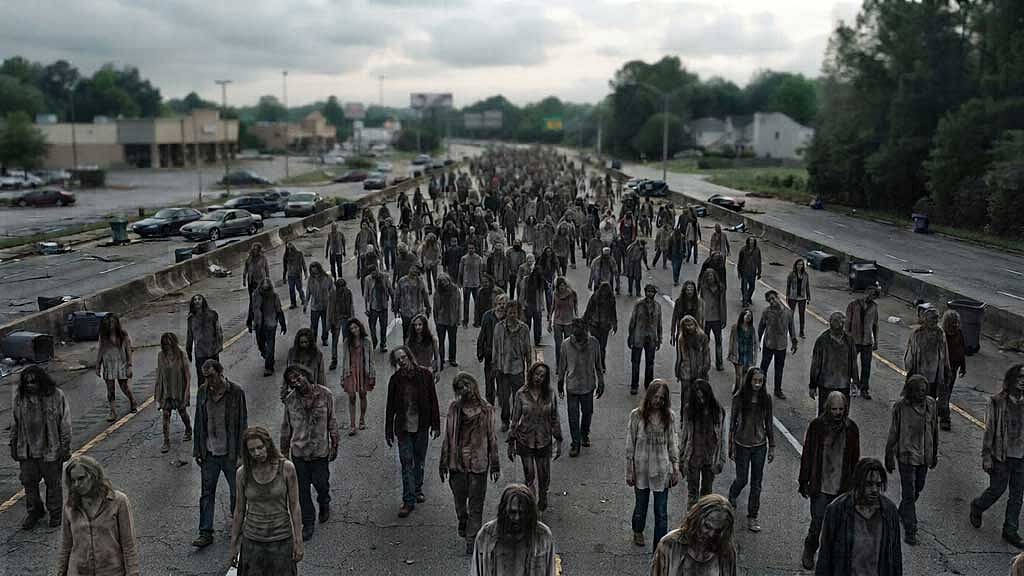
I have seen “Night of the Living Dead”, “Dawn of the Dead”, “28 Days Later”, “Train to Busan”, “World War Z”, “Zombieland”, and “The Walking Dead”.
I was once so obsessed that I traded John Milton’s “Paradise Lost” for a zombie book. Yes, that sounds insane.
“Paradise Lost” is a story of temptation, free will and the fall of humanity. Zombie tales pick up where Milton left off, asking what becomes of people once society crumbles.
One has Satan and forbidden fruit; the other has infected people and survivors fighting over the last can of food.
The US Department of Defense has an unclassified document called “CONPLAN 8888-11: Counter-Zombie Dominance”. It was written by US Strategic Command planners in 2011 and later became public.
According to PolitiFact, it was not a real plan for a zombie invasion. It was a fictional training exercise designed to help military planners practise creating plans and responding to a major disaster.
The document imagined different kinds of zombies, including disease-based, radiation-based, and even “evil magic” zombies. Its stated goal was to protect “non-zombie humans” from a zombie horde.
That sounds funny, but the exercise had a serious purpose: planning evacuation, communication, logistics, public safety, and coordination during a disaster.
Bangla horror has always been full of ghosts, spirits, and things moving in the dark. But zombies have entered Bengali fiction too.
One example is “Manush Pishach” by Hemendra Kumar Roy. The story is often described as one of the first Bangla zombie horror-thrillers, and it also introduced his famous detective duo, Jayanta and Manik.
So zombies are not only a Hollywood idea. Bengali readers have met them in stories too -- though our ghosts still have better manners, better outfits, and a much stronger sense of family drama.
Zombie stories are not only about monsters. They are about fear, survival, trust, and human selfishness.
In “The Walking Dead”, the real danger is often not the dead. It is the living.
In “Train to Busan”, the zombie outbreak becomes a story about class, sacrifice, and family. Even “Zombieland” has rules because survival depends on discipline.
The Pentagon probably is not waiting for zombies to attack. But it did once write an official-looking plan about what to do if they did.
Even after all my explaining, my grandma still thinks zombies are ghosts.
Which is, honestly, a very understandable response.