Published : 13 Aug 2023, 02:51 AM
Updated : 13 Aug 2023, 02:53 AM


Two widely reported news stories in recent days have perfectly captured the escalating public health crisis because of the dengue virus.
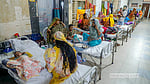
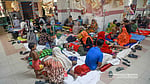
The first story reported on the situation at Dhaka Shishu Hospital for children, where authorities were overwhelmed by a surge of patients suffering from severe dengue infection.
The hospital reached a point where they had no option but to turn away patients, even those in dire need of immediate care.
The second incident concerned a distraught father who was arrested after he allegedly got into a confrontation and later assaulted a doctor at Dhaka's Mugda Medical College Hospital.
This was after the hospital staff advised him to transfer his daughter to another facility due to a shortage of beds.
These events exposed the public health system's struggles to cope with the rising tide of dengue cases. They also shed light on the profound distress and desperation experienced by the populace, particularly when their young ones are affected.
Public health experts have warned about the changing nature of the dengue virus and how it can be detrimental to the general public’s health even before monsoon, peak months of dengue fever, but the queue of patients suffering from the potent virus is getting longer each day.
A pre-monsoon government-funded survey of Dhaka city has uncovered an alarming surge of Aedes aegypti mosquitoes, known carriers of the dengue virus, fuelling the worst spread of the disease over the past five years.
Most of the deaths caused by dengue occurred from haemorrhagic fever and shock syndrome, which health experts associated with some new variants of the deadly virus, previously undetected in Bangladesh.
Data released by the Directorate General of Health Services, or DGHS, indicates that since the beginning of August, at least 2,000 patients have been admitted to hospitals with dengue symptoms every day, and on average, 10 dengue patients have been dying daily.
As of Saturday morning, Bangladesh logged 82,506 dengue hospitalisation cases this year, and the death toll rose to 387.
The dengue outbreak has been worse in 2023 than in previous years.
Last year, hospitals reported 62,382 patients taking medical care, and the death toll stood at 281, the previous highest since record-keeping began for dengue hospitalisations in the 1960s.
In 2019, Bangladesh witnessed over 100,000 dengue hospitalisations, a record number of cases yearly. The official death toll that year was recorded at 179.
The number of dengue-infected patients and the death toll could be higher as the number of people who got infected but did not get tested or got tested but did not go to a hospital are not included in the DGHS data.
Professor Dr Ahmedul Kabir, an additional director general at the DGHS, sounded alarm when he described how bad the current situation is.
“So far, there is no indication of the number of hospitalised dengue patients going down; instead, the number keeps soaring all over the country, which is why we are only prioritising the patients whose conditions are worsening. For the rest, we are advising telemedicine,” he said.
Kolkata, the capital of the neighbouring Indian state of West Bengal, which once had struggled with dengue for decades, successfully kept the spread of the virus at bay.
Bangladesh so far has failed to replicate the result.
Public health experts bdnews24.com interviewed for this article have so far come up with
several reasons.
WHY DENGUE A MAJOR HEALTH CONCERN IN BANGLADESH?
- Dengue control efforts in Bangladesh begin at the beginning of the season each year. Any long-term coordinated initiative is absent here.
- Most of the Aedes aegypti, known carriers of dengue virus, control initiatives are city-centred. In comparison, the disease spread extensively outside Dhaka in the last few years.
- A need for general awareness among people about Aedes aegypti mosquitoes.
INEFFECTIVE MOSQUITO PREVENTION ACTIVITIES OUTSIDE DHAKA
DGHS data indicates dengue patient admittance rate in hospitals outside Dhaka jumped to 46.03 percent by Aug 5 from 28.09 percent on Jun 5.
The data also indicates that more patients were admitted to hospitals outside Dhaka compared to those in Dhaka between Jul 31 and Aug 7.
However, the initiatives to address the situation are similar to two metropolises- Dhaka and Chattogram.
Barishal division has the highest number of patients this year after Dhaka and Chattogram, with more than 7,000 patients.
Out of these patients, until last Sunday, 1,058 patients were from Pirojpur alone.
In a recent survey conducted in the district’s Boldia Union under Nesarabad Upazila, Aedes aegypti mosquitoes were found at a dangerous level, confirmed Dr Shyamal Krishna Mondal, deputy director of the DGHS in Barishal.
The union’s Chairman Md Saidur Rahman told bdnews24.com that currently there is no mosquito control activity in the area.
“We have no allocation in our budget for mosquito prevention activities,” he said.
THE KOLKATA MODEL
Even a decade ago, Kolkata struggled with yearly dengue outbreaks.
Not anymore.
West Bengal Chief Minister Mamata Banerjee told the Legislative Assembly on Jul 31 that 4,500 people have been infected with dengue in the state this year.
Only 900 of the patients were hospitalised, including 290 in Kolkata.
Among the eight deaths from dengue in the state, one occurred in the city.
Kolkata authorities say that such an extraordinary feat of controlling the outbreak was achieved through coordinated efforts.
Atin Ghosh, deputy mayor of the city, told bdnews24.com that they had established a multi-pronged structure in the last 12 years to control dengue, and the city is reaping the outcome of it.
HOW KOLKATA CONTROLS DENGUE OUTBREAK
- Mosquito control in Kolkata is conducted at three levels. First, at each ward, a borough with a few wards and the municipality supervises the activities of all the boroughs.
- The city authorities have five experts who conduct regular mosquito research programmes. There are 32 rapid-action teams. Dedicated dengue detection centres have been established.
- Each ward has one health centre for dengue detection. A total of 300 doctors and pathologists have been working in these centres.
- Instead of fogging, the Kolkata city authorities focus on eliminating mosquito eggs and larvae, with a massive team of 3,500 trained people who can identify sources and patients.
Kolkata’s Chief Vector Control Officer Debashish Biswas played an essential role in controlling mosquitoes.
“If mosquito larvae are found in someone's household, my people warn them on the first day and show necessary techniques to eliminate mosquitoes. We make a second round of visits after a week, and if larvae are found again, we penalise them,” he said,
“Social awareness is critical here. A strict penalty system is crucial to make people aware.
In Dhaka, both the city corporations have been using larvicide in the morning and adulticide in the afternoon to control mosquitos. The city corporations also spray insecticides on streets, open spaces and drains outside houses to kill mosquitoes.
Recently, city corporations have been meeting with public and private stakeholders to raise awareness about dengue control.
Penalties are being imposed through mobile courts to destroy mosquito breeding grounds.
However, there was hardly any improvement in the dengue situation because of a lack of coordinated initiatives.
Dengue control initiatives in cities outside Dhaka are next to none. Furthermore, there needs to be a mosquito control system in rural areas.
In 2019, when the dengue outbreak peaked, some Kolkata experts were brought to Dhaka. At that time, they made several recommendations.
Dr Mushtuq Husain, an adviser to the Institute of Epidemiology Disease Control and Research, or IEDCR, was part of the team which received guidance from the Kolkata team.
“In Kolkata, they use a round-the-year effort to prevent dengue outbreak. After the visit, we started preparation to set up guidelines, integrated vector management, and a separate directorate. However, with the advent of the COVID-19 pandemic, the plans for dengue did not go ahead.”
Dr Mushtuq said Bangladesh authorities should have restarted the effort in 2022 after that year's massive casualties.
“Instead, we did nothing.”
Dr Mushtaq said an inter-ministerial coordinated control room is required, which will issue instructions based on the analysis at the local level.
Renowned medical entomologist, Prof Dr Kabirul Bashar of Jahangirnagar University, was in Barishal in early July on a personal visit. He described the mosquito and dengue situation in the city as “bad enough”.
“I hardly found any mosquito eradication drives in the city while the cases were rising,” he said.
UNAWARE CITIZENS, INEFFECTIVE MOSQUITO REPELLENT DRIVE
Public health experts keep saying social awareness is vital to bring dengue under control since the sources of the dengue-carrying mosquito larvae breeding are inside private properties, which the authorities can not reach.
The city corporations in Dhaka have been running a drive to punish landlords for keeping their houses messy enough to turn those into a breeding ground for Aedes aegypti.
The Aedes mosquito lays its eggs in water-filled containers in or around the house, where the larvae develop. Mature mosquitoes rest indoors behind cupboards, under beds, behind doors or windows.
Two city authorities have been spraying insecticides outside homes, on streets or in sewerage drains.
Entomologists say that larvae or full-fledged Aedes mosquitoes are rarely found on roads and drains, which is why the effectiveness of the ongoing mosquito control drives is being questioned.
In a survey by the DGHS from Jun 18 to 27, At least 3,149 houses under two corporations were visited, and Aedes mosquito larvae were found in 549 houses.
Of these 549 households, 11.83 percent were in slums or semi-paved buildings and 5.10 percent of empty plots had Aedes mosquito larvae.
Analysis of survey data also showed that more larvae were found indoors and in yards.
“You can only find 5 to 10 percent of larvae on the street. In my 27 years of experience, I've never found an Aedes mosquito larva in a drain.” Biswajit Chowdhury, an entomologist who participated in the mosquito detection survey, said.
Prof Kabirul said the mosquito control activities have not been moving in the right direction in Dhaka.
“Aedes [Aedes aegypti] mosquitoes live in basements, parking lots, houses, and yards. Those who are spraying insecticides, I don’t see them targeting those areas,” he said.
Ex-president of Bangladesh Zoology Association entomologist Dr Manjur A Chowdhury agreed with Dr Kabirul.
“It is important whether the mosquito repellent is applied to specific target areas. If incorrect, the mosquito and larvae will not be killed.”
Dhaka South City Corporation’s Chief Health Officer Dr Fazle Shamsul Kabir said the city authorities have not been getting enough support from the people to control mosquitoes.
“This is the only problem. They [citizens] are not listening to repeated requests not to let water gather in the house. Aedes mosquito will not be eradicated if this trend continues.”
“We are now even trying to get inside the houses. However, it is not possible to go inside every room.”
Dhaka North Mayor Md Atiqul Islam said his team has been doing all they can.
“Regular operations are being conducted, task forces have been formed, awareness is being raised by visiting educational institutions,” he said.
“We are emphasising more on raising public awareness. Meetings are being held with teachers, mosque imams, and parents in every ward.”
When approached, Tajul Islam, the local government and rural development minister, said that an integrated guideline has already been made, and all local government institutions have been put on alert.
[Writing in English by Adil Mahmood; editing by Biswadip Das]