Published : 27 Oct 2026, 01:16 AM
Updated : 27 Oct 2026, 01:17 AM


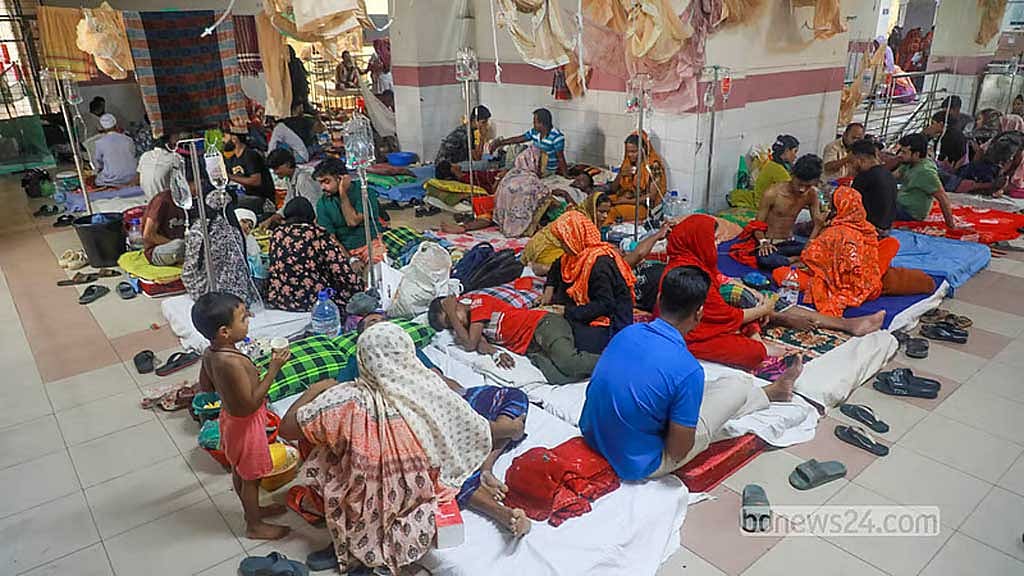
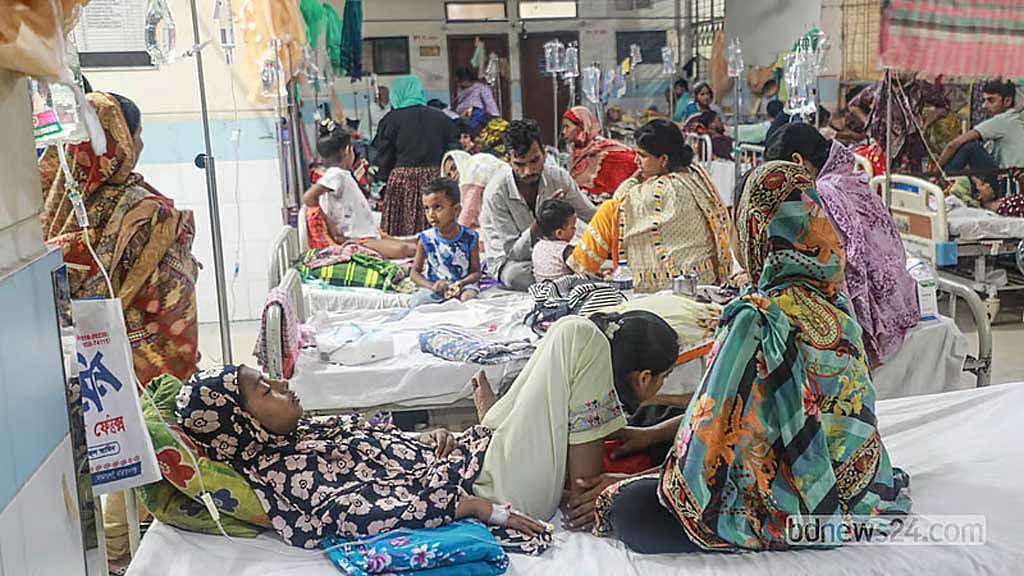
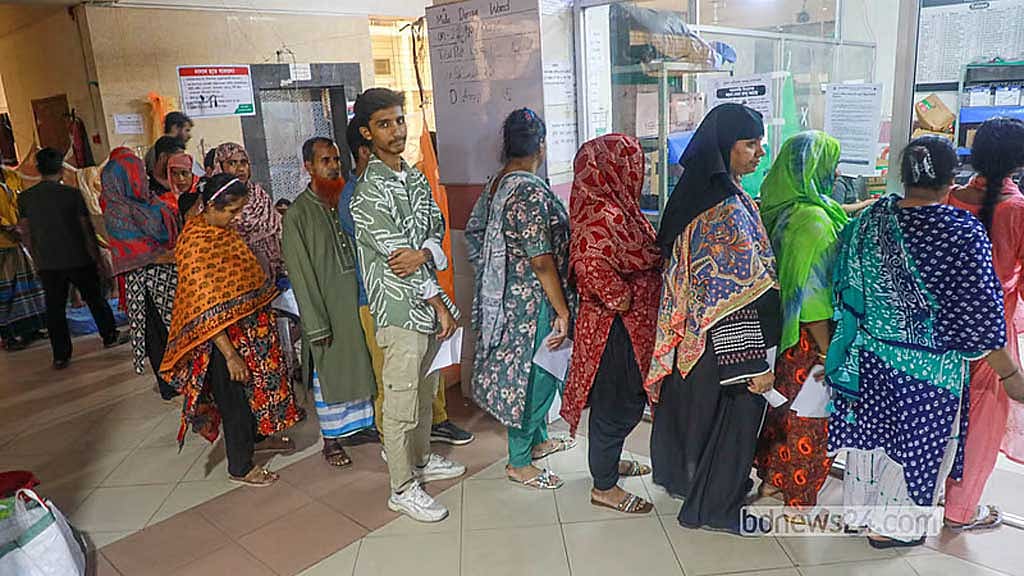
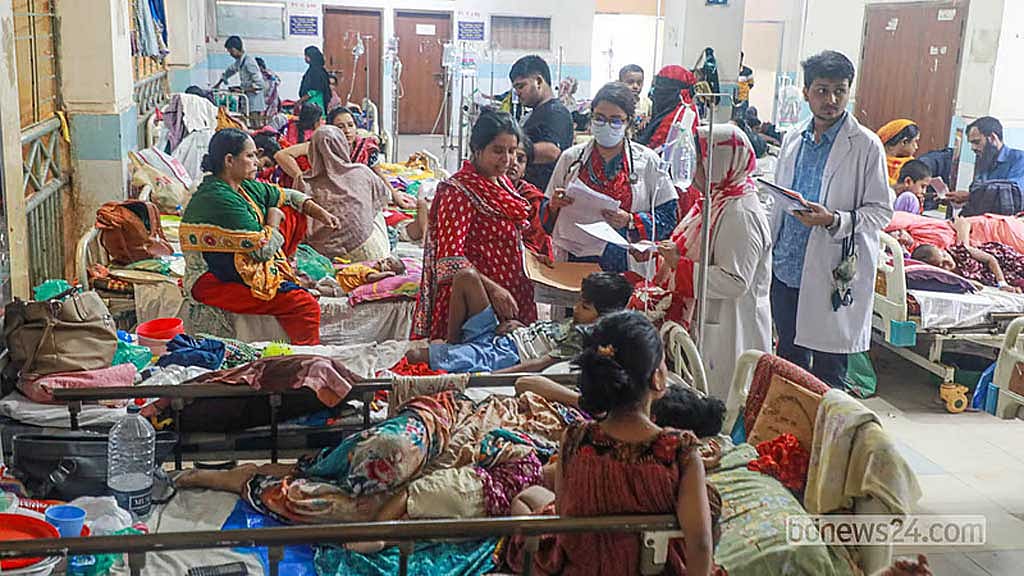
The warning signs were there long before dengue began overwhelming hospitals. Before October was even over, more than 126,000 patients had been admitted with the Aedes mosquito-borne disease and over 380 had died.
The hospitalisation tally is the second-highest in 26 years of recorded data.
The Directorate General of Health Services (DGHS) has tracked hospitalisations and deaths since 2000, but patients who never enter hospital are excluded.
In 2023, more than 300,000 people were hospitalised and 1,705 died; last year, admissions reached 101,214.
Entomologist Prof Kabirul Bashar of Jahangirnagar University’s zoology department says all three rounds found more larvae than in previous years in Dhaka.
In earlier surveys, larvae were typically found at around 10 of every 100 potential breeding sites. This year, the proportion rose several-fold.
At the start of a dengue-prevention drive on Jun 6, Health Minister Sardar Md Sakhawat Husain warned: “Doctors fear that dengue could take a severe turn this year. So everyone must remain alert from the beginning.”
He said mobile courts would operate every two or three days, adding: “Action will be taken against those responsible at any institution or premises where larvae of dengue-carrying mosquitoes are found. Fines will be imposed.”
What is the Government Doing?
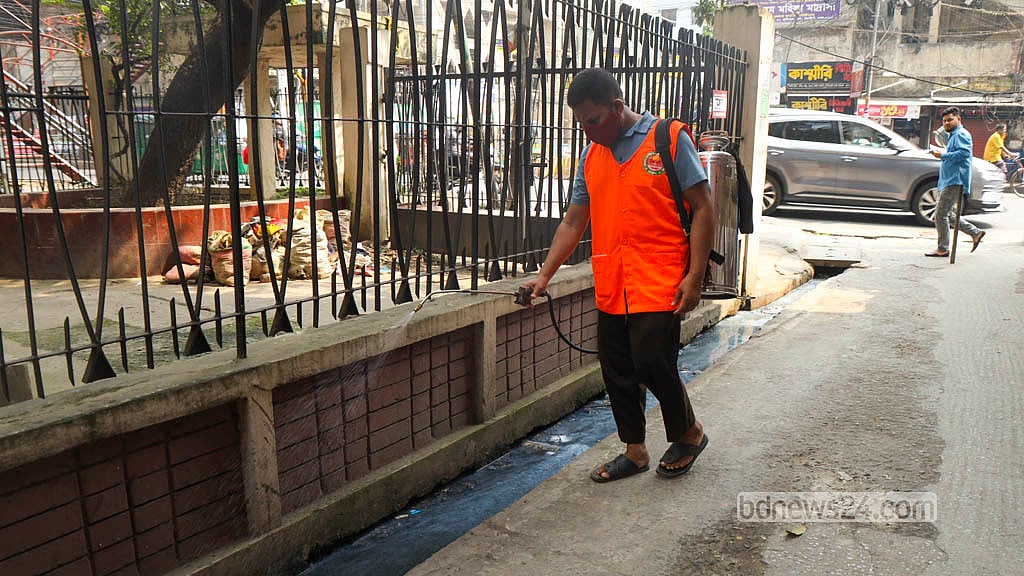
Prime Minister Tarique Rahman launched a nationwide prevention campaign on Sept 12. It will continue until Dec 12.
ANM Bazlur Rashid, secretary of the Health Services Division, said: “Cleanliness drives to control mosquitoes began in May this year. Mosquito-control activities are continuing across the country.
“From the capital to Upazila level, we have carried out various activities, including announcements over loudspeakers, leaflet distribution and awareness advertisements.”
Brig Gen Imrul Kayes Chowdhury, chief health officer of Dhaka North City Corporation, said his team worked regularly in Mohakhali.
“We carried out extensive work there just two days ago, ahead of the prime minister’s visit. It is difficult to keep mosquitoes under control in that area without regular work.
“People think no work is being done there. But our operations focus more on source reduction and larviciding. These activities make no noise and produce no smoke, so people do not realise a team is working.
“When fogging machines are used, the area fills with smoke and there is noise. Then people can see that work is being done. But mosquito control does not mean simply operating fogging machines.”
He said residents must share responsibility: “We cannot blame only the city corporation or the weather for mosquitoes not dying. Citizens must be involved too.
“Aedes mosquitoes live inside homes. It is impossible for Dhaka North City Corporation to visit the 6 to 7 million homes of its 15 million residents.
“During visits in September, I found larvae in the basements of many buildings. The problem is worse in places we cannot visit regularly. Our mosquito-control workers are often not allowed into basements, and access to rooftops can raise security concerns.”
He said workers had been issued identity cards, QR codes and uniforms.
“But mosquito control is difficult for the city corporation alone if citizens do not cooperate,” he said.
He said larvae had been found around household taps and dish racks. “It is essential not to let water collect in these places,” he said.
“If building managers, security staff and residents are a little more aware, it becomes much easier to identify and destroy breeding sites. Citizens must keep their homes and surroundings clean. Without everyone’s cooperation, it is almost impossible for the city corporation alone to control Aedes mosquitoes.”
Jahane Ferdous Binte Rahman, chief health officer of Dhaka South City Corporation, also called for shared responsibility.
“I am a doctor myself, and I am concerned too. But it is not enough for us alone to be concerned. Teachers and students, journalists, cleaners, hospital authorities and senior officials all need to be aware.
“Even now, in large buildings, air-conditioning drainage pipes often do not reach the ground. They are cut off halfway, allowing water to drip. I have seen this around my own home.
“Even a small amount of stagnant water is enough for Aedes larvae to develop. We must pay attention to these things.”
She acknowledged the limits of municipal work: “We have some limitations too. Let us see whether more crash programmes and monitoring in November can help bring the situation under control. I hope we can work more effectively.”
‘Current Approach Will Achieve Nothing’
Prof Kabirul said mosquito-control methods had major shortcomings.
“We control mosquitoes in a general way, but Aedes mosquitoes are not like other mosquitoes. Their behaviour and breeding patterns are completely different.
“So we cannot simply target mosquitoes in general; we must take measures specifically targeting Aedes. This is where we are going wrong.”
He said authorities needed to identify where Aedes mosquitoes breed, how extensively they do so and what controls should be applied at those exact locations.
Public health specialist Mushtuq Husain said, “The government is following routine practices, distributing saline and medicines in hospitals. It is indifferent to the need for urgent action in a situation like this.”
Mushtuq, a former chief scientific officer at the Institute of Epidemiology, Disease Control and Research, said: “The government is currently busy buying aircraft and military equipment, but people are dying every day from measles and dengue.
“Given the current situation, it is difficult to act without declaring an emergency. But the government does not understand this, and we public health experts have failed to convince it.”
“The method being used to control mosquitoes will achieve nothing. A committee involving different kinds of experts is needed for mosquito-control operations.”
Public health specialist Be-Nazir Ahmed said the outbreak reflected the absence of national mosquito-control efforts since 2000.
“Judging by this year’s patient numbers, dengue will be even more severe in the future. A national policy and an expert team are needed to control it.
“Aedes mosquitoes need to be monitored throughout the year by people who can oversee all aspects of mosquito control and carry out science-based work.”