Local govt 'should deal with urban health'
Experts say only the health ministry should not be responsible as urban health includes water and sanitation.
bdnews24.com News Service
bdnews24.com
Published :
08 May 2012, 09:29 AM
Updated :
09 Aug 2022, 03:46 PM
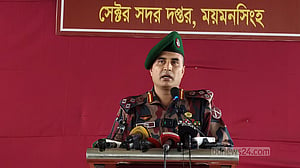
Dhaka, May 8 (bdnews24.com)—Hinting at the city corporations or municipalities, the chairman of the parliamentary standing committee on land ministry says elected representatives should take the responsibilities of urban health and all ministries should assist them.
AKM Mozammel Huq made the suggestion at a Bangladesh Urban Health Network's discussion in the capital amid ongoing debate about who will oversee urban health in Bangladesh witnessing rapid, but unplanned urbanisation.
Health Minister AFM Ruhal Haque on different occasions said the urban primary healthcare should be under his authority as the local government that ran it had 'no expertise to do it.'
But experts disagree.
They say it should not only be the health ministry that will deal with urban health, diseases and their treatment. Urban health entails a broader spectrum of issues including water and sanitation, they argue.
Terming the lack of a proper urban strategy a 'political failure', Huq, the MP from Gazipur-1 constituency, said: "We have no scope to blame bureaucrats. It's our failure. We don't understand the issue, so we cannot implement it."
"We have to have a strong local government under elected representatives' leadership. Other ministries should assist them. It's not the job of a single ministry."
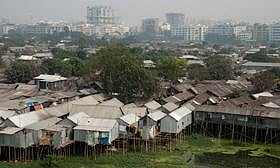
Since people migrate from rural to urban areas mostly in search of livelihood, Bangladesh's urbanisation is mono-city based. The capital Dhaka is growing at an unprecedented rate of at least 6 percent every year.
Formation of an urban health strategy is underway as demographers predict equal number of urban and rural population within the next 20 years in Bangladesh with increasing trend of internal migration to make a living.
The strategy aims to see urban people, particularly the poor, healthier, happier and economically productive, according to the draft.
"We have no scope to see urban health only from the health perspectives. We must consider water and sanitation issues as well. Once we start to see it through health perspectives, it will be confined within disease and treatment," said Dr Abu Jamil Faisel, country director of EngenderHealth.
Studies suggest growing disparity between the health conditions of the urban poor and rich.
Available urban health statistics suggest infant mortality rate in urban slums is 63 per 1000 births while it is only 29 in non-slum areas. Nearly 80 percent deliveries are assisted by unskilled attendants in slums.
Child malnutrition is 55 percent in slums while it is 40 percent in non-slum areas.
bdnews24.com/nih/bd/1423h