Published : 10 Apr 2023, 02:36 AM
Updated : 10 Apr 2023, 03:29 AM


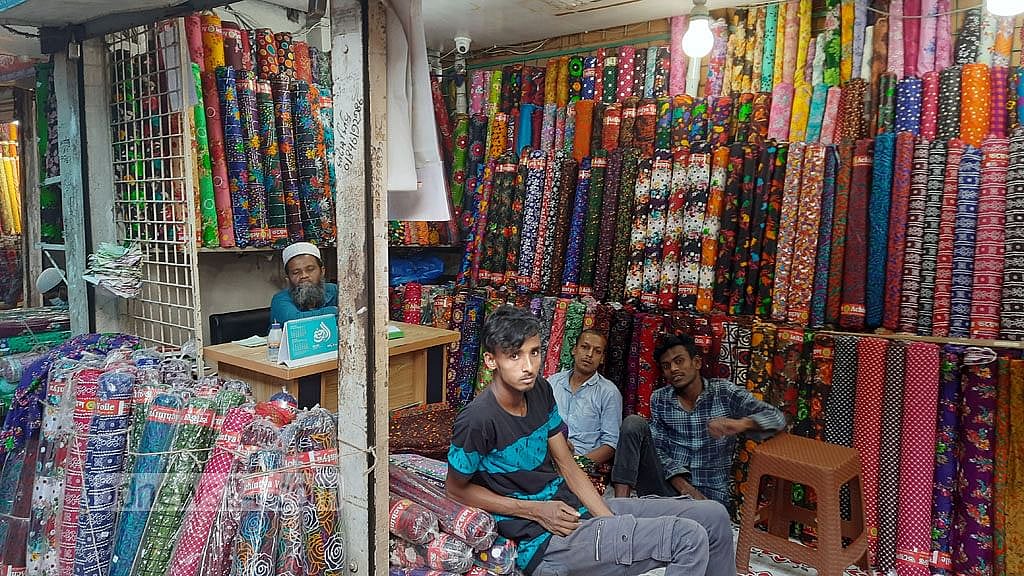
Ramadan is usually the busiest time of the year for textile merchants in Narsingdi’s Baburhat, arguably the largest wholesale marketplace for traditional clothing items for the middle class in Bangladesh.
The weekly marketplace, which, legends say, was borne out of egotistical infighting between a Hindu feudal lord and his jealous brother during the British colonial era, racks up a turnover of Tk 20 billion each week in regular times and before the Eid-ul-Fitr festivities, the sales grow to at least four times than average, according to Gias Uddin Ahmed, president of the association of Baburhat clothing merchants.
However, this year, as described by Rakib Hasan, a Ram Krishna Saha Collection salesperson, pre-Eid sales at the almost 90-year-old marketplace lack “stamina” and “momentum”.
“I work at the store's Orna [scarf-like accessories for women] section. Ramadan is usually our peak period of the year. But sales this year took a major hit,” he said.
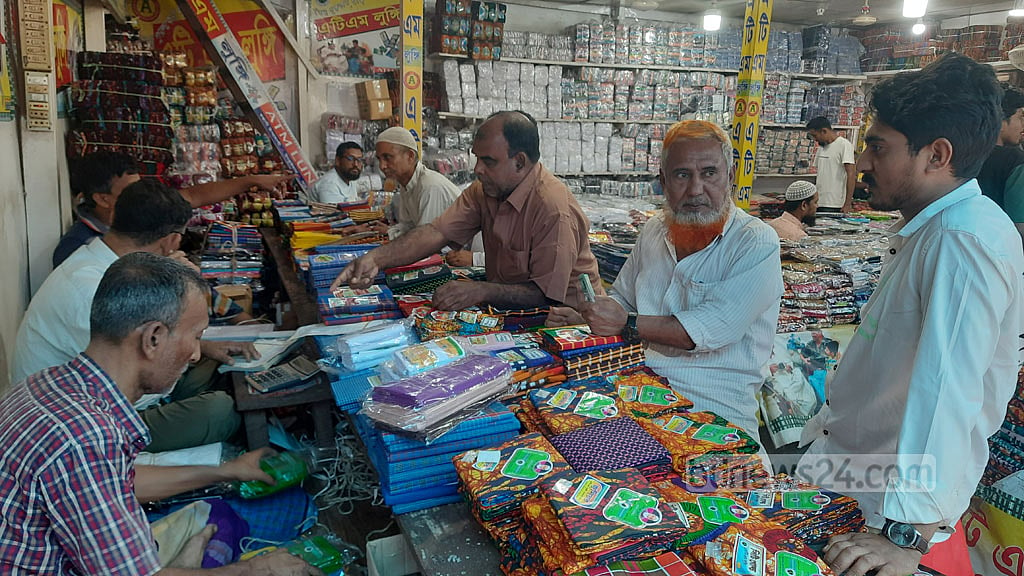
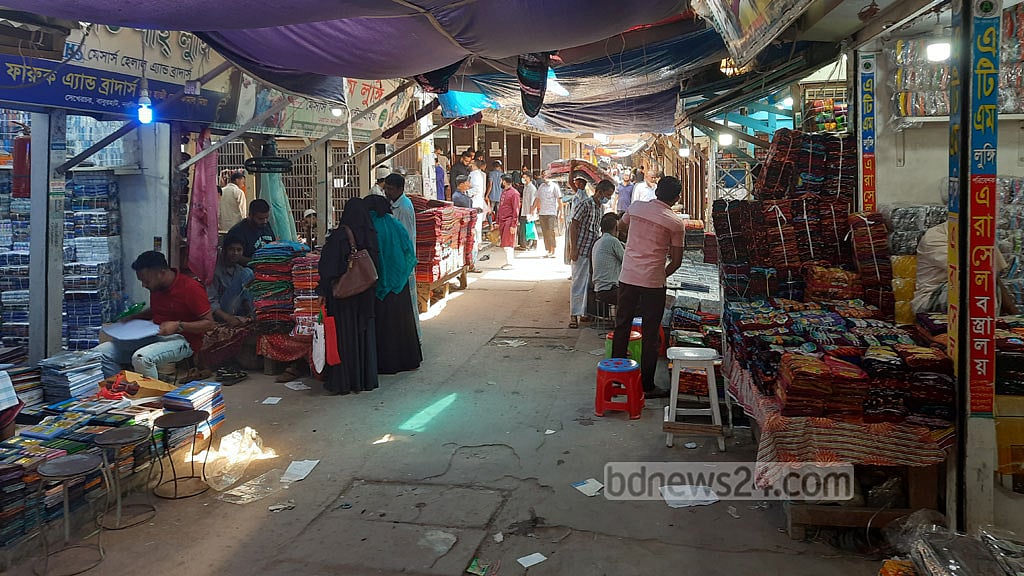
“The footfall had been so massive in the marketplace since the beginning of each Ramadan that we couldn’t even have time to take a breather. Look at it now, almost deserted. Sales volume has dropped to a shocking 25 percent compared to the previous year.”
To deal with the slump, businesses even agreed to cut up to Tk 10 for every yard of fabric.
The move apparently failed to make any impact, according to traders interviewed for the article.
The reason?
Just like other sectors, the merchants of Baburhat blamed the rising inflation in Bangladesh, which, according to the Bangladesh Bureau of Statistics, hit 9.33 percent in March, prompting a senior Bangladeshi minister to forecast that the consumer price index is likely to cross the double-digit mark amid a surge in prices during the Eid-ul-Fitr holiday spending season.
The data from the logistics agencies which handle the shipment of products also indicated a significant drop in sales.
Nayan Mia, a staffer of the trucking agency Messrs Baki Siddique, said the demand for their trucks had halved in recent months.
“We use a fleet of at least seven trucks to ship products from Baburhat to different parts of the country. Half of the fleet is being used now,” he said.
THE SIGNIFICANCE OF THE BABURHAT MARKETPLACE
Baburhat, officially known as Shekherchar Baburhat, is home to the textile mills of the household brands like BL Print Saree, Johny Print Saree, Pakiza Print Saree, ATM Lungi, Amanat Shah Lungi, Smart Lungi as well as many other brands.
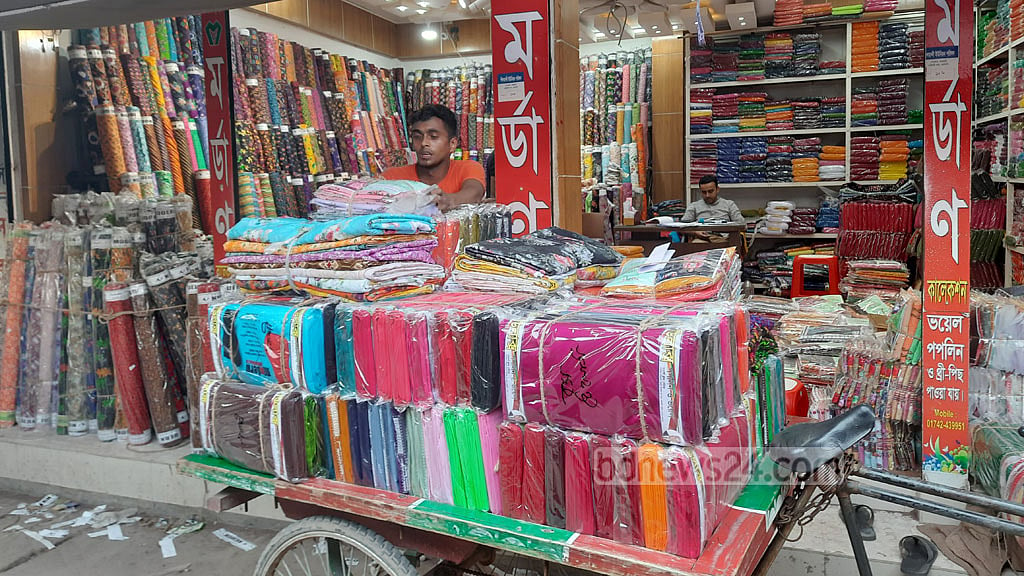
Apart from these brands, merchants at the wholesale marketplace sell generic brand Sarees, Salwar suits, varieties of fabrics, Sarees branded as Tangail Saree, Katan Sarees, and Jamdani Sarees, as well as home textile products.
The bulk volume of clothing items for Dhaka’s high street fashion houses as well as in Islampur, the largest marketplace for fabrics in Dhaka, are supplied by the Baburhat wholesalers.
FABRIC PRICES UP DUE TO VOLATILE THREAD PRICES
Merchants at Baburhat categorically pointed out they were forced to increase the prices of their products as since February, the market of threads, a core element to produce clothing items they sell, has been volatile.
Asit Saha, the proprietor of Sree Laxmi Bostraloy in Baburhat, accused a cartel within the thread manufacturing industry of manipulating thread prices, which affected the prices of the finished products they sell.
“The items we used to sell at Tk 200 increased to Tk 300 due to thread price manipulation. A bolt of a generic fabric has increased to Tk 200 average,” he said.
Abdul Malek, incumbent manager of LB Cloth Store and a veteran of 33 years at the Baburhat marketplace, portrayed the same narrative.
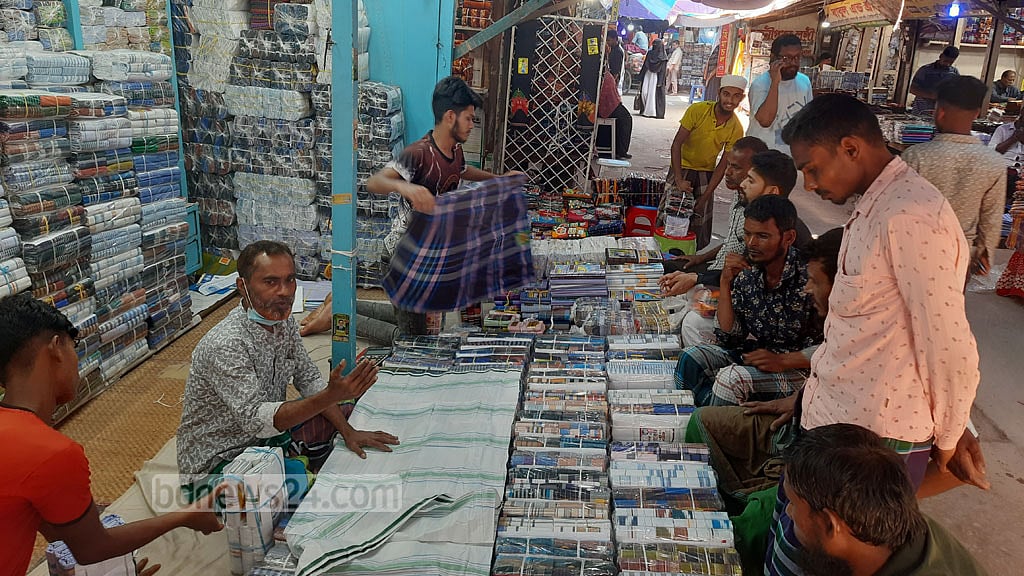
“The mill owners have reduced the thread prices slightly, which allowed us to reduce the fabric prices up to Tk 10. But it wasn’t enough for our regular customers, who already were forced to cut budgets due to inflation. So, we are still stuck in a slump, even at the height of the peak sales season,” he said.
MALE CLOTHING MARKET WAS HIT THE HARDEST
The traders who predominantly focus on selling male clothing items and accessories, especially Lungis, have been facing the worst impact of the slump.
Lungi is the preferred choice of gift items for males among people with low income, and many people purchase Lungis in bulk to distribute in the form of Zakat, an obligatory charity for Muslims before Eid festivities,
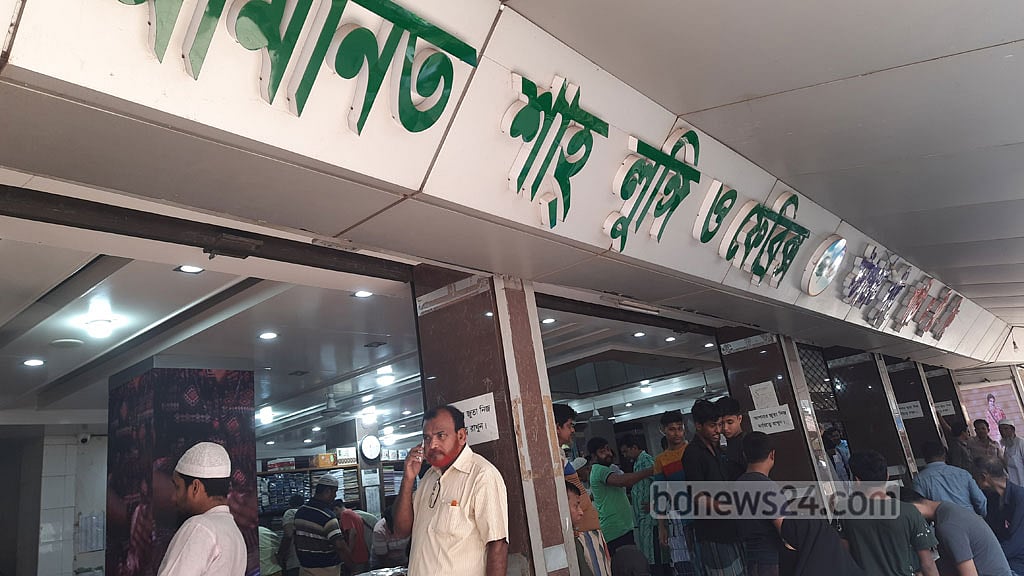
However, this year, according to Masudur Rahman Noman, a salesperson of Aftab Enterprise, prices of a set of four Lungis were increased to at least Tk 100 and prices of threads have gone up.
“The set of four Lungis we sold last year at Tk 550 is now Tk 700. Similarly, the set we sold at Tk 2.200 is now Tk 2,500,” he said.
Sentu Mia, a staff at Mohnini Bostraloy in Baburhat, agreed with his colleague.
“Male clothing and accessories market was hit the hardest. We are mostly selling female clothing and accessories, but the volume is considerably less than what we sold last year,” he said.
Gias Uddin, president of the Baburhat clothing merchants association, said that since inflation hit their target market the hardest, people are prioritising necessities over clothing.
“Recession hit the whole world. People are considering putting food on the table instead of buying new clothing items,” he said.
[Writing in English by Adil Mahmood]