
Published : 28 Nov 2026, 10:31 AM
Updated : 28 Nov 2026, 10:42 AM


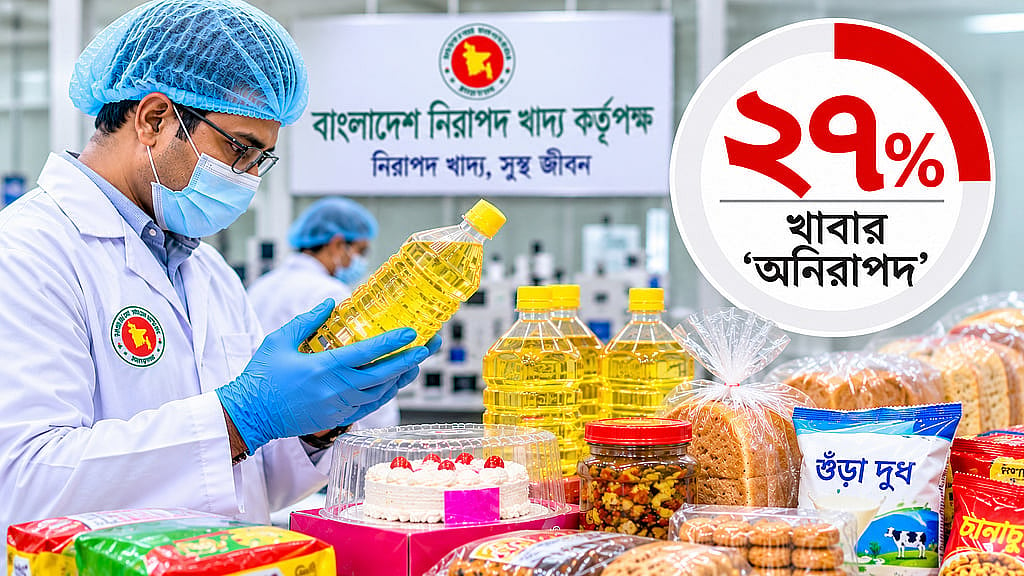
More than a quarter of the food samples tested by the Bangladesh Food Safety Authority (BFSA) over a nine-month period have been found to contain substances exceeding permissible limits.
A total of 37 substandard and potentially hazardous food products, including edible oil, bread, cakes, baby food and powdered milk, have been withdrawn from the market.
The findings were presented at the second meeting of the Parliamentary Standing Committee on the Ministry of Food at the Parliament Building on Tuesday.
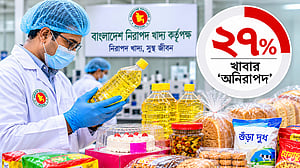
According to the BFSA report, 25,521 food samples were tested across three types of laboratories between February and October, with irregularities detected in 6,928, or around 27 percent.
Asked why only 37 products had been recalled despite the high number of samples failing tests, BFSA Chairman Shafiqul Islam told bdnews24.com that not all violations warranted the same response.
“Contamination occurs at different levels. In some cases, it is low, while in others it is high,” he said.
The authority considers the severity of contamination, how widely a product is consumed and its intended consumers, with particular attention paid to food for children and the elderly.
Depending on the risks, products may be withdrawn or destroyed, while manufacturers may face warnings, fines or criminal proceedings.
How Products Are Withdrawn
Shafiqul said withdrawal orders generally target specific production batches rather than all products sold under a particular brand.
Manufacturers are notified in writing, while the authority's 72 field offices monitor the removal of affected products from the market. Some products are subsequently destroyed.
The authority also publishes information about product withdrawals on its website, he said.
Among the 37 products withdrawn were edible oil, bread, cakes, molasses, savoury snack mixes, pickles, kewra water, rose water, baby food, vermicelli, chocolate, beverages and powdered milk.
Under Section 43 of the Food Safety Act, 2013, food businesses must notify the public and the BFSA and withdraw products they have reasonable grounds to believe are substandard or contain hazardous substances.
The authority can also order the withdrawal of such products.
What the Tests Revealed
Government-recognised laboratories tested 1,617 samples during the nine-month period, finding irregularities in 618, or 38.2 percent.
Mobile laboratories detected irregularities in 901 of 9,679 samples, a rate of 9.3 percent, while smaller laboratories found problems in 5,409 of 14,225 samples, or around 38 percent.
Shafiqul acknowledged limitations in testing capacity, given the thousands of different food products available in Bangladesh.
Other government agencies, including the Bangladesh Standards and Testing Institution (BSTI) and those responsible for agriculture, fisheries and livestock, also conduct food safety tests within their respective jurisdictions.
Nearly Tk 20 Million in Fines
Between February and October, the BFSA conducted 143 mobile court operations at food manufacturing facilities, resulting in 137 cases, fines totalling Tk 19.59 million and prison sentences for seven people.
The authority has also conducted joint operations with other government agencies to tackle pesticide and chemical residues in fruits and other food products.
Concerns over harmful chemicals being added to baby food and milk were raised at the parliamentary committee's first meeting on Oct 15.
Jamaat-e-Islami MPs called attention to alleged adulteration in several areas and urged stronger monitoring at production sites, tougher penalties and the cancellation of licences of offending businesses.
State Minister for Food Abdul Bari said plans were underway to establish three large laboratories in Dhaka, Chattogram and Khulna, alongside smaller district-level laboratories and additional mobile testing facilities.
He also outlined plans to introduce mandatory testing and clearance of imported food products before they enter the domestic market.
Death Penalty for Food Adulteration
At Tuesday's meeting, Food Minister Afroza Khanam Rita called for tougher laws to combat food adulteration, including provisions for the death penalty if necessary.
Shafiqul said introducing more severe penalties under the Food Safety Act would require legislative amendments.
“Under this law, a prison sentence of more than five years cannot be imposed,” he said.
However, Section 25C of the Special Powers Act, 1974, already provides for the death penalty, life imprisonment or rigorous imprisonment for up to 14 years, alongside liability to a fine, for certain offences involving harmful food adulteration and the sale of unsafe food.
Shafiqul said judicial powers would also need to be considered.
With executive magistrates conducting mobile courts limited to imposing prison sentences of up to two years and food courts subject to sentencing limits, tougher penalties could require special tribunals or jurisdiction to be granted to higher courts at the district level.
Proposed Tk 1 Million Administrative Fine
The food ministry also presented proposed amendments to the Food Safety Act that would allow administrative fines of up to Tk 1 million for serious violations uncovered through complaints or inspections.
Section 78 of the existing law allows administrative fines of up to Tk 300,000 under certain conditions for failure to comply with the authority's directives.
The proposal would also award complainants 25 percent of the administrative fines collected, potentially amounting to Tk 250,000.
Section 62 already entitles complainants, excluding BFSA officials and employees, to a quarter of fines imposed upon conviction by food courts.
The proposed amendment would extend the financial incentive to administrative fines.