


Published : 28 Sep 2017, 11:15 PM
Updated : 19 Oct 2022, 03:47 PM


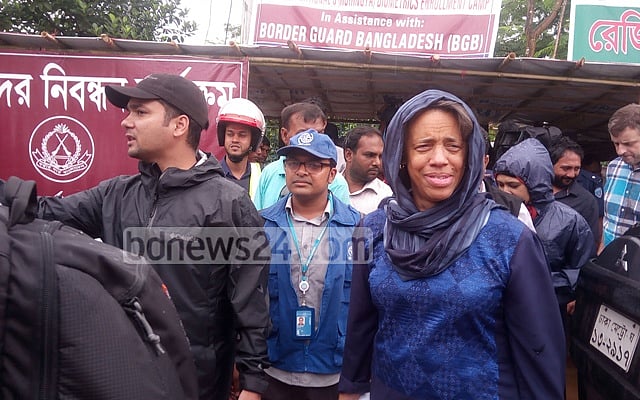
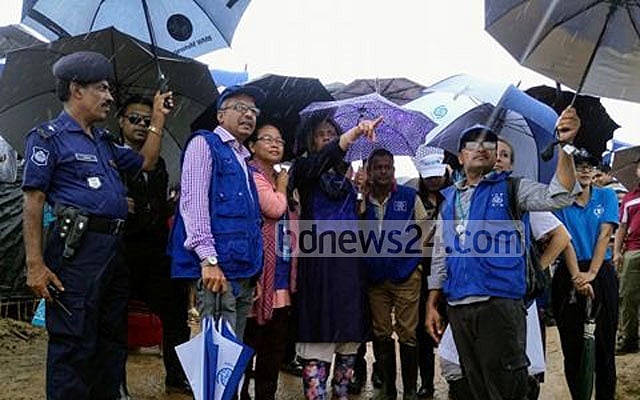
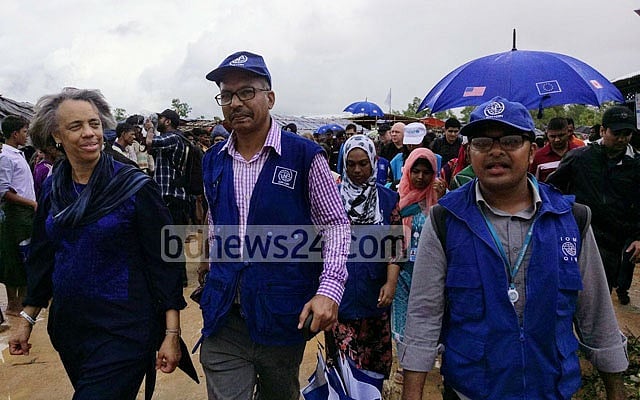
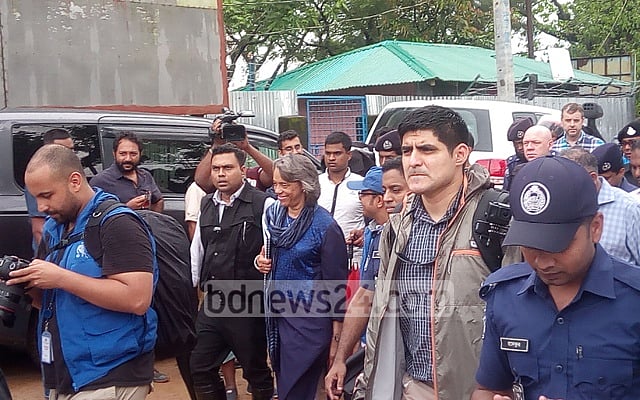
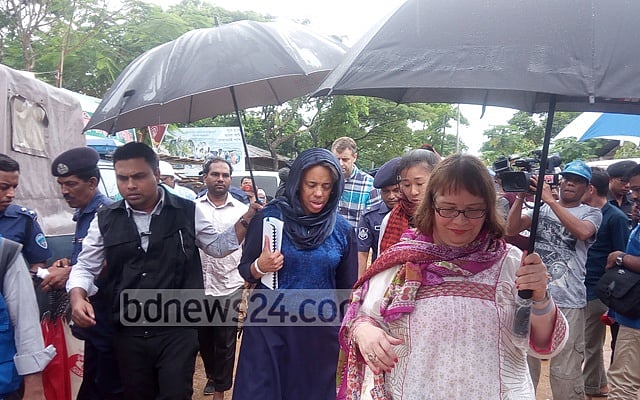
She was speaking to journalists during a visit to Kutupalong refugee camps at Ukhia in Cox's Bazar on Thursday.
Bernicat said that the United States contributed $6 million to the World Food Programme or WFP as humanitarian aid for Bangladesh to tackle Rohingya crisis. The amount is in addition to the one million her country committed earlier in the year, she added.
She said she believed that the problem would be solved through "dialogue and diplomatic process."
Bernicat reached Cox's Bazar on a special flight at around 11am on Thursday and then travelled to Kutupalong refugee camp at around 1pm.
She witnessed the registration process of the Rohingya refugees and food distribution programme undertaken by the International Organisation for Migration (IOM) and WFP.
She, later, went to the zero point between Bangladesh-Myanmar border at Ghundhum-Tambru and spoke to the stranded Rohingyas.
Later, at a media release, the Embassy said that the recent funding to WFP complements assistance announced by the United States on September 20, which included $28 million in assistance to Rohingya refugees and host communities in Bangladesh.
"This new funding brings US humanitarian assistance to Rohingya in the region to approximately $101 million in Fiscal Year 2017.
"In 2017, the US Government, through USAID, has provided over $212 million in development assistance to Bangladesh.
"In Cox’s Bazar, USAID helps improve the lives of Bangladeshis, including those in communities hosting refugees, through programs that expand economic opportunity, advance health and education, and ensure human rights and practices," it added.
Meanwhile, the United States Center for Disease Control (CDC) and USAID have been partnering with the Ministry of Health and ICDDR, B to strengthen Bangladesh's capacity to respond to public health events and disease outbreaks.
The CDC is also providing technical assistance to the Ministry of Health and the IOM and other partners on the management of the public health aspects of the Rohingya crisis.
The CDC staff from Washington DC, with expertise in refugee health and public health crisis management, will be engaged for several weeks in refugee camp health assessments, strategies for reducing disease risks, and the establishment of health information and management systems, according to the media release.












