Published : 08 Mar 2017, 06:41 PM
Updated : 05 Aug 2022, 07:16 PM


They were given the false promise that by doing so, they would be able to stay in the country longer, according to Japanese media.
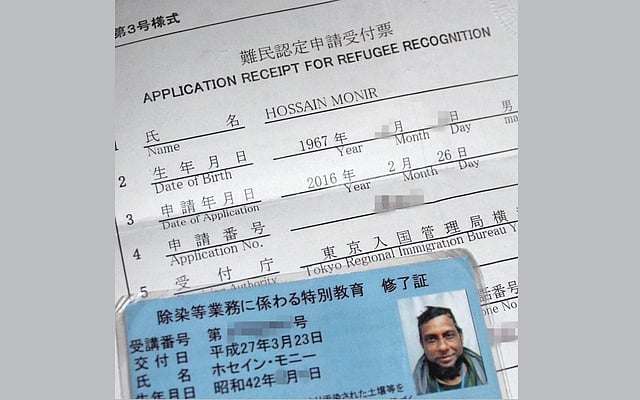
The two men, who arrived in Japan in 2013, said they were told by brokers and construction companies that their visas would be extended if they did decontamination work, Reuters news agency said citing the Chunichi newspaper on Wednesday.
The Bangladesh embassy in Japan says it will check whether the two lied to get asylum.
Chunichi identified the duo as Monir Hossain, 50, and Delwar Hossain, 42.
The Fukushima nuclear plant suffered multiple meltdowns after being hit by a tsunami triggered by a big earthquake on March 11, 2011.
Companies decontaminating areas around the plant, which usually involves removing top radioactive soil, have struggled to find workers willing to do the job.
"We believed the visa story because they said it's a job Japanese people don't want to do," Chunichi quoted one of the men, Monir Hossain, as saying.
The men did the decontamination work in Iitate village, about 50 km (30 miles) south of the plant, from January to March 2015, Chunichi said.
Mohammad Jobayed Hosen, second secretary at the Embassy of Bangladesh in Tokyo, told bdnews24.com on Wednesday that many Bangladeshis looking for a job came to Japan in 2012 and 2013.
The Bangladeshis get the option to work even after coming to Japan with a tourist visa, and many of them apply for asylum, Jobayed said.
According to him, the number of such Bangladeshis in Japan is more than 100.
"We are checking whether any of them was forced to work at Fukushima nuclear plant. But if someone joins the work willingly, we will have nothing to do," he said.
"We will also check whether they (the BNP workers) lied for political asylum," he added.
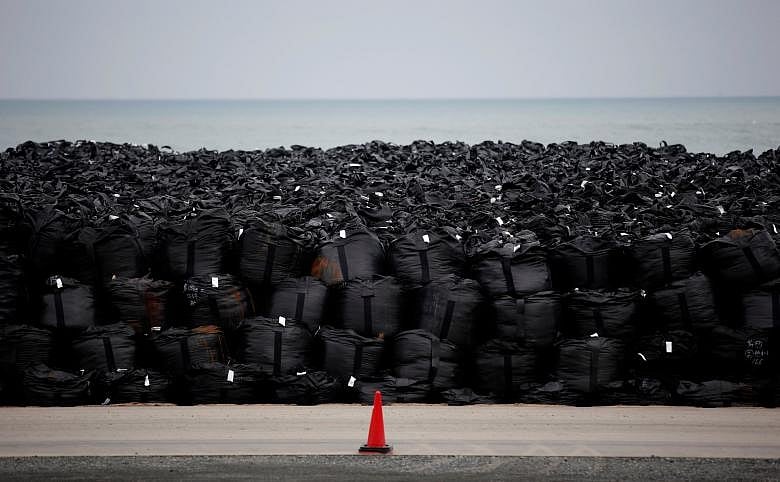
FILE PHOTO - Big black plastic bags containing radiated soil, leaves and debris from the decontamination operation are dumped at a seaside, devastated by the March 11, 2011 earthquake and tsunami in Tomioka town, Fukushima prefecture, near Tokyo Electric Power Co's (TEPCO) tsunami-crippled Fukushima Daiichi nuclear power plant. February 22, 2015. Reuters
Many have permits allowing them to stay and work that have to be renewed every six months.
Mitsushi Uragami, a justice ministry official who oversees refugee recognition, said there were no residence permits on offer for people doing decontamination.
"The length of asylum seekers' residence permits and them doing cleanup work are unrelated. If anyone is giving inaccurate explanations about this, it's problematic," Uragami told Reuters.
The department was investigating the case, he said.
Takuya Nomoto, an environment ministry official overseeing decontamination, said the Chunichi report did not give the names of the companies or labour brokers involved, and as such the ministry was not able to confirm it.
"The ministry expects all contractors involved in decontamination to comply with the law," he told Reuters.
The Fukushima Labour Bureau said this month more than half of the 1,020 companies involved in decontamination violated labour and safety laws last year.
Reuters revealed in 2013 that homeless men were put to work clearing radioactive soil and debris in Fukushima for less than the minimum wage.
Reuters also found the clean-up depended on a little-scrutinised network of subcontractors - many of them inexperienced with nuclear work and some with ties to organised crime.