Published :
13 Aug 2013, 12:33 PM
Updated :
09 Aug 2022, 11:00 AM
“Democracy depends on the rule of law based on an independent judiciary. Everyone must have faith on it. Otherwise the democratic system and institutions involved in it will not be able to work,” he said on Tuesday after inaugurating a workshop for the newly appointed judges at the Judicial Administration Training Institute in Dhaka.
On Aug 1, the High Court in a verdict cancelled Jamaat’s registration as a political party with the Election Commission saying it was ‘illegal and void’. Jamaat claimed the verdict was ‘wrong’ and reflective of the government’s ‘political motives’.
However, a political party can continue to be active without a registration but is ineligible to contest in the elections.
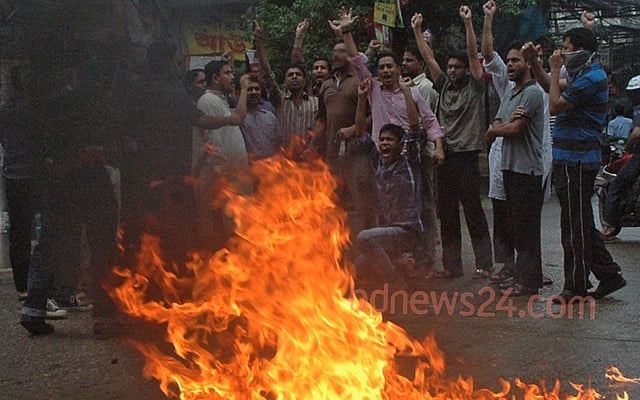
The Jamaat gave the 48-hour strike call in a media statement hours after the High Court verdict.
The party in the release, signed by its Central Publicity Department chief Mohammad Ibrahim, also announced to continue its movement against the ‘unconstitutional and undemocratic verdict’.
The High Court, meanwhile, has summoned both Ibrahim and Khan for appearance on Sept 16 to explain why calling strikes against its verdict should not be treated as contempt of court. Khan is currently absconding as he faces a three-month imprisonment on a similar charge.
The Law Minister on Tuesday said, “Everyone should accept any verdict given by the High Court or any court. There is a system for appeal against the verdict. But calling strikes and creating disorder to protest the ruling is against the rule of law.”

File Photo
“The judges must work independently to maintain freedom of the judiciary and rule of law. Strikes and rallies are not going to change the verdict.”
Jamaat, which opposed Bangladesh’s independence during the war in 1971, had observed shutdowns over all verdicts of the International Crimes Tribunal against the leaders of the party who are accused in war crimes cases.
On July 17, during his introductory speech before reading the death sentence awarded to Jamaat leader Ali Ahsan Mohammad Mujaheed, the presiding ICT-2 judge Justice Obaidul Hassan had said, “One can be aggrieved but a verdict cannot be rejected. One could move court if the verdict appeared flawed. Rejection of verdicts is tantamount to the contempt of court."
He had said rejection, shutdowns or acts of violence cannot change the verdicts, while urging everyone to refrain from such acts over any verdict.