


Published : 01 Dec 2017, 07:10 PM
Updated : 05 Aug 2022, 07:32 PM


He also urged the world not to ignore refugees, persecuted minorities, the poor and vulnerable.
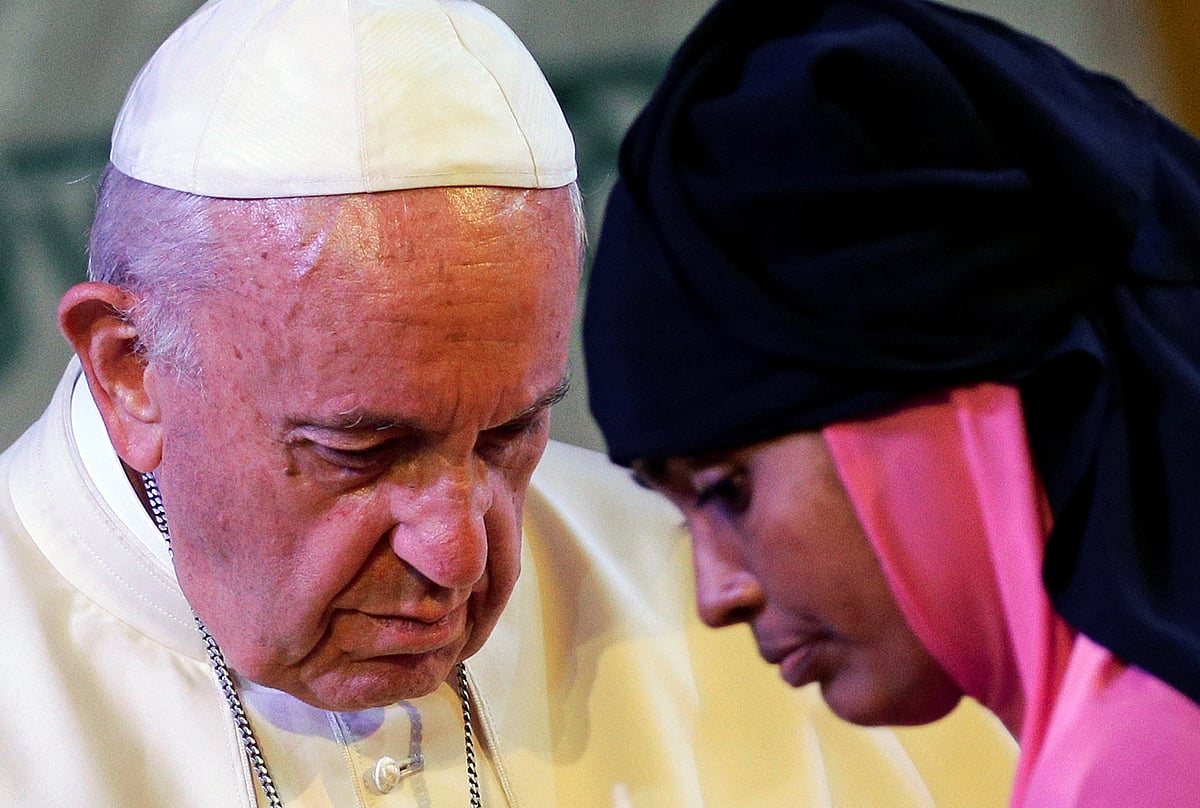
The encounter took place at an inter-religious peace meeting on his first full day in Bangladesh, to where 625,000 Rohingya from Myanmar's Rakhine state have fled from an army crackdown.
Refugees have said scores of Rohingya villages have been burnt to the ground, people killed and women raped. Myanmar's military has denied accusations of "ethnic cleansing" by the United States and United Nations.
The pope had earlier in the week visited Myanmar, where he met its leader Aung San Suu Kyi and Senior General Min Aung Hlaing.
But there he avoided using the word Rohinngya, a term the authorities reject. Many people in Myanmar regard the largely stateless Rohingya as illegal immigrants from Bangladesh.
At the Bangladesh meeting, however, he said: "The presence of God today is also called Rohingya."
Addressing about 5,000 people at the gathering on the grounds of the Roman Catholic archbishop's residence, Francis said: "How much our world needs this heart to beat strongly, to counter the virus of political corruption, destructive religious ideologies, and the temptation to turn a blind eye to the needs of the poor, refugees, persecuted minorities, and those who are most vulnerable."
Aid workers brought 16 Rohingya refugees from camps in Cox's Bazar, about 430 km (260 miles) southeast of Dhaka on the border with Myanmar, to join other Muslims, as well as Hindus, Buddhists, Christians and charity workers.
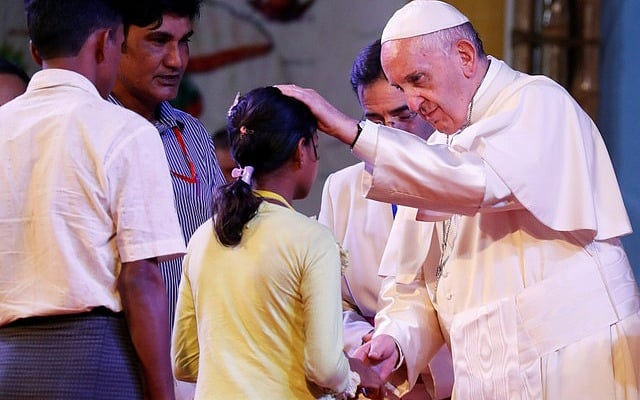
Pope Francis meets a group of Rohingya refugees in Dhaka, Bangladesh December 1, 2017. Reuters
"In the name of all those who persecute you, who have persecuted you, those who have hurt you, above all for the indifference of the world, I ask for forgiveness, forgiveness." Francis said in improvised comments.
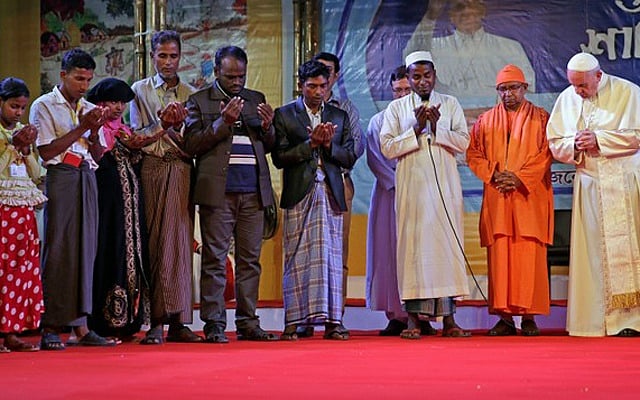
Pope Francis prays with Rohingya refugees in Dhaka, Bangladesh December 1, 2017. Reuters
He had decided to follow the advice of Myanmar Church officials, who said his use of the word could prompt a backlash against Christians and hurt Myanmar's fragile path to democracy.
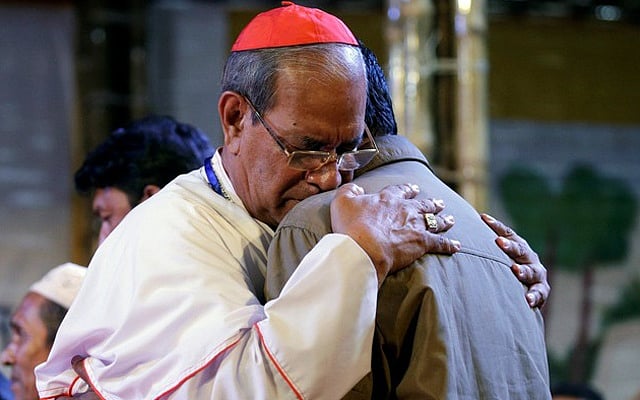
Cardinal Patrick D'Rozario, the Archbishop of Dhaka, embraces a Rohingya refugee as Pope Francis meets a group of Rohingya refugees at St Mary’s Cathedral in Dhaka, Bangladesh December 1, 2017. Reuters
"I will share my pain with him," the woman as her young daughter clutched at her burqa garment.
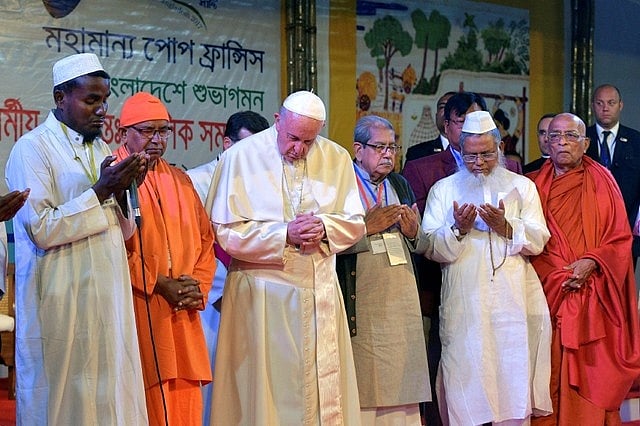
Pope Francis attends an interfaith and ecumenical meeting in Dhaka, Bangladesh December 1, 2017. Osservatore Romano/Handout via Reuters
Decisive measures
The pope spoke under a huge tent-like canopy held up by bamboo poles and covered with red, white and scarlet fabric to guard against the afternoon sun. He had first visited the cathedral and then was taken to the tent in a flower-bedecked peddle rickshaw that a man pushed up the central aisle.
In his address, Francis said: "Religious concern for the welfare of our neighbour, streaming from an open heart, flows outward like a vast river, to quench the dry and parched wastelands of hatred, corruption, poverty and violence that so damage human lives, tear families apart, and disfigure the gift of creation," he said.
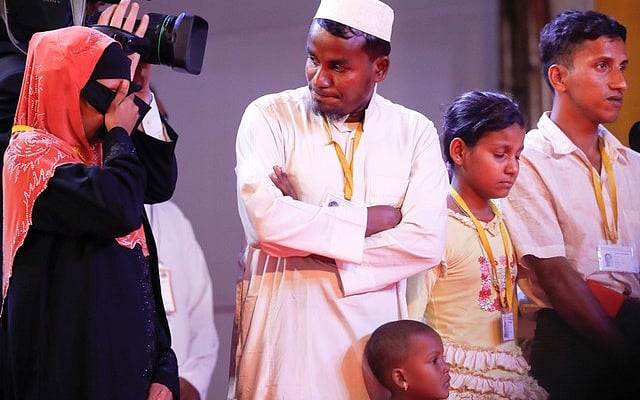
Rohingya refugees react as Pope Francis addresses them in Dhaka, Bangladesh December 1, 2017. Reuters
Earlier this year from the Vatican, the pope twice defended the Rohingya by name, once saying that they had been "tortured, killed simply because they wanted to live their culture and their Muslim faith".
The Myanmar military launched the crackdown in response to Rohingya militant attacks on an army base and police posts in August and says it is a legitimate counter-insurgency operation.












