


Published : 28 Nov 2017, 07:09 PM
Updated : 19 Oct 2022, 03:51 PM


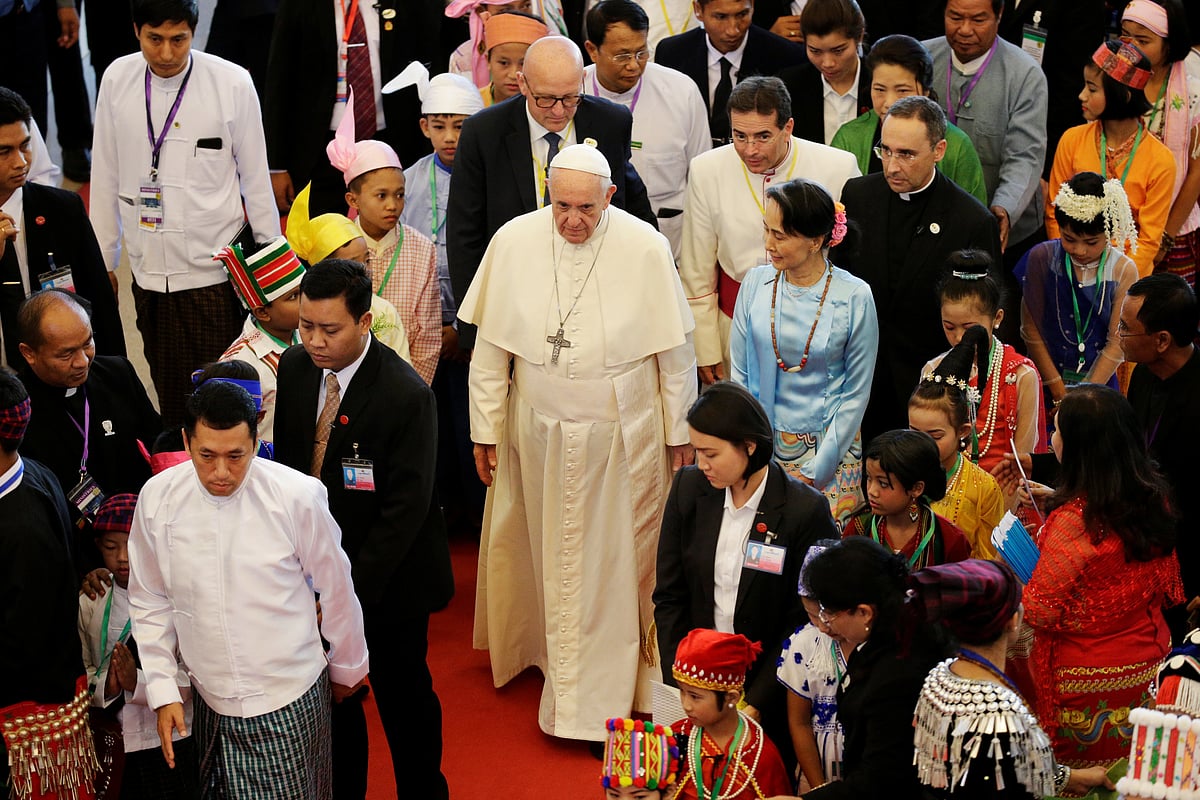

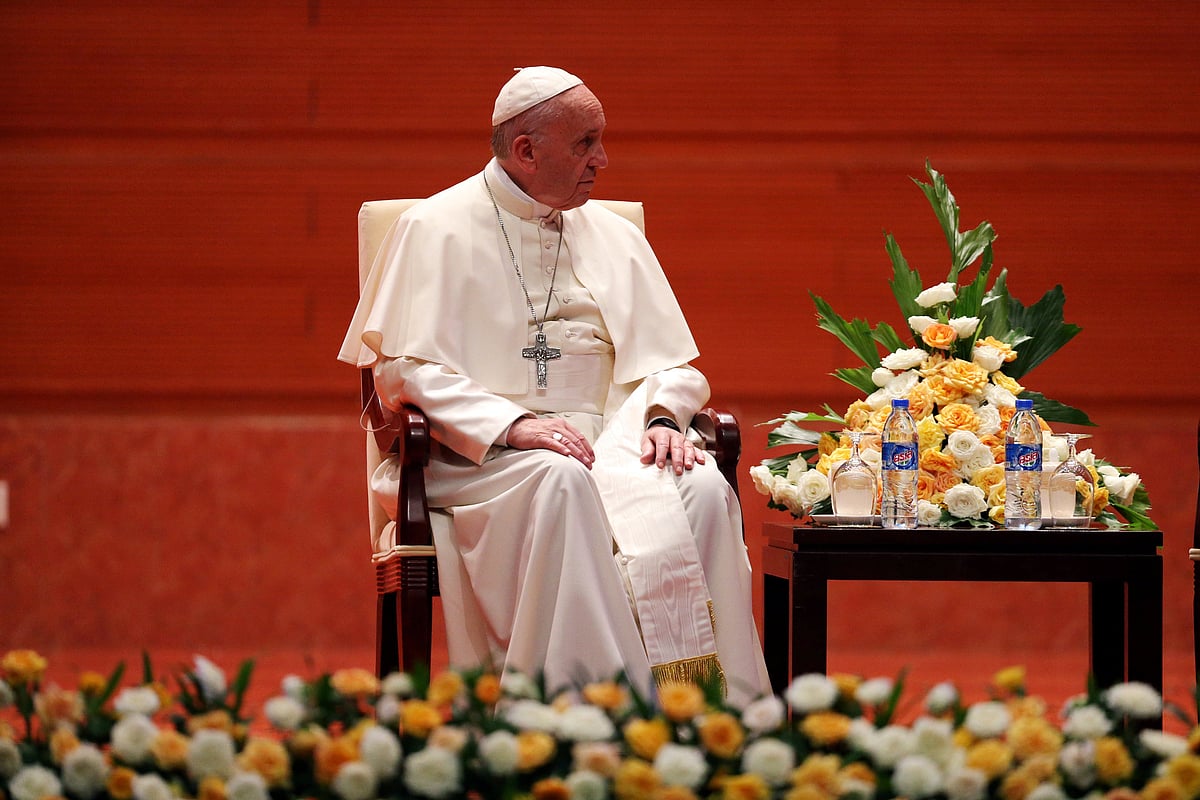
The pope avoided a diplomatic backlash by not using the highly charged term "Rohingya" in his addresses to officials, including leader Aung San Suu Kyi.
However, his words were applicable to members of the beleaguered minority, who Myanmar does not recognise as citizens or as members of a distinct ethnic group.
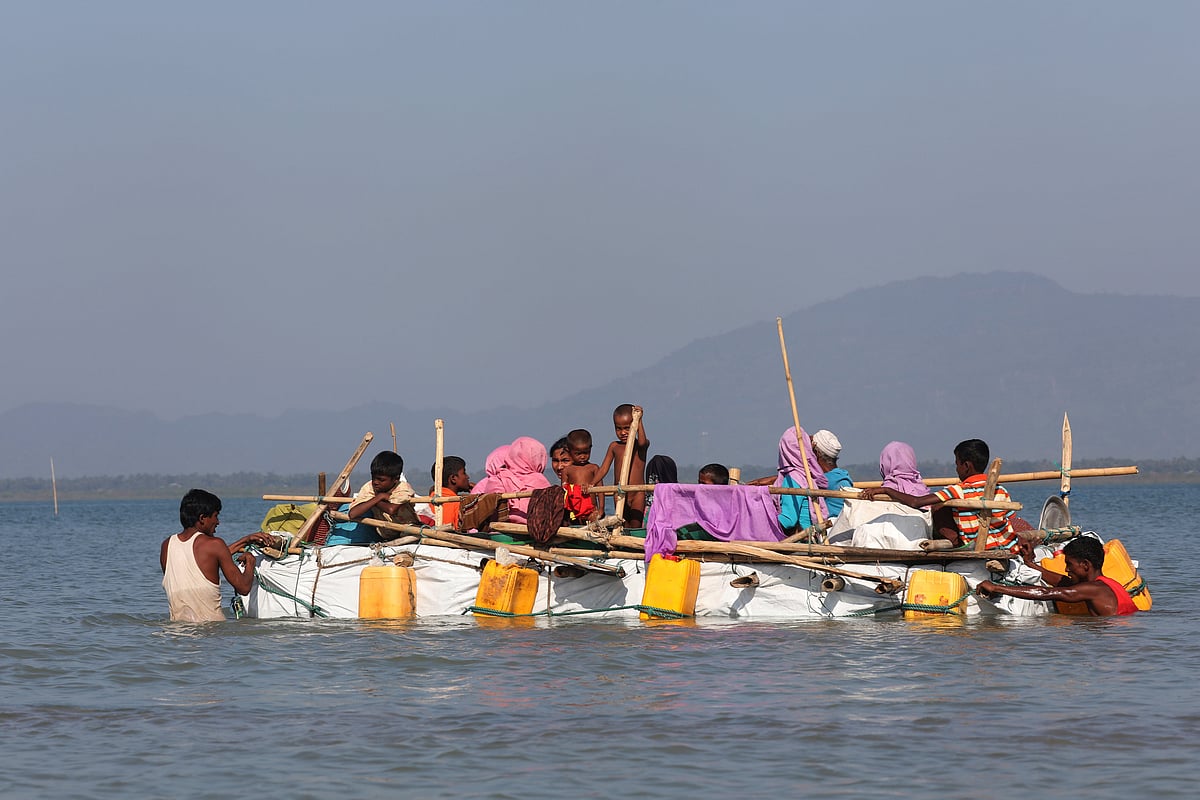
More than 620,000 Rohingya have fled to Bangladesh - where the pope heads on Thursday - since the end of August, escaping from a military crackdown that Washington has said included "horrendous atrocities" aimed at "ethnic cleansing".
Francis made his comments in Naypyitaw, the country's capital, where he was received by Suu Kyi, the Nobel peace laureate and champion of democracy who has faced international criticism for expressing doubts about the reports of rights abuses against the Rohingya and failing to condemn the military.
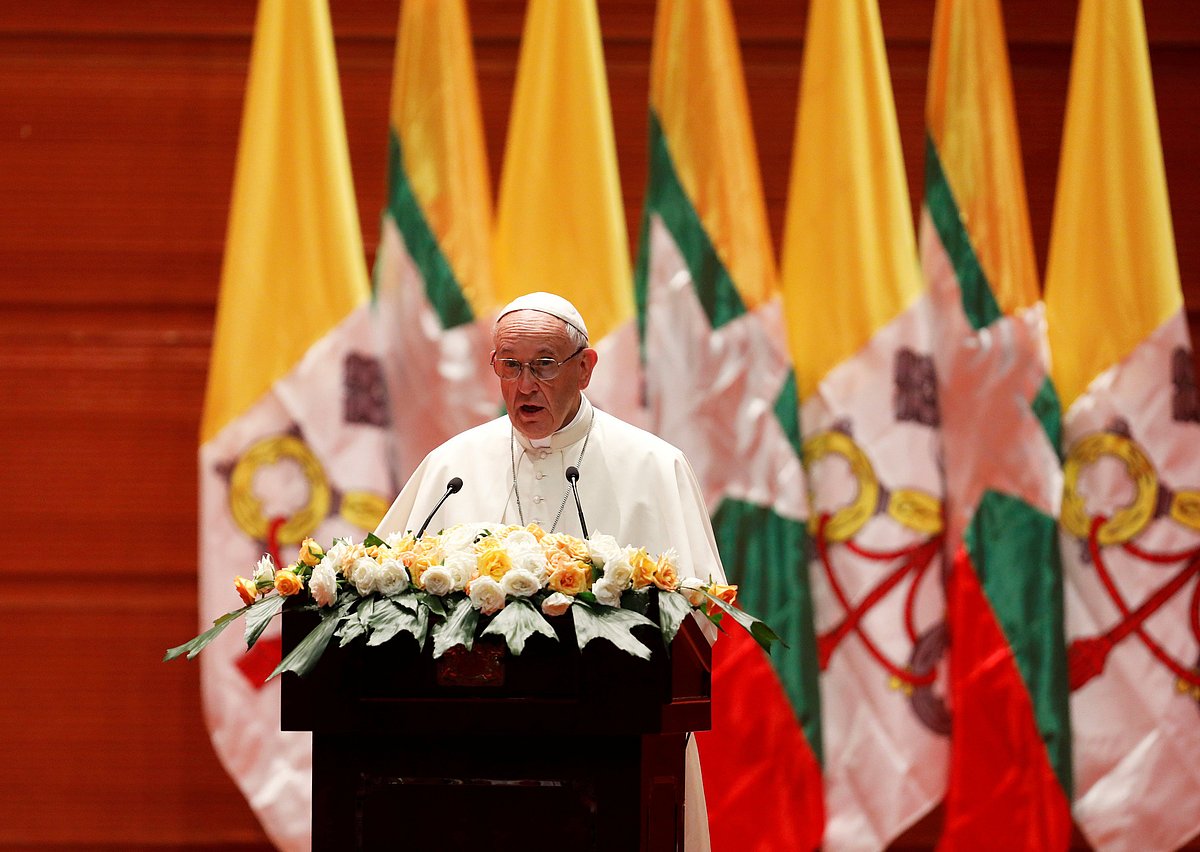
"The future of Myanmar must be peace, a peace based on respect for the dignity and rights of each member of society, respect for each ethnic group and its identity, respect for the rule of law, and respect for a democratic order that enables each individual and every group – none excluded – to offer its legitimate contribution to the common good," he said.
Pope Francis gives a speech during a meeting with members of the civil society and diplomatic corps in Naypyitaw, Myanmar Nov 28, 2017. Reuters
The pope had used the word Rohingya in two appeals from the Vatican this year.
But before the diplomatically risky trip, the pope's own advisers recommended that he not use it in Myanmar, lest he set off a diplomatic incident that could turn the country's military and government against minority Christians.
Human rights groups such as Amnesty International, which has accused the army of "crimes against humanity", had urged him to utter it.
A hardline group of Buddhist monks warned on Monday - without elaborating - that there would be "a response" if he spoke openly about the Rohingya.
Religious differences "A force for unity"
Richard Horsey, a former UN official and analyst based in Yangon, said the pope's speech was "very cautiously worded" and "crafted to avoid antagonising local audiences".
"He has clearly taken the advice of his cardinals to avoid weighing in too heavily on the Rohingya crisis, but he certainly alludes to it with a message in his speech on some of the specific points that he makes," Horsey said.
Vatican sources say some in the Holy See believe the trip was decided too hastily after full diplomatic ties were established in May during a visit by Suu Kyi.
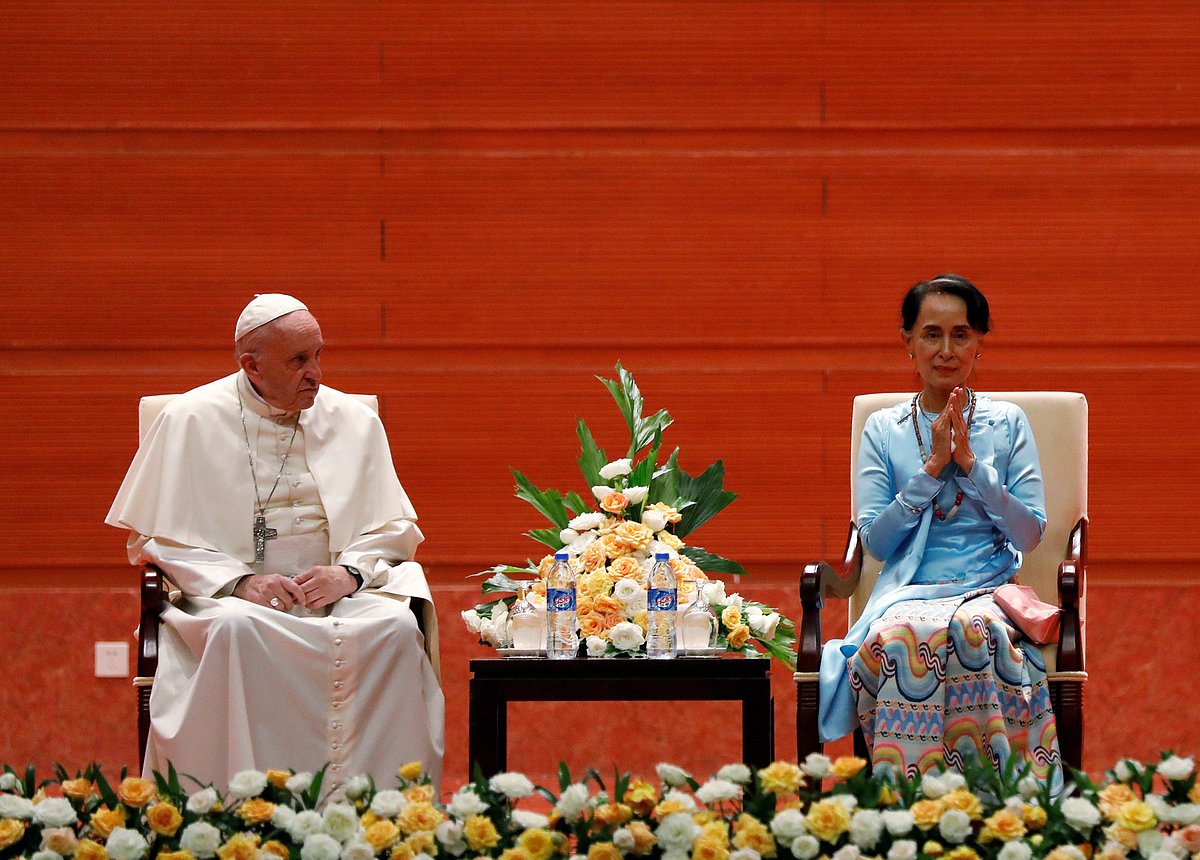
Pope meets with Aung San Suu Kyi at the Presidential residence in Naypyidaw on 28 Nov 2017. Osservatore Romano/Handout via Reuter
Suu Kyi said in her speech that there had been an erosion of trust and understanding between communities of Rakhine state, but did not refer to the Rohingya.
Francis, speaking in Italian, said that as it emerged from nearly 50 years of military rule, Myanmar needed to heal the wounds of the past.
He called for a "just, reconciled and inclusive social order", adding that "the arduous process of peacebuilding and national reconciliation can only advance through a commitment to justice and respect for human rights".
Myanmar’s State Counsellor Aung San Suu Kyi applauds next to Pope Francis as they attend a meeting with members of the civil society and diplomatic corps in Naypyitaw, Myanmar Nov 28, 2017. Reuters
The military has denied the accusations of murder, rape, torture and forced displacement of the Rohingya that have been made against it.
The Rohingya exodus from Rakhine state began after Aug 25, when Rohingya militants attacked security posts and the Myanmar army launched a counter-offensive.
Rohingya refugees sail on an improvised raft across the Naf River to reach Bangladesh, in Teknaf, Bangladesh Nov 27, 2017. Reuters
He made the same point at an earlier meeting with leaders of the Buddhist, Islamic, Hindu, Jewish and Christian faiths in Yangon, where he called for "unity in diversity".
Aye Lwin, a prominent Muslim leader who was at the interfaith meeting, told Reuters he had asked the pope to appeal to Myanmar's political leaders "to rescue the religion that we cherish, which could be hijacked by a hidden agenda".
Only about 700,000 of Myanmar's 51 million people are Roman Catholic. Thousands of them have travelled from far and wide to see him and more than 150,000 people have registered for a mass that Francis will say in Yangon on Wednesday.
Francis is expected to meet a group of Rohingya refugees in Dhaka, the capital of Bangladesh, on the second leg of his trip.










