


Published : 02 Mar 2020, 01:33 PM
Updated : 17 Oct 2022, 11:03 AM


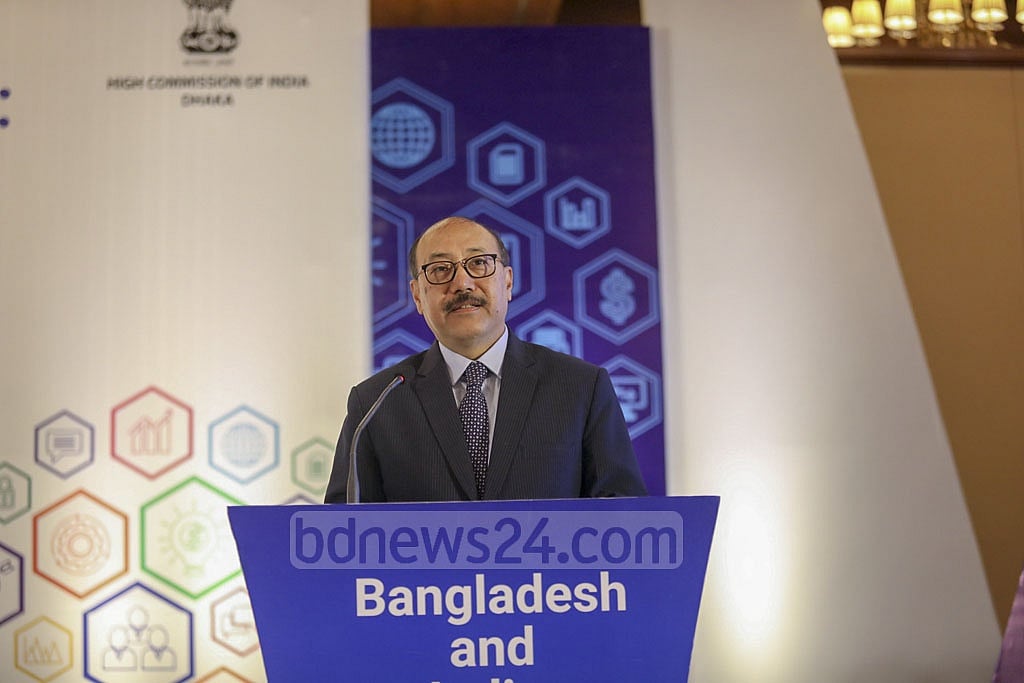

“As the closest of neighbours, with so many shared cultural traits, it is also inevitable that events in each other’s countries create ripples across the border – irrespective of whether there is real justification for this,” Shringla said.
One recent example is the process of updating the NRC in Assam, which has taken place entirely at the direction and under the supervision of the Supreme Court of India, he said at a seminar organised by the Bangladesh Institute of Strategic Studies at Sonargaon Hotel in Dhaka on Monday.
“Let me clearly state here what our leadership has repeatedly confirmed at the highest level to the Government of Bangladesh: this is a process that is entirely internal to India. Therefore, there will be no implications for the Government and people of Bangladesh. You have our assurance on that count,” he said.
Those people who are not covered under the lists have the right to appeal to tribunals, he said, adding the appeals can be heard in the High Court and Supreme Court level in India.
“As you can imagine this is a long and lengthy judicial process and therefore there is no reason at this point of time for any concern that there will be any impact on Bangladesh. As far as we are concerned, this is an internal issue and there should absolutely be no impact particularly when it comes to a country that is a close friend of ours, a country that is an important partner of ours as I’ve elaborated earlier.”
The citizenship amendment bill is actually a proactive legislation which has been initiated on humanitarian grounds, said Shringla.
“In other words, we have hundreds of thousands of people who are currently in India, who are basically homeless and stateless. They will be allowed to seek citizenship on a faster track. That means instead of 10 years, they will get it in 5 years.”
Responding to a question after his speech, Shringla said, “Firstly, the citizenship bill is not against any religion. Secondly, it will provide express citizenship to those who have fled persecution in neighbouring countries and have taken refuge in India. And thirdly, this does not apply to the current government in Bangladesh. This applies to the post 1975 period when military governments and other governments did not observe the spirit and letter of the constitution of Bangladesh which is secular and as a result of which a number of people had to flee persecution and come to India.”
India has been assuring Bangladesh of “no effects” of the NRC and the citizenship law on bilateral ties in past three to four years, Gowher Rizvi, the foreign affairs advisor to the prime minister, said at the seminar presided over by BIISS Chairman Fazlul Karim.
“What we want to say is that we are a secular country. We don’t want the development of a situation that can threaten our secularism. This is why we want to work with India,” Rizvi said.
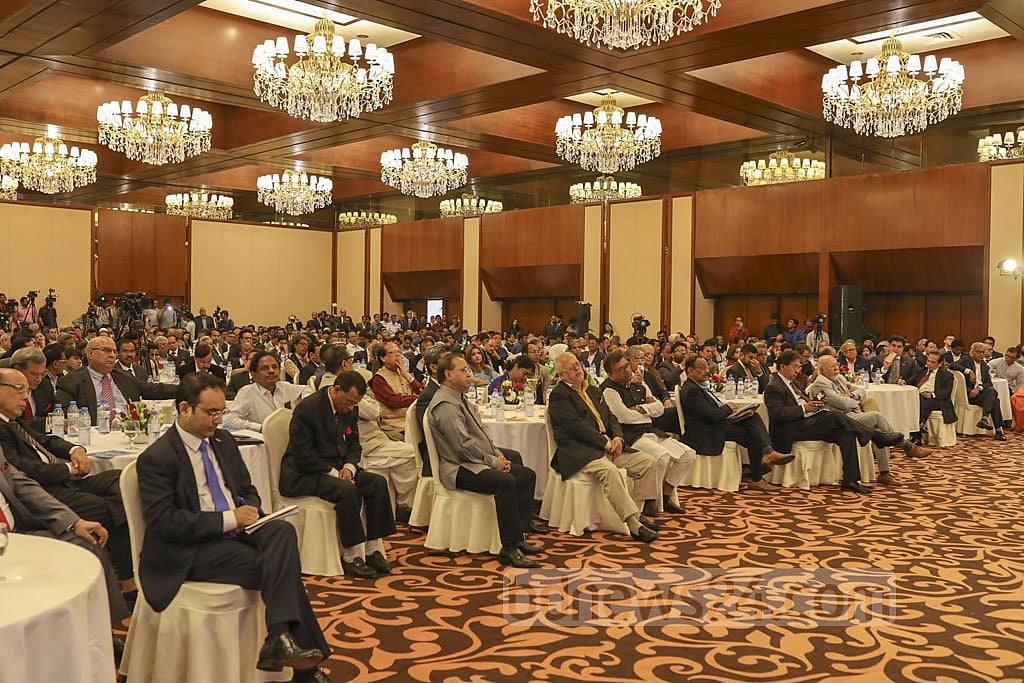
Guests attend a seminar titled ‘Bangladesh-India: A Promising Future’ at the Pan Pacific Sonargaon Hotel in Dhaka on Monday. Photo: Mostafigur Rahman
Shringla also touched upon the Rohingyas to defend his country’s position on the refugee crisis. “There is also often interest and sometimes uninformed speculation about our position on the humanitarian crisis in Rakhine State of Myanmar, and its impact upon Bangladesh. Let me clearly say that India is deeply appreciative of the spirit of humanism that motivated Bangladesh to offer shelter to nearly one million displaced people,” he said.
“And we fully recognise and sympathise with the enormous burden that you are facing. As the only country that is an actual neighbour of both Bangladesh and Myanmar, we are committed to offering the fullest support for any mutually-acceptable solution that will enable the earliest possible return of displaced persons to their homes in Rakhine State and to a life of dignity.
“This should be done in a manner that is safe, secure and sustainable.”
Shringla mentioned that India provided five tranches of aid to the camps in Cox’s Bazar through the government of Bangladesh and is prepared to do more.
TEESTA RIVER
Taking a question from the media on the thorny issue of Teesta River, Shringla said: “You are aware that India is committed to an early and mutually acceptable conclusion of an agreement to share the waters of Teesta River.
“This is an emotive issue on both sides of the border and but there is no diminishing of the commitment of our government on this issue,” he said.
“Given our federal system, the agreement can only be finalised on the basis of consensus among stakeholders and we certainly want to assure you that we are working on concluding this as early as possible.”












