
Published : 10 May 2019, 12:17 AM
Updated : 05 Aug 2022, 05:54 PM


“Do we run the country? It’s the government’s job. Then why do issues like adulteration or death in fire at jail come to us? What is the government doing?” Justice Sheikh Hassan Arif asked.
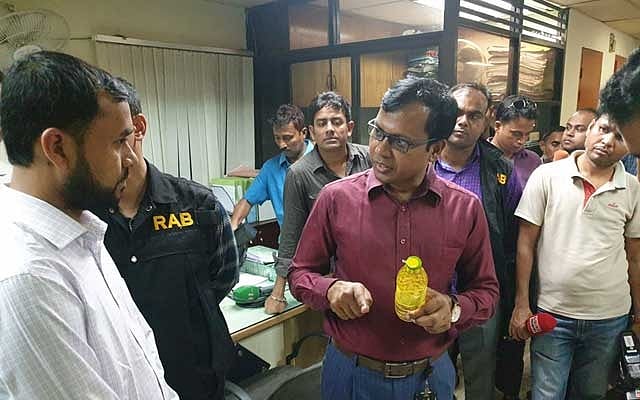
The bench of Justice Arif and Justice Razik-Al-Jalil was hearing a writ petition filed by Conscious Consumers Society or CCS over a recent commerce ministry revelation that the Bangladesh Standards and Testing Institution or BSTI tests have found 52 products substandard.
The producers had been served with notices to explain the condition of their products, the government had said.
“We are worried because these are essential in our daily life. A consumer cannot live without using these. So it’s a public issue,” Shihab replied and sought the court’s intervention to stop adulteration of food.
“We are helpless. Something at least happens when you issue directives,” the lawyer said when Justice Arif pointed out that it was the job of the government, not the court.
“What will we do then? People’s cases or these? These are the government’s job but are coming every week. And these cannot be left out either,” the judge said in response to Shihab’s plea.
“We don’t understand what we should do. Such matters are coming every week - adulteration here, adulteration there,” Justice Arif said, addressing Deputy Attorney General Md Mokhlesur Rahman.
Traders were applying formalin on products every now and then even though the Special Powers Act stipulates up to death penalty for such offence, the judge said.
Justice Arif also questioned the role of the BSTI and the Directorate of National Consumer Rights Protection, saying that such cases would not have come to the court if the “specialised government agencies” worked properly.
“We need to know if they followed up after serving the companies with show-cause notices,” the judge said.
Shihab later told bdnews24.com that the court asked the deputy attorney general to present two senior officials of the BSTI and the directorate to hear from them what they were doing to prevent food adulteration and production of substandard goods.