Published : 24 Nov 2013, 06:40 PM
Updated : 09 Aug 2022, 11:20 AM


The Chittagong-based Islamist group’s Secretary General Zunaid Babunagri made the announcement at a press conference in Hathazari on Sunday.
It will also hold rallies at all Upazilas across Bangladesh on Nov 29 to push the government to meet its 13-point charter of demands.
The controversial demands include scrapping the National Women Development Policy and banning mixing of men and women in public.
The rally is also to demand compensation for those who allegedly suffered damages during the previous rally in Motijheel, for the release of its activists and withdrawal of cases filed against them.
It also demands a neutral probe into the events of that day.
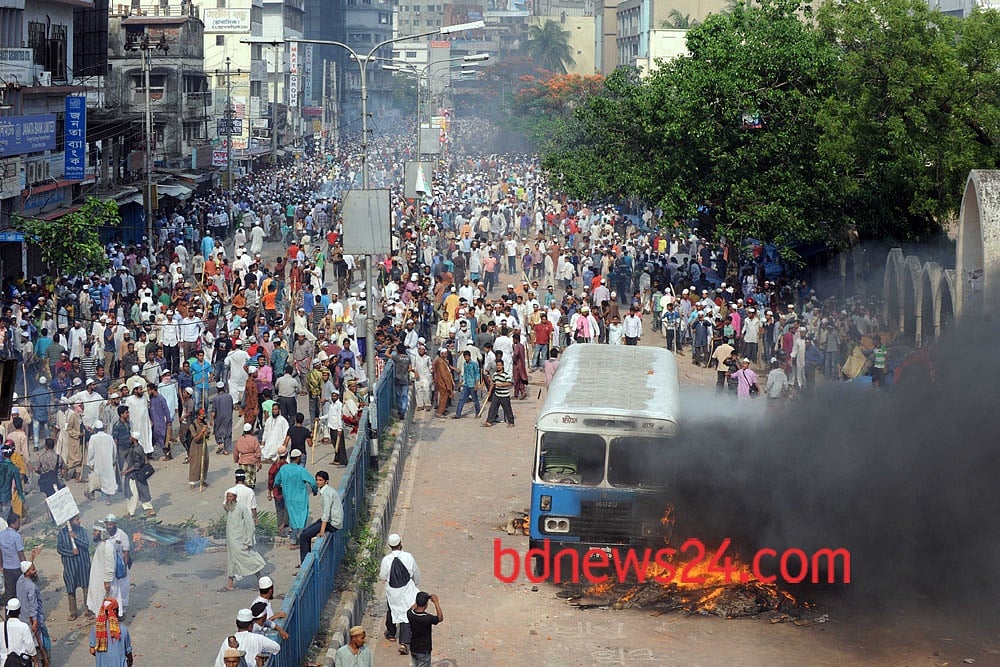
On May 5 this year, the group had held a rally at the same venue, leading to widespread violence in and around the business district. Ten people were killed in the violence that ensued throughout the day.
Law enforcers had eventually evicted the Hifazat supporters from Motijheel’s Shapla Chattar in a night raid after they had begun an indefinite sit-in.
Since then the organisation along with the Opposition has been claiming numerous casualties in the raid.
The Hifazat had announced another rally at Motijheel on Nov 15. The government had said it was ready to ‘tackle’ any disorder the Hifazat might create.
However, the group later called off its rally on account of Biswa Ijtema and Ashura events.
Hifazat’s Joint Secretary General Mainuddin Ruhi claimed the government had politically attacked its non-political movement by ‘patronising atheists.’
He claimed the government was trying to confuse the people by saying that the Hifazat had ties with the Jamaat-e-Islami and BNP.
Speaking at the press conference, Ruhi also argued that Hifazat’s chief Shah Ahmad Shafi, who recently likened women to tamarind, was a victim of ‘hateful rumours’.
Formed only a few years ago, the little-known group came into the spotlight after it announced to thwart a programme of the Ganajagaran Mancha, which had been demanding maximum penalty for convicted war criminals and banning the Jamaat-e-Islami that opposed Bangladesh’s independence.