Published : 19 Oct 2026, 02:07 AM
Updated : 19 Oct 2026, 02:07 AM


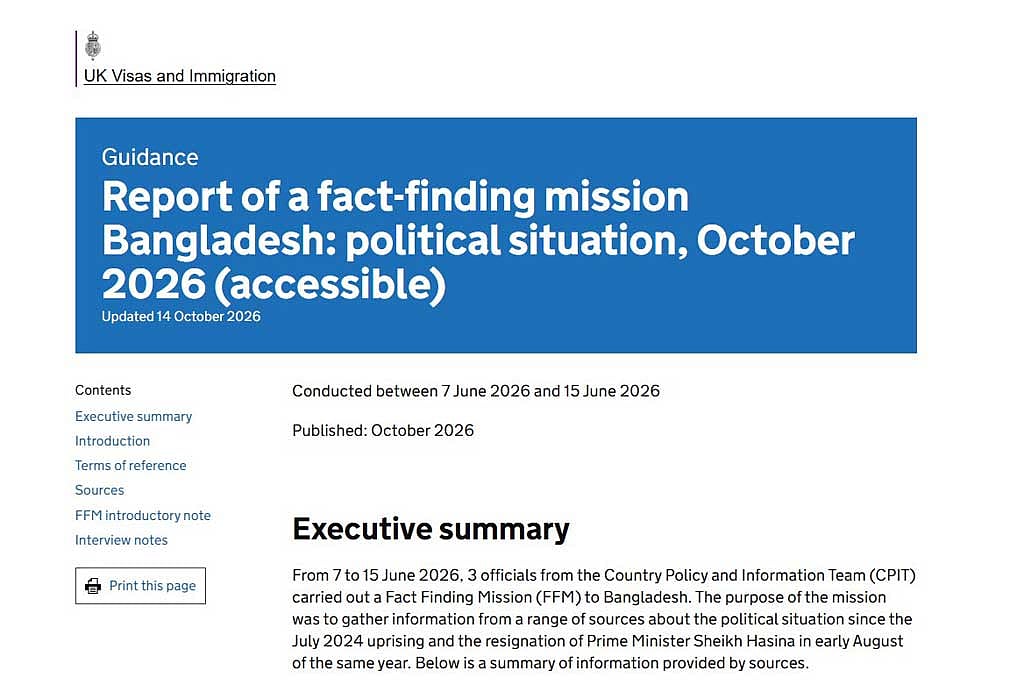
A report by the UK Home Office has said the political situation in Bangladesh has stabilised and generally improved since the July Uprising in 2024, with political parties, journalists and civil society groups enjoying “greater freedom” under the BNP-led government.
However, concerns remain over corruption, police accountability, and effectiveness, and the limited implementation of sweeping reforms proposed after the Uprising, the report said.
The survey, titled “Report of a fact-finding mission Bangladesh: political situation, October 2026”, was published on the British government’s website on Oct 14.
Three officials from the Home Office’s Country Policy and Information Team (CPIT) visited Dhaka from Jun 7 to 15.
The team gathered information from 15 sources through 15 face-to-face interviews involving 24 people, including politicians, police officials, journalists, academics and representatives of human rights and civil society organisations.
“The purpose of the mission was to gather information from a range of sources about the political situation since the July 2024 uprising and the resignation of Prime Minister Sheikh Hasina in early August of the same year,” the report said.
The findings are based on information provided by those sources and are intended to inform the UK’s country assessments.
The report said the BNP, Jamaat-e-Islami, the National Citizen Party and other political groups could organise activities, campaign, stage protests, and criticise the government.
Political violence has continued, but sources generally described it as localised and linked largely to disputes over influence, business interests, resources and control of local politics.
The parliamentary election held in February has been described as generally peaceful and significantly less violent than previous elections”, noting a decline in political violence since the vote.
The report noted that political parties, journalists, civil society organisations, and human rights groups had greater freedom to operate, express views and participate in public debate than during the previous Awami League government.
It also recorded concerns that progress on reforms proposed after the Uprising remained limited.
The AL remains banned, and public hostility towards the party persists over alleged human rights abuses during its time in power and its role in the events surrounding the July 2024 Uprising, the report said.
Grassroots supporters who were not involved in corruption, violence or repression have generally been able to remain in their communities.
However, those who openly express support for the party may face harassment, social hostility or violence, according to the report. Some former members have joined other political parties, moved elsewhere within Bangladesh or left the country.
The report also noted that some sources raised concerns about AL members facing criminal proceedings and returning to positions of influence despite the ban on the party’s activities.
Most people arrested on politically motivated charges under the previous AL government have been released, while most cases against them have been withdrawn, the report said.
Citing police sources, it said more than 21,000 “politically motivated or false” cases had been withdrawn. Reviews of cases from the previous administration were still under way.
At the same time, large numbers of AL politicians, activists and officials continue to face criminal proceedings over alleged actions during the party’s tenure and the July 2024 protests.
The cases are being handled by both the International Crimes Tribunal (ICT) and the regular courts. Some prominent figures have secured bail and been released, while others remain in detention awaiting trial.