Published : 19 Oct 2026, 02:57 AM
Updated : 19 Oct 2026, 03:00 AM


A resort can be flagged for unauthorised construction, denied environmental clearance and warned over fire safety. But what happens when those warnings do not shut it down?
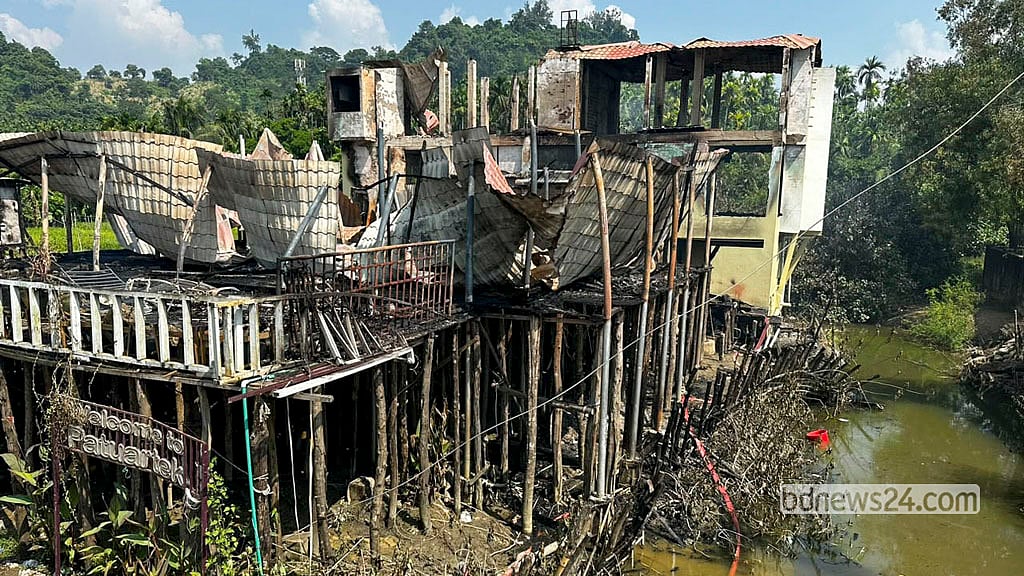
At TUPTUP Resto & Resort in Cox’s Bazar’s Inani, that question has become urgent. A fire on Saturday killed at least 10 people, while authorities struggled to establish the full toll and identify the dead.
Records show that multiple agencies had raised concerns about the property before the blaze. Their notices and proceedings now face a harder test: whether they did anything to protect the people staying there.
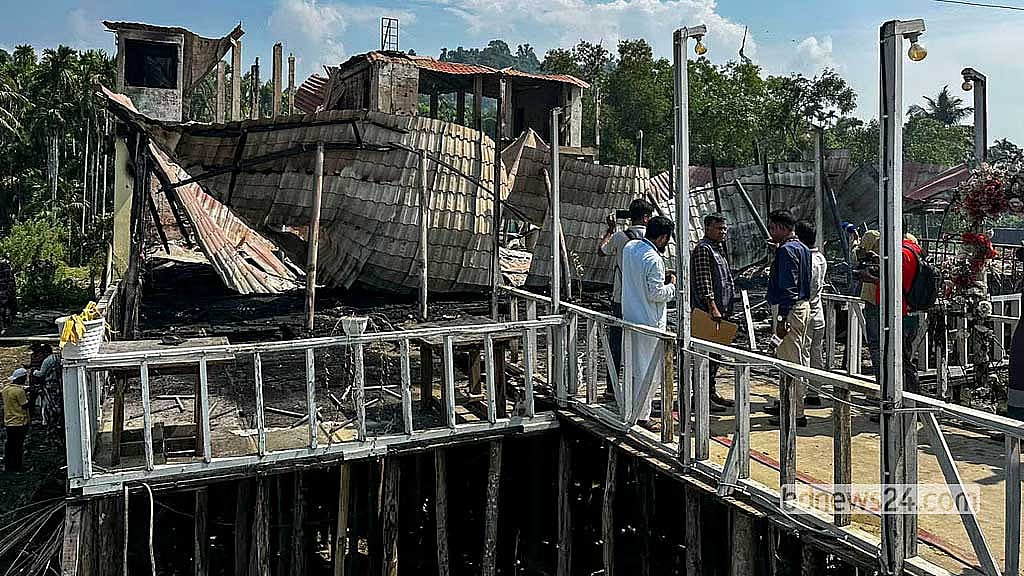
To understand why the resort remained open despite those warnings, bdnews24.com visited the site on Sunday and spoke with officials from the agencies responsible for oversight.
Throughout the inquiries, officials repeatedly cited severe staff shortages, asserting that they lack the workforce to monitor hundreds or thousands of commercial entities across a single district.
This raises the question: Has safety oversight in the tourist hub ultimately been left to the discretion of business operators?
‘Just One Inspector For Up To 600 Establishments’
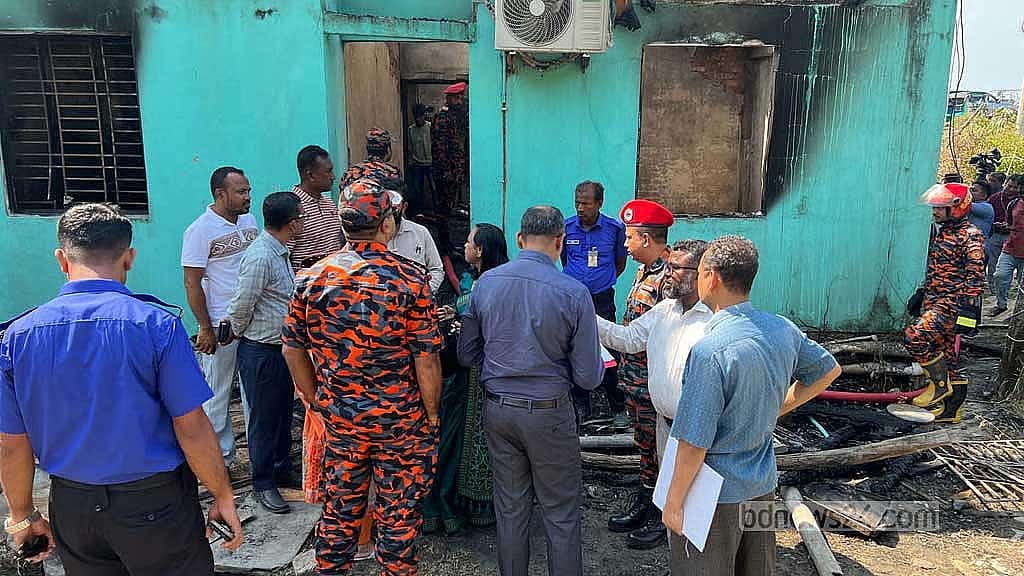
Lt Col MA Azad Anwar, director (Training, Planning, and Development) of the Fire Service and Civil Defence, said at the site on Sunday that only one sanctioned inspector is assigned to inspect commercial premises across the entire Cox's Bazar district.
This officer oversees approximately 500 to 600 businesses of varying classes. Among them, roughly 100 have obtained an e-fire licence, while an additional 52 have applied through the system.
According to his estimates, nearly 400 commercial establishments are operating without a valid fire licence.
Asked whether businesses along the Marine Drive hold fire service licences and what actions are taken when licences are missing, Azad said: “This establishment was an illegal entity.”
According to him, the resort operated without approval from the deputy commissioner, the local union council, or municipal authorities.
He advised consulting the relevant authorities for further details.
The Fire Service official said their inspector served a written notice to the establishment in June, instructing them to apply promptly for an e-fire licence.
However, available records do not indicate whether the establishment complied following the notice, or what actions were taken to halt operations.
Pointing to the operational limitations, Azad said: “We have only one inspector against 500 to 600 establishments. Even if he conducts one visit a day, it takes a year to a year and a half before he can revisit the same establishment.”
He noted that an inspector’s duties extend beyond site visits to drafting reports, attending hearings, and administrative tasks, making regular fire safety verifications across all premises unfeasible.
While this highlights a structural constraint, it raises a key issue: Once an establishment is identified as a fire risk, what mechanisms exist to prevent it from operating until a licence is secured?
‘We Issued Notices, But The Structure was Not Removed’
Addressing the construction and location of the resort, Fazle Rabbi, authorised officer of the Cox's Bazar Development Authority, said the resort had been served sequential notices since 2023.
These included directives to cease operations and demolish the structure.
According to him, the resort's application for development approval was rejected because the site falls within a designated no-development zone, where such constructions are prohibited.
Asked whether authorities bear responsibility for the emergence and continued operation of such structures, the official said the Cox's Bazar Development Authority is tasked with development control.
Through a digital survey along the 80km Marine Drive, structures are being identified, and action is being taken against unauthorised constructions in phases.
He added that enforcement measures have been initiated against around 150 to 250 identified structures in the area.
Regarding why structures remain standing despite notices, Rabbi explained that many operators disregard the law despite repeated warnings.
He said, “The Fire Service issues notices, and we issue notices as well. You will find that even without business permits, these operations continue.”
Asked why businesses persist in operating, he attributed it to a “criminal mindset”.
While officials said the resort was unauthorised and subject to removal orders, enforcement efforts failed to shut down the facility. Authorities confirmed that removal directives were issued in both 2023 and 2024.
The investigation centres not only on whether the facility lacked authorisation, but also on why mandatory orders were not enforced, according to Abu Morshed Chowdhury Khoka, president of the Cox's Bazar Civil Society.
Khandakar Mahmud Pasha, deputy director of the Department of Environment, confirmed that previous actions had been taken against the resort.
He noted that the Cox's Bazar-Teknaf peninsula, Saint Martin's and Sonadia islands fall under Ecologically Critical Areas (ECAs), where activities causing environmental damage are restricted.
According to him, a notice was served to TUPTUP resort in 2026.
Subsequently, a compensation assessment of Tk 100,000 was levied under Section 7 of the Bangladesh Environment Conservation Act, 1995.
Questioned about subsequent actions following the assessment, the official said the department had taken measures against different hotels, resorts, and restaurants along Marine Drive.
Over the past year, compensation assessments totalling Tk 13.8 million were levied against roughly 60 establishments, and 30 regular legal cases were filed in the Ecologically Critical Areas of Cox's Bazar.
Responding to these figures, Khoka noted that such statistics do not reveal how many structures were closed or removed, or how many continued operating after paying fines.
Addressing how large new structures continue to emerge, he said no commercial entities hold environmental clearance within the Ecologically Critical Areas.
So how are such establishments constructed and operated without required clearances? In response, he cited workforce constraints.
According to him, the district office of the Department of Environment employs only eight personnel to cover 10 sub-districts in Cox's Bazar, including just two assistant directors.
These personnel handle environmental law enforcement, prosecution, and administrative duties.
Data from the Department of Environment indicates that while initiatives exist to identify unauthorised structures, operational capacity to prevent or remove them remains limited.
Khoka questioned where administrative responsibility lies when non-compliant structures continue operating following financial penalties or legal proceedings, and how effective those measures are in practice.
Fire Risks in Timber Structures
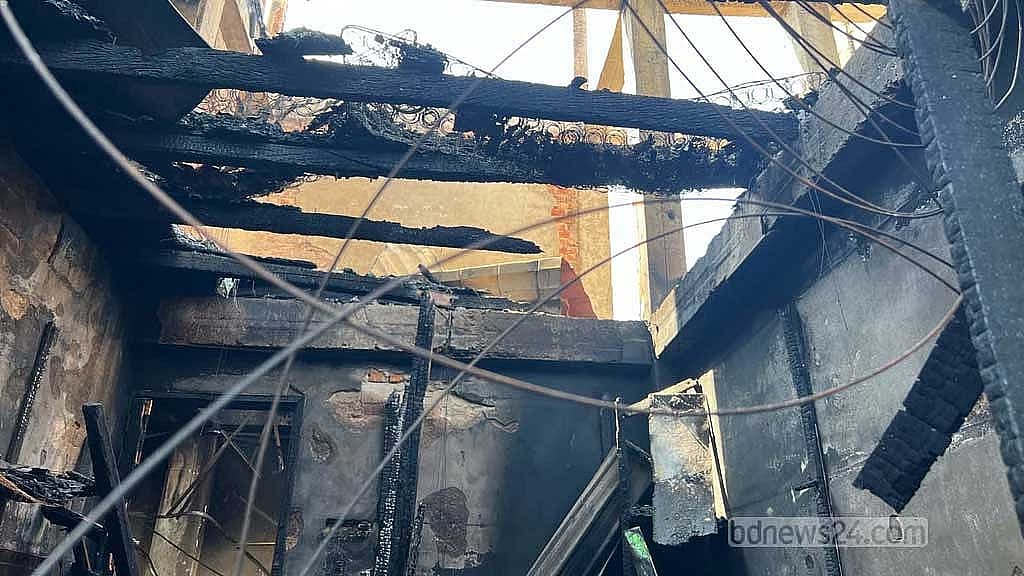
The physical structure of TUPTUP resort has raised safety concerns.
Witness accounts indicate that the resort’s kitchen was situated near the main staircase. As the fire spread rapidly, exit routes for tourists inside may have been obstructed.
However, structural layout, emergency exits, and the origin of the blaze remain subject to investigative confirmation.
Fire Service Director Azad emphasised that timber or bamboo structures require comprehensive fire safety measures.
He noted that such constructions may require full-scale fire safety infrastructure, including room-level sprinklers, connected risers, dedicated pipelines, fire pumps, and water storage systems.
He observed that commercial developments often prioritise low construction costs over necessary safety investments. While timber or bamboo structures offer an eco-friendly appearance, they present severe risks without appropriate fire safety systems.
Rabbi cited the Bangladesh National Building Code 2020, noting that constructions of this nature require fire-resistant structural components and adequate firefighting equipment.
Whether the resort maintained these safety systems remains under investigation. It is not clear whether any fire safety measures were installed, a licence application was submitted, or risk mitigation steps were taken following the Fire Service notice.
Do Staff Shortages Account for Administrative Failures?
Multiple agencies documented actions against the resort, yet official statements reflect shifting administrative accountability among departments.
The Cox's Bazar Development Authority confirmed issuing notices and removal directives, maintaining that operators failed to comply with the law.
The Department of Environment confirmed issuing notices, imposing financial assessments, and initiating legal proceedings, while citing limited personnel.
The Fire Service noted that the establishment operated without a fire safety licence, asserting that a single inspector cannot systematically monitor hundreds of facilities.
When asked if a lack of inter-agency coordination contributed to the failure, Azad denied this, explaining that the Fire Service lacks its own executive magistrates and relies on district administration support to conduct mobile courts.
He added that since the introduction of the e-fire licence system, copies of issued notices have been routinely forwarded to local administration authorities.
However, the district administration oversees nearly 1,000 establishments with fixed staffing capacity.
In his words, after serving a notice, an inspector may not be able to revisit the same facility for up to three years.
While one department issues notices, another rejects authorisation, and a third notes the absence of a licence, it remains unclear how responsibilities were assigned to enforce closures, eliminate hazards, or maintain systematic oversight.
Abu Morshed noted that while staffing limitations represent a practical challenge, investigations must determine what alternative measures were available to shut down high-risk structures when law enforcement capacity was constrained.
Post-fire Investigation Raises Pre-existing Concerns
A seven-strong investigation committee has been formed to examine the cause of the fire, safety deficiencies, and the role of oversight agencies. The committee has been instructed to submit its findings within five days.
Tasnim Jahan, additional district magistrate of Cox's Bazar and head of the committee, said investigators are verifying whether necessary approvals and safety measures were met during construction. Representatives from different technical agencies will assess compliance within their respective jurisdictions.
Khoka emphasised that several core questions must be resolved by the investigation: First, how did the resort remain operational following notices and removal orders from the Cox's Bazar Development Authority?
Second, what steps were taken to halt operations or dismantle the structure following environmental notices and compensation assessments?
Third, did the Fire Service verify fire safety arrangements or enforce measures after issuing a notice in June without a licence being obtained?
Fourth, given that relevant agencies possessed records of authorisation and safety deficiencies, were coordinated enforcement actions taken based on that information?
He noted that attributing administrative failures solely to workforce constraints leaves these critical issues unresolved.
Khoka added that limited staffing does not relieve authorities of their obligation to mitigate risks once a facility is identified as hazardous, and that serving notices or filing cases does not in itself constitute safety enforcement.
He added that accountability cannot be evaded.
Witnesses Describe Rapid Spread in Timber-Bamboo Structure
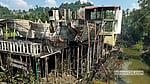
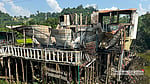
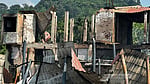
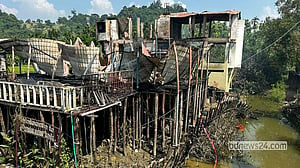
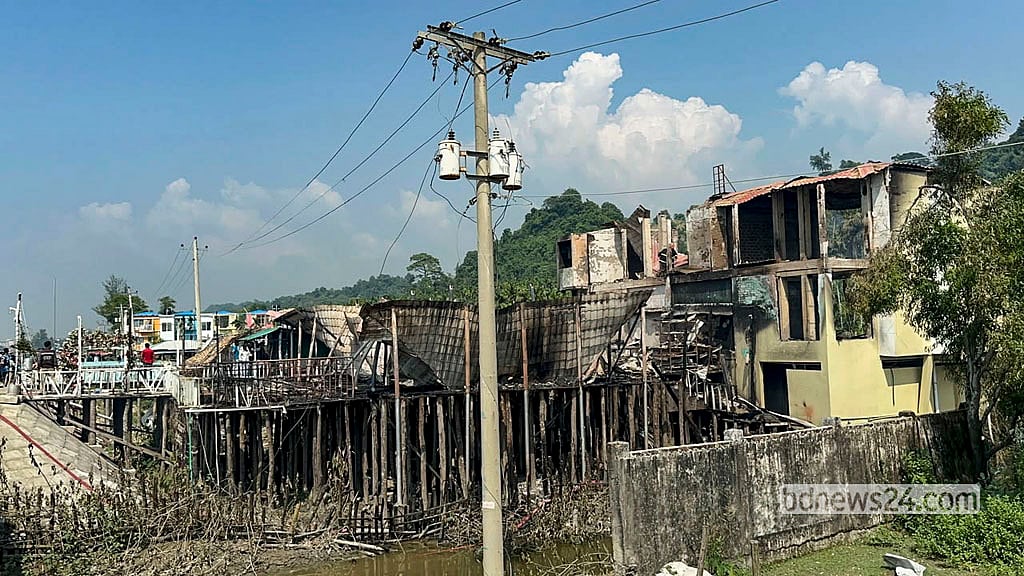
The TUPTUP Resto & Resort in Patuartek of Ukhiya’s Inani was a three-storey structure built using timber, bamboo, and wooden planks.
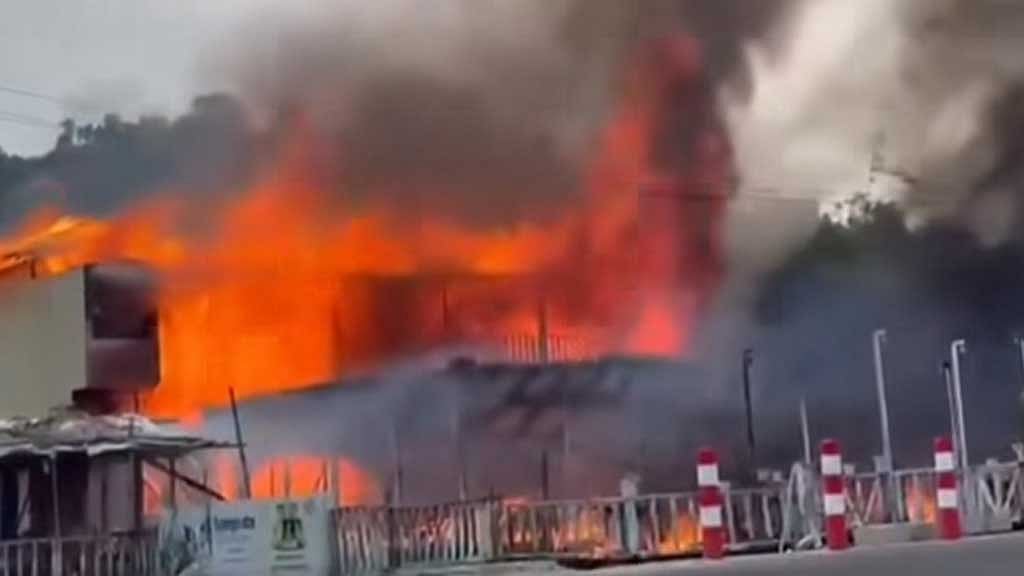
When the fire broke out, it spread rapidly through these materials, causing the upper level to collapse and trapping occupants under debris.
Local resident Md Abdullah suggested the fire may have originated in the resort kitchen during morning breakfast preparation.
The kitchen was located adjacent to the reception area and staircase, though the official cause remains unconfirmed.
Witnesses reported that the rapid spread prevented many occupants from escaping through standard exits.

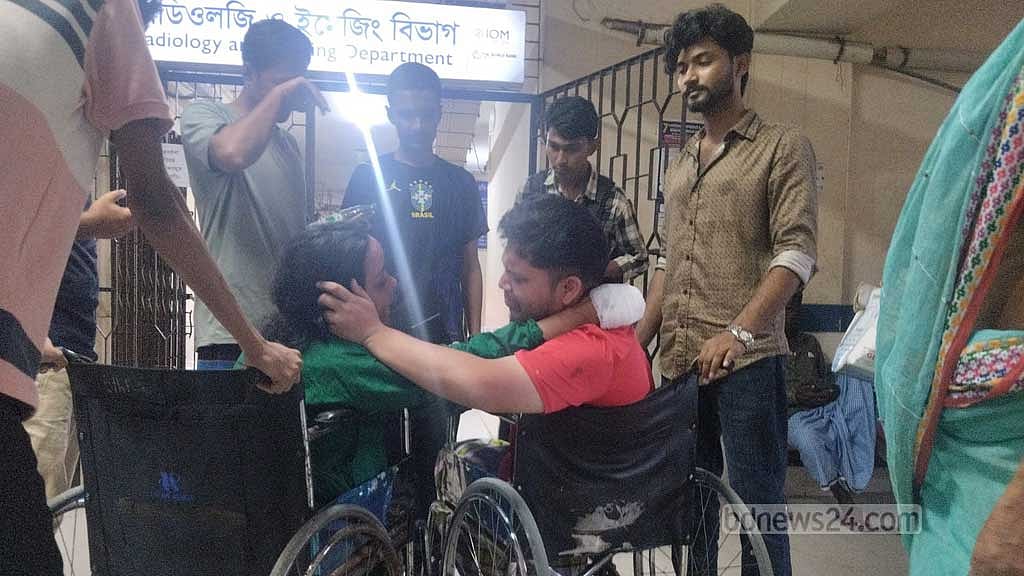
Several people jumped from windows and balconies to escape.
Among them, Ashiqul Islam reported that after attempting to alert family members, he broke a window and jumped to safety. His wife and several relatives were initially unaccounted for.
The severity of the burns rendered immediate identification of the dead impossible.
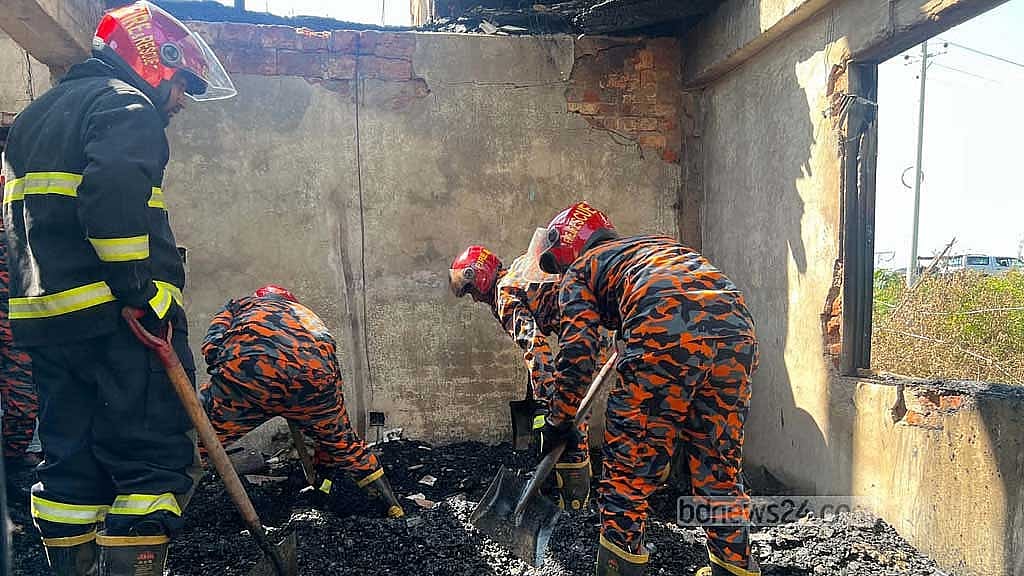
Fire Service officials said DNA testing will be required to identify the 10 recovered bodies.
Search operations continued to determine if additional victims remained trapped in the wreckage.