Published : 11 Oct 2026, 01:15 PM
Updated : 11 Oct 2026, 01:15 PM


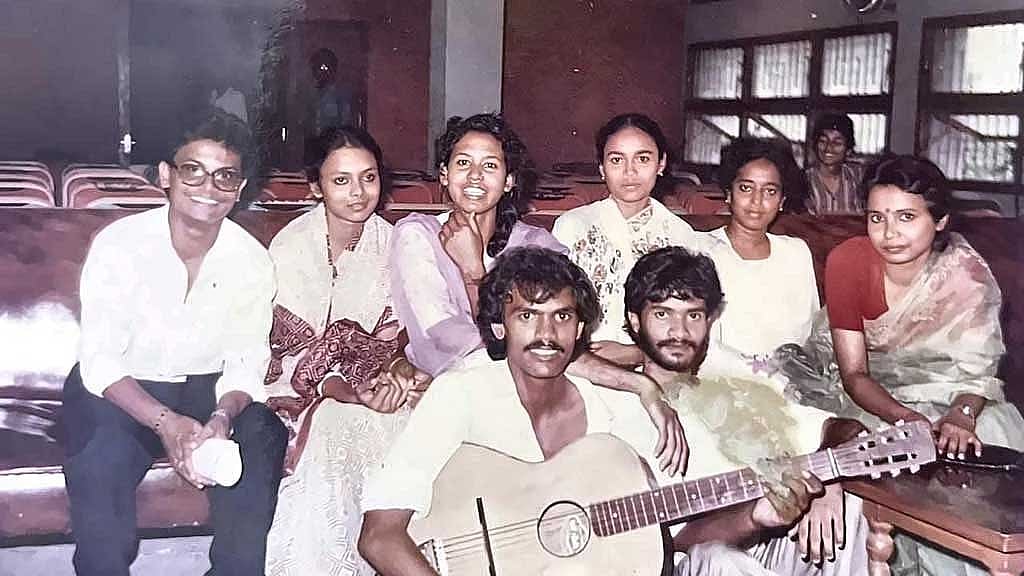
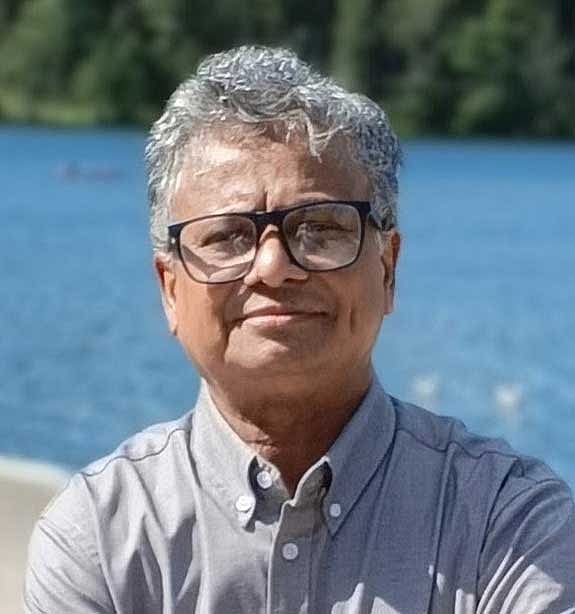
The news of Toufique Imrose Khalidi's death on Oct 2 in a London hospital left me with a sadness that is difficult to describe. But this is not because death is unfamiliar to those of us who have crossed into this stage of life. Over the years, too many friends, teachers and companions have left us. We have attended too many burials, written too many condolence messages, and spoken too often of lives that ended sooner than they should have. Yet some deaths strike us differently. They seem to take away not only a person but an entire time of life. Toufique's death feels like that to me. Since hearing the news, I have found myself returning again and again, not to the celebrated editor, the pioneering journalist or the founder of Bangladesh's first online news portal, but to the young man I met in the English Department of Dhaka University in 1985. It is as if, with his passing, a door has quietly closed on a world that survives now only in memory.
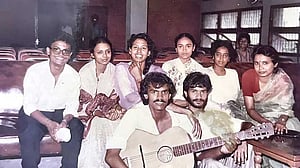
Our batch was officially the class of 1984. Because of the prolonged session jam created by repeated closures of educational institutions during General Ershad's martial-law regime, however, we did not begin our studies until September 1985. We arrived carrying all the impatience and uncertainty of a generation that felt it had already lost precious time. Five of us came from Dhaka College and already knew one another well. Yet within weeks those old friendships expanded into something larger. Toufique quickly became part of that circle, as did Ripon, Era, Faruque, Deena, Hasib, Peea, Shahnaz, Mizan, Iftikhar, Laaj, Ekram, Sufi and many others. Looking back now, what moves me most painfully is the thought of how many of those names belong to people who are no longer here. Ripon has gone. Era has gone. Deena has gone. Hasib has gone. Faruque has gone. Our beloved Syed Manzoorul Islam, SMI Sir, whose classes shaped our intellectual lives, has also made his journey to that place from which no traveller returns. Now Toufique has joined them. At our age one begins to realise that memory increasingly becomes a gathering place for the dead as much as for the living.
Our teachers often said that our batch had brought life to the department. There may have been some exaggeration in that assessment, but not much. We seemed perpetually unwilling to go home. Classes ended around one o'clock, but for us the real university experience began only then. The Mall, with its Fuchka and Jhalmuri vendors, became our first destination. Afterwards many of us drifted toward the British Council. Most of us, truth be told, did not go there primarily to study. The British Council of those days felt vastly different from the institution it later became. It was accessible, welcoming, almost casual in its atmosphere. We could browse books, linger in corners, meet friends, and continue conversations started elsewhere. Later, the adda would move again to Fuller Road, the TSC area, or the roads beside Shamsun Nahar Hall and Rokeya Hall. Looking back after four decades, I can no longer remember the details of most conversations, but I remember the feeling they created - the intoxicating certainty that friendship would last forever and that life was still opening before us.
And whenever I think of those years, Toufique is always there. Some people occupy a place in memory. Others animate it. Toufique belonged to the second category. Among ourselves we called him Kera, a nickname that somehow captured his restless and carefree spirit. If an adda was in progress, he would be there. If there was an argument, he entered it. If there was a plan to be made, he helped organise it. If there was laughter, his voice could usually be heard somewhere nearby. What distinguished him even then was not merely energy, but an extraordinary engagement with life. He seemed genuinely interested in everything and everyone around him. Most of us eventually went home. Toufique rarely did. Despite living in the Sobhanbagh Officers' Quarters, a considerable distance from the campus, he would routinely be the last among us to leave. Quite often he would depart Fuller Road only to head to SM Hall for another round of adda before finally returning home long after midnight.
I find myself remembering so many small things. His enthusiasm whenever we organised programmes in the department. His ability to persuade people. His refusal to abandon a project simply because it seemed difficult. I recall particularly our efforts to organise a departmental picnic sometime in early 1987. We were in our second year then and desperately wanted the outing to happen. The department, however, seemed reluctant to grant permission. Most of us resigned ourselves to disappointment. Toufique did not. He lobbied, argued, persuaded and negotiated until finally Manzoor Sir and Anis Ahmed Sir agreed to accompany us. Looking back, I realise that this was a pattern that would repeat throughout his life. He possessed an unusual ability to convert enthusiasm into action. Where the rest of us saw obstacles, he saw merely another argument waiting to be won.
The same determination revealed itself whenever he encountered something he considered unjust. One memory returns particularly vividly. We were then old second-year students. One of our Boro Bhais in the Department had been causing considerable discomfort to a sweet and gentle female Apa. When Toufique learned about it, he challenged him directly. Predictably, the confrontation created a great deal of noise and tension. Confronting seniors was not something students normally did. Yet Toufique never possessed much patience for the unwritten rules that protected bad behaviour. Fortunately, Prof Ahsanul Haque, who functioned almost as a father figure to generations of students, intervened and ensured that the matter did not escalate further. The episode remained with me not because of the drama it generated but because it revealed something essential about Toufique's character. He simply could not coexist comfortably with what he considered wrong. Long before he entered journalism, the journalist was already present within him.
That quality remained unchanged throughout his life. He was progressive in outlook, deeply suspicious of bigotry and fundamentalism, and entirely willing to defend his beliefs. Yet what I admired most was that he never confused conviction with intolerance. He could argue fiercely without becoming dogmatic. He welcomed disagreement. He listened. He reconsidered. In later years, when I watched him navigate increasingly polarised public debates, I often recognised the same young man from our university days, still determined to think for himself and unwilling to surrender his independence of mind.
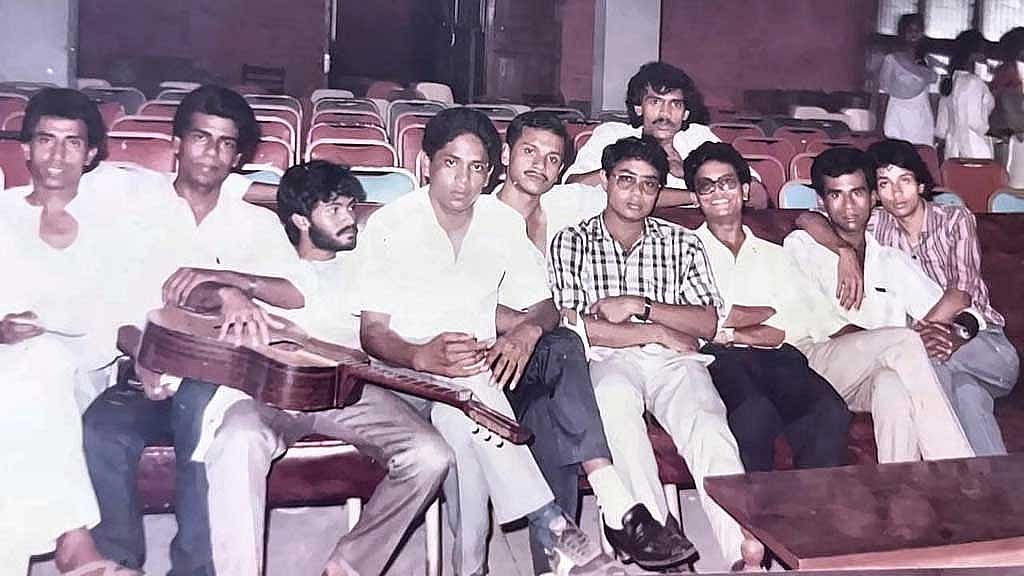
Few people know that it was Toufique who opened the doors of journalism for several of us. Shortly after we completed our master's examinations, The Daily Star experienced a major exodus of journalists. Toufique had already joined the newspaper. One day he took several of us to the office opposite the buildings that housed The Dainik Bangla and The Bangladesh Times. A brief discussion followed and, almost before we realised what was happening, appointments were made. Two of us, including myself, joined as trainee sports reporters, while others became trainee sub-editors. Looking back, I am struck by how casually life-changing moments arrive. At the time it felt like another day's adventure with a friend. Only later did I understand how profoundly that opportunity would influence my future. Journalism taught me many things, but among the most valuable was the importance of writing in a living, conversational English rather than an academic one. In subtle ways, that lesson too came from Toufique.
As the years passed, our lives drifted outward in different directions, as lives inevitably do. Careers demanded attention. Families required nurturing. Daily responsibilities replaced daily addas. Yet some friendships survive long periods of silence because they are rooted in a shared past that neither time, nor distance can erase. We met less frequently, spoke less often and occasionally lost touch for stretches of time. But whenever we met again, the intervening years seemed to disappear with surprising ease. That is the privilege of friendships formed in youth. They become incorporated into who we are.
Perhaps that is why a conversation I had yesterday continues to haunt me. Ripon's sister Lorna, now living in Sussex and the sole surviving member of a family that was once very close to all of us, called after attending Toufique's Namaz-E-Janaza at his favourite Brick Lane mosque. During our conversation she mentioned something she had heard from people close to him. Apparently Toufique disliked staying alone in hotels. He was afraid of it. Ever since hearing that, I have been unable to free myself from the cruel irony that what he feared was ultimately what happened. He suffered a massive stroke while alone in a hotel room in London. By the time he was found and taken to hospital, there was little that could be done. The image is almost unbearable to contemplate. A man who filled every room he entered with conversation and companionship, a man who seemed happiest in the company of friends, a man whose life was woven from human connections. Yet when the decisive moment arrived, he faced it alone.
Perhaps that thought disturbs me because it collides so violently with the Toufique I remember. When I think of him, I do not see solitude. I see crowds of friends. I see teacups accumulating on roadside tables. I see evening descending on Fuller Road. I hear laughter, arguments and impossible dreams. I see a young man who always stayed a little longer than everyone else because the adda was too enjoyable to abandon. The loneliness of that London hotel room simply does not belong to the story I carry in my heart.
The truth is that we have not met much in recent years. My last interaction with him came on his birthday, Jun 14 this year. I sent greetings through WhatsApp and Messenger. He responded with a heart emoji. Nothing more. At the time it seemed completely ordinary. Today it feels unbearably precious. Age teaches us many things, but perhaps its cruellest lesson is that final conversations seldom announce themselves as final. We assume there will be another birthday greeting, another phone call, another chance encounter, another reunion. Then, suddenly, there isn't.
One memory keeps returning to me above all others. It was sometime in the late 1980s during a farewell programme at the English Department. Toufique stood before the audience and began reciting Tagore's “Kaler Jatrar Dhoni”. The hall fell silent. His voice possessed a depth and resonance that commanded attention without effort. When he reached the closing lines, something in the room seemed to pause:
Hey aishorjobaan,
Tomare je diyechhinu se tomari daan,
Grohon korecho joto rini toto korechho amay,
Hey bondhu, biday.
For days those words have echoed in my mind. Not as literature. Not even as poetry. As a farewell from one friend to another.
The country will remember Toufique Imrose Khalidi for his achievements, and rightly so. History will record his contribution to journalism. Colleagues will remember an editor. Readers will remember a public figure. But when I mourn him, I mourn something more private. I mourn the young man whose presence helped define some of the happiest years of my life. I mourn the friend who expanded every gathering simply by arriving. I mourn the countless conversations left unfinished. I mourn the illusion, cherished by all old friends, that there would always be more time.
And so, my friend, when I think of you now, I do not think of London. I do not think of hospitals. I do not even think of death. I think of Fuller Road at dusk. I think of the adda beginning to break up after hours of conversation. One by one, everyone rises to leave. The crowd grows smaller. The night deepens. Yet one familiar figure is still there, still talking, still laughing, still postponing his departure for just a little longer. In memory, that is where you remain. The last to leave the adda. And as long as those evenings survive in the hearts of your friends, perhaps you never really will leave at all.
[Ahmed Ahsanuzzaman is a professor of English and director, Kazi Nazrul Islam and Abbasuddin Ahmed Research & Study Centre at Independent University, Bangladesh (IUB), Dhaka]