Published : 17 Oct 2026, 01:13 AM
Updated : 17 Oct 2026, 01:45 AM


It must have been 1989 or 1990. In the familiar corridor of the Department of English at the University of Dhaka, a student was chatting informally with the department’s then chairman, Prof Syed Manzoorul Islam, while smoking a cigarette. The scene caught the attention of a relatively new student - this scribe -passing through the corridor. It prompted a natural question: who was this student? He turned out to be Toufique Imrose Khalidi, a Master’s student already pursuing a career in journalism.
Soon, it became clear that Khalidi was a popular figure in the department. Teachers liked him, classmates respected him and junior students looked up to him - some even idolised him. His charisma inspired many students in the department to pursue journalism, several of whom would later join the newsrooms of Dhaka’s English-language newspapers some 36 years ago.
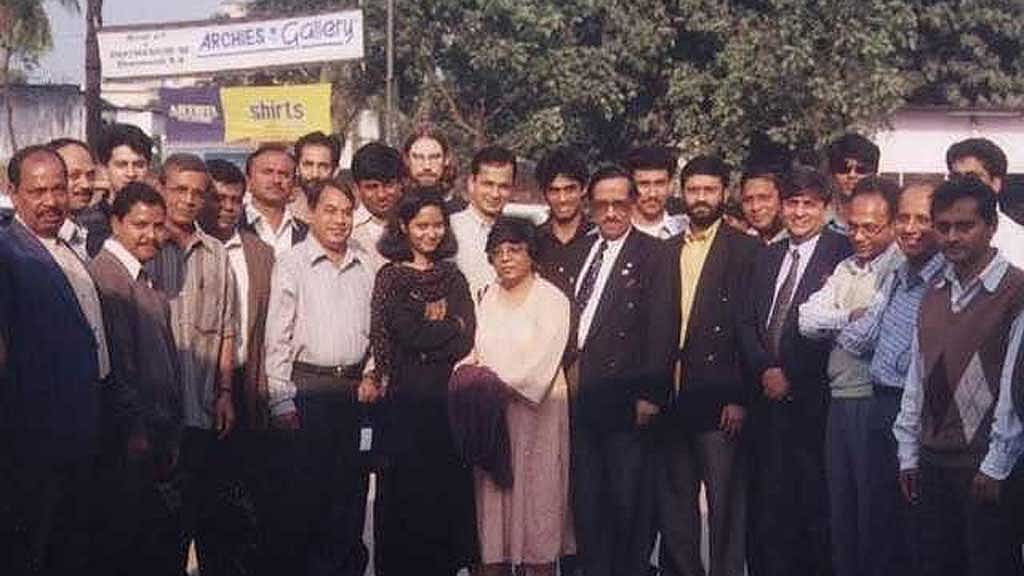
Khalidi was also a familiar face in the department’s extracurricular activities. He was among the leading figures of the English Department Alumni Society (EDAS) at the University of Dhaka, established in 1986. In the subsequent years, he became a driving force behind EDAS, helping to sustain and strengthen the organisation. He was also one of the key student volunteers who helped organise the department’s annual river cruise on the Buriganga.
This scribe later became Khalidi’s colleague at The Daily Star, though only for a few months before he moved to the BBC Bengali Service in London in early 2000. Khalidi returned to Bangladesh in 2005. Having worked at The Financial Express, The Daily Star and the BBC, he brought considerable experience to his next venture. In 2006, he took charge of bdnews24.com, which initially operated as an online-based wire service, selling news to newspapers and other clients.
Khalidi saw an opportunity to transform bdnews24.com from a conventional news agency into a fully digital news organisation, making news available online around the clock, including during the long Eid holidays when print newspapers suspend publication. bdnews24.com thus became Bangladesh’s first online newspaper. This scribe had several long conversations with Khalidi about joining the venture, but that never materialised.
At work, he was talented, quick and accurate, always striving to do his best and setting himself apart from mediocrity. His English was lucid, his prose flowed effortlessly and his writing was always engaging. Outside work, his mannerisms and gestures made him stand out among his contemporaries. At a small farewell party hosted by his Star newsroom colleagues at a Dhanmondi restaurant, Khalidi charmed the gathering with his eloquence and animated gestures. His high standards and insistence on quality sometimes led to misunderstandings with colleagues, peers and even friends, some of whom saw him as a man of strong likes and dislikes.
Despite bdnews24.com’s achievements under Khalidi in reporting accuracy, editorial standards, solid journalistic ethics and innovation, its business model struggled to turn those strengths into financial sustainability. Making online news freely accessible helped broaden its reach but limited its ability to earn directly from readers through subscriptions. Yet bdnews24.com had an early success with its subscription-based breaking news service delivered via mobile phones, a pioneering initiative in Bangladesh before smartphones became ubiquitous.
Khalidi’s insistence on editorial independence also came at a cost. He struggled to secure support from private-sector advertisers, particularly when his refusal to suppress reports of corruption involving powerful business interests put him at odds with those who might otherwise have funded the organisation.
Government regulators, too, offered little cooperation. Khalidi’s insistence on editorial independence brought him into conflict with powerful interests on numerous occasions. Eventually, he became embroiled in a prolonged legal battle with the authorities under Sheikh Hasina’s authoritarian regime.
After bdnews24.com announced a Tk 500 million investment by LR Global Bangladesh, an affiliate of the New York-based LR Managers Investments, in 2019, the deal came under scrutiny by the Bangladesh Securities and Exchange Commission (BSEC), which said the news outlet was not listed on any stock exchange.
bdnews24.com said, “The investment will also go into news outlet’s constant efforts to remain the most trustworthy news source in an environment in which people share and reshare untrustworthy information, sometimes with malicious intent, on social media.”
“We are now accountable not only to our millions of readers but also a staggering 30,000 investors through LR Global,” Khalidi said.
The Anti-Corruption Commission (ACC) subsequently filed a case in July 2020, accusing Khalidi of acquiring wealth beyond his known sources of income. Khalidi denied the allegations and maintained that the case was baseless. In November 2022, the High Court restricted his foreign travel, requiring him to seek permission before leaving the country.
Following the fall of the Hasina government in August 2024 though the student-people led mass uprising, the case was withdrawn. The court acquitted Khalidi, lifted the travel-permission requirement and ordered the release of his and bdnews24.com’s frozen bank accounts.
At bdnews24.com’s 18th anniversary in October 2024, Khalidi spoke of the challenges the news outlet had faced, including undue pressure from corrupt politicians and rogue business figures.
Khalidi’s commitment to journalism was evident in his defence of fellow journalists under pressure, even when he disagreed with their decisions. In 2016 during the regime of Hasina, when The Daily Star editor Mahfuz Anam faced a barrage of lawsuits over the publication of unverified reports supplied by military intelligence during the 2007–08 caretaker government, Khalidi condemned the harassment and warned against turning the matter into a personal or political vendetta. Anam is the only editor who publicly acknowledged the lapse; others who also used the unverified materials did not do so.
“Let his readers punish him, or his employers assess him,” Khalidi wrote in an opinion piece published on bdnews24.com.
His defence, however, was not unconditional. Khalidi called on Star management to introduce a proper editorial process to prevent similar mistakes, arguing that accountability should come through professional scrutiny, not intimidation and lawsuits. Yet he made his position clear: “But for now, all said and done, we stand by Mahfuz Anam.”
Khalidi’s untimely death cuts short a remarkable yet unfinished journey in journalism. Far from flawless, his uncompromising pursuit of high standards sometimes made him difficult to work with. But he remained steadfast in his principles. His work leaves important lessons for Bangladesh’s news media as it grapples with questions of credibility and financial sustainability.
Toufique Imrose Khalidi leaves behind a legacy that will endure. As Percy Bysshe Shelley wrote in “Adonais”: “The splendours of the firmament of time / May be eclips’d, but are extinguish’d not.”
[Shamim A Zahedy is a journalist who has worked at The Daily Star, Independent Television and The Financial Express]