Published : 28 Nov 2026, 02:16 AM
Updated : 28 Nov 2026, 02:33 AM


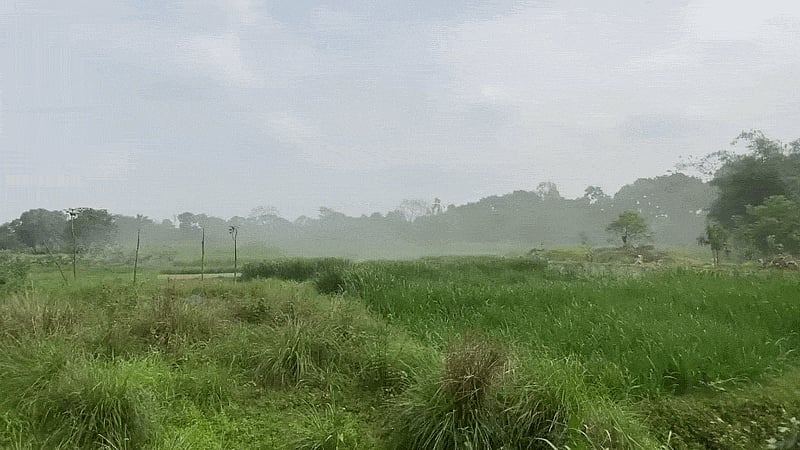
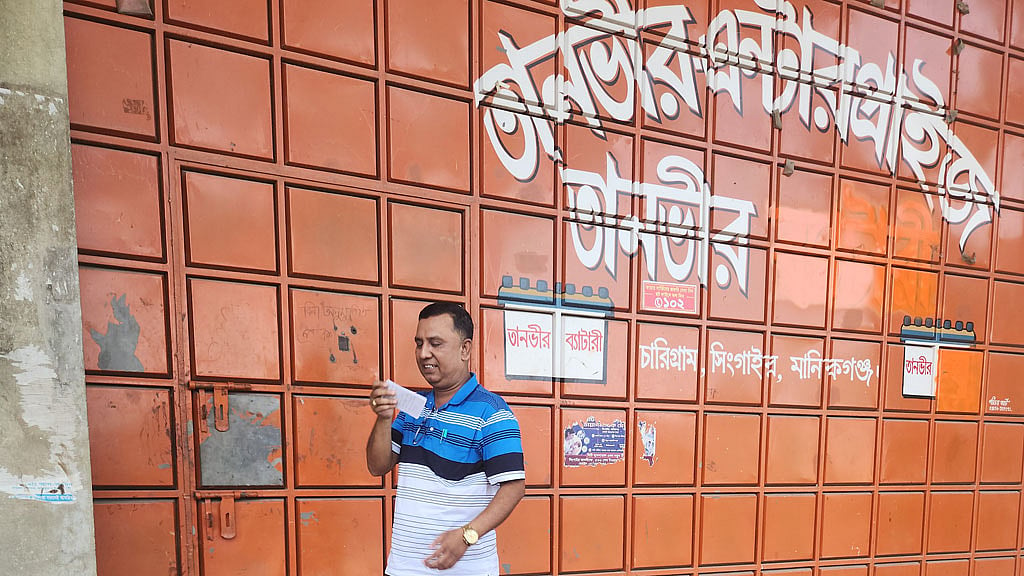
Smoke hangs over Charigram, a village in Manikganj’s Singair, about 35km west of Dhaka. Beside farmland and homes stands Tanvir Enterprise, a recycling plant where lead is extracted from discarded batteries. Smoke billows from its chimney and spreads across the locality.
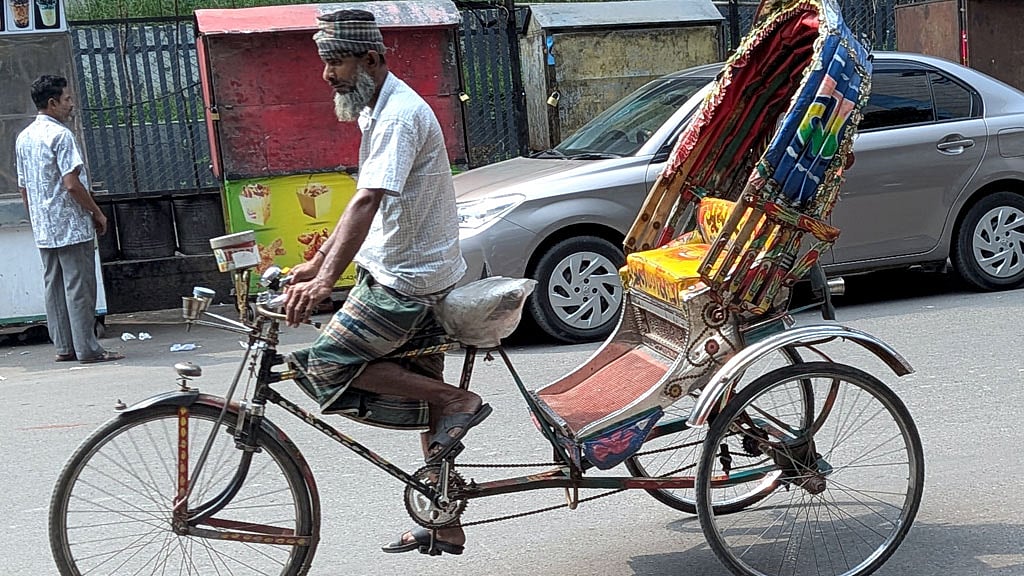
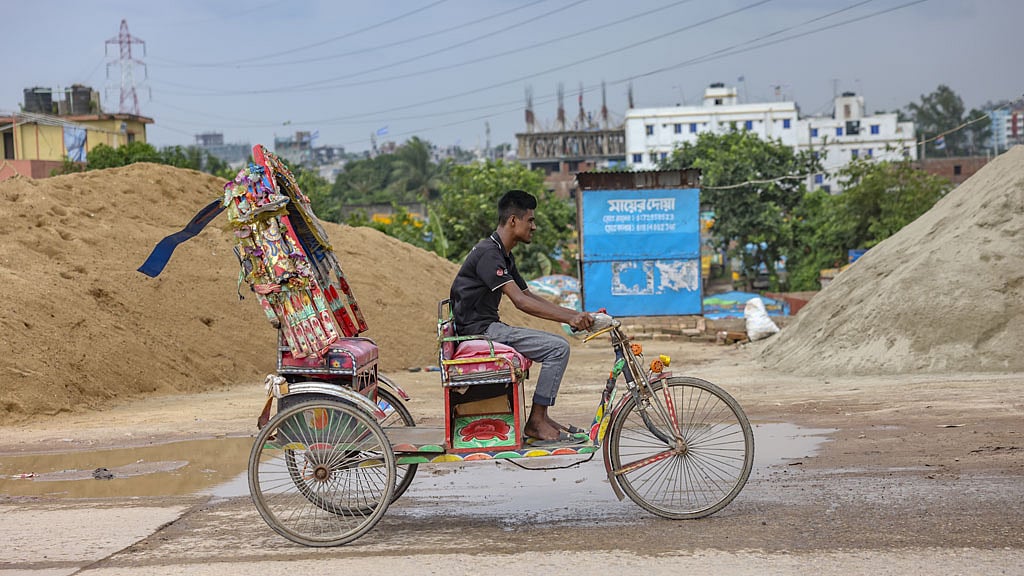
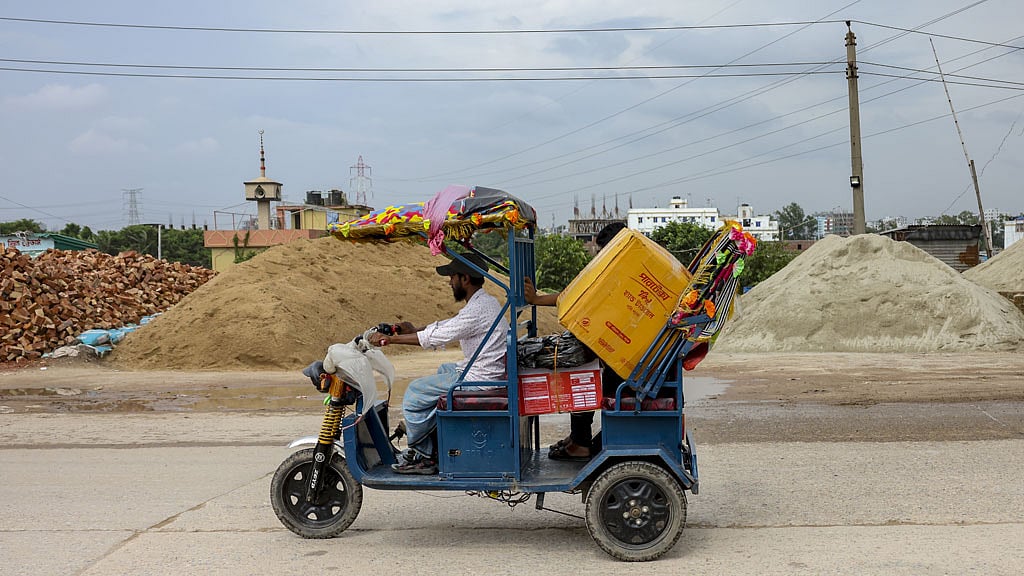
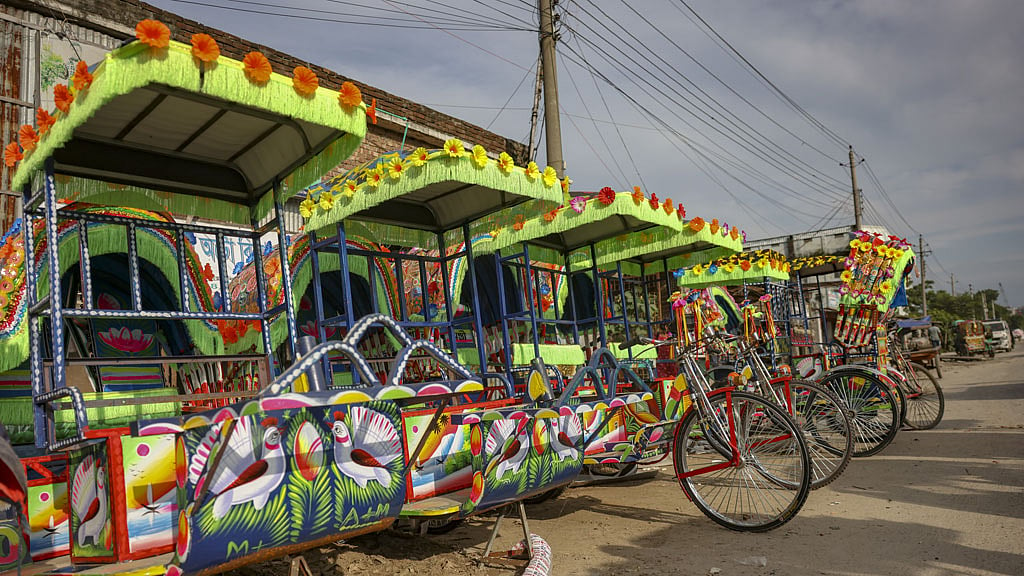
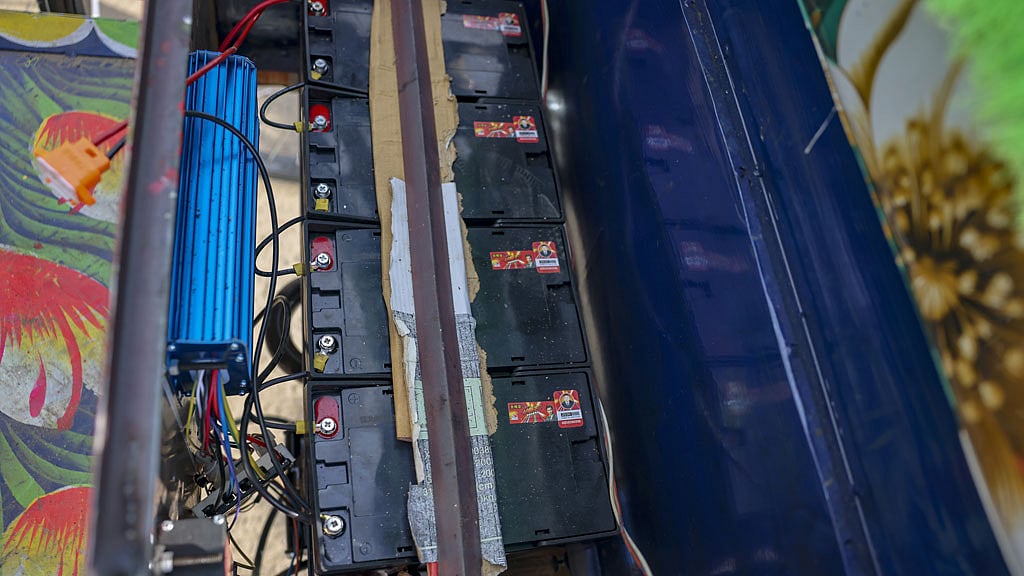
The batteries that power electric rickshaws and easy-bikes eventually wear out. But the trade does not end there. Old batteries are sold, broken apart and stripped of their components. The recovered lead becomes a commodity again. It is the smoke and waste from this process that have prompted complaints in Charigram.
More than 150 residents have petitioned the authorities to stop the factory's emissions. They say the smoke irritates their eyes and throats, causes coughing, nausea and stomach pain, and has affected crops. Some also report illness and deaths among livestock.
Factory Manager Md Habib says the plant operates in compliance with the rules. But an investigation found Tanvir Enterprise is absent from the Department of Environment's list of approved facilities, although it appears on a list maintained by the Department of Inspection for Factories and Establishments.
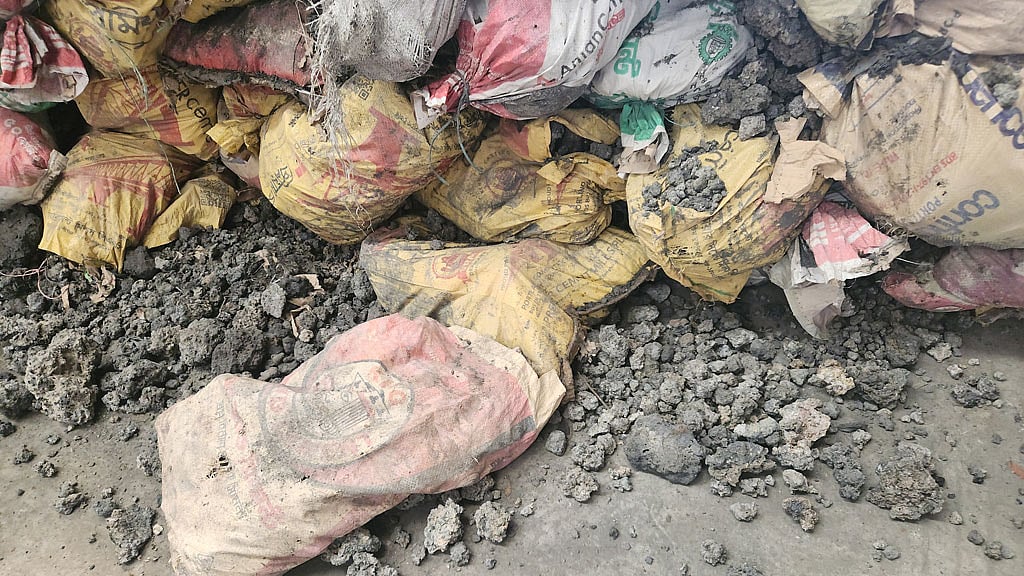
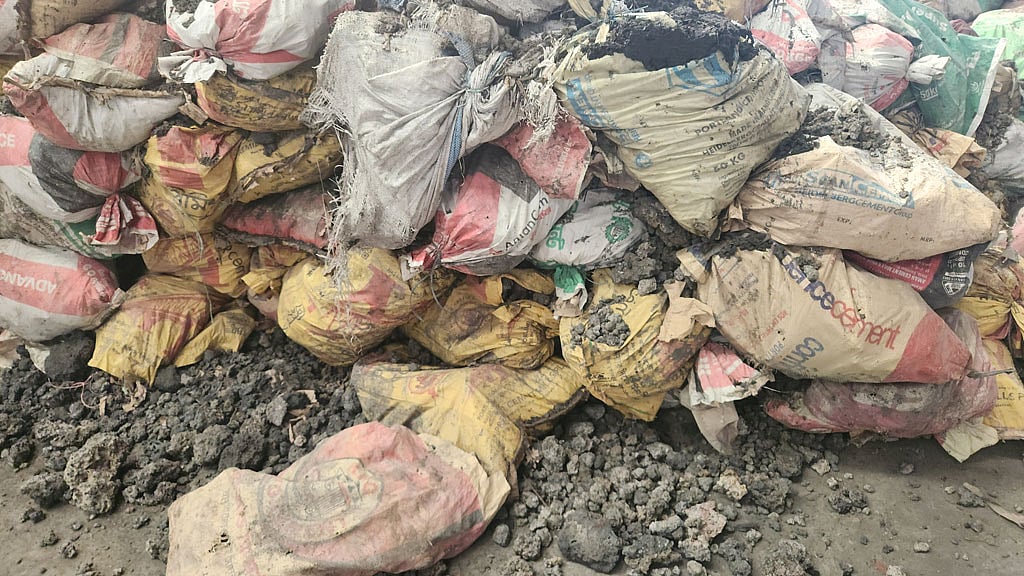
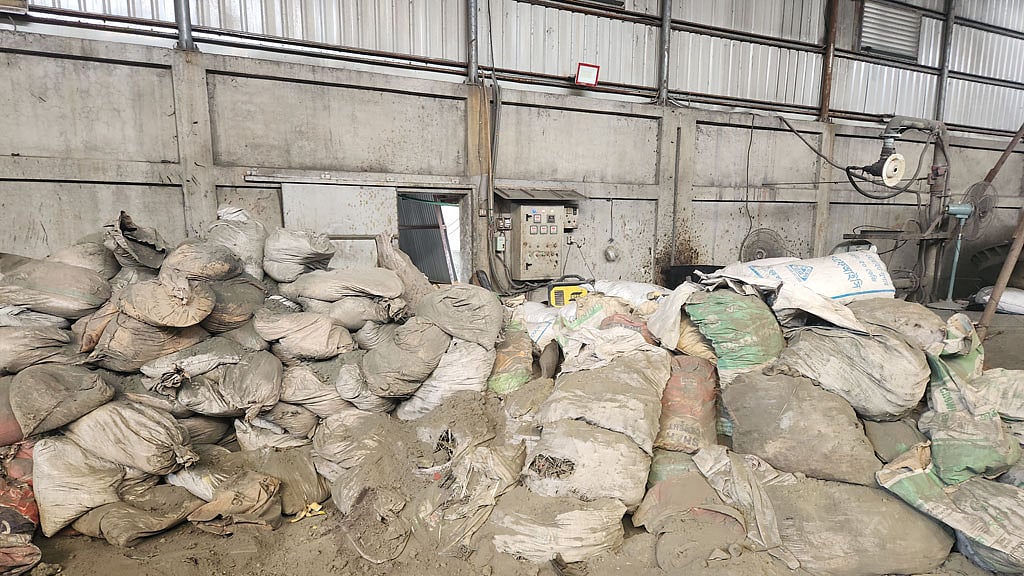
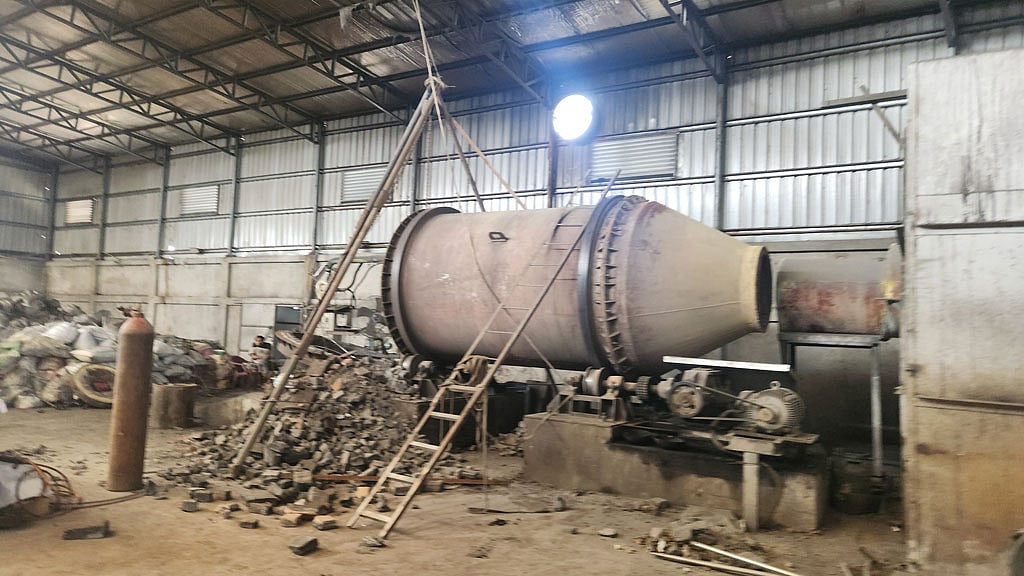
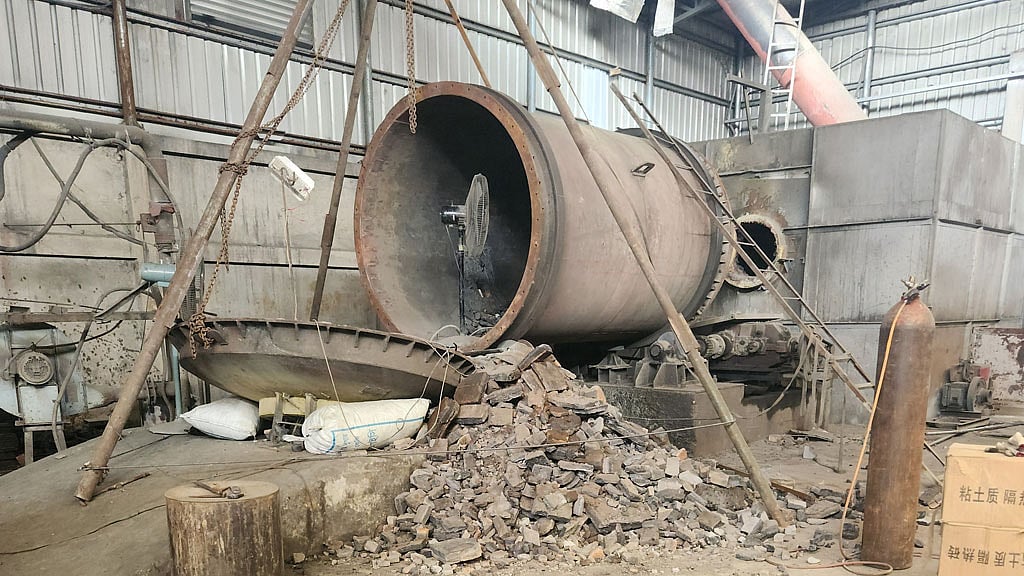
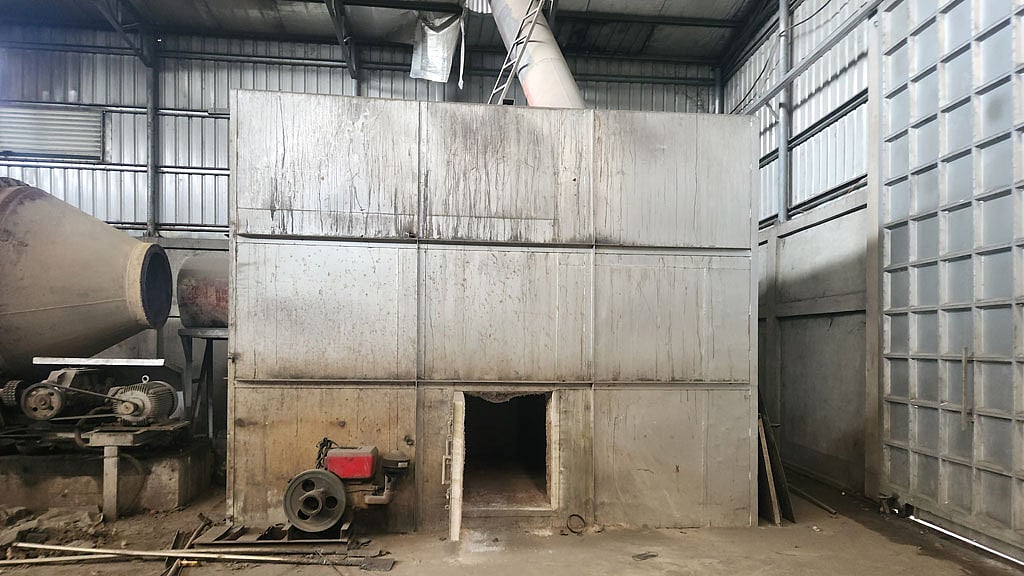
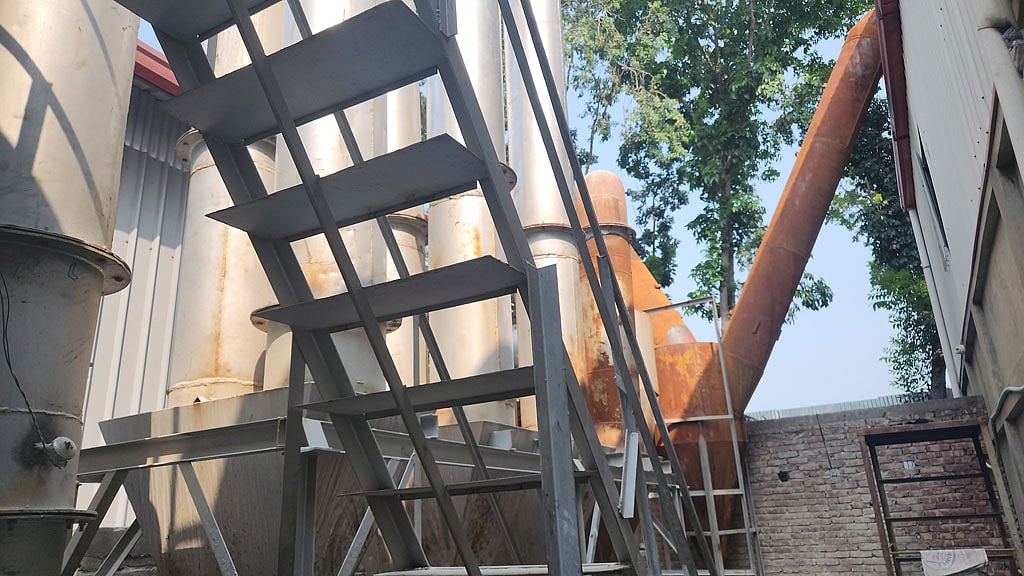
The smoke from battery manufacturing and recycling plants is visible. Less obvious is the supply chain behind the batteries used in electric three-wheelers. Much of it leads to China.
Import records show that hundreds of Chinese companies have been exporting electric three-wheelers, battery plates and casings, and other components to Bangladesh for years.
Data from Tradeindata and ImportGenius identify 343 Chinese exporters and 440 Bangladeshi importers. Between January 2020 and June 2026, the value of their exports was about $112.4 million.
Some companies shipped electric three-wheeler frames without batteries; others supplied positive and negative battery plates. The exports also included motors, controllers, chargers, axles and brake components.
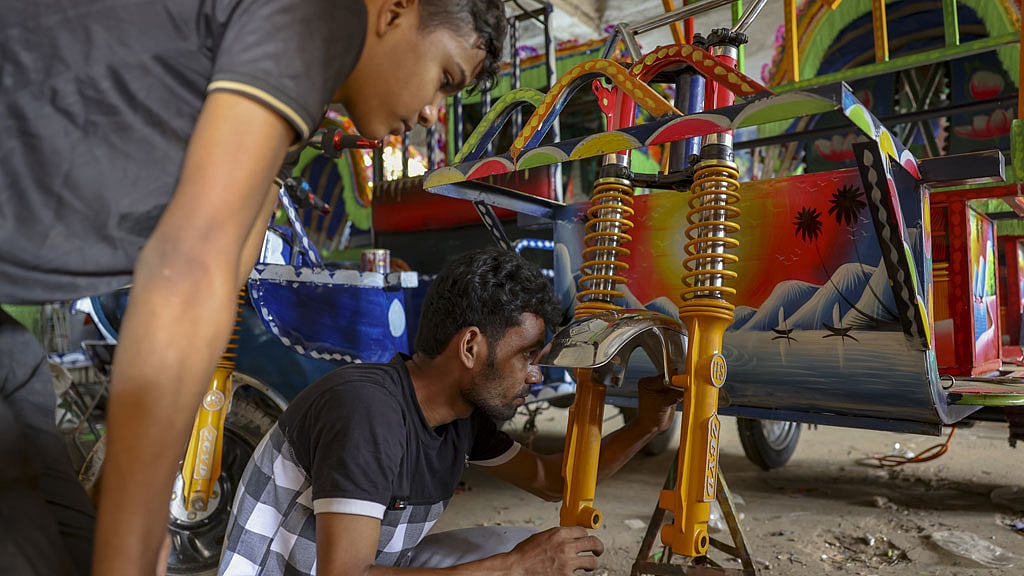
As these vehicles remain on the roads, their batteries must be replaced repeatedly. A three-wheeler may last for years, but no single battery set lasts as long. Discarded batteries enter a separate trade in collection, dismantling and lead recovery.
Batteries Wear out, Waste Piles up
The international non-profit Pure Earth, which works on lead pollution from used batteries in Bangladesh, estimated in a 2026 publication that about 4 million electric three-wheelers were operating in the country.
Its estimate of annual lead waste, however, uses a different baseline: about 167,000 tonnes, calculated on the assumption of 2 million easy-bikes, five batteries per vehicle containing a combined 125kg of lead, and replacement every 18 months.
The same publication puts the lifespan of an easy-bike battery set at eight to 11 months. The difference between that figure and the 18-month assumption used for the waste estimate highlights how much the annual total depends on how frequently batteries are replaced.
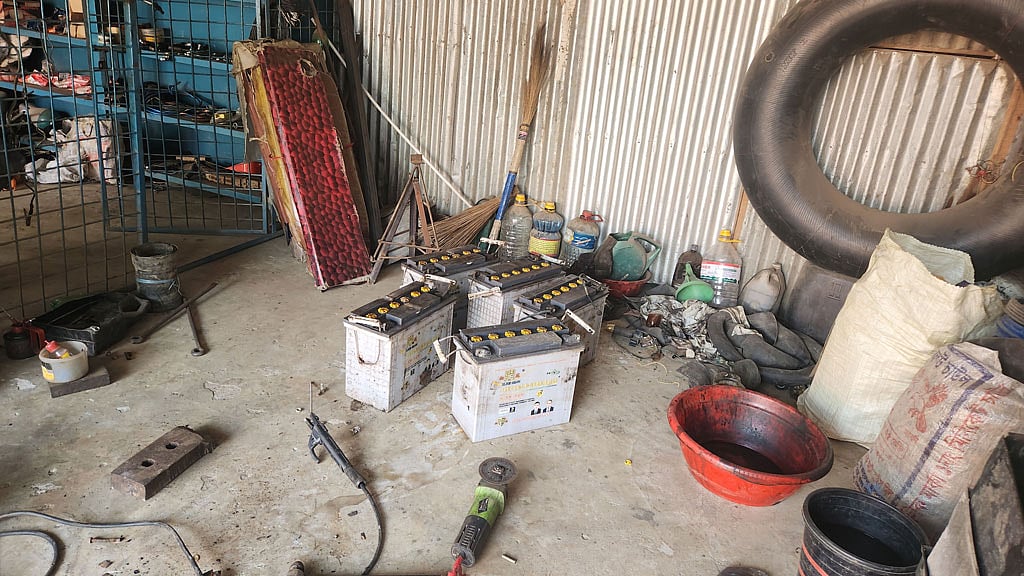
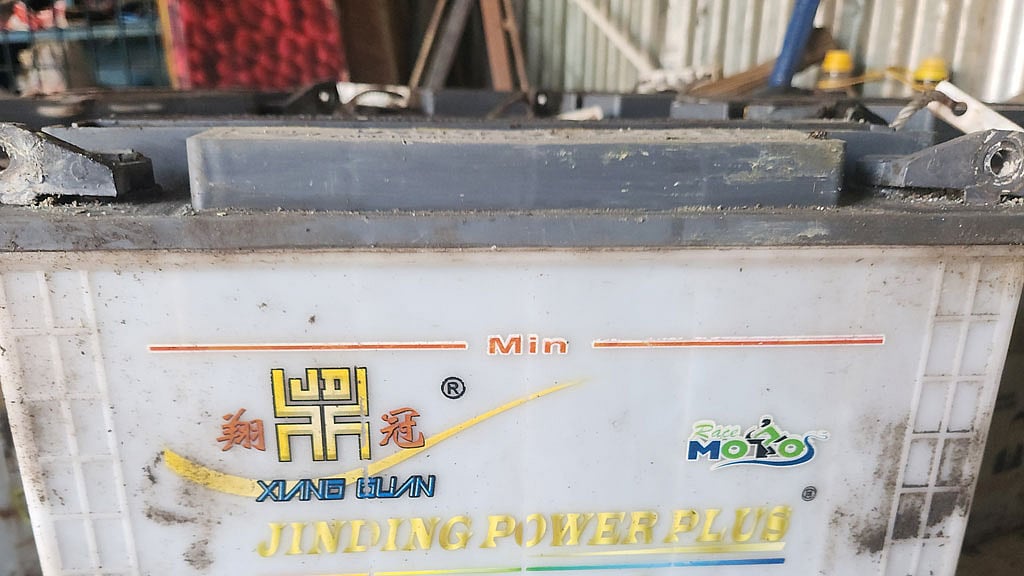
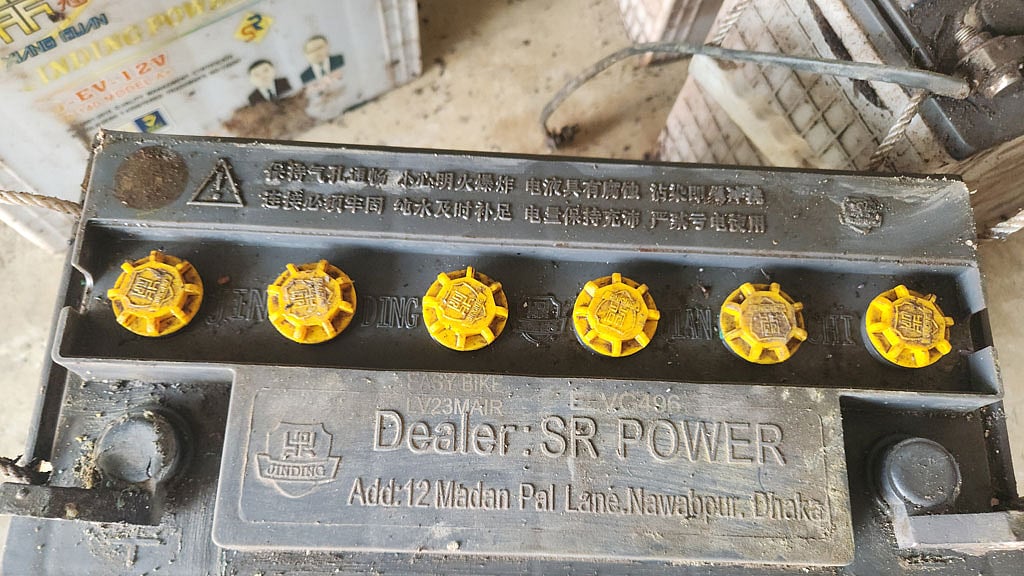
Interviews with sellers, drivers and garage workers revealed differing accounts of battery life. Lead-acid batteries are commonly sold under two names: water batteries and powder batteries.
A garage supervisor in Kathalbagan said a battery could last up to 18 months. Several sellers in Savar put the lifespan at 18 months to two years, while a Karwan Bazar seller said batteries he sold generally lasted two years.
Water batteries are flooded lead-acid batteries, usually lasting one to one-and-a-half years. Powder batteries are also lead-acid batteries, but use lead paste and typically last eight to 12 months. Despite the different names, both types contain lead.
There are complaints that powder batteries fail particularly quickly. An owner in Kalabagan said he paid an additional Tk 13,000 on top of his old set to buy a replacement without a warranty. Some sets, he said, did not last even a month.
A rickshaw mechanic in Kathalbagan alleged that old batteries were repackaged and sold as new, leaving drivers unaware of their condition.
Battery life also depends on quality and usage. But consistent records of purchase dates, battery types, periods of use and reasons for failure are difficult to obtain.
A garage owner in Kalabagan quoted Tk 26,000 for a powder battery set with a three-month warranty. Another put the price at Tk 24,000. Water battery sets were priced at Tk 45,000 by one seller and Tk 60,000 by another.
There is no single reliable estimate of battery life. But a market has grown around exchanging old sets for new ones with an additional payment. Keeping a vehicle running means buying batteries repeatedly, while the discarded sets become someone else's business.
A Market for Discarded Batteries
Used batteries fetched Tk 80-95 per kg in Karwan Bazar, about Tk 100 in Kathalbagan and Tk 120-160 in Savar. Damaged powder batteries in Kalabagan were quoted at Tk 180-190 per kg.
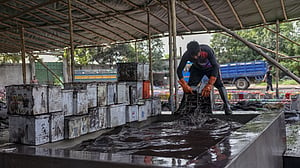
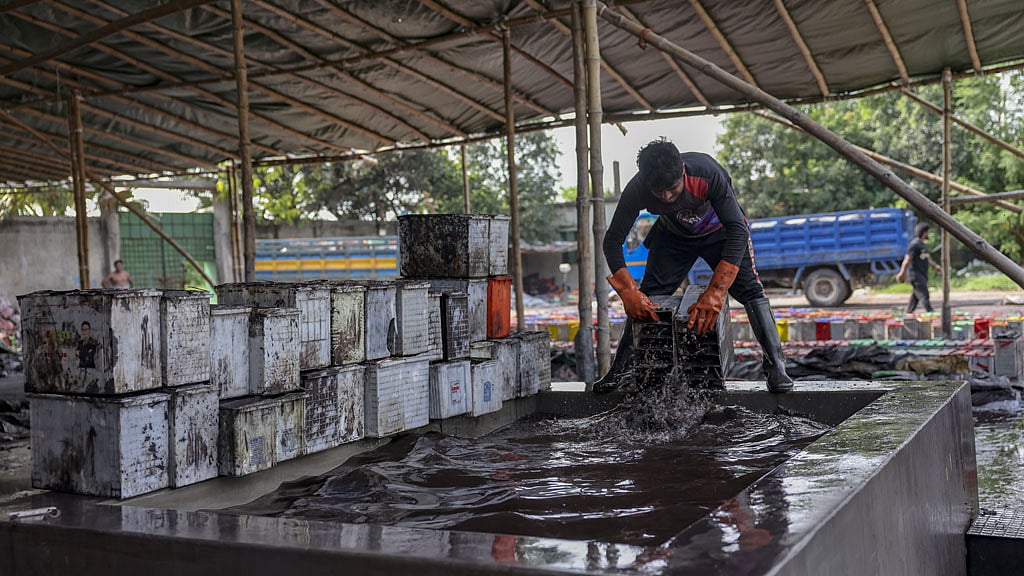
Inside these discarded batteries is lead that can be recovered and sold. One stage of that process was observed in Keraniganj, about 13km south of Dhaka, where used lead-acid batteries were stacked in an open, partly covered area beside broken casings and fragments.
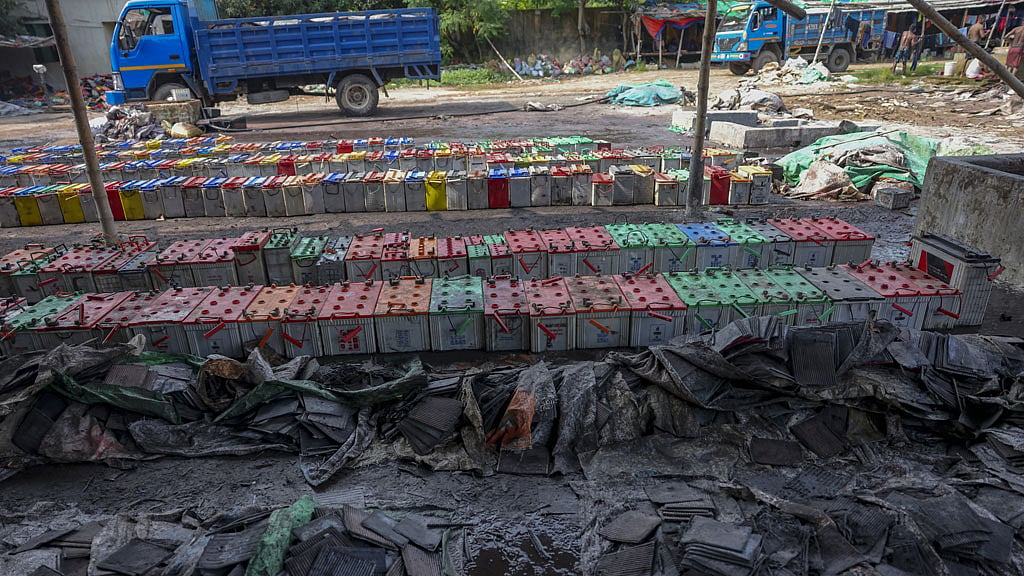
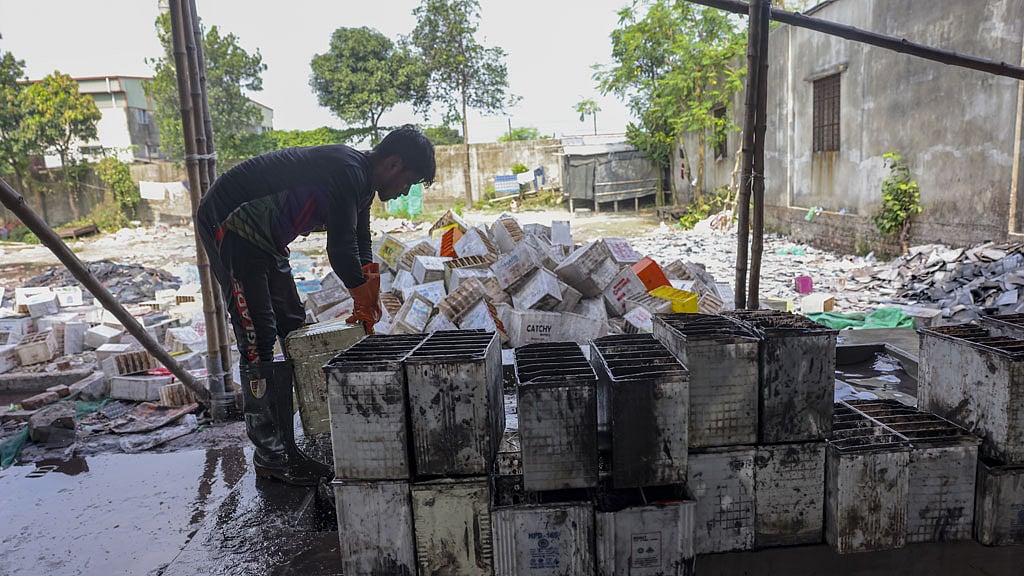
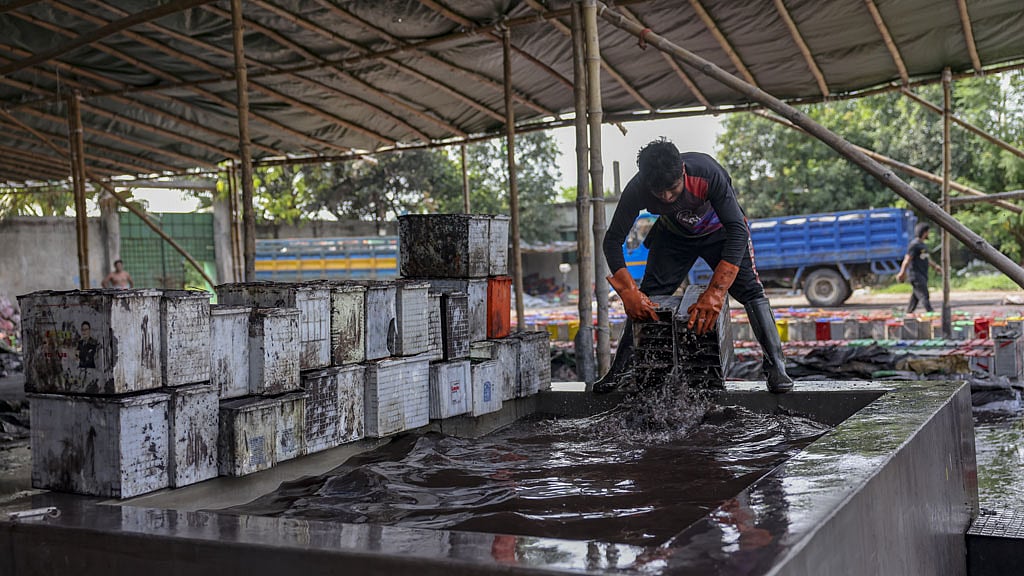
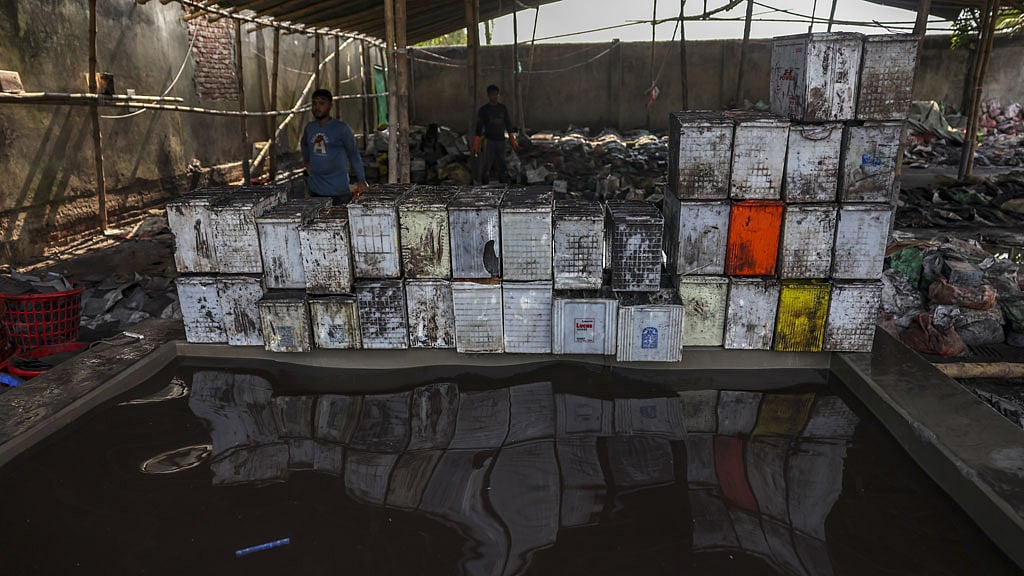
About eight workers were breaking open the batteries, separating the plastic from the material inside and collecting a dark, ash-like substance in buckets.
Some wore rubber boots; others handled the material with bare hands. One worker was seen washing an opened battery casing in water. Broken plastic and battery fragments lay scattered across the site.
A pickup was waiting to carry away the recovered material. Workers said it was headed for Kamrangirchar, but the destination factory or buyer could not be identified.
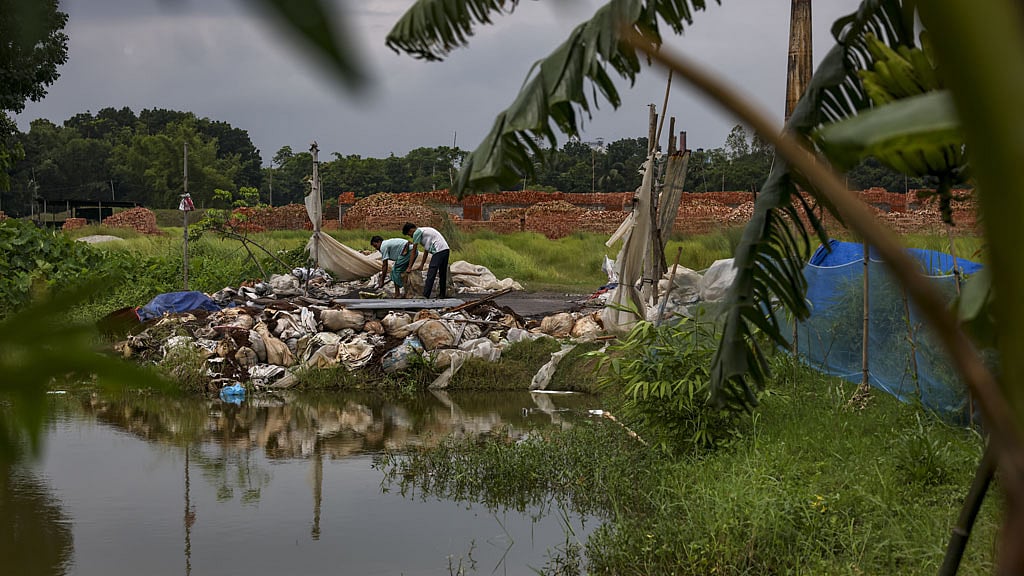
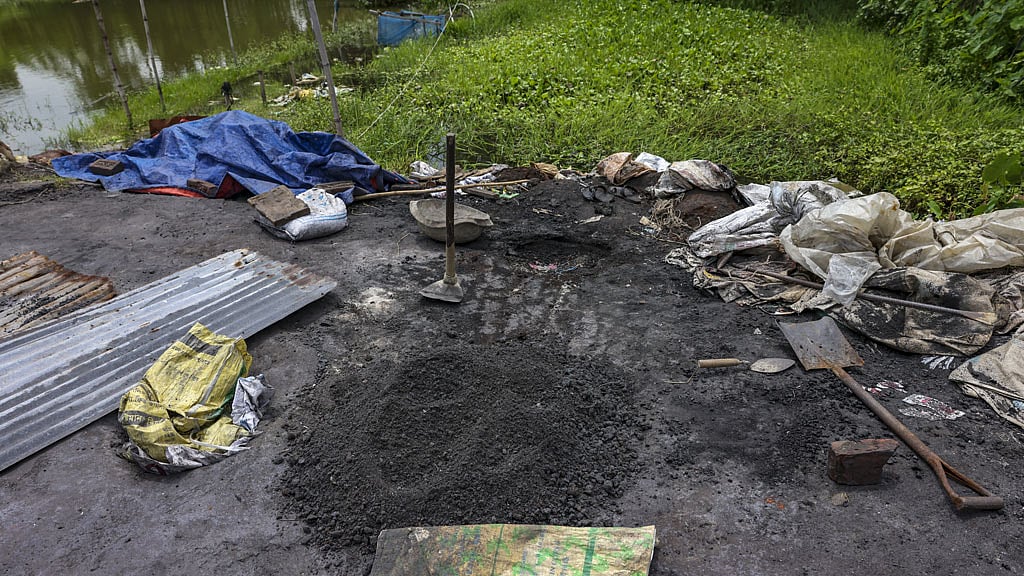
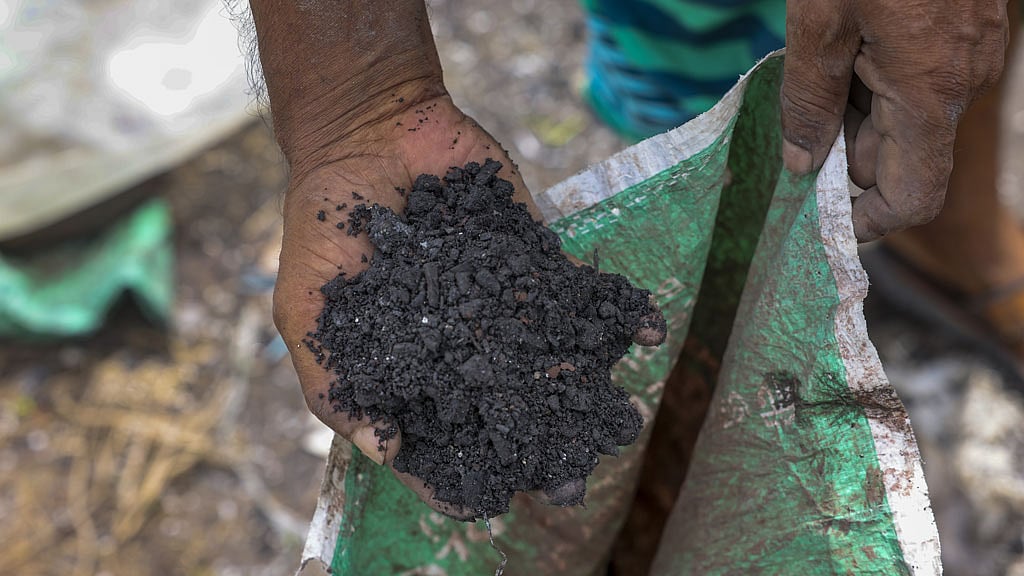
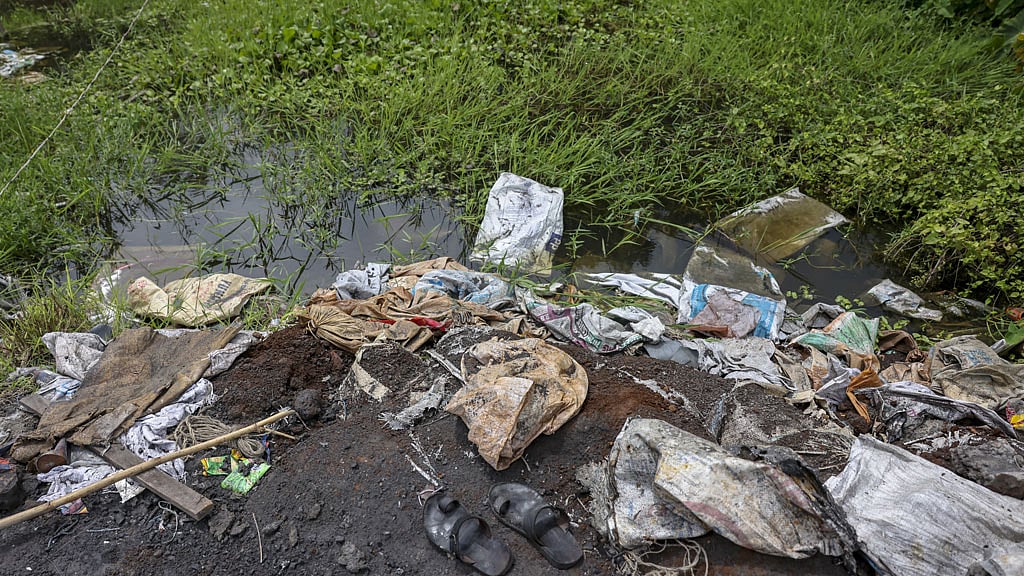
Collecting discarded batteries does not necessarily mean recycling them safely. According to Pure Earth's 2026 report, The Circular Economy of Lead Acid Batteries in Bangladesh, 80 percent of used lead-acid batteries are recycled at illegal and informal facilities.
The report says informal operators keep costs down by avoiding taxes and environmental regulations, and can collect used batteries faster and more cheaply. Compliant facilities, by contrast, face higher costs for transport, storage and environmental safeguards.
Alongside the business of breaking old batteries for lead, another trade supplies the materials used to manufacture new ones. This is where Chinese companies account for the largest share of the imports examined.
The Business inside the Battery
Battery components and materials accounted for about $81 million of Chinese exports over the six-and-a-half-year period, or 72.2 percent of the selected exports examined.
At least 292 Chinese companies supplied these products, including positive and negative plates, plate jackets, plastic casings, covers and separators.
China also exported about $24.51 million worth of battery-free electric three-wheeler frames during the same period.
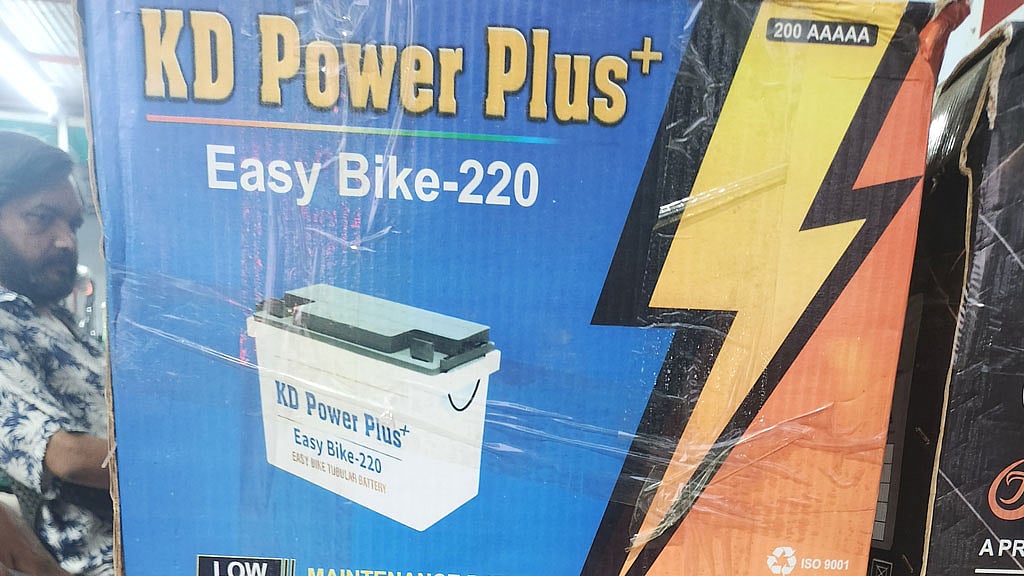
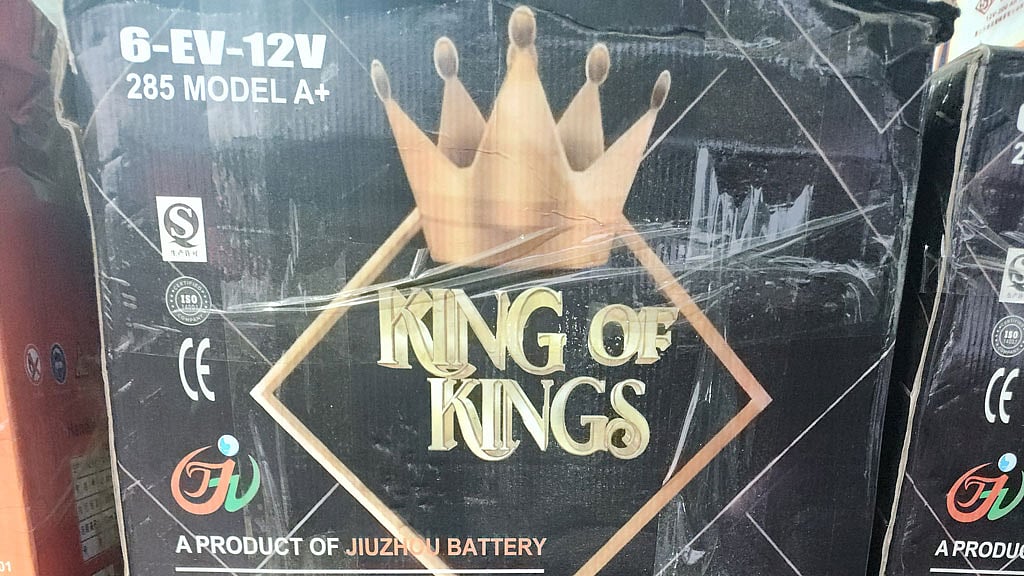
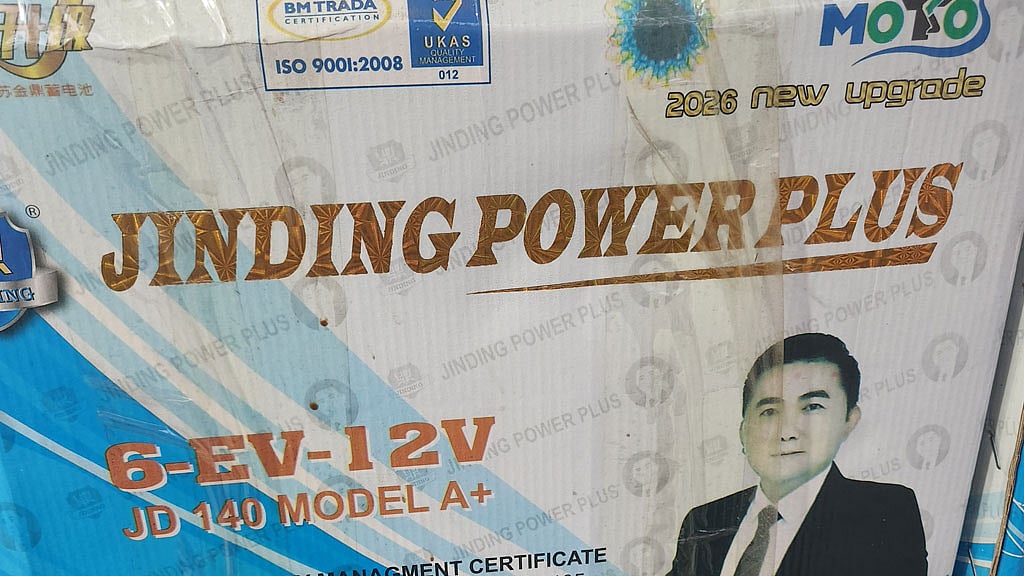
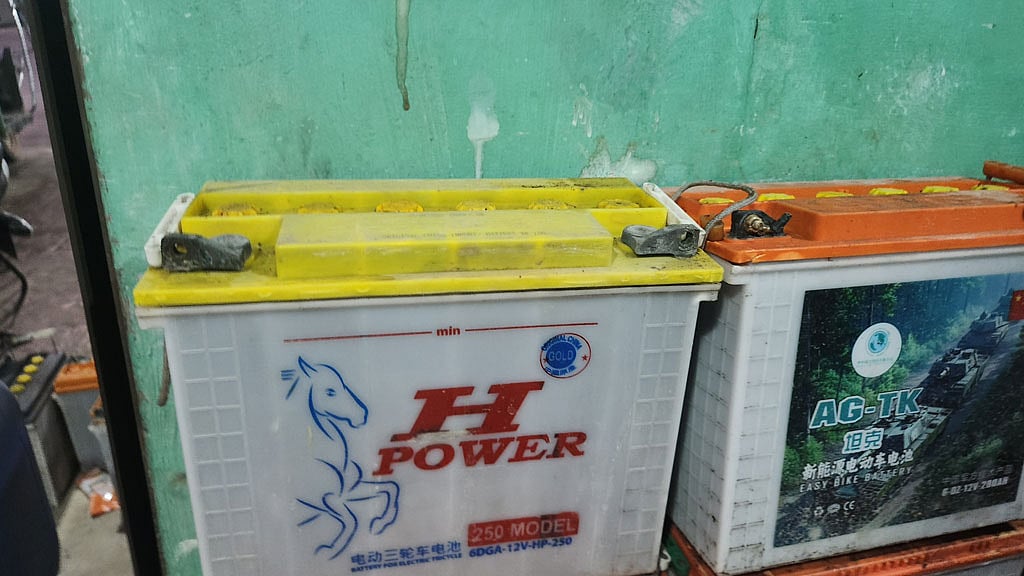
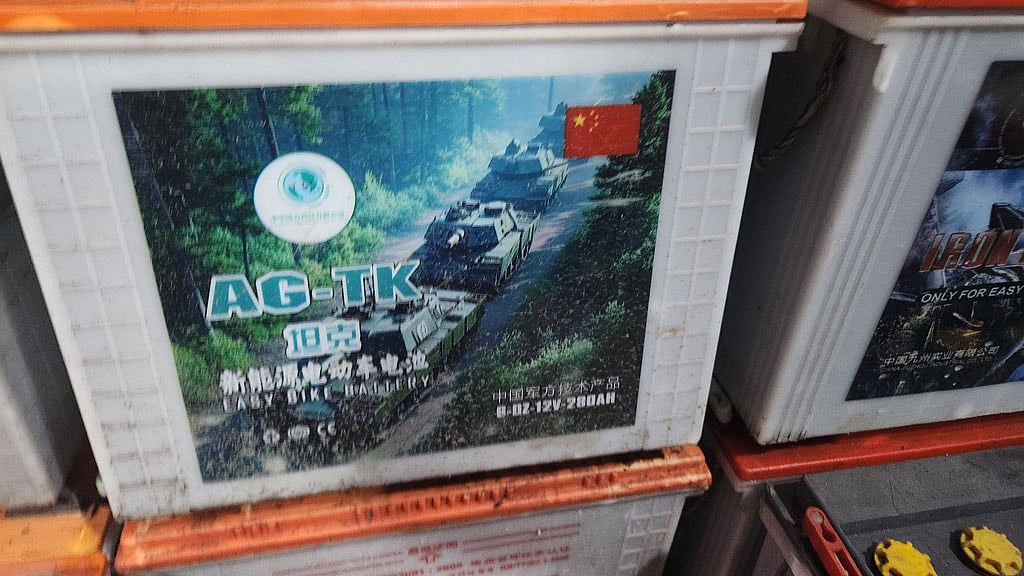
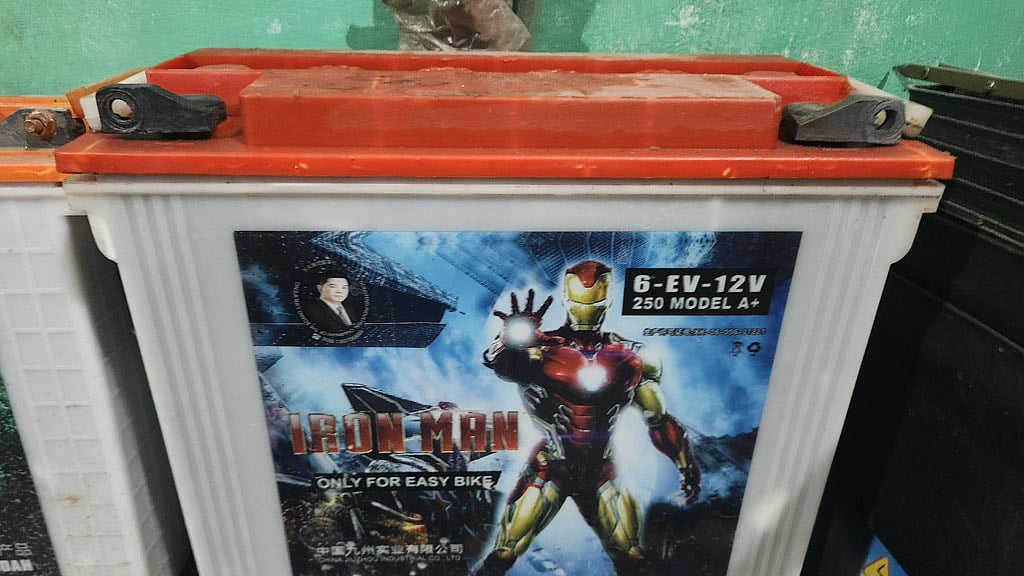
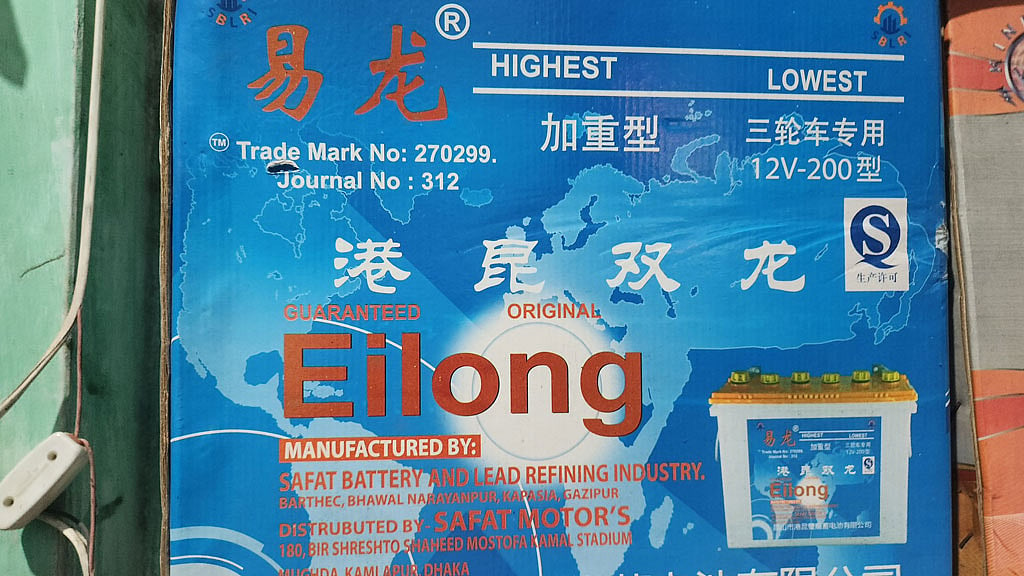
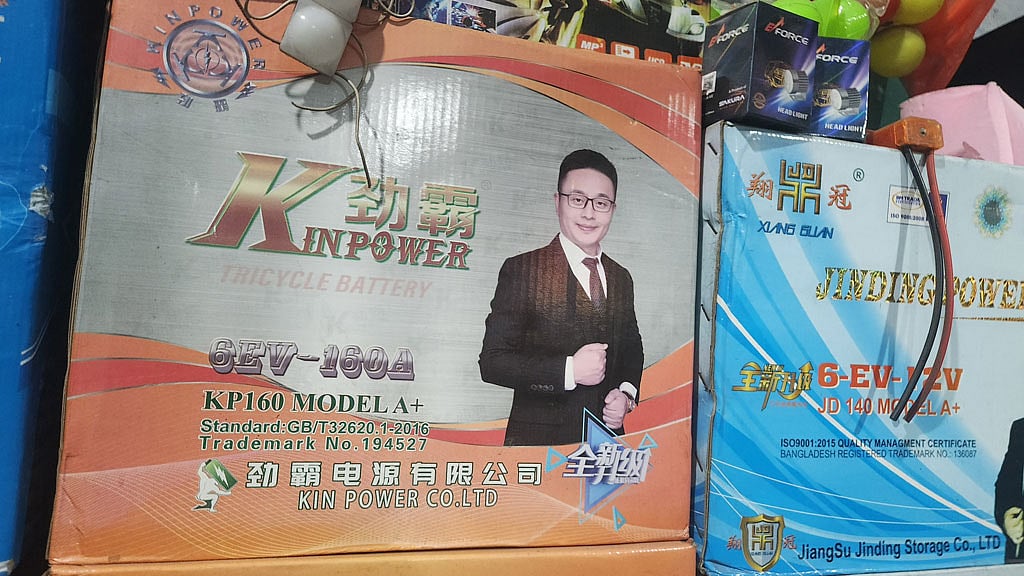
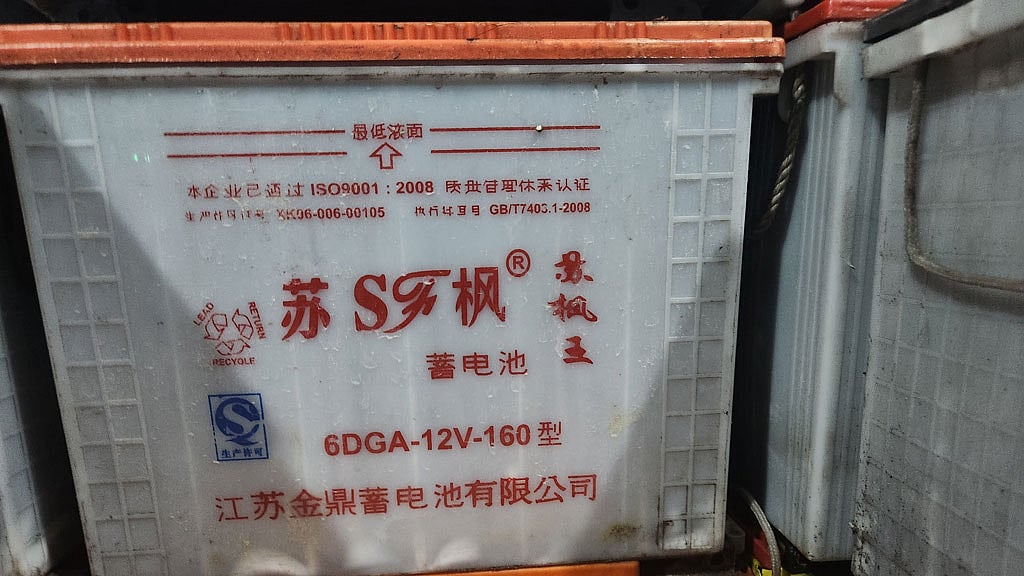
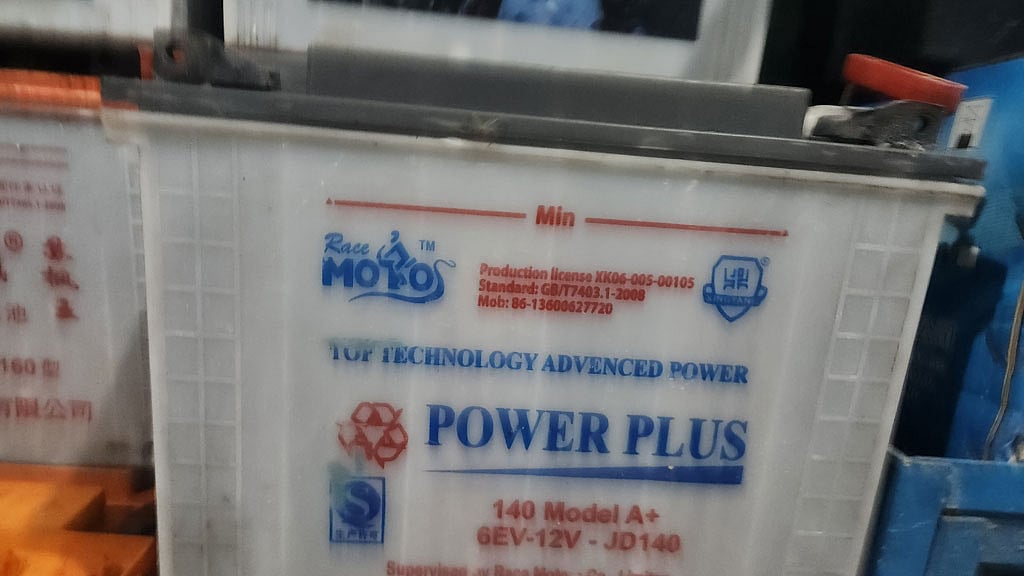
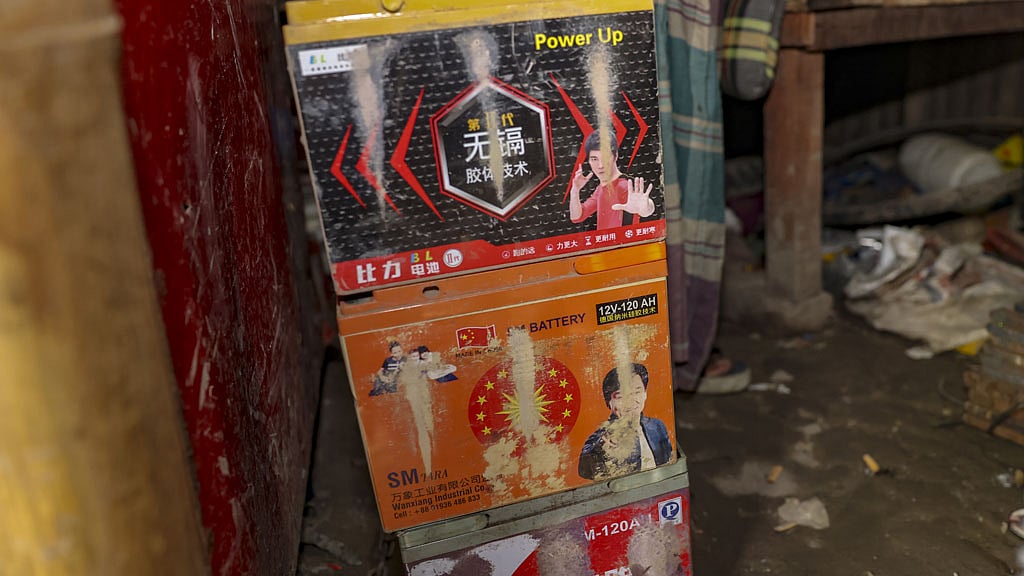
One of the largest Chinese exporters was Shaoxing Nosimon Machinery, which supplied battery materials worth about $12.71 million.
Its Bangladeshi buyers included RR International, which imported about $6.82 million worth; MSRK International, about $4.3 million; and RK Power, about $1.6 million.
Another major supplier was Jiaxing Hongguan International Trade, which exported about $6.6 million worth of battery materials to Bangladesh between January 2020 and June 2026, including positive and negative plates for lead-acid batteries.
Its Bangladeshi buyers included Al Zara Corporation, with imports worth about $3.41 million; HBC International Industries, $1.69 million; Sinha Trading, $800,000; and HBC High Power, about $458,000.
Easy-bikes without Batteries
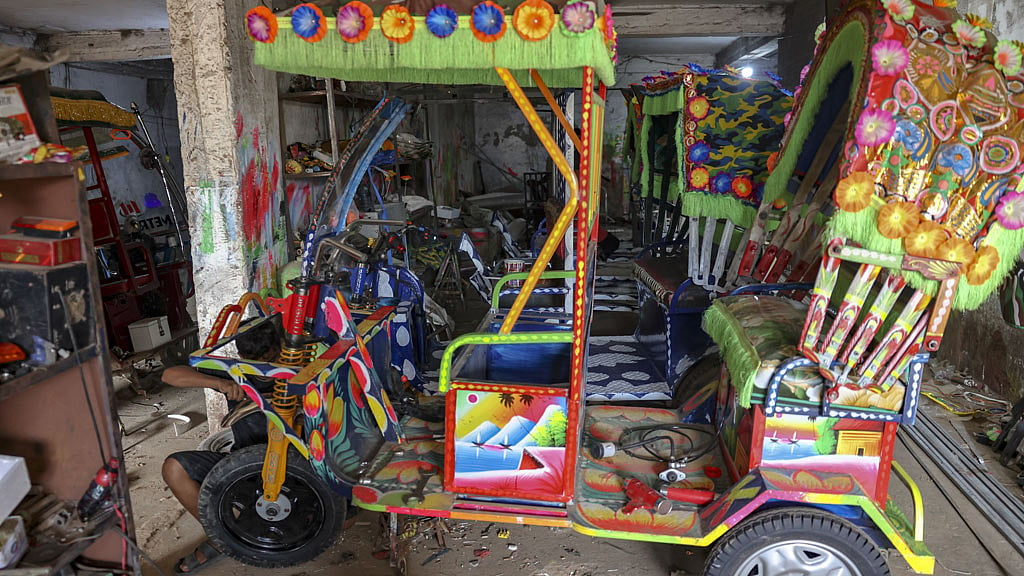
China also supplies battery-powered three-wheelers, including easy-bikes shipped without batteries as completely knocked-down (CKD) kits for assembly in Bangladesh. Some are exported fully assembled, also without batteries.
The records examined include 546 export consignments worth about $24.51 million, involving 57 Chinese exporters and 93 Bangladeshi importers.
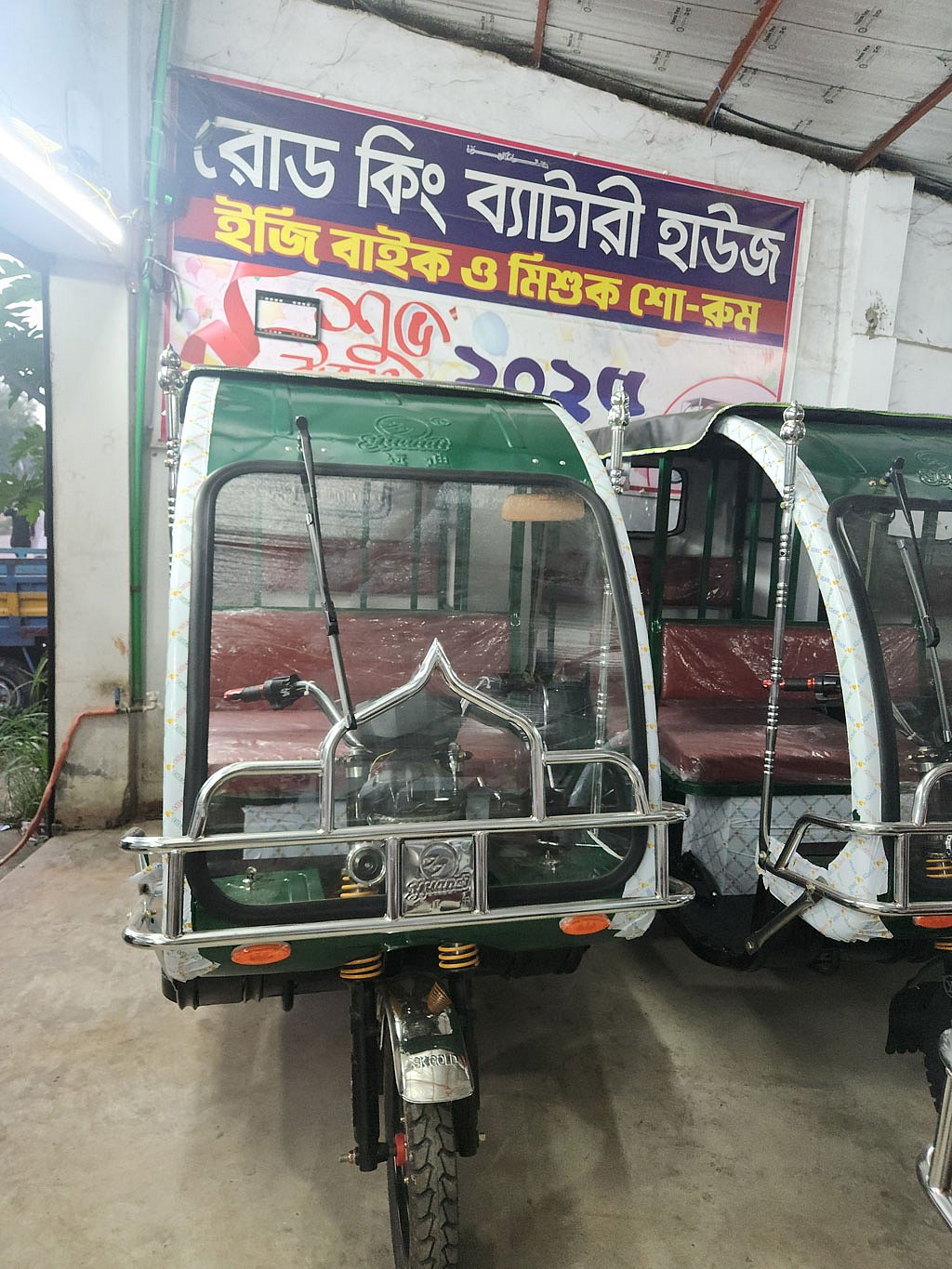
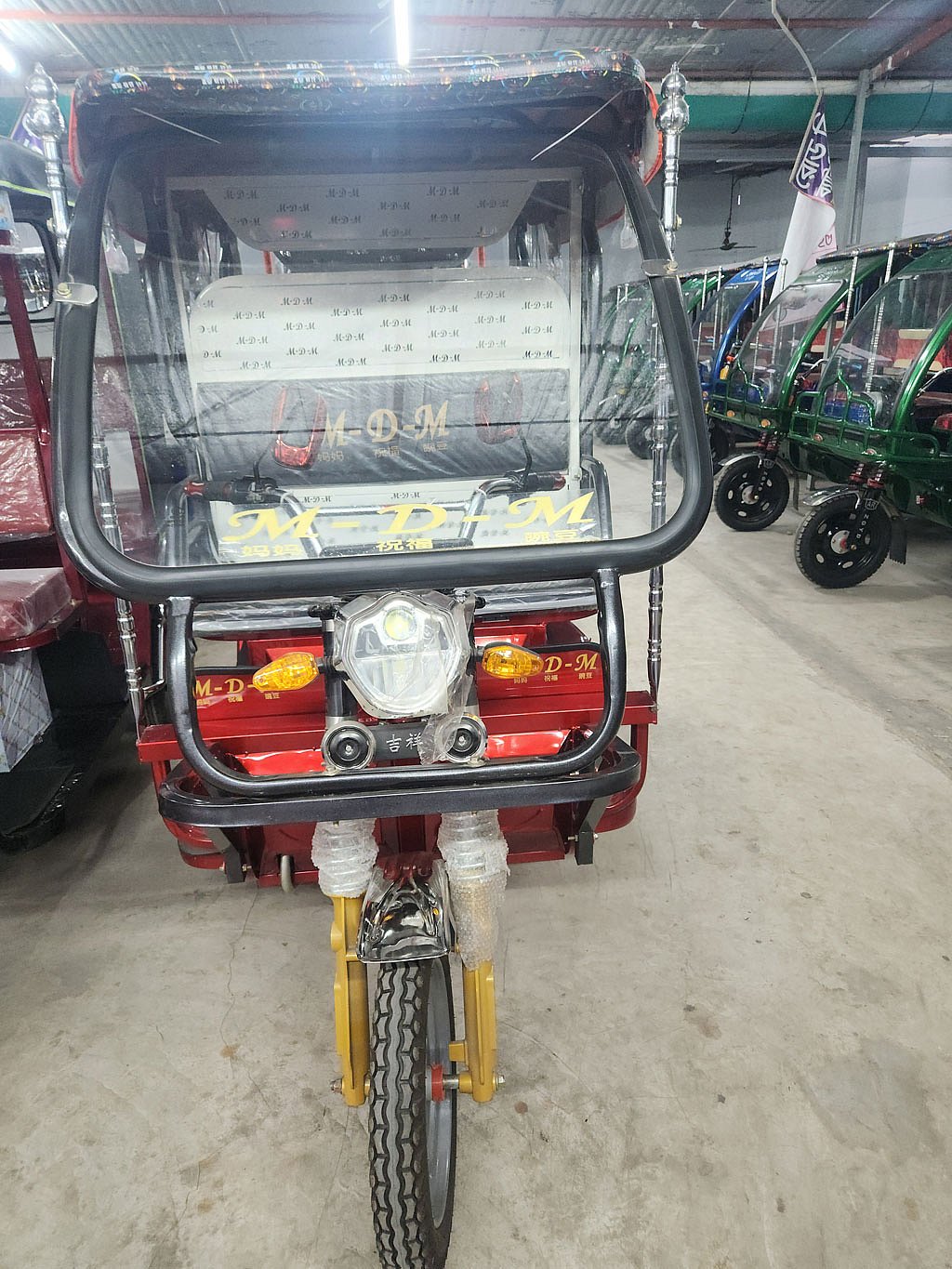
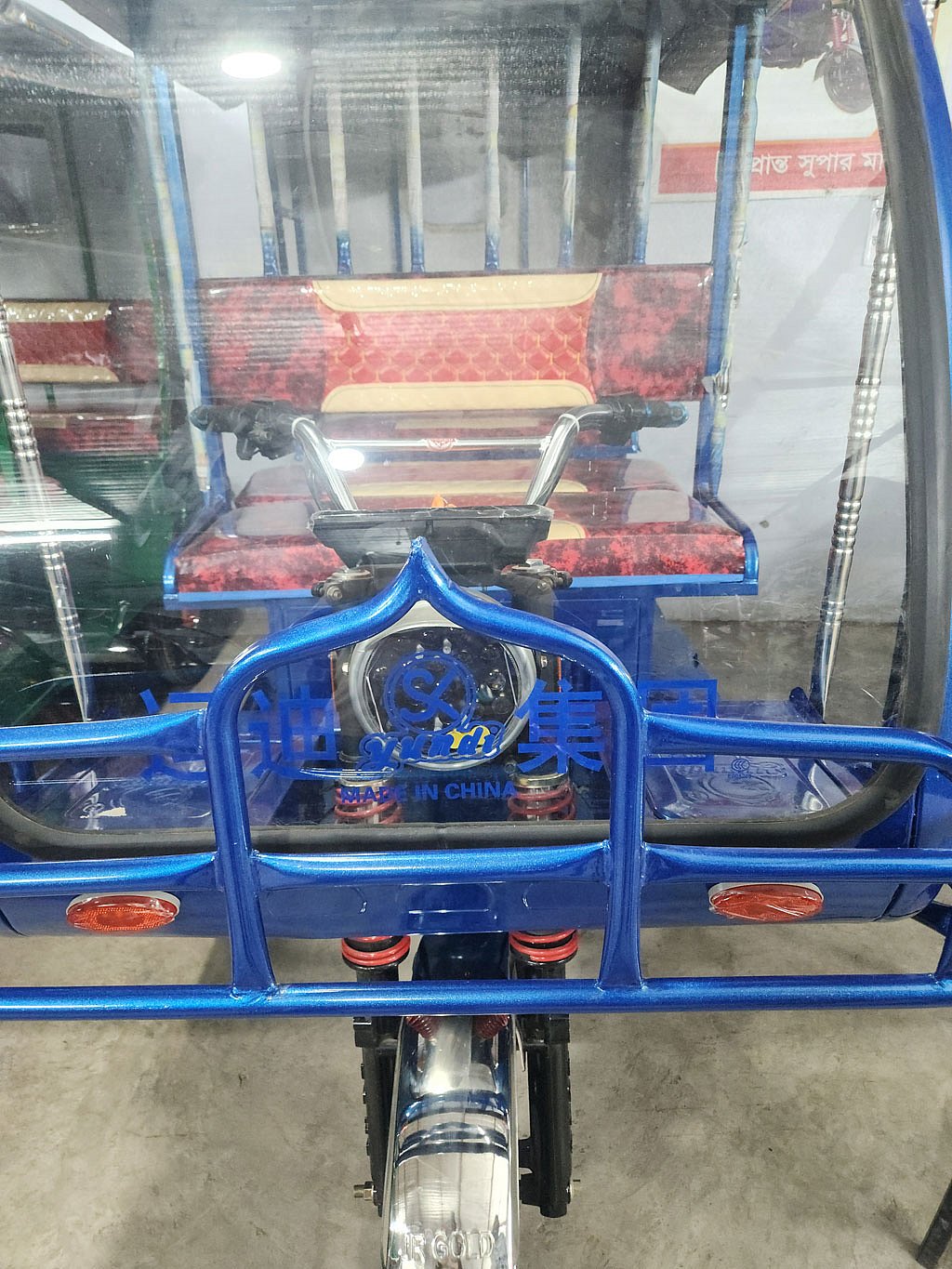
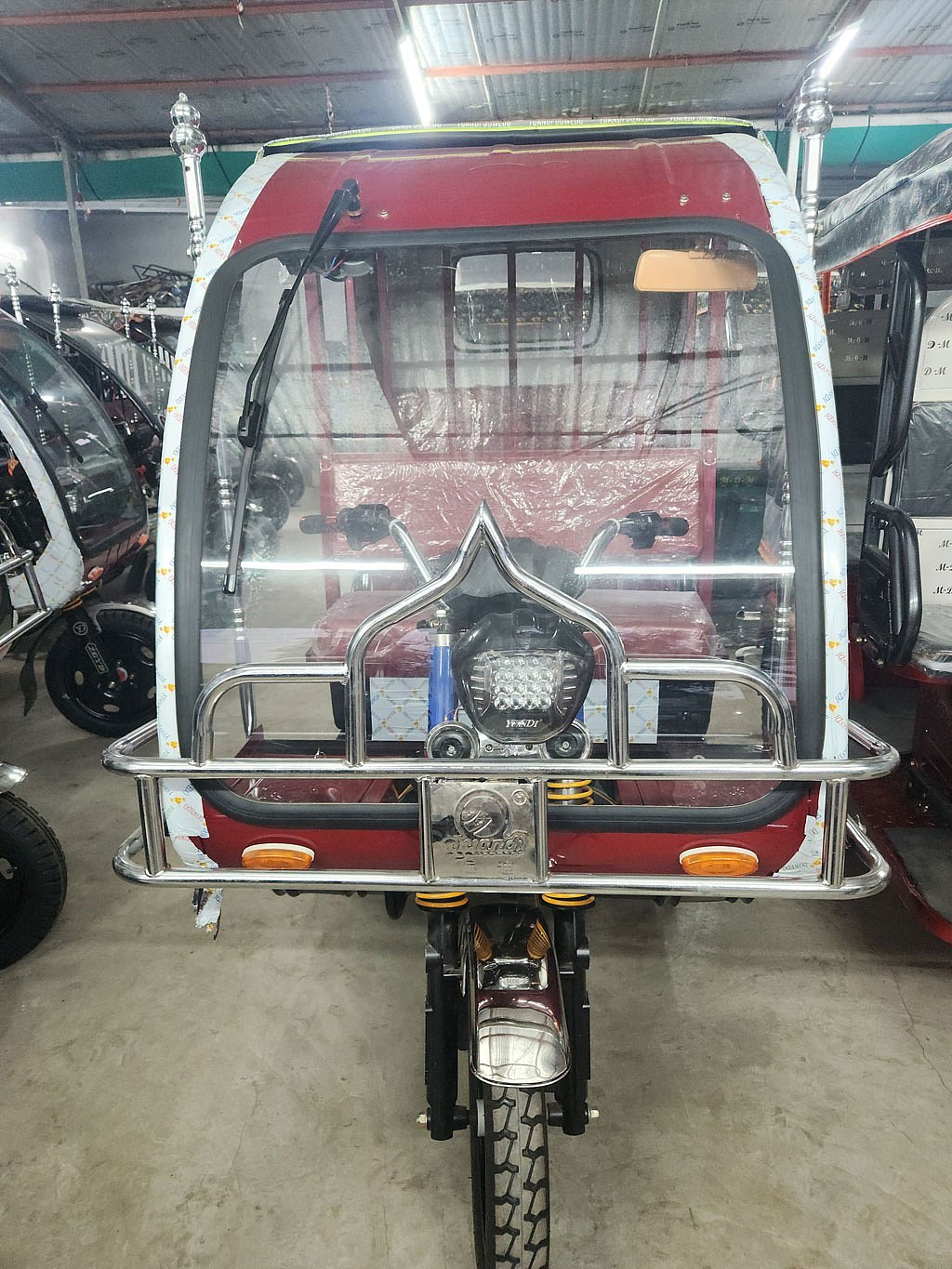
Although many exporters were involved, two companies accounted for about 87 percent of the total value of electric three-wheeler supplies in the records: Langfang Sandy Electric Tricycle and Ningbo Doedo International Trade. Their combined exports were worth about $21.36 million.
There were 269 export records for Sandy, worth about $14.69 million. Its largest Bangladeshi buyer was Alina Auto Bike Industries, which imported easy-bikes worth about $11.89 million.
Doedo exported about $6.67 million worth of easy-bikes and a further $414,000 in battery components.
Sandy supplied three- and five-seat easy-bikes as battery-free CKD kits. Doedo exported five-seat models in CKD form, as well as a fully assembled three-seat model without a battery.
From Motors to Brakes
Chinese companies also supply motors, controllers, chargers and other components used in electric three-wheelers.
Six companies exported about $1.35 million worth of electrical components to Bangladesh between January 2020 and June 2026: Weihai Silon International, Shanghai Jiameng International Trading, Wuxi Sino Import and Export, Taizhou Fulaixi Import and Export, Hebei Diniu Trade and Guangzhou Kolanbo Import and Export.
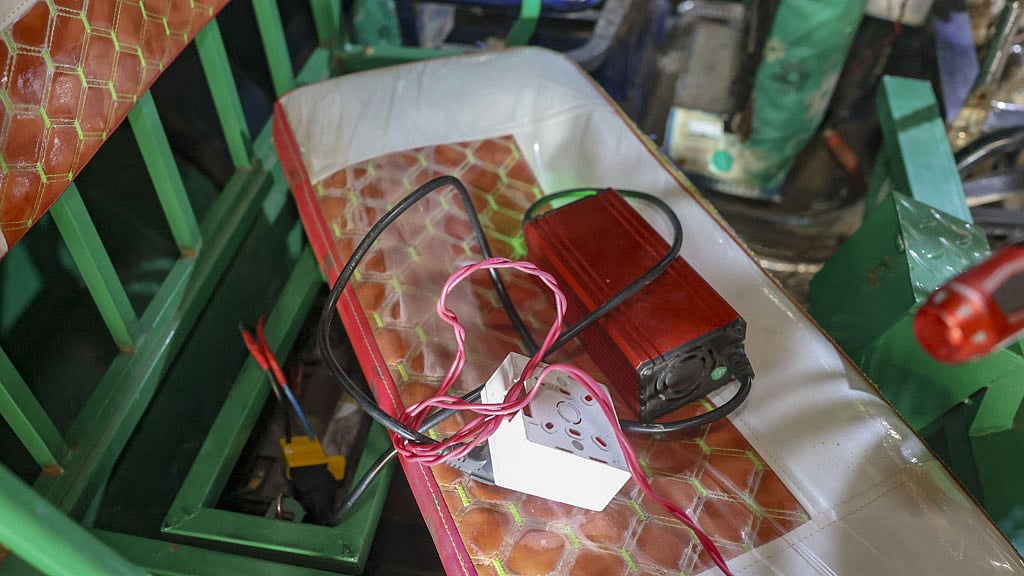
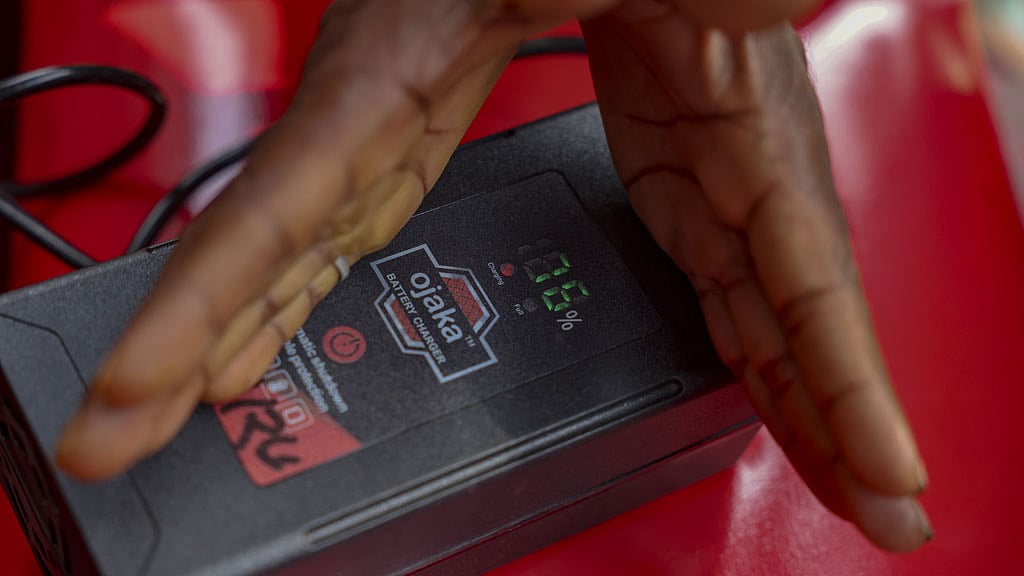
Four companies supplied about $5.42 million worth of axles, shock absorbers, brakes and other parts: Weihai Silon, Guangzhou Kolanbo, Shijiazhuang Zhuoru Import and Export and Lijinji Trade. Weihai Silon and Guangzhou Kolanbo appear on both lists, bringing the total number of suppliers to eight.
Weihai Silon was the largest supplier by value, exporting about $6.49 million worth of components for Bangladesh's electric rickshaw and easy-bike industry. This included about $1.16 million in electrical components such as motors, controllers and chargers.
Its exports of axles, shock absorbers, brakes and other parts were worth about $5.32 million. Newgramin Motors imported about $5.25 million of these products. The company sells battery-powered three-wheelers and easy-bikes under the H Power brand.
Chinese suppliers have provided components for different stages of operating and maintaining the vehicles. Weihai Silon and Guangzhou Kolanbo exported controllers, wheel axles and brake parts, while Shijiazhuang Zhuoru supplied brake components.
Chargers came from five companies: Weihai Silon, Shanghai Jiameng, Taizhou Fulaixi, Hebei Diniu and Wuxi Sino. All except Hebei Diniu also supplied converters.
A Trade Built over Years
Chinese companies have supplied vehicle frames, battery materials and components for Bangladesh's electric three-wheeler industry for years.
The value of the products imported from China was about $27.2 million in 2020 and $26.6 million in 2021. It fell to $12.9 million in 2022 and $7.4 million in 2023, before rising to $14 million in 2024. Imports were worth about $12.9 million in 2025 and $11.4 million in the first six months of 2026.
The value of electric three-wheeler exports has risen more recently. Chinese companies supplied about $4.5 million worth of the vehicles in 2024 and $5.03 million in 2025. In the first half of 2026, the value reached $7.58 million, about 50.7 percent more than in the whole of 2025.
The Chinese role extends beyond supplying vehicle frames. Langfang Sandy and Ningbo Doedo have exported electric three-wheelers, including battery-free vehicles and CKD kits. Shaoxing Nosimon and Jiaxing Hongguan have supplied battery plates and other materials, while Weihai Silon and other companies have provided motors, controllers, chargers and axles.
Through Bangladeshi importers, these products feed different stages of the industry, from assembling vehicles to keeping them on the road.
Chinese-owned Battery Plant in Bangladesh
Chinese business interests are also present in local battery manufacturing. About 20km north of Tanvir Enterprise, in Belishwar, Dhamrai, stands Jiangsu Storage Battery (BD), a lead-acid battery factory owned by several Chinese nationals.
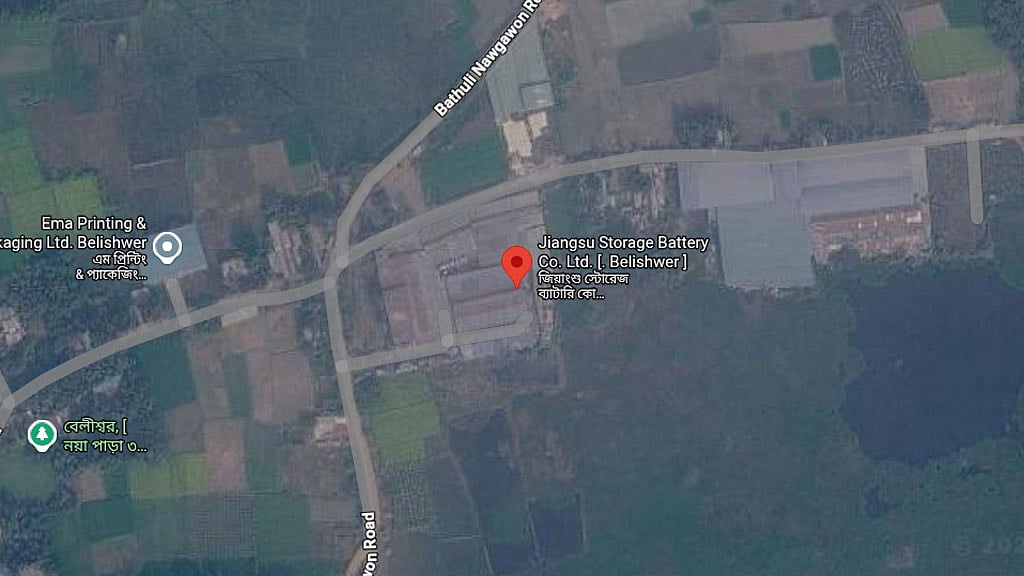
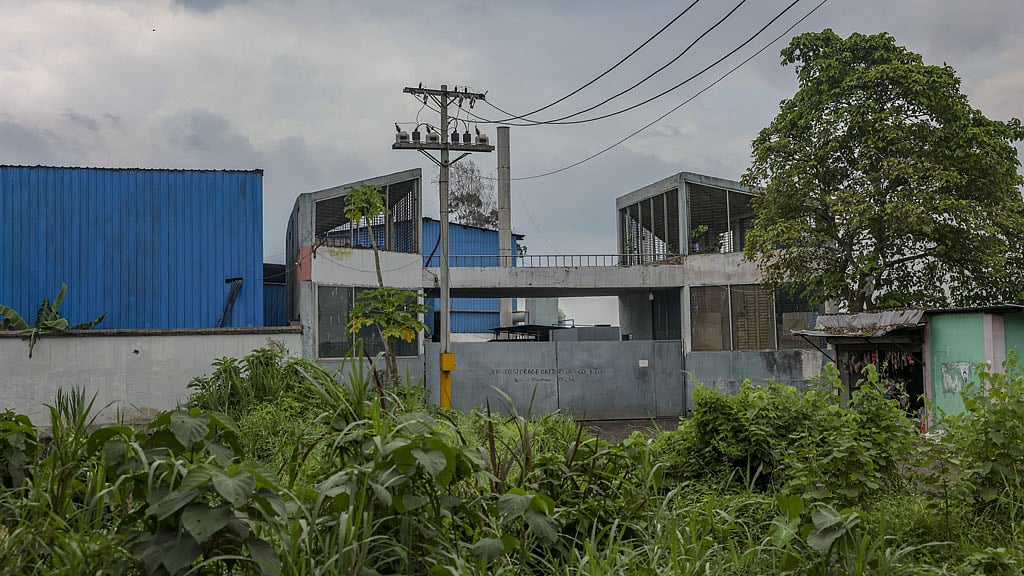
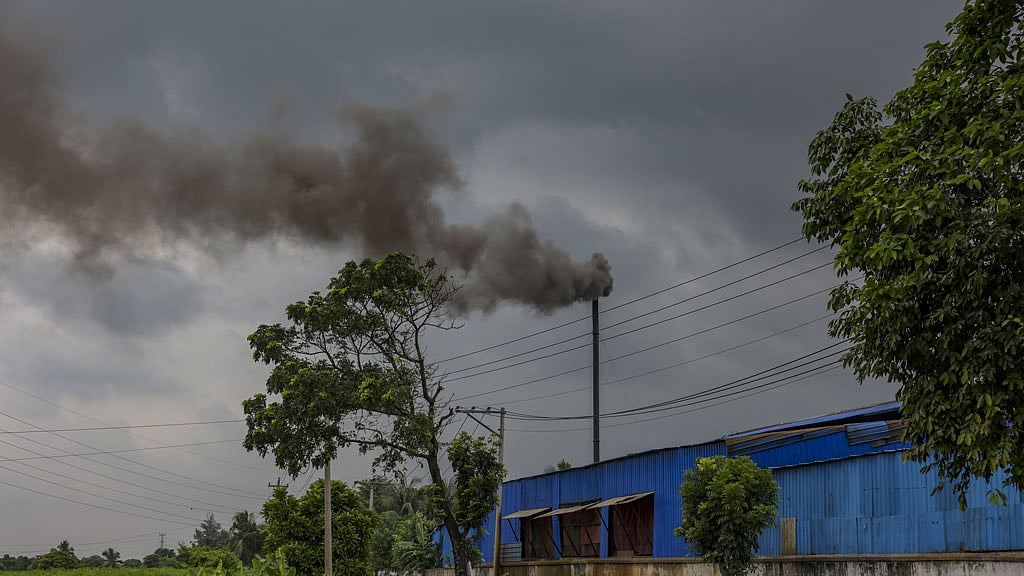
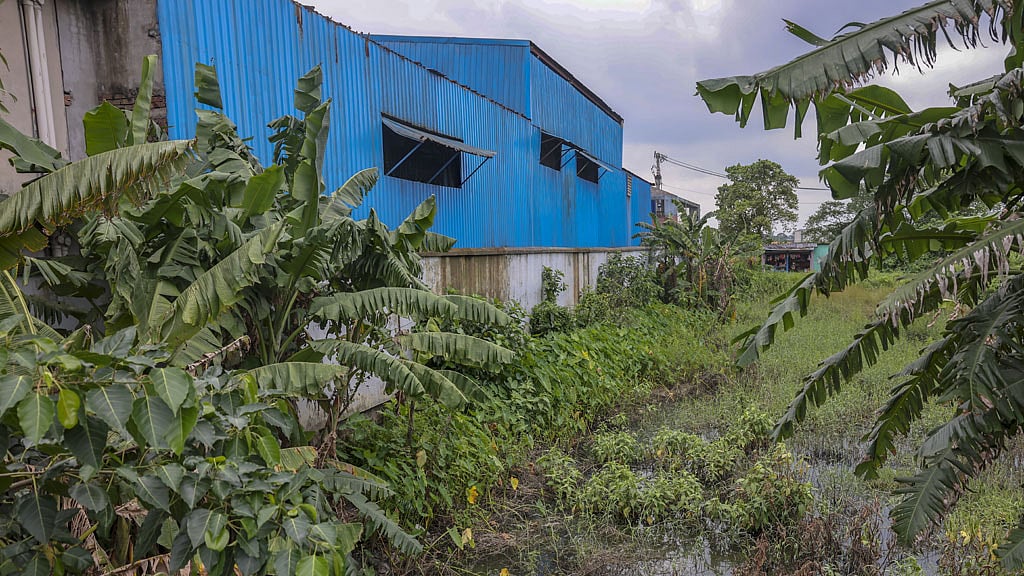
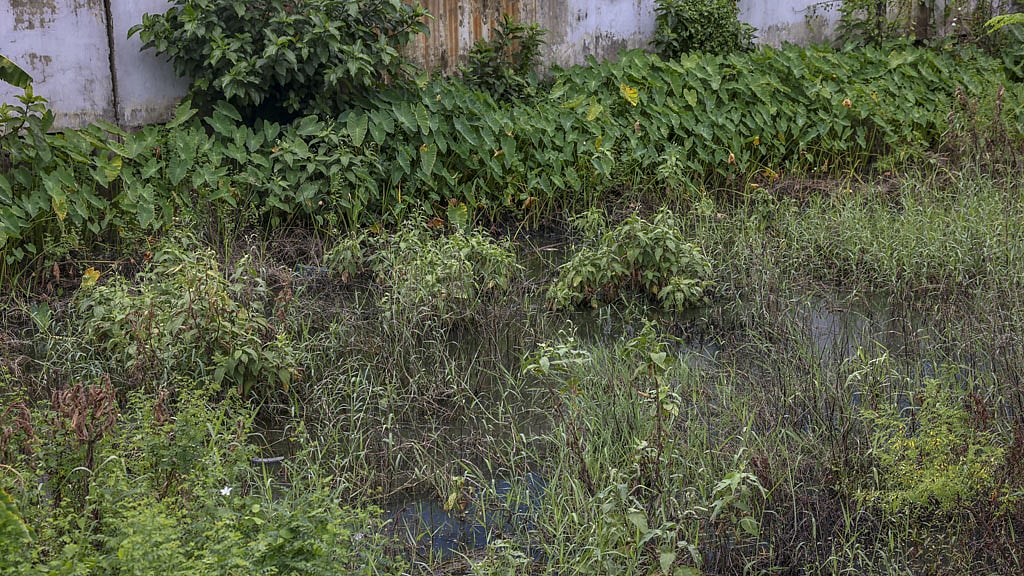
A visit in September found the company's name handwritten in English on the factory's steel gate. Farmland surrounded the site, while thick, dark smoke rose from a chimney inside its blue-sheeted enclosure.
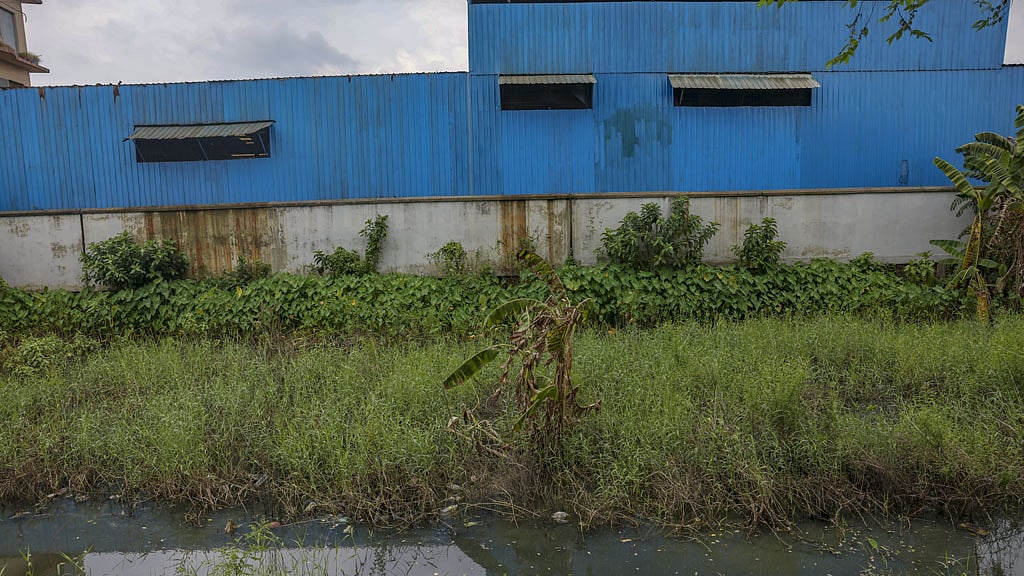
Permission to enter was denied. Outside the boundary, water, weeds and aquatic plants filled low-lying ground, with some vegetation appearing dead.
Records from the Department of Inspection for Factories and Establishments show that the factory's inspection certificate is valid until Mar 3, 2027. But the available Department of Environment records show that its permit to manufacture lead-acid batteries was issued on Jul 27, 2020, and expired on Jul 26, 2021. The documents do not establish whether the permit was subsequently renewed.
The records for Tanvir Enterprise also differ between the two departments. It appears on the factories and establishments inspection list but not on the Department of Environment's list of approved lead recycling plants, which contains four facilities.
As battery manufacturing and use expand, so does the need to deal with discarded batteries. A vehicle may remain on the road for years, but its battery will not last the entire journey.
Are Chinese Manufacturers Turning to Lithium?
While Chinese-owned factories in Bangladesh continue to make lead-acid batteries, representatives of several Chinese battery companies interviewed by a colleague at the Hong Kong Electronics Fair said their focus was shifting towards lithium batteries.
Asked about supplies of lead-acid batteries to Bangladesh, none acknowledged having customers in the country or elsewhere in South Asia.
They said manufacturers were giving greater attention to lithium batteries, including alternatives to lead-acid products. Some were considering stopping lead-acid battery production altogether. But they also noted that lower-income markets remain price-sensitive, sustaining demand for cheaper lead-acid batteries.
Some exhibitors still displayed lead-acid products, which representatives said were intended for energy storage and small appliances. One also offered 12-volt batteries for vehicles. None identified easy-bikes or electric rickshaws as a market for their products.
Sean Dai, international business director at exhibitor Hebei Tianyi Electric Appliance Co, said the company made a valve-regulated lead-acid battery designed for energy storage, not electric three-wheelers.
Dai said stricter pollution controls in China had raised the cost of installing the necessary equipment, making lead-acid battery production increasingly difficult for smaller manufacturers. In his view, mainly larger producers now remain in the business.
Levi Lin, business manager at Ningbo Wisdom Union International Logistics, which advises on customs clearance and transport, said export documents covered customs procedures, packaging, labelling and transport safety. Exporters, he said, were not required to meet separate conditions on how products should be disposed of after use.
Dai said major battery manufacturers had their own recycling facilities or worked with recyclers. Shipping recovered metals back to China was expensive, he said, so they were reused in manufacturing in the country where they were recovered.
China's Ministry of Ecology and Environment banned imports of solid waste from Jan 1, 2021. But it is unclear whether metals recovered from used batteries fall under the ban.
Dai said he was unaware of any mandatory Chinese policy requiring the collection or recycling of exported lead-acid batteries after use. He referred to government guidelines for manufacturers but could not identify them or provide details, saying they were not enforced or monitored.
A review of China's Law on the Prevention and Control of Environmental Pollution by Solid Waste, revised in 2020, shows that battery producers' responsibilities extend beyond manufacturing and sales. Article 66 requires producers to establish systems to collect used batteries in proportion to the volume they sell. They must operate the systems themselves or assign the task to another organisation, and make information about the arrangements public.
The law, however, does not clearly specify how the collection and recycling obligations apply to batteries exported overseas.
Rules Follow the Toxic Expansion
On Oct 29, 2026, the government introduced new rules for battery-powered rickshaws in city corporation areas, seeking to bring the trade under regulation after years of expansion.
The rules require vehicles to be charged at authorised locations and sellers to take back old batteries when selling new ones. Dumping discarded batteries in open spaces, on soil or in water bodies, as well as burning them, is prohibited.
But the return trade already exists. Drivers and owners routinely hand over old battery sets and pay extra for replacements.
The unanswered questions begin after that exchange: who takes the returned batteries, where they are dismantled and how the lead is recovered. That is where the question of safety lies.
[This investigative report was produced with support from the Pulitzer Center, with bdnews24.com as its content partner. Palash Dutta is a Dhaka-based data journalist, while Selina Cheng is a Hong Kong-based business and investigative reporter. The photographs were taken by photojournalist Mahmud Zaman Ovi.
The Pulitzer Center is a non-profit organisation that supports in-depth investigative journalism on underreported issues around the world.]