Published : 11 Oct 2023, 02:08 AM
Updated : 11 Oct 2023, 02:08 AM


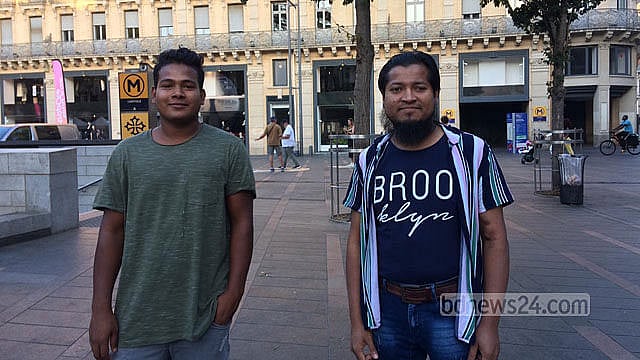
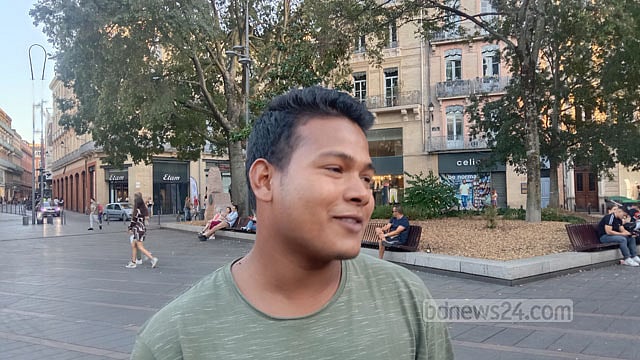
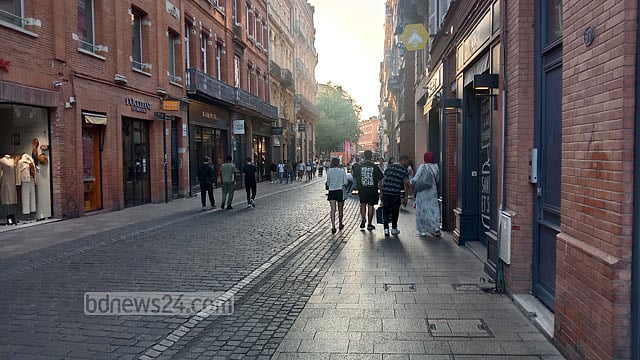
In the city of Toulouse, located in southern France, a large crowd has gathered in the square near the Capitol building to watch a rugby match on the big screen. Amid the frenzy, a Bangladeshi spotted a fellow national in the crowd and drew his attention. The two men immediately fell into deep conversation.
Mohammad Yasin from Cumilla and Foyzullah from Brahmanbaria have lived in a French government shelter for the past few months. Irregular migrants who come to the country through various routes are accommodated in these shelters. The French government provides them with accommodation, medical care and the opportunity to learn the French language.
Foyzullah and Yasin have had a pleasant time in Toulouse for the past few months, but their path to get here was rarely smooth. On occasion, it was even life-threatening.
FOYZULLAH’S JOURNEY
At the start of 2019, Foyzullah left Dhaka for Lebanon. There, he worked at various places for two-and-a-half years. But, when the COVID-19 pandemic hit, work dried up, and the value of the Lebanese currency plummeted. His employer wanted to send him back to his home country. Faced with a difficult situation, he sought refuge in Europe through an Afghan broker in 2021.
The broker suggested he travel to Greece or any other European country via Turkey. Accordingly, Foyzullah and a few others were brought to the Syrian border one night. After about a week of waiting, they managed to enter Syria. Once in Syria, the brokers put about 35 Bangladeshis, including Foyzullah, in a room and locked it from outside. They were confined in the room for nearly one-and-a-half months for fear of being caught by the police.
Twice a day, the migrants got a sandwich each. It was the only thing they had to eat. After many requests, the brokers game them rice for a few days. But the rice was plain, without salt or any accompanying dishes. If anyone protested, they were beaten. The beatings were regular, with victims being thrashed even as they performed prayers.
After a month and a half, the brokers took the migrants and set off for the Turkish border. Some Ethiopians and citizens of other countries were in the group alongside the Bangladeshis. They walked continuously for several days.
The brokers had warned them about the risks of landmines planted by various Islamic groups. A young Ethiopian woman died after accidentally stepping on one. The troubled party hesitated, unsure whether to leave her body behind. The brokers told them they had no other choice but to move on. The group then set off again, nursing their grief and fear.
Afterwards, they arrived at the Turkish border but could not enter the country. For eight months, Foyzullah and the others were unable to cross. The traffickers eventually arranged to cut through the barbed wire fences. Even then, the strict police surveillance stopped them from crossing for five straight days. On the sixth, they made their attempt. The police opened fire. Foyzullah and his companions jumped over the barbed wire and survived, but he broke his toe.
A few days later, on a rainy night, they climbed a mountain and entered Turkey. They hid in the mountain forest as soon as they crossed the border. The police in the area searched for them and started shooting, but they eventually left. The smugglers then took the migrants to a ‘safe room’.
Eventually, 18 of them were piled into a five-seat car and taken to an area near Istanbul.
“Three people sat on top of me,” Foyzullah said. “There was no room to breathe.”
He stayed in Turkey for about seven months. There was not much work, but Foyzullah survived by doing small jobs.

Later, Foyzullah approached another broker to travel to Greece. For two nights, they failed to cross the border. On the third night, he made it across, only to be caught by the police. The Greek police beat him before returning him to Turkey half-clothed.
Foyzullah reached Istanbul the following day. He was detained by the Turkish police when he went to an Istanbul market in the evening to buy clothes. After being imprisoned for 18 days, he was again brought to the Syrian border and released by the police. With great difficulty, Foyzullah made his way back to Istanbul. With the help of another broker, he left for Greece again. This time, they walked from Turkey to Greece through Bulgaria. The trip took 18 days.
Foyzullah said that there were 26 people in his group. After ten days of walking, everyone had blisters on their feet. An older Bangladeshi could not walk any further, and the traffickers abandoned him.
After entering Greece, the group endured a few suffocating hours in a small car. They were eventually dropped off in a small town near Athens. Foyzullah stayed there for about a year, worked in the strawberry and olive orchards, and earned a fair amount.

There are many Bangladeshis in Greece, Foyzullah said.
After saving up his money for the year, he decided to travel on. Once again, he engaged the services of an Afghan broker to travel to Italy. He walked to the Albanian border for two days and stayed there for three days. As he attempted to enter the country, he was caught by the Albanian police on the third day and deported. After two more days of trying, they broke through. They walked for two more days before entering the neighbouring country of Montenegro.
Foyzullah hired a broker from Bosnia and paid him 800 euros to travel to Italy. The brokers then took him to Croatia, where Foyzullah was arrested. The police released him after taking his fingerprints and photo. He then went to the neighbouring country of Slovenia with his broker. According to Foyzullah, the Slovenian police did not cause them much trouble.
The police sent them to a refugee camp and from there, Foyzullah went to Italy by bus. Immediately after entering Italy, the police arrested him again. They released Foyzullah the following day after taking his fingerprints. He travelled on to Germany via Switzerland after paying a broker 180 euros.
Foyzullah eventually decided to travel from Germany to France due to the strict laws and regulations.
In Paris, the authorities sent him to a migrant camp in Toulouse. Foyzullah has been staying there for three months. The government pays him a food allowance of 120 euros per month. Foyzullah and three others are now living in a small government flat.

According to Foyzullah, the French government is good for migrants. Once somebody learns the language, they can get good jobs. He said many jobs are available in French cities, including at restaurants and as food delivery drivers or car drivers.
He has decided to settle in France permanently.
YASIN BATTLING KIDNEY DISEASE
In 2016, Yasin travelled to Turkey via Pakistan and Iran. He travelled from Dhaka to Pakistan by plane and to Iran by bus. Then, he went to Turkey after walking for a few days and taking a taxi. He worked in a garment factory in Turkey for about two years. He was doing well but decided to move on to Greece two years ago with the help of a broker.
He worked in a garment factory in Greece for five years. He had a good income there too but started to suffer from a complex kidney disease. The garment factory job proved to be too hard on his body.
Yasin arrived in France on May 23 this year, looking for a better life. Now, he is residing in a government-run migrant camp. The government here is paying for his medical expenses. He has to undergo dialysis three days a week. The French government has also arranged transport for him to the hospital. Yasin said that if he can learn the French language and work here, he will save money and organise a kidney transplant.
[Writing in English by Md Taif Kamal; editing by Shoumik Hassin]