Published : 04 Jan 2016, 10:56 PM
Updated : 19 Oct 2022, 05:02 PM


Also Read:
Expert warns of 'preludes' to quake disasterAnd, in the absence of any means to predict and prevent earthquakes, awareness and preparations are vital to minimise losses, say experts.
Bangladesh experienced tremors after an earthquake measuring 6.7 on the Richter scale struck the Indian state of Manipur, about 300 kilometres from Dhaka.
The quake has triggered fresh fears in a densely populated country like Bangladesh.
But government officials and experts caution against panic, and stress preparation to cope with earthquakes and their aftermath coupled with awareness about the do’s and don’ts in the event of tremors.
The Dhaka University’s teacher of geology ASM Woobaidullah told bdnews24.com there had been instances of powerful quakes in Sylhet, in 1918, and later in the Sirajganj-Bogra region. But no recent earthquake had its epicentre in Bangladesh.
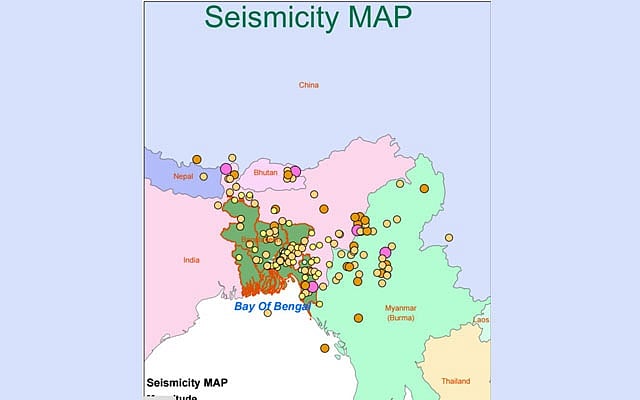
He said the Manipur fault, besides the Dauki and Modhupur faults in Bangladesh, is quite active. These places often experience mild to medium tremors that do not find media mention.
“It is true that we are at risk. But there is no point panicking over this. The creation of awareness and the maintenance of preparedness are vital tasks. There must be joint efforts in this direction at the government and private levels,” he said.
There could be chances of severe damages in densely populated places like Dhaka, if the epicentre of a powerful quake were to lie within the country, he said.
Prof Woobaidullah said: “Earthquakes will keep occurring. Consternation should not be created among the people regarding them. Instead, they should be equipped to rescue those who survive a disaster.”
Disaster management would require the purchase of proper equipment and the building of roads fit for vehicular movement.
“Houses have to be built leaving some open space around. It has to be created if it is not there already.”
Disaster Management Department Director General Riaz Ahmed agrees with Prof Woobaidullah. “Considerable preparations have been made, although earthquakes give no early warnings and there is now way to prevent them.”
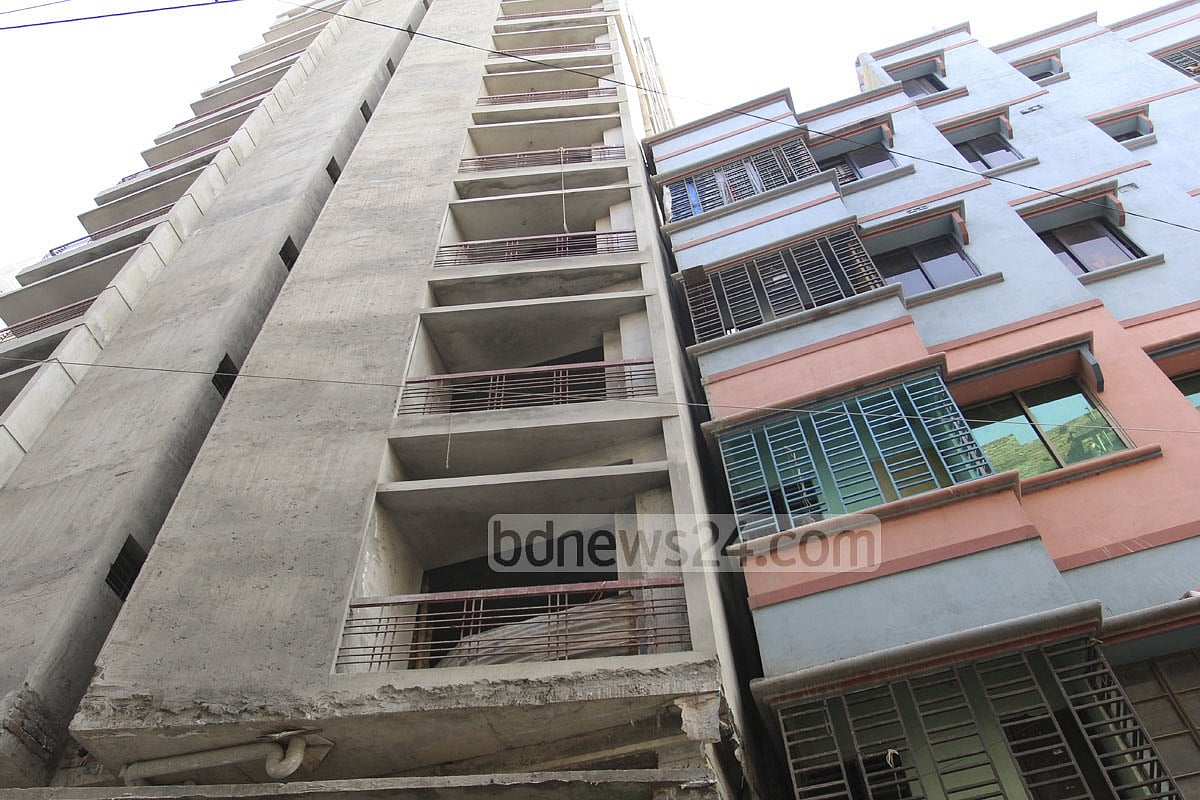
A quake measuring seven or more on the Richter scale with its epicentre inside Bangladesh could lead to the collapse of 75,000 hazardous buildings, he told bdnews24.com, giving an idea of the extent of the damage such a disaster could cause.
“We have taken several steps after considering the hazards. We have already identified 72,000 vulnerable houses. There over 3,500 such buildings in Chittagong and Sylhet.
“Arrangements are in place to provide medical treatment, clear debris, and mount swift rescue operations,” he said.
Awareness was being spread, he said, by introducing the study of disaster management in the education curriculum to minimise the loss of lives and property.
The government was stressing the adherence to the house-building code and the refurbishing of vulnerable buildings, Ahmed said.
Disaster management equipment worth Tk 670 million had been purchased of late. They have been given to the Fire Service and the armed forces for use in times of need. The purchase of equipment worth another Tk 1.67 billion was being processed, he said.
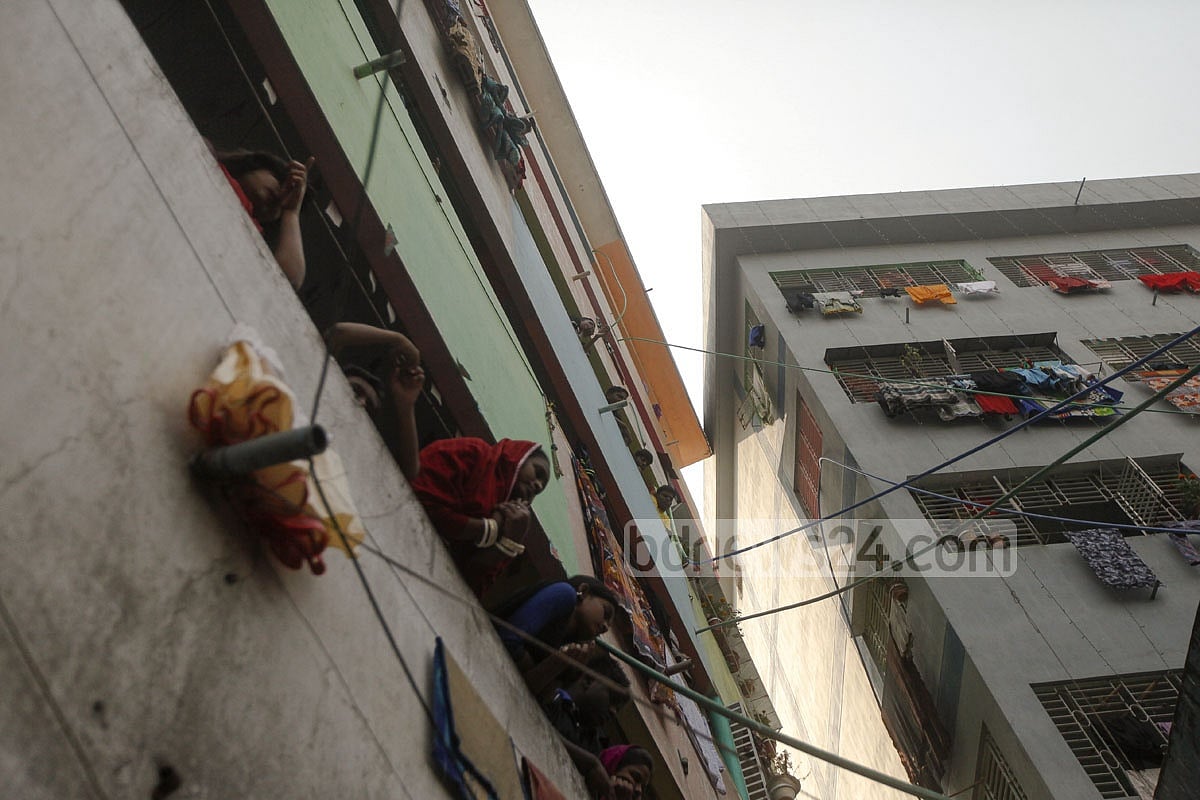
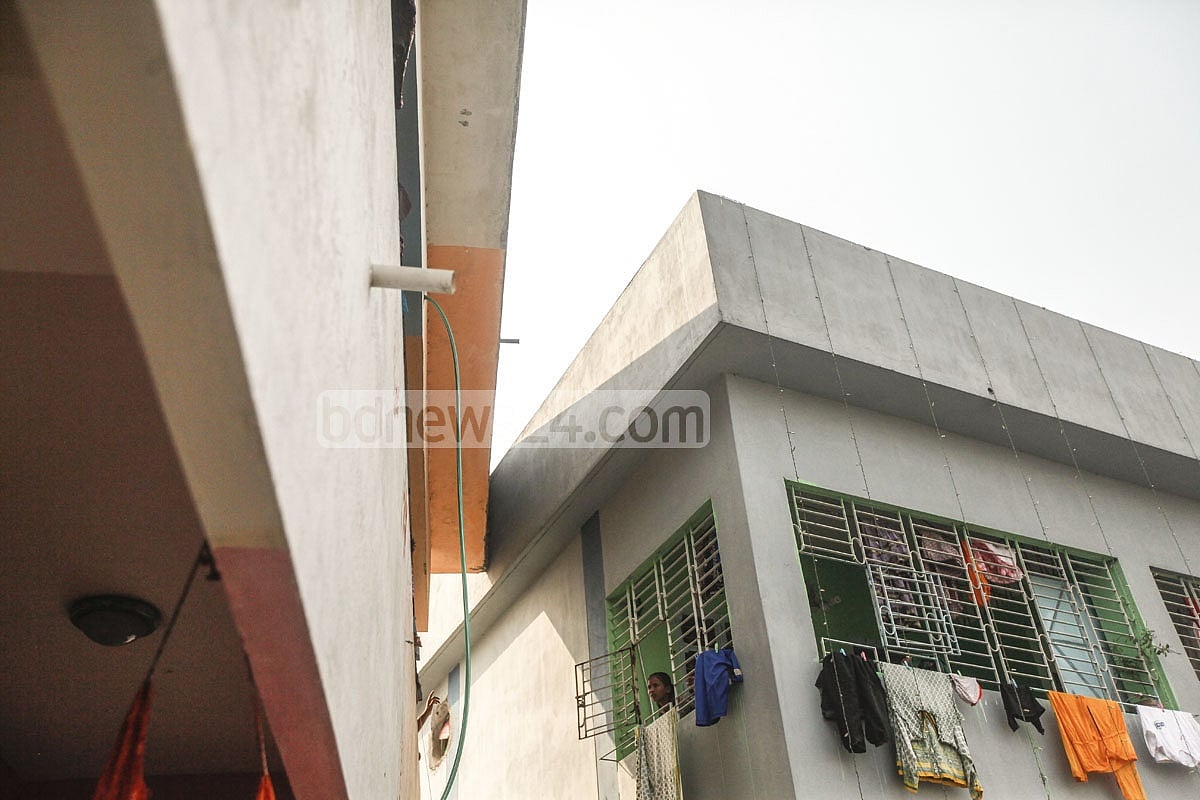
But Ahmed conceded that Old Dhaka’s maze of lanes and narrow roads could pose a major challenge to rescue workers.
“Bangladesh is a role model in disaster management,” he said, and added the country would not lag behind in coping with earthquakes.
A UNDP Comprehensive Disaster Management Programme report in 2009 said there were 325,000 houses in Dhaka then. Nearly 40 percent of them were hazardous, while 35 percent were of ‘medium’ grade.
Plate movement behind quakes
The Dhaka University’s geology teacher and Earth Observatory caretaker Syed Humayun Akhter says earthquakes, volcanic eruptions, the creation of hills and mountains are caused by the movement of crust-forming plates.
Nearly 70 to 100 km of the upper crust of the Earth, called the lithosphere, consists of moving plates divided into 13 parts.
The meeting point of the Indian and the Eurasian plates lies to the north of Bangladesh; the Burmese and the Indian plates meet to the east of the country. And since the plates are in motion, the Bangladesh landmass is also shifting, he says.
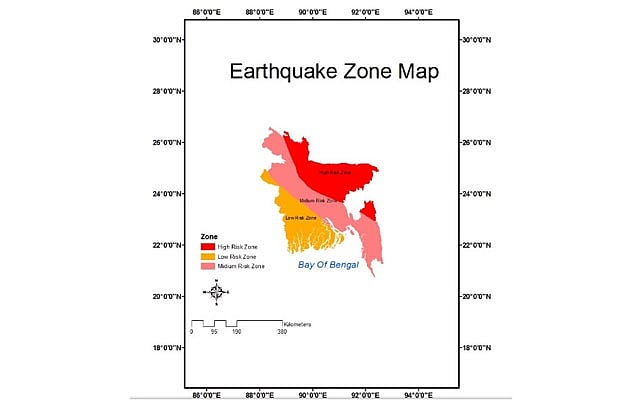
Akhter says Dhaka, the Chittagong Hill Tracts, Rangpur, Mymensingh, Netrokona, and Dinajpur are especially susceptible to earthquakes.
“There would be severe damage even if a quake of 7 or more on the Richter scale were to hit the Indian states of Meghalaya, Assam, Manipur, Mizoram or the Myanmar border, besides Bangladesh,” he said.
What’s to be done
Experts caution against panic, which was behind the death of five people in Bangladesh during the Monday morning tremors.
Disaster Management Department Director General Riaz Ahmed said houses conforming to the building code could reduce losses.
“Instead of wasting time in panicky movements, one should stay close to building pillars during earthquakes. Initially, one could also take shelter beneath tables or cots to avoid being hit by falling pieces,” he said.
He said it was advisable to stand in an open space if one could get out of a building.
Experts feel Bangladesh may have successfully coped with storms and floods but is way behind in it preparations to deal with earthquakes.
But Disaster Management and Relief Minister Mofazzal Hossain Chowdhury Maya does not agree.
“I believe the soil of Dhaka can absorb quakes. There will not be much damage in Dhaka even in the event of an earthquake measuring 7 on the Richter scale," he said.